Watched this rare love story in tv but happened to miss the title and opening scene that I managed to find in You Tube. It was from Berg (the hero)’s bath tub scene that I watched the picture in the idiot box. Catching up with the first couple of reels on internet, I was amazed to discover how our censor board continues to edit steamy scenes for us Indian viewers!!! One would think by 2018, things must be different!
Anyway, having watched over a hundred times the debut picture of Kate Winslet the Titanic (of which I never tire), nothing prepared me for her middle-aged mature looks in ‘The Reader.’ She looks her age. The second part of hero character is played by Ralph Fiennes. I like him from his ‘Maid in Manhattan’ with Jennifer Lopez, another Hollywood romance favourite of mine. Like Richard Gere, Fiennes seems to have compassion written in his eyes… How important cast selection is, is something I learned from his role. Why do directors pick on certain actors. Why not others. Ralph Fiennes, from two of his films i have watched, seems to have an answer.
Googled Kate Winslet and found her to be born 1975. Not too young.
Powerful and bold script but totally understandable. I don’t know how I missed this one all these days. (Obvious reason: i watch most Hollywood films at home, in tv, never in cinemas. Cinemas are reserved for watching local Tamil ‘masalas’ with unruly and non-stop whistling Chennai ‘machis’ hahaha) ‘The Reader’ looks like an Academy award winner. No memory of it but I could guess right away that this one was different and well made.
We speak of unconditional love, but when you come across one it totally bowls you over. Such a rare gem to find.
As for Hanna Schmitz played by Kate Winslet, her obsession with perfection is baffling. OCD, the obsessive compulsive disorder. Could it be that? It is easy to hold her in contempt if not for her honesty and forthrightness and the false pride that convicts her for life.
In spite of the gravity (literally) of the crime she is tried for, one can deeply empathize with Hanna-Kate. The bubbly Irish tap-dancing Titanic girl has come a long way. Ralph Fiennes’s Micheal Berg character is equally crafted with care. I fell in love with this man. His sensitivity to Hanna moved me to near tears. Respect for the man who wouldn’t judge Hanna. The way Berg reads his love to Hanna is poetry. How Hanna matches his imagination teaching herself to read is a love letter by itself. The proud woman leaves a proud woman.
The Jewish daughter refusing absolution is understandable. May be here, we Hindus can take cue. May be this is the steely Jewish resolve.
The one who has played the junior Berg is perfect.
War movies have somehow been touchy : ‘The Schindler’s List’ and ‘Life is Beautiful’ .
Looking forward to watching this beauty a second time. Felt like reading a good book. Few films leave you with such a lingering after taste. Melancholy can be sweet.
Watched this mindblowing Tamil picture ‘Aruvi’ (waterfall). Only this Aruvi happened to be the name of a girl of 25 years. Brand new picture to hit the silver screen only in 2017. Very apt title because, that is how the character flows: at times bouncy and bubbly, at times listless and subdued. But Aruvi does make one hell of a sound: roaring sound. And the message is heard clear.
Debutante Aditi Balan plays the lead as Aruvi. The director Arun Prabhu Purushothaman’s debut venture couldn’t have been better. A star is born. Two stars really. Incidentally, learned of the director and heroine from Wiki. Missed the titles and the opening scene. The director has unwittingly set a very high bar for his second project.
Kudos to the director once more and the producer for daring to produce a film without a hero. Our heroine is the hero of the film.
Secondly, rare to come across such a flipping script… back and forth, back and forth, frames from the present juxtaposed against frames from memories(past) weaving an interesting and complex story. A dozen or so scattered life events captured in snatches spin a beautiful yarn of solid story of a middle-class family girl. The way it is done is what makes it different. This is a hitherto unexplored technique. The flashbacks become something you look forward to for any idea on what is about to come. The mystery lingers for a while.
The online reviews describe the story as a socio-political drama and I guess I can borrow their words here. I can elaborate more but prefer to hold, unwilling to give away the plot. I am hardly the type to turn to the last page to read first like some do. Reviews I skim barely not to get prejudiced about a film (or even a book) before I get to watch (or read) it without a clue. It was while watching the picture, I wanted to grab some vital info that I decided to read reviews. Wanted to catch up with the opening scene.
The picture is also refreshing in that, we get to see a real Tamil girl (or probably Mallu) playing the lead instead of a light skinned north Indian star. I have no problem with a Hindi speaking dubbing artiste from Bollywood heartland cast in a Tamil picture but it is good (and probably relief) to hear free flow of Tamil from a local heroine for a change – who looks dusky or tanned like Tamil people!!! Tamannah or Samantha or whoever can hardly fit into urban Madarasi role!
Tamil cinema audience are not new to satires-sarcasms from magazines (Tuglaq of Cho’s times not now) to films, but Aruvi takes you to a whole new level. It is an unbelievable mix of satire, sarcasm, humour, despair, helplessness, compassion, inclusiveness everything. Three cheers to the director for exposing the sham that the media is. Everything revolves around TRP ratings these days. No scruples. The script does not judge characters. The forgiving and somewhat cynic attitude when it comes to the heroine is a breather. Aditi Balan has done proper justice to the character she has played, with her immaculately perfect dialogue delivery. Tamil diction is too good. Absolutely no fancy costumes or make-up or any aggravated scene of violence or nonsense in the script. The heroine is like your girl next door. One can’t believe Aditi is a new comer. She has virtually lived the role and is reported to have shed some significant kilos before the final shoot for the closing scenes for a credible story line (with her emaciated looks). The make-over is out of the world, scored without a foreign make-up artist (unlike our Kamal Hasan’s who may come very pricey). The supporting cast have done a remarkable job to make the picture wholesome and truly entertaining.
Rarely we get to see pictures of this genre. Every time I lose hope about Indian film industry, something like this crops up like a promise for future.
The current breed of Tamil directors is awesome. Their story-screenplay-dialogue seem to be realistic. Hopefully they don’t remain the ‘one-film-wonder’ or become the casualty of ‘early burn-out syndrome.’
Aruvi is reported to have been shot entirely in a digital camera to cut costs to bare minimum levels which is something like a world record! This is not internet news. This was snippet news in between ads in the tv. A commercial hit, which goes on to prove that good scripts will find takers any day. Aruvi is a trendsetter of sorts. A treat to watch, lagging not for a second. Not your normal range film yet with the fast pace manages to make a lasting impression on you. I wish I had watched the picture in cinemas. The effect would have been even better. Very low production costs, high entertainment value, women-centric, with NO MALE LEAD/HERO, convincing, compelling story without unnecessary ‘add-ons’ and tags … these could make Aruvi, a strong contender for both national and international film awards. The rare intriguing picture that made me double up rolling with guffaws one minute and weep quietly the next.
Arab countries, Pakistan, Iran etc., are like Fixed deposits. You may keep them ‘untouched.’ But secular democracies such as India, UK, Europe, USA, Canada, Australia are like joint deposits, free for all. You can draw from indiscriminately and suck up their resources running them dry without disturbing your fixed deposits. Well, we will have to do something about that. That is why we need a Trump and a Modi in this world.
If you peruse the list aforementioned, the bottom most entry is the massacre of Goan christians by Tipu Sultan, the only non-Hindu community/group to be persecuted in Indian history. Irony is that, the Konkan (Goan) chrisitians were massacred for a second time, after their ancestors were a century or two earlier force-converted by the Portuguese invaders who mass-murdered the staunch Hindu. Every Goan church that stands today is idle witness to brutal extermination of Konkan Hindus who laid down their lives refusing to embrace Christianity.
Look at the false and misplaced pride of the Goan christians in modern times. Miranda. Alfonso. What nonsense. Surnames quite like the Black Americans who have adopted theirs from their erstwhile white slave masters. Can we get one single Goan christian to own up to this shame in present times?
IDENTITY CRISIS OF THE INDIAN MUSLIM. WHY TO RE-TELL THE TRUE INDIAN HISTORY, NO HOLDS BARRED
This post is penned without prejudice with only truth as the beacon showing the way. The point cannot be missed if one studies it subjectively than objectively. This write-up is aimed at making one meditate upon his/her true origin, history, bearing, culture, ancestry and heritage. Am I Arab? Am I European? Everyone from the minority community in India needs to put the question to oneself and answer it with all honesty. In case one is mixed Arab blood, of course, no one is stopping anyone from quitting India for good. But by no means will India give up a square inch from Kashmir to Kanyakumari. If you want to leave you are welcome to leave, but India stays. As she is.
This post also seeks to explain why Hindus will never accept followers of foreign invaders as their own or put their trust in them. The pain and sense of betrayal is acute when your own blood turns against you.
The Indian muslim may be suffering from ‘Stolkholm Syndrome’ – that which afflicts the vanquished generally. The enslaved. Disowning one’s pedigree and true identity is ‘Slave mentality.’ You just do not become ‘them.’ You will belong neither here nor there. This is one treacherous trait which for a relief, is missing in the Indian christian. Because unlike the Indian muslim, the Indian christian does not have a consolatory Pakistan to relate to. That makes Indian christians loyal citizens of India in spite of their conversion spree. We can handle conversion, but terrorism and disloyalty could be subversive. Which is why this attitude that is like a poison coursing through the Indian muslim community needs to be addressed earliest.
Indian children need to be told, the Moguls were none but yesteryear Taliban. That India had been subject to most horrid terror for over eight long centuries. That Taj Mahal is a monument of torture and death not love and was in all probability a Shiva Temple, and that Ram Temple in Ayodhya was demolished by the barbarian Afghan Babur but even at this time perhaps, an overwhelming 99% of Indians must have been native Hindus only. Conversions happened in the Punjab earliest followed by Uttar Pradesh, Bengal. Last to convert perhaps were ironically the Kashmiris, only by sword, in Aurangzeb’s time.
The Great Mogul Contribution to India: Bastards, Biryani Beside Mausoleums
Historical dates/events listed in this post may not follow chronological order.
The Great Hindu Genocide panned over 8 centuries that not even Hindus want to talk about, so why blame the Indian government or our neighbours with whom we have shared ancestry… The West is too preoccupied with their own selfish interests… the bloody history of Hindu persecution for nearly a 1000 years hardly merits interest in any quarter…
One can’t help but smirk at the misplaced loyalties of Indian muslims who never for one thing bother to voice their concern when Hindus in Pakistan and Bangladesh are decimated systematically that when in 1947, Hindu population in these countries stood at over 12% today it has climbed down to pathetic 3% or even less.
CURSORY GLANCE: THE CURRENTLY INTERNALLY DISPLACED REFUGEES (IDR): THE KASHMIRI HINDU PANDITS
Why should India bother about Rohingyas or Syrians when we have refugees in our own native soil – KASHMIR HINDU PUNDITS
Ethnic cleansing of Kashmiri Hindu Pandits by muslim militants in the state of Jammu & Kashmir made the sons of the soil IDPs (Internally Displaced Persons) in their own country (India) living in shabby tents in the outskirts of Delhi hoping to return to the valley someday.
By this logic, should muslim population in Tamil Nad someday exceed Hindu population, will we Hindus have to flee our homes like our Kashmiri Hindu brothers and sisters. Have the world media ever focused on them? On Yazidis? So why now talk about Rohingyas, Syrians?
THE PERSECUTION OF HINDU RACE UNDOCUMENTED IN INDIAN/WORLD HISTORY
The great Hindu holocaust happened over centuries through which millions of Hindus were butchered, force-converted, with Islam reaching the Indian shores from the Persian Gulf in the 7th century AD.
ALEXANDER THE GREAT TO MOHAMMAD GHORI, GHAZNI AND ALAUDDIN KHILJI
Mohammad Ghori invaded India for a record 16 times and lost every single time. He was pardoned every single time by the Hindu king Prithvi Raj Chauhan who sent him back which was the gravest error he committed. The final 17th time Ghori returned, and with the help of his father-in-law killed the very same Hindu king who graciously and magnanimously pardoned him for 16 times and raided and looted the famous Somnath Temple, unleashing in his wake a cold blooded reign of terror. Hindu custom of hoarding golds and precious stones is not limited to our homes; our temples until today are veritable banks of treasure that will put World Bank and IMF to shame. Google Padmanabhaswamy Temple and Tirupathi Balaji temple to have an idea of what gold and hoarding gold means to Hindus. Islamic invaders came to India for our riches. The same objective got the British later to Indian shores.
What made the Hindu king pardon Ghori in a number of battles preceding the Somnath invasion? The adherence to Hindu Dharma. Hindu kings fought battles in Dharmic ways because India was already a very civilized society eschewing meanness, pettiness and cunning in every walk of life. The influence of Buddhism had also dulled the otherwise valiant Kshatriya spirit in our princes. Peace times reigned in Akaand Bharat and universities such as Nalanda and Taxila (now in Pakistan) invited aspiring students from all over the world. It is in this backdrop that one has to view the islamic invasion of India and the havoc the onslaught wrecked in the civilized Hindu society living in harmony.
Earlier in the 3rd century BCE, Alexander the Great had won over King Purushotham of Purushapura (today’s Peshawar) – counting on the Hindu king who he believed not to violate the ‘dharma’ of war as dictated by the Sanatana Dharma (Hindu) principles. Hindu kings did not fight after sunset, desisted from harming women, children and cattle, hesitated to kill and favoured pardoning the worst adversaries. It is the Dharma that proved costly for India in the end.
The greatest ‘sati’ in Indian history was committed when Alauddin Khilji, the barbaric slave invader defeated the Chithoor king to claim the throne. The Rajput queen Rani Padmini of Chithoor had posted sentries everywhere on her fort to get her the news of the battle. As soon as it was learned that the defeat was inevitable, the queen lit a big bonfire and some 14,000 Rajput women jumped live into the lit funeral pyre with the queen sacrificing their lives, unwilling to surrender themselves to Islamic invaders.
Hail Rani Padmini! It is because of the supreme sacrifice of those like her, that India today is still a Hindu majority country.
Muslims of Indian subcontinent are an intellectually dishonest community who cannot even bring themselves to admit to what is their true ancestry and heritage. It is is shocking that they have sided in history with India’s worst foreign invaders who can never become our heroes.
Indian curriculum speaks at length on winning independence from the British who ruled us for less than 300 years. Who still left us with great institutions and a legacy worth speaking of. What do we call the freedom from the Mogul invaders who made India their home, made us pay the Jiziya taxes, who took our women into their harems in hoards siring bastards, demolished and desecrated and looted our temples and massacred our forefathers for almost thousand years. Did the British commit any of these heinous crimes. Why understate the Mogul atrocities. If the British were foreign, were not the Afghan Mogul alien either. Only in India, invaders are depicted heroes in our text books and the natives are made to look inferior and at fault. Is there a word on colonialism in UK text books or on Indians in US even if it was they who colonized and ethnic cleansed many a native tribe?
History they say is penned by the victors, the way we know it. But there is this other side to the coin: the untold story of the slain.
You see the pattern is familiar with all Islamic states of the present which have had distinctive native culture before Islam vanquished them. These include Iran, Iraq, Afghanistan, Pakistan, Egypt, Syria just to name a few. All these lands were glorious with arts and sciences flourishing before everything went up in flames.
Until the barbarians reached Greater India, what was the state of India like?
INDIA UNTIL 7 CENTURY CE
India was a conglomerate of smaller kingdoms still,
The idea of ‘Bharat’ (India) existed from time immemorial from what is today Afghanistan to the southern tip of the Indian peninsula Kanyakumari. India extended upto Tashkent,Taksha Khand in Sanskrit actually. It is the British-planted idea seconded by the Muslims that the former united us into one single entity which is untrue. Ram and Krishna and Shiva are as much part of our beliefs down south, east and west as for north and even Buddhhism and Jainism reached every nook and corner of the great Indian subcontinent as evidenced from the Chola kings deep down Coromandel south renouncing meat upon embracing Buddhism. A Hindu Pilgrimage started with Kashi/Varnashi in the north and ended with Rameshwaram in the south. The Shakthi-peets are spread all around Bharat including in today’s Pakistan and so do the ‘Shiva Stals.’ Kailash in Tibet and Vaishnodevi and Amarnath in Kashmir have been important Hindu pilgrimage centers for thousands of years. Adi Shankara of the Shankaracharya lineage from Kaladi, Kerala, established one of the five Shankara Mutts at Sri Nagar in the 7th century CE. Indic faiths renounced aggression and violence and promoted peace and harmony in ancient Bharat. India was a landmass rich and vibrant in culture, literacy, civilization, arts, sciences, crafts, cattle, wildlife, rivers, flora and fauna, spices and farm produce besides precious stones and metals. ‘Which is why Columbus to Vasco-da-Gama left in search of ‘India’ – a wholesome entity, not in clamour of finding a cluster of small, fragmented unruly kingdoms in lieu of India. The idea of India, the idea of Bharat is ancient over what is documented as human civilization.
If India did not exist before, then UK did not either if you cut out Scotland, Ireland, Welsh etc piece by piece. Neither did Greece exist but there was Sparta, Athens, Troy. Italy never existed but Florence and Rome did individually. There was no Saudi Arabia until some 60-70 years back. In a very similar fashion, India has always existed as a single nation united by a common culture and civilization, in world history. It is mischievous to refer to us as ‘South Asia’ – a planned strategy with ulterior motives. Indians/Hindus must always try to refer to India as the Indian subcontinent. None will dare to refer to China as East Asia.
Persians called us ‘Hind’ – the land of the Hindus. The Europeans called us ‘India.’ We are neither India nor Hindustan. We are Bhaarath.
‘Bharat’ is named after King Bharatha, renowned ancestor of Lord Ram, who ruled India well, whose name is still popular when it comes to naming Hindu newborn boy babies.
One of the first casualties of the invasions from central Asia/Middle east was the Nalanda University.
The Nalanda University
The renowned international university at Nalanda, seat of advanced learning, was vandalized and reduced to ruins, ransacked in a heart-wrenching manner with the barbarians reaching Indian shores for the first time. Please give it a thorough read.
Nalanda University is a single proof of what a knowledge society Hindu-Buddhists were. It may be unbelievable to many that once upon a time, Afghanistan was a peace loving Buddhist country.
It has taken centuries for us Hindus to break out of the jinx and rediscover our hidden potential. We have just started with reclaiming our lost glory. It is the foremost duty of every single remaining Hindu to ensure that our great and unique Hindu gene pool is not further tainted and degenerated.
Before Islam came to India, Aryabhatta had already invented the calculus, trigonometry (the Pythogorus theorum). Sushrutha had performed world’s first plastic surgery. Bhaskara was the world’s first astronomer. And even Kamasutra, the world’s greatest and No.1 sex manual until today had been penned by Vatsayana. Chankya had written the first every political-economic text book of the world ‘Arthashastra’ which is still prescribed syllabus in leading international management schools. The Hindus had already given the world ‘the zero concept.’ There was no field untouched by ourgreat Hindu scholar ancestors. Only they did not know of the concept called ‘patenting.’ Neither did they know about ‘visas’ that the Europeans conveniently invented after they had done with a visa-free home run for centuries in Asian, African nations.
This is the reason our earliest satellites were named after Aryabhatta and Bhaskara.
The ancient medicine system in India was Ayurveda, practised until today in India, the dances were Bharat Natyam and Kuchupidi and Odissi and Mohiniyattam etc, the music was Hindustani and Carnatic, the musical instruments were native and traditional like the Sitar and the Veena and the Mridangam for instance. Art was at its best – living examples being the Ajanta and Ellora caves dating back to thousands of years. Hindu sculpture and architecture,one of the finest examples being Hampi for instance, are never played up as much as the monotonous and lifeless Mogul themes – you only have to take a tour of South India to discover what a great heritage we have. And about engineering marvel. The Tamil Chola king Karikala raised the ‘Kallanai’ world’s first documented stone dam against river Cauvery in 2nd century CE and the same stands good to date. Tamil Grammar was penned in the 3rd century BCE by Tholgappiyar. Back to back if you compare north with south, the civilization was matching and advanced.
Ancient Hindus were very cultured, advanced for their age but were too gentle, complacent and peace-loving to their own detriment.
Yoga and meditation are our heritage handed down over centuries, perfected and pracised for eonsand thus Hindus had nothing but GOOD to give the world.
And I have not even mentioned a word on the Vedas and the Upanishads….
But what happened to us all in between the 7th century and the 17th century CE when the British colonized India?
India was culturally crushed, spirit broken. Hindus massacred, demoralized with women and homes taken over. Hindu progress was stalled, Hindu thinking was brutally snapped and Hindu creativity and brains stampeded upon.
THE MOGUL ERA
Mirror Mirror on the wall, who was the cruelest of them all? Aurangzeb? Tipu Sultan? Alauddin Khilji? Ghori? Ghazni? Sad discussion in the Quora:
Who were the Moguls. Only predecessors to today’s Taliban. India is victim of terrorism for centuries, rest of the world welcome to the reign of chilling terror! For the sins of ignoring Hindu agony, rest of the world, pay at leisure.
The mogul architecture and the mogul era literature/poetry are over-emphasized in Indian history over the Golden age of Guptas. India was a glorious and vibrant civilization with Emperors Ashoka and Kanishka and Chandragupta Maurya whose reign extended to most parts of south Asia in their times. The south remained relatively peaceful under the Vijayanagara Empire and Chola , Chera and Pandya dynasties about which our history books hardly speak a word.
What is Urdu. A dialect, cross-breed of Persian and Sanskrit, sanskrit basically. Hindi is like the colloquial form of Sanskrit, the language of the Hindu gods. Hindi language still adopts the same script as Sanskrit, the same ‘libi.’ Urdu may sound romantic when infused with Persian, i have no idea sincerely because I can manage a smattering of Hindi and read and write Hindi but my grasp of fluent Urdu is minimal. If anything, this is the only achievement of mogul era – Urdu language and literature. Other than Biryani and Korma that is. What else is there to gloat about other than perhaps miserable mausoleums. The British played up the Indian muslims only because the two shared the same Abrahamic roots from Jerusalem. The pillars of the Qutub Minar are all pillars of the Hindu temple razed, so can our muslims take pride in such a vain and vandalized monument. What was the state of science and mathematics and arts in the same mogul period. A BIG ZERO.
The selfless sacrifices of the 9th Sikh Guru, Guru Tegh Bahadur: They say in India, the Sikhs are Hindus’ protectors, and they took up swords to defend Hindus and protect the rest of us from conversion so that we remain and live as Hindus until today. In short, the Sikhs stopped the spread of Islam in a big way with Punjab.
Bow my head in respects to Sikh Gurus, and all Sikhs in general, who are the true saviours of Hindus, and whose religious duties include securing and safeguarding Hindus as per their scripture ‘Guru Granth Sahib’.
HOW CAN MOGULS BE DEEMED INDIAN?! NO CHANCE. THEY WERE THE TALIBAN & AL QAEDA AND ISIS ROLLED INTO ONE EVEN CENTURIES BACK. NOMADIC DESERT CULT CAN NEVER APPEAL TO HINDUS SORRY. NOT IN A MILLION YEARS.
It is this Tipu Sultan the most barbaric among Islamic rulers who was portrayed as a hero in the disputed tv serial made in his name, much to the angst of native Hindus. The very recent Bollywood picture ‘Padmavathi’ featuring Deepika Padukone was based on real life story of Chithore Rani Padmini who committed ‘Sati’ – and whether or not the film sought to put across the brave Rajput spirit and blood, it did in a very perverse manner try to paint Alauddin Khilji in better light which is shameful. Most disgracing. (True, I have not yet watched the movie. But any attempt to justify the invaders’ position is sadistic that we Hindus, persecuted for centuries for no fault of ours can do without).
Ancient Hindu history will break your heart if anyone bothers to give it some thought. Let us not Hindus forget who we are and what we are. Hinduism is all encompassing, passive ideology but let that not make us weakest souls on earth. Let us forgive, but not forget. Let us co-exist but let us not compromise. We owe our individuality to the world benefit.
Taj Mahal: the true story
How many in the world will believe if we are to claim that even Taj Mahal was once perhaps a marble Shiva Temple. For one thing, there is no muslim monument in India or anywhere in the world bearing the name ‘Mahal’ which is a typical Hindu word given for palacial structures. Throw open the Taj to world renowned historians – let them lay bare the truth.
Every single Hindu temple was desecrated over which the Moguls built mausoleums including the Babri Masjid – built by Babur for his boy love reportedly. For the followers of Islam in India that destroyed the shrine of our Lord Ram, until very recently we Hindus were paying out of our tax money to subsidize their Haj pilgrimage to Mecca.
As for Indian text book writers, there is an urgent need to revisit history and revise our history text books. How about describing Babur as Afghan in black and white for the plundered and marauder that he was. How about a description of Aurangzeb’s treatment of Guru Tej Bahadur and how he converted Kashmiris at the point of his sword. How about the bloody terror unleashed by Tipu Sultan in the Malabar that the carnage he committed in Kerala-Karnataka coast in mere 17 years outdid what Aurangzeb could manage in 50 long years? It is essential that the world must know what happened here in India. And more than the world, Indian children have a right to know the truth and Indian muslims and christians must come to ‘acknowledge’ what is what. Is it time for the government to open up the dark and secret chambers of the Taj for further investigations by a world archaeological panel.?
India is a secular democracy but it is imperative for every Indian muslim to acknowledge how he/she came to be in the first place. This is the only way forward, as the onus lies with the Indian muslim to allay the inborn fears of Hindus who have endured terror and agony for centuries that there exists this trust deficit in between the two communities to this day. Every time an Indian muslim identifies himself/herself with an Arab cause, the more betrayed and insecure shall Hindus feel that we would want ‘the bhais’ out.
This is merely the tip of the iceberg: in continuation of posts on the scourge of Conversion in India. Limiting the scope here to North East and Kerala.
The British did not decamp in entirety from India in 1947, with the Christian missionaries in the country opting to stay put spreading the gospel. Pandit Jawaharlal Nehru’s Congress government apparently had no issues on that. Prime minister Nehru, with his communist Defence minister and cabinet ally V R Krishna Menon who could be singly held responsible for Sin0-Indian war of 1962, was bent on projecting the secular face of India at the expense of conversion of vast majority of North East Indians to Christianity, in miraculous span of a couple of decades. The Christian missionaries who were by this time deeply entrenched in the hilly tracts of the east Himalayan states, did not stop with their evangelical work in sovereign Indian soil. They were also actively engaged on the other hand in abetting openly the Nagas to seek their independence from the newly constituted Indian union on the basis of religion to whose ’cause’ the British government claimed to be ‘sympathetic.’ The economic and military support that armed the Nagas to the teeth must have misguided the Nagas. It is no surprise that the British when they left India also generously offered similar ‘friendly pacts’ to small Hindu princes whose kingdoms were unilaterally fused with the union of India, by the sheer will of Sardar Vallabhbhai Patel, the Home Minister and Deputy PM. Kashmir is a case in point. Kashmir would not have gone to the United Nations if not for India’s last serving British Governor General, Mount Batten. Lessons learned from Kashmir probably helped India when it came to dealing with Nagaland. British journalists were writing of the ‘Naga plight’ in their national dailies (among other concerns of theirs about India whose survival was predicted not beyond ‘five years’ by none other than prime minister Winston Churchill.) The British government no doubt underestimated the newly resurgent independent India, advising the young Indian nation to ‘let go of the Naga.’ Phizo, the chief rebel Naga leader of NNC (Naga National Council) was granted political asylum in Britain. Ever since, Nagaland has been a thorn in our flesh, with our tribal brethren alienated from us on widespread conversion, wanting to sever ties with the Indian republic. Nagas have exercised their adult franchise in the past with rest of India, yet the divisive lines have always been left open like festering wounds.
This tweet gives one a picture of the level of Christian conversion taking place in Nagaland from before 1947 and how it went unchecked for decades after independence, with foreign missionaries pumping in NGO funding and extending moral support.
Once a majority of populace in any state in India is converted to non-Hindu/non Indic such as Abrahamic with Middle Eastern origin, it may be possible to entrap/enroll them in larger schemes such as ‘Breaking India’ missions. Nagaland could never have been independent but would have been absorbed by China. Kashmir can never been independent. Its strategic location would make it the next Afghanistan in no time (if not for India). The buffer states of Kashmir and North East India do not only function as shock absorbers securing and safe-guarding the rest of India, but are also preventing themselves from turning into next casualty, on the strength derived from Force India.
Nagaland geography is another critical point. Sandwiched between China and East Pakistan (now Bangladesh), Nagaland and the even the rest of the north-east, is a security issue for India. The unsolved Naga equation has been an irritant for Indian nation for long. The entire North East India is a sensitive strip.
One cannot help quoting in this context, the UK’s war with Argentina at the start of the 1980s, for Falkland Islands which must legitimately belong to the South American nation. The havoc the British have wrecked in their erstwhile colonies leaving loopholes deliberately unplugged with an intent to cause trouble at a future date, is now coming to surface as evident in Sri Lanka, Malaysia etc where (violent) communal strifes have erupted in recent years. The Englishman played one ethnic group against another before going back home for good. Legacy of the British policy of ‘Divide and Rule.’
The BJP win in Nagaland raises hope. The Nagas have finally come home. It may not be too late either to correct the injustices and mistakes committed by the Congress government for 60 long years in the Seven-Sister-States of India. A ‘Gharwapsi’ is our legitimate right. A reversal of the conditions back to pre-missionary era should hardly raise the liberals’ eyebrows.
The BJP sweep in North East leaves Kerala as the single and only remaining Communist state of India. The 20+ years of Communist regime in the state of Tripura has been brought to a close.
Like the North Eastern India, Kerala too is victim to calculated and widespread conversion (to Christianity).
In the case of Kerala, I am to deal with a peculiar issue here that hardly draws the attention of our government or agencies that it deserves.
I have been been following a few Elephant care groups in the social media Facebook. The unnatural, abnormal concern of foreign nationals for the Indian elephants sparked my interest. It is with utmost certainty that I can vouch that, one hundred percent all the Elephant care groups in India are Evangelical missions sponsored by foreign church. To mention a case in point: Kerala Suffering Elephants. A quick browsing of the group’s content and members will reveal the vested interest of these foreign Christian evangelists/missionaries strangely in Indian elephants that are employed in service of Kerala Hindu temples (for centuries now as part of local custom and traditions). Now the domesticated elephants in Kerala are not restricted to Hindu temples; Churches and Mosques too use elephants for their festivals, however one finds no mention of Elephants maltreated and misused in non-Hindu places of worship.
The Christian missionaries in India are starting to feel the pinch, as the Modi government has successfully blocked the funding of hundreds of fake NGOs who were dubiously funding conversions in India. Kerala Communist government turns a blind eye to the shocking horror and reality unfolding in the state which could have a drastic impact on the future of the state which was overwhelmingly Hindu even at the time of our independence. Today, the Hindus of the state have been reduced to a minority due to flawed communist policies giving a free hand to overseas missions to carry out uncontrolled and unregulated conversions.
With one after the other most avenues of funding closed, it is easy guess that the evangelists both local and foreign are targeting the Hindu temples using the Indian Elephants as their front. I am an Elephant lover myself. However it is not difficult for me to blow the cloak of the evangelist missions who are trying to wage a war on India on a different and altogether unbelievable front.
While the concern for the endangered species is appreciated, is it not ironic that almost all the foreign members of the Kerala Elephant groups happen to have church connections. In a recent post in one more Elephant care group based in Africa, it was revealed how some fake Facebook groups in Europe and USA were duping the gullible, inviting them to fund Elephant conservation.
The multi-pronged threats faced by India from every direction one can think of, is alarming. The missionaries are clearly cooling their heels waiting for the return of the Congress government which will undoubtedly give them a free run with funding for conversion in the country. Unabated conversions were happening until the BJP formed the government. Even as of today, illegal conversions are taking place in every state of India including Tamil Nadu. The last time I visited home, I was shocked to learn two of my friends’ maids had been bribed to conversion by ‘Aseervadham’ church in Anna Nagar, Chennai. In Pulla Avenue, I was witness to evangelists going shop to shop offering bribes for conversions to petty shop owners and pavement stall holders.
This when they talk about the Saffron surge and VHP and Shiv Sena and RSS and Hindutva. Right under the nose of Bharatiya Janata Party.
It was not A CROWD Scroll guys, it was a group of seven KERALA MUSLIM YOUTH who beat up and murdered tribal Madhu who stole after all their rice because he was hungry. And he did not go to them, they came visiting his place. The murderers went on to click selfies with the victim committing the criminal offence, torturing mercilessly the mentally unstable poor man to death . Indian media along with foreign media that went screeching for months endless about beef lynching cases using the word ‘Hindu’ a million times can’t be more quieter now when it comes to mentioning the killers identity. Religious affiliation. The beef lynching cases were hardly one or two, isolated incidents, blown out of proportion by the same media not so long ago.
The champions of Dalit causes who were in the forefront defending Kanhaiya Kumar of JNU (a PhD scholar in ‘very relevant’ ‘African Studies’ over 30 years of age, drawing a stipend of 25,000/- rupees per month from tax payer money, for over 5-8 years now) along with Umar Khalid (another PhD no-gooder at tax payer expense) who raised anti-national slogans, have gone eerily quiet now. The crusaders for Rohit Vemula who committed suicide, find themselves unable to print that seven muslim youth in COMMUNIST SECULAR KERALA have in fact killed in cold blood a poor SC tribal (Adivasi of scheduled tribe caste).
But this is not the first time that Indian media play mum when minority men happened to commit heinous crime against Hindus. An illegal Bangladeshi immigrant from Assam brutally raped, mutilated and murdered a 29 year old Dalit woman in Kerala only last year. The murderer’s name was shielded maximum possible extent by our media. Whenver (and as in most cases) when the minorities commit crimes in India, it is general media practice in India to omit mentioning the offenders’ faith.
Leave alone the protection of identity that goes with the worst offender of Nirbhaya gangrape case in Delhi, Mohammad Afroz, who was the one to insert a foreign object (rod) into Nirbhaya – who was let off the hook because he was short of 18 years (the legal majority age) by 6 months, with the courts counting him juvenile delinquent. Activists in India were up in their arms in favour of the mastermind criminal, holding banners for his release. This criminal is now on loose and has supposedly sneaked into southern India. His identity and name were leaked by some good samaritans for public safety and security.
Very recently a Hindu youth was beheaded by a muslim family for the only reason he fell in love with their daughter.
If you study this Hindu newspaper/online report, you can notice, how careful they are not to mention the word ‘muslim’ anywhere when it comes to naming the criminals. As much as possible they desist from referring the killers at all. Journalistic skills. How to write on a gruesome murder yet save the skin of the assailant. It is a one-sided affair. They only stopped short of reporting that Ankit beheaded himself.
Even Pakistanis seem to have an ounce of ethics and honesty surprisingly:
In contrast, how many times, the word ‘Hindu’ gets used for minor isolated crimes committed by anyone in the majority.
It is suggested to take a peek into the police records nationwide and determine (or rather establish), who are mostly India’s smugglers, drug dealers, pimps, fake note printers, terrorists, other violent offenders. Hindus, Christians commit white collar crimes, admittedly. Presently I am leaving it at that.
But here is a video proof of a Chrisitian NGO suspected of foul play in the case of unexplained death of over 1,590 destitute poor near Kanchipuram, Tamil Nadu. So far, no national tv channel has evinced interest in this gruesome case where the dead were buried without civic authority’s approval in cement cellars. Speculation is that this is a racket for bone and organ harvesting.
Why are Timesnow and Republic tv news channels not investigating this (literally) grave issue.
After engaging in pedophilia and relentless illegal conversions, this is the next vital news on Christian evangelists sponsored by foreign church in Indian soil, waiting desperately for CBI attention and action. 1590 deaths in record 7 years. Yet the story not picked up by the Hindu, Times of India, Indian Express or Scroll.
Where is NDTV now.
The other day there was a report in NDTV on how Kashmiri muslims were sprucing up a Shiva temple in Kashmir for Shiv Ratri. Not a single Kashmiri Hindu pundit in sight. Either butchered or banished from the valley by way of ethnic cleansing long ago. But these guys were proud, drum-beating how magnanimous really their ‘terrorist’ brethren were. This is insane! Or is the temple becoming another Ayodhya, turned into ‘their’ place of worship really?
I am searching for a report on how ‘Agraharams’ in Tamil Nadu towns have been taken over by the minority and the Hindu names have been struck down and replaced with ‘their’ names. Even centuries old temples are not spared, converted to ‘their’ worhsip places or religious schools. This was a Whatsapp message by someone who toured Kumbakonam, Tanjore etc taking pictures. The concrete proofs were the photographs which point to a bleak future for the Hindus in very near future. Not a single Ayodhya – we have a thousand Ayodhyas in the making silently and we can do nothing about it in our own country, when we are the majority Hindu. This is secularism and democracy in India.
So this is just a brief compilation by me. Like the tip of the iceberg. India is the only country in the world where the majority Hindu continue to get persecuted, lied to by our own media owned by foreign Christian missionaries who fund them and direct them, where criminals can get away committing heinous crimes against the majority Hindu with the immunity that comes with their minority status,
OWNERSHIP OF INDIAN MEDIA BY CHRISTIAN MISSIONARIES
Here is a lengthy read (cut and paste job from Quora in bold indigo, which explains it all): please give it a patient reading, it is an eye opener like none. (Data though not updated).
1. Hindustan Times – Shobhna Bhartia, owner and editor-in-chief of Hindustan Times is a Congress MP from Rajya Sabha.
2. Vinod Sharma, HT Political Affairs editor, is essentially a Congress spokesman on all TV panel discussions, because once his boss’ term gets over, he will be looking out for her RS seat next
3. Barkha Dutt and Vir Sanghvi, famous Congress stooges (and intermediaries for UPA allies) who were exposed in the Radiagate scandal, and are virtual Congress spokespersons in their capacities as electronic media personalities, are the ones who write opinion and op-ed columns most frequently (once every week) on the editorial pages of HT. In return, Barkha and Sanghvi are rewarded with Padma Shris and other monetary compensation by the Nehru dynasty or Congress party.
4. NDTV’s promoters are Prannoy Roy and Radhika Roy. Radhika’s sister Brinda Karat is a famous CPM leader (well known for anti-Baba Ramdev views) and Brinda’s husband Prakash Karat is the CPM Politburo General Secretary (well known for preferring Congress over BJP). And Prannoy Roy’s first cousin is the famous far-leftist pro-Maoist-Naxalite pro-Kashmiri-terrorists “intellectual” Arundhati Suzanna Roy.
5. NDTV’s Barkha Dutt’s reality has already been exposed by me in above section.
6. NDTV’s Sonia Singh is the wife of Uttar Pradesh Congress MP, Union minister and ex-princely state ruler, Mr. R. P. N. Singh, who is one of the fastest rising stars in the Congress party. If you remember, Sonia Singh is a very high-profile anchor on NDTV whose pro-Congress anti-BJP bias is legendary.
7. NDTV’s Nidhi Razdan (high-profile anchor of Left Right Centre) is the current girlfriend of J&K CM Omar Abdullah (after Omar recently divorced his wife of several years and mother of his two children, Payal). Nidhi Razdan is also famous for her legendary pro-Congress and anti-BJP bias.
8. CNN-IBN : Rajdeep Sardesai’s wife and co-promoter of CNN-IBN, Sagarika Ghose, who anchors Face the Nation and is famous journalist of CNN-IBN (well, her hubby is the owner-editor-in-chief after all) are famous Congress stooges.
9. Sagarika’s father Bhaskar Ghose was a famous sarkari babu and was made the chief of Prasar Bharati (Doordarshan) during Indira and Rajiv regimes. Bhaskar Ghose was well-known for personal loyalty to the Nehru dynasty, and now his daughter and son-in-law are rewarded with their own channel to do Congress propaganda.
10. In fact Sagarika’s extended family even consists of her aunts Ruma Pal (former Supreme Court justice and a close friend of the Nehru family) and Arundhati Ghose (former diplomat and Indian ambassador to various countries, predictably, under Congress regimes).
11. Let’s now come to another famous CNN-IBN media personality who also writes columns frequently for Hindustan Times — Karan Thapar. What you may not know is that the Nehru family itself is related, through blood and marriages, to the high-profile Thapar family. India’s Army chief during the 1962 debacle against China, Gen. P. N. Thapar, is brother-in-law of Nayantara Sehgal, the daughter of Vijaylakshmi Pandit and niece of Jawaharlal Nehru. Gen. Thapar’s son is pro-Congress journalist Karan Thapar. Gen. Thapar’s sister is Romila Thapar, a famous “top” typical JNU Nehruvian communist ideologue historian, who gets to write our textbooks and pollute them with pro-Congress Marxist propaganda.
12. The HIndu – The Worst – N. Ram, owner and editor-in-chief (till February 2012) of The Hindu, was once a vice president of the Students Federation of India. SFI is the students’ wing of the CPM.
13. P. Sainath of the The Hindu (acclaimed journalist well known for his, again, unsurprisingly, typical left-wing Nehruvian communism ideology), is the nephew of Congress politician V. Shankar Giri and the grandson of V. V. Giri, ex-President of India and famous Congress politician. Giri was especially known to be one of the first few staunch loyalists of Indira, and whom Indira fielded for President elections against her own party’s Neelam Sanjeeva Reddy, and who ultimately became the cause of the first high-profile split in the Indian National Congress into Congress (O) and Congress (I) — almost all the pre-independence regional stalwarts split away to join Congress (O) or form their own state parties, and the rest including Giri (all the loyalists of the Nehru family staying on with Indira).
14. Or even what about little known News24 Hindi media channel? Owned by ex-journalist and editor Rajiv Shukla, famous Congress MP in Rajya Sabha, Union minister, industrialist, BCCI vice president and IPL chairman.
15. Or even what about little known Lokmat (and IBN Lokmat) that is Marathi newspaper (and channel) in Maharashtra? Owner and editors-in-chief are the brothers Vijay Darda (Congress MP) and Rajendra Darda (Congress MLA in Maharashtra, and minister in state govt).
16. Or even the other bigger and smaller media houses, such as The Times of India and Indian Express, where the Nehru dynasty has managed to infiltrate its loyalists such as Dileep Padgaonkar and Shekhar Gupta, who are essentially paid stooges of the Congress party.
17. Vinod Mehta – Outlook editor has been well known to take anti BJP stand.
The Congress (in fact just the one single family — the Nehru dynasty) has been in power for 56 of the last 65 years of independence. This matters a LOT. Personal relationships have been built, blackmail-worthy secrets have been spied, monumental wealth has been accumulated … all by the one single Nehru dynasty (and its family-business-cum-polit ical-party aka Congress) that helps it maintain its tight irongrip over not just the entire Indian mainstream media, but also deep into our bureaucracy, our governmental institutions, and even our journalism and mass media colleges and grad schools.
We have probably not even scratched the surface of the network of family and personal relationships through which the Nehru dynasty has completely dominated and controlled the entire intellectual, historian and journalist landscape of India. And we haven’t even talked about the monumental wealth or the blackmailing secrets. All because the one single dynasty got to rule over India for 60 years uninterrupted. It matters a LOT.
The typical JNU Nehruvian communist left-libbers ideologues have really perpetrated some kind of stranglehold on India’s journalism, media and intellectual space.
Almost all pro-BJP (or even centre-right ideologues) journalists have been slowly thrown out of their jobs due to pressure from the Congress and the Nehru family.
Even the great venerable Ramnath Goenka, frustrated and broken by repeated I-T raids and ED investigations ultimately had to fire Arun Shourie twice from the Indian Express, which was once the best Indian newspaper in the 1970s and 80s. That was the team — Goenka the owner, Shourie the editor, and S. Gurumurthy the fearless journalist, that brought political heavyweights like Indira Gandhi down on her knees and even took on corporate honchos like Dhirubhai Ambani. (Ramnath Goenka inspired the Mithun Chakraborty character and S. Gurumurthy inspired the R. Madhavan character in the Ambani biopic “Guru”.)
But very few centre-right ideologues are left in India’s media space today, that too in minor publications like The Pioneer. Almost all the mainstream media houses have been thoroughly infiltrated and coerced into towing the Congress’ line, sometimes just through ideology and relationships, and not even money power.
The Congress party essentially owns and controls every single mainstream media house in India, including Hindustan Times, The Times of India, NDTV, CNN-IBN, The Hindu, Tehelka, Outlook, etc”
Let us see the ownership of different media agencies.
NDTV: A very popular TV news media is funded by Gospels of Charity in Spain Supports Communism. Recently it has developed a soft corner towards Pakistan because Pakistan President has allowed only this channel to be aired in Pakistan. Indian CEO Prannoy Roy is co-brother of Prakash Karat, General Secretary of the Communist party of India . His wife and Brinda Karat are sisters.
India Today: Which used to be the only national weekly which supported BJP is now bought by NDTV!! Since then the tone has changed drastically and turned into Hindu bashing.
CNN-IBN: This is 100 percent funded by Southern Baptist Church with its branches in all over the world with HQ in US.. The Church annually allocates $800 million for promotion of its channel. Its Indian head is Rajdeep Sardesai and his wife Sagarika Ghosh.
Times group list:
Times Of India, Mid-Day, Nav-Bharat Times, Stardust, Femina, Vijay Times, Vijaya Karnataka, Times Now (24- hour news channel) and many more… Times Group is owned by Bennet & Coleman. ‘World Christian Council’ does 80 percent of the Funding, and an Englishman and an Italian equally share balance 20 percent. The Italian Robertio Mindo is a close relative of Sonia Gandhi.
Star TV: It is run by an Australian, who is supported by St. Peters Pontifical Church Melbourne.
Hindustan Times: Owned by Birla Group, but hands have changed since Shobana Bhartiya took over. Presently it is working in Collaboration with Times Group.
The Hindu: English daily, started over 125 years has been recently taken over by Joshua Society, Berne , Switzerland .. N. Ram’s wife is a Swiss national.
Indian Express: Divided into two groups. The Indian Express and new Indian Express (southern edition) ACTS Christian Ministries have major stake in the Indian Express and latter is still with the Indian counterpart.
Eeenadu: Still to date controlled by an Indian named Ramoji Rao. Ramoji Rao is connected with film industry and owns a huge studio in Andhra Pradesh. Andhra Jyothi: The Muslim party of Hyderabad known as MIM along with a Congress Minister has purchased this Telugu daily very recently.
The Statesman: It is controlled by Communist Party of India.
Kairali TV: It is controlled by Communist party of India (Marxist)
Mathrubhoomi: Leaders of Muslim League and Communist leaders have major investment.
Asian Age and Deccan Chronicle: It is owned by a Saudi Arabian Company with its chief Editor M.J. Akbar.
Gujarat riots which took place in 2002 where Hindus were burnt alive, Rajdeep Sardesai and Bharkha Dutt working for NDTV at that time got around 5 Million Dollars from Saudi Arabia to cover only Muslim victims, which they did very faithfully… Not a single Hindu family was interviewed or shown on TV whose near and dear ones had been burnt alive in Godra, it is reported.
Tarun Tejpal of Tehelka gets blank cheques from Arab countries to target BJP and Hindus only, it is said.
The ownership explains the control of media in India by foreigners. The result is obvious.
Latest to join the bandwagon is Kamal Hasan, actor from Tamil Nadu, plunging into politics invoking the divisive Dravidian policies, as if on cue. Will Kamal Hasan address a public meeting in the Chennai Marina and announce it clear to the world whether he is a converted Christian or not. Or if he is funded and fielded by Christian NGOs? Does he or does he not have an offshore bank account in Cayman Islands, the tax haven. Whether he is still a Hindu. Will Kamal Hasan file an affidavit of declaration to this effect in a competent court of law. This is very important if he is to contest next state assembly elections in the state. The electorate in Tamil Nadu must be informed and Kamal Hasan must not deliberately suppress facts which could have the potential to swing votes and decide the future and fate of the state.
Why I will not vote for a Christian or a Muslim: Look at the Kanchipuram videos. And at the silence of the media. The Madhu murder. Lengthening silence on perpetrators of such an inhuman crime. What will happen to us Hindus if we become the minority in the country when the Indian media can connive conveniently and comfortably with anti-national foreign christian conversion missionaries to do this injustice to us right now.
A grand design is afoot to undermine the Hindu majority in general. The picture emerging is scary. Sometime back a friend shared a video in Whatsapp, of a group of youth going about in Malapuram in Kerala, stoning Hindu homes and hailing the desert cult. Am I living in India. Are Hindus still the majority in this country. What is happening to my nation.
The democracy in India depends foremost on the demography of India. India will be a democratic, secular republic only till we are Hindu majority. When Hindu population in this nation drops to below 50%, we will be on our way already to become the next Af-Pak, the No.1 terror nation in the world. Let the Ramachandra Guhas of India who maintain a stoic silence (for a supposed historian and renowned author that he is) on conversions, the Award Wapsi gangs and Indian media ponder on that.
Sri Devi from my hometown Madras aka Chennai, starred in a Tamil picture for the first time when she was barely 4 years old. From child artiste, she went on to become leading lady and superstar not only down south but also in Bollywood. Rather than remembering her for ‘Hawa hawaiii’ and ‘Chandni’ , this is what I will remember her always for: Sri Devi from Tamil films. Can you believe this Sri Devi. Almost no make-up, no glam costumes, none of the farces like nose job… The innocence and dignity of character called Sri Devi. Unlike the diva who banished her true self into oblivion once she set foot in Bollywood. Every single picture of hers was epic. Tamil people mostly do not speak Hindi and know of only her Tamil pictures. This list is not exhaustive. I have compiled whatever came to my mind.
This is my tribute to the legendary star who passed away last night in Dubai. Untimely death. I doubt whether even her daughters know the other side of her the way the Tamil audience may.
However i do not underrate her tryst with Bollywood. Daughter of Chennai may be, but bahu of Mumbai. Bombay made her phenomenal, the first all India lady superstar that she was. If not for Bollywood, she would have remained a hidden jewel to the world.
This first number is from her debut picture opposite both Rajni Kanth and Kamal Hasan, directed by thespian director K Balachander. Sri Devi is 13 years in this film.
A crime story, Gayathri must have been a heavy subject to handle for 15 year Sri Devi with anti-hero Rajni Kanth but she managed it admirably well.
A cute Jolly Abraham song which was my pre-teen favourite.
Also a pre-teen favourite, this is a film where Sri plays village belle.
The landmark and award winning ’16 Vayathinile’ which went on to create 3 superheroes in Indian film industry: Sri Devi, Kamal Hasan and Rajni Kanth. Bharathi Raja became ace film director and Ilaya Raja became south India’s no.1 composer. Village story. Cannot see a classic like this until today, down to earth. A peek into rural Tamil Nad.
This song was a rare mistake of Sri Devi’s in Tamil films but it went on to become a runaway superhit with its catchy tune. I happened to watch the video only in You Tube and was relieved I only listened to this one in radio in my teenage:
Another award winning and thought provoking picture with director K Balachander who was belatedly awarded Dada Saheb Phalke award as if as an afterthought.
Award winning ‘Moondram Pirai’ which was dubbed into ‘Sadma’ in Hindi. My school screened a single film for us every year. That is how I got to watch this picture with my entire school gang in our school’s huge LV Hall, in the second floor. The dozens of lining doors were closed and the hall was darkened before the projector started running. Every time Cheenu (played by Kamal) called ‘Viji’ (Sri Devi character), my friends called me back ‘Viji’ a dozen times! It was also the first time I ever saw a picture with my school friends/friends without adult companionship/supervision. Unforgettable memories about the film. Every girl in my class remembers it even today therefore. Although we did not know then that the Balu Mahendra picture would forever take Sri Devi away from Madras, once it was dubbed into Hindi.
Beautiful melodies from Johny:
The cutest one and my all time favourite of Sri Devi. This was also my mother’s favourite (my mother passed away in 1982).
Vaazhve Maayam presented a stylish Sri Devi for the first time to Tamil audience. Sri Devi was changing.
Crime-Horror film like none other:
Priya: Sri Devi in her first foreign shoot in Singapore.
Very few cultures in human race are gifted with rare acumen of producing, creating soulful music. Hindus are one such a gifted and unique species which is why India is home to not just one but two genres of Desi Classical Music: the Hindustani stream of the north and Carnatic classical of the south (apart from native classical dance forms from every other state that merit a separate write-up in their own right).
The aim of this post is to make a brief, if not complete, record of Hindu contribution to world music (by way of music instruments only). So this list is not exhaustive. There is scope for future additions.
India’s native classical instruments comprising the Stringed ones (like Sitar and Veena), Percussion (drums such as Mridangam and Tabla) and Wind (like the Bansuri) command a special place in global music stage, with Sitar and Tabla adapted by a wide range of western music followers. An array of other instruments vastly remain unpopular, although thriving in local scene, with the music tradition dying a slow death in some cases as in rural/folk country.
Hindus revere musical instruments which find a place in ritual worship by way of ‘puja’ (service), the highest respects, tributes, mankind can ever give these finest creations of God who gifted us the basic ‘Sapta Swaras’ (the seven notes of scale) that form the core of all sounds/tunes and beats (raags and taals) in universe. Simply everything is contained in ‘Sapta swaras.’ There is no sound or vibration that is out of scope of ‘Sa Re Ga Ma Pa Da Ne’ right?
musical instruments along with books and other tools find a venerable place in Hindu worship; this is Saraswathi Puja aka Ayudha Puja celebrated on the 9th day of Navrathri in the south.
We Hindus believe, Veena is the instrument of the very Goddess of learning/knowledge/wisdom Mother Saraswathi. If Saraswathi reigns supreme, Lakshmi, the Goddess of wealth/fortunes and Shakthi, the Goddess of power/energy/strength cannot be far behind.
Lord Ganesha is revered as the master of drums.
India thus is this divine home where we view everything – including inanimate objects like music instruments, as life.
tabla
playing the tabla
tanpura (thambura in tamil)
playing the tanpura
sitar
Pandit Ravishankar with the sitar
George Harrison learning to play sitar from Pundit Ravi shankar
veena
a Raja Ravi Verma print of a 19th century woman playing the veena
sarod
India’s first woman sarod performer Sharan Rani
sarangi
playing the sarangi
mridangam
Karaikudi Mani playing the mridangam
tabla mridangam
mridangam tabela thappattai
thaarai-thappattai in folk music, tamil nadu
thavil, not mridangam
nadaswaram
nadaswaram and thavil, signature wedding music instruments in tamil nadu
no south indian hindu wedding is complete without playing the nadaswaram with thavil as accompaniment
shehnai or shenoy is played in north Indian hindu weddings
a shenoy player
ghatam, the pot
Indian Nari, the multi-tasker playing multiple ghatams at the same time
kanjira
Guruvayur Dorai playing the kanjira
bansuri
playing the bass bansuri
manjira
morsing
playing the morsing by the mouth
Our classical traditional instruments have less and less number of learners, teachers (gurus) and followers these days which is a big concern. This precarious situation endangers the transition of our native and pedigree music passed on over the millennia from our ancestors, to next generation. The music scene in Chennai, the gateway to Indian culture, is vibrant. Chennai is home to Carnatic attracting thousands of classical music exponents and disciples from around the world during the famous December Music Season (Margazhi). But of late, even here we see vocal music gaining an overwhelming predominance over instrumental music which is kind of sad. Very few youngsters take to Indian instruments these days and interest is waning.
In Hindu culture, music translates to spirituality. Music is essentially a form of ‘bhakthi.’ Bhakthi and Music intertwine in search of the ultimate bliss: Nirvana. That is why we have Meera Bhajans for instance or even the Thiruppavai-Thiruvembavai (in Tamil Nadu). The ‘Divine Being’ for Hindus revels in soulful music.’ Meera sang to her eternal love Krishna and her renditions are timeless.
a painting of Ganesha playing the mridangam
an ancient bronze statue of Goddess Saraswathi playing the veena
a beautiful print of Krishna and Radha playing the bansuri together in moonlight
Bansuri, the flute, is also the instrument of Lord Krishna, played in India for eons. The western flute version differs slightly from original desi version. Called ‘Pullankuzhal’ in tamil, the south Indian flute is also a tad different from the northern Indian bansuri. Thus there is not a thing that Hindus did not discover or invent in an ancient civilization that pre-existed the current one.
The amazing north-south sync in the Indian classical music versions north & south of Tropic of Cancer is brilliant: The Sitar of north’s equivalent in the south is Veena. The Mridangam from down under finds a mate in Tabela (tabla) up north. The Nadaswaram (nagaswaram) played in south Indian weddings is substituted with Shehnai or Shenoy without which there is no north Indian wedding.
‘Yaazh’ (as proncounced in ‘Yaazhpaanam’ a Tamil city in Sri Lanka) is a unique ancient Thamizh stringed musical instrument. ‘Jalatharangam’ also specific to India played with bowls of varied sizes with different levels of water, gives a rare musical vibration.
yaazh, the ancient tamil classical music instrument
a painting of an ancient tamil woman playing the yaazh
jalatharangam (jal tharang) playing with bowls of water
a veteran playing the jalatarangam effortlessly
Pranaams to Hindustani/Carnatic Classical and Folk Music traditions of Bharath (India)!
Computerized synchronization is killing traditional and native classical instruments of India in such an obscene fashion. Art is dying, artisans are dying because of electronic synthesis of our musical reverberations, even if it can be argued that this is one more step in evolution of music. Is it really possible to produce the ‘ghamaka’ of Veena cent percent with computers? No way! The finest nuances of Veena can be produced only in the instrument.
There are deliberate, steady and systematic designs and manipulations to trivialize, devalue, discredit and even disinherit (us of) and usurp anything and everything Hindu by gene, culture & heritage by some quarters, which is highly alarming. Aryabhatta was indeed the world’s first astronomer. Sushrutha was the world’s first plastic surgeon unquestioningly. Bhaskara did give the world Calculus and Trigonometry and Hindus did invent the Zero concept. Ayurveda to Yoga and Meditation, there is not a field ancient Hindus did not touch or pioneer in. Everything ground to a standstill by 7th century CE. Why. We Hindus never bother about patents either. Vasudeiva Kudumbakam, World is one family for us.
I have a request before I close: Dear Indian parents, PLEASE ENROLL YOUR KIDS FOR CLASSICAL INDIAN MUSIC INSTRUMENT TRAINING rather than aspire for Dance shows in television channels. You will be rendering yeoman service to Bharat Matha, Mother India.
Most Tamils or South Indians may be aware of Kal Chatti (Soapstone ware) and Man Chatti (Clay pots). The Kal chattis were widely in use until our grandparents time. This stone cookware literally may weigh a ton. Me rediscovered very recently through Gita’s kitchen more info on this and Smt. Gita actually breezes us through her yum recipes cooked up in Kal chattis or Soap stone ware. Here is the link for any order as copied from her You Tube channel:
Gita’s Kitchen
Link to kalchatti/Soapstone cookware @t Message/call Meera 6360966871 email: enquiry@zishta.com Avail discount Use code GITA05
For traditional Indian cookware like Soapstone ware aka Kal Chatti and also Ironware, Copperware, etc., here is one more link:
More dealer shops now in Chennai as the city and perhaps the entire nations seems to return to the roots! Still, these links must help.
Back to Original blog post now:
*******************************************
Referring to the ‘Vaarpatta Kadai’ (Tamil) in this post as Cast Iron which is very brittle. Regular Iron Kadai which is ‘Irumbu Kadai’ is Wrought Iron which is not as brittle. Both are good but Vaarpatta kadai or Cast Iron kadai/wok/tawa is better with enhanced taste and less rusting quality as it is heavy and denser and involves slow cooking.
In this post, we deal with only Cast Iron and not Regular/Wrought Iron cookware.
*******************************************
Not only in Chennai, even in Doha I have moved over to Cast Iron kadais/woks/shallow-to-deep frying pans and Tawas from Teflon-coated Non-stick pans/woks/tawas. Cast Iron is what my grandma used as I remember from very young years, and my friends in Kerala rebuked me for switching over to the chemical (Teflon) coated cooking pans/woks in last few years. Could this be a reason for increasing incidences of cancer in India? Because Indian cuisine essentially requires direct cooking over fire to highest temperatures. We cook for hours this way which may also include pressure cooking. So in such a scenario, how reliable is even two or three coats of teflon in the non-stick ware we use in our kitchen? Won’t the teflon melt or smoke? The manufacturers say ‘no’ but I am a housewife, a full-time cook for my family and challenge me! Teflon definitely smoulders in a minute of heating, giving out the nastiest chemical/pungent odour, and thinking of that going into our intestines spooks me completely. Using stainless steel spoons is unavoidable in our cooking – because Indian culinary ways demand so. Plastic spoons and ladles are not ideal to stir our steaming hotpots. Usage of steel spoons may also erode the teflon coating in the nonstick pans exposing us to graver health risks. Teflon nonstick ware now comes with an additional ceramic coating (!) as if enough is not enough. We in India are not the sauce and soup types. Our cooking blends much of deep frying, shallow frying, wet grinding, dry grinding, roasting, sauteing, seasoning all at nearly 100 degree celsius, a plethora of green vegetables, fresh spices, foodgrains and pulses and meat. What do you think is the best and healthiest choice of kitchenware under the circumstances?
Never discarded cast-iron totally from routine life all these years, was only toying with teflon pans as they come with good finishing and are cook-and-serve line mostly.This is not so possible with cast-iron. Using the non-stick pan every morning to make omelettes always stayed at the back of my mind and I wanted to put an immediate stop to that – and have almost. Got back to cast-iron so the texture (of cooked food, in this case omelette) is different and better.
Along with cast-iron, I also use regular Iron/Wrought Ironware in my kitchen. This is easily rusty and needs greater maintenance.
CAST IRON WARE – THE TASTE ENHANCER
As for dosas and rotis/chappathis, anyway I was using mostly cast-iron tawas because right from the start, I have had this strongest opinion that the taste changes in non-stick pan and the browning does not happen the way it does with cast-iron. Dosas come out dry in nonstick tawas.
Ofcourse a mild single coat of oil is required for use in cast-ironware from time-to-time which is minimal/negligible. I use a fresh cut onion instead of tissue paper every time to swipe the cast iron pan/tawa with a tsp of oil which gives it a special aroma especially while making dosas. (eco-friendly thus, cutting out on tissue use).
From making daily omelettes in my cute little tiny cast-iron wok to cooking chicken curries and gravies to vegetable stir-frying to bringing stews to a boil and toasting the dosas/chappathis/parathas and even the bakery bread, cast iron it is for us now completely. Nonstick ware is mostly reserved for use when we have guests as it is quick and easy and user-friendly. Naturally cast-iron takes time and also a bit of oil – healthy oil. A minimum of 1-3 tsps of healthy coconut oil/mustard oil/gingely oil/peanut oil is good for our skin in my opinion. Leave out Olive oil which is good only for salads.
Nothing can roast to that adorable golden brown the way Cast Iron can!
WORLD’S MOST ECONOMIC COOKWARE
Cast Iron ware is brittle – in the sense, will break if dropped with purpose. But cast-iron is priced very economically and is available with some old stainless steel utensil sellers in Chennai. But is limited in edition. A cast iron wok smallest size will not cost over 150-300 bucks and the biggest one, not over 350-850/- bucks depending on the seller. Whereas one has to shell out 5-10 times these prices for the same size/volume Teflon nonstick ware.
Cast Iron also effectively uses energy even if it cooks slow. The heat spread is even and it is rare for food to get burnt in cast iron.
I recommend everyone to think of cast-iron in place of teflon coated non-stick ware in order to have a truly healthy kitchen. I am also using ‘matka’ (clay pots) wherever its possible like when cooking greens/paalak (spinach). Most in the south do. Thinking of bringing down some copper utensils especially the tumblers from the loft. I have inherited quite a good collection of brass/copper cookware, my family heirloom from mother’s side. This includes a 5 box tiffin carrier (lunch box), plates, big pots and pans etc. Antique, high value today and also healthy choice. Want to include some of these in everyday cooking from now on.
MAINTENANCE AND USAGE OF CAST IRONWARE
Cast Iron is very heavy for handling. Needs to be dried completely every time after usage and oiled after scouring clean. Requires good/adequate space for storing and must not be stacked one over another (to avoid rusting).
When you buy cast iron, it will look mostly very rusty (browning red). Wash it and scrub it thoroughly a number of times after immersing in water for 1-2 hours. Then wipe dry, coat it in oil and leave for a day. Again scrub it mildly and wash it and dry it and oil it. Repeat the process for a week for the rust to wear off totally and for the black colour to set in.
Takes time to practice in cast iron. At first it will be sticky entirely.
For first time use, heat the cast iron kadai/wok/tawa/pan, oil it generously and fry boiled rice to remove the remaining rust off the cast iron. Repeat the process if necessary. Cool the pan/tawa, wash it again and dry it. Store it on oiling.
Next, use oil generously and deep-fry papads/potato chips first to get the cast iron kadai into cooking mode once the rust is worn off completely. Deep fry at least a couple of times. Scrub mild and coat with coat using a small piece of cotton cloth or an onion slice or tissue paper before storing.
Use the cast iron tawas to do chappathis or toast bread first before trying the dosas on.
These are the essential ‘conditioning’ steps to make fit the cast iron ware for our regular kitchen use.
By now, the cast iron kadai/tawa/pan is almost adapted for our regular use.
The final qualifying test is, when you can roast potato/aloo curry comfortably in your cast iron wok/kadai to golden brown without the curry sticking to the sides and coming away comfortably and /or when you make that first thick ‘kal dosa’ nicely without tearing/breaking with the watery rice-urad dal Idli-dosa batter in the cast iron tawa that comes out free with ease. When your cast iron pan/wok/tawa passes this ultimate test, then both of you are winners and friends for life!!!
For the cast-iron woks/pan/tawas to get completely non-sticky in character except for a minimal use of cooking oil, it will take time. Atleast a month of regular use for deep-frying and chappathi/roti making is recommended before this non-stick mode sets in. Once it does, the cast ironware will put all No.1 quality teflon coated branded nonstick ware to shame. Best Indian kitchenware in my opinion. Traditionally followed for millenniums. Why we Indians don’t bother with patenting beats me.
Cast Ironware must not be scrubbed everyday. If you have to, do it mildly. Otherwise, a mere slapping and rinsing well with running water must be enough – once the cast ironware cools off to room temperature the natural way. Never attempt cleaning/scrubbing it when it is hot/warm. This will turn the cast iron to sticky mode once again so that the tedious re-conditioning has to be done with no option. Always rub in a tsp of oil after use to keep off rust on both sides. Keep over newspaper sheets or other papers on storage shelves/cupboards.
HEALTH BENEFITS
Needless to be told, Cast Iron is an indirect source of iron. Ancient Indians have included different metals in their eating habits chiefly for their health benefits: Copper for drinking water from, for instance. We source it the way we source vitamin D from direct sunlight. Nowadays iodine is added to our cooking salt. Iron is likewise best consumed indirectly through our kitchenware for whatever shortfall we may find in our food intake. Cast Iron is not a chemical like ‘teflon’ in nonstick ware. We do not know the exact health risks from long term use of nonstick ware but any chemical that goes into our intestines can only harm and not help. Cast Iron is a healthy choice that way. Prolonged use of Aluminium ware is reported to be responsible for Alzheimer’s.
Wrought Iron (regular iron) kadais/woks/tawas are also easily available in all parts of India along with Cast Iron ware.
Watched back to back two good Bollywood pictures in the 14 hour long flight from America. It is sad that good Hindi films never make it to the headlines and it is the scum (of Khans) that hogs the limelight. Both films seem to be the diagonally opposite: one was of the rural girl Poorna Malavath who made it big from small and miserable village life despite all odds; the other is the sad tale of the upper-middle class girl Aarushi Talwar whose young life was brutally snuffed out one unfortunate evening in Noida, suburban Delhi under mysterious circumstances. Rare for one to get to watch two contrasting stories like these one after another like I happened to, which made it possible for me to make a mental comparison between the two teenagers with hardly a couple of years’ age difference between them in actual life when they were catapulted into national news. There was nothing common between them even if they’re both from India. Looks like they’re from two entirely different worlds. Each world had its own blessings and woes.
First one was, Poorna (Hindi) produced by Rahul Bose based on the real life story of Poorna Malavath from Nizamabad, Telengana who at the tender age of 13 years and 11 months became the youngest woman in the world to summit Mount Everest in the year 2014. Aditi Inamdar playing the lead as the naive village girl Poorna from Pakala, with Rahul Bose taking on the major supporting role as the Social Welfare Department official, the film is an inspiration in and out and is refreshingly original. Coming close on the heels of Aamir Khan’s Dangal (which probably was inspired by ‘Sala Khadoos”), the celluloid making of Poorna probably risked being labelled a stereotype, but the director-producer seems to have outguessed this, moving away the story line therefore from the predictable and beaten track to chart a different course altogether. Bureaucratic issues and red tape are part and parcel of Indian sports (like it is with any other arena). Untangling yourself from the muddle and raising your standard by itself is a feat, given the complexities that characterize Indian sport. Still, small town achievers have been outshining their urban counterparts in recent years led by none other than the ex skipper of Indian cricket Mahendra Singh Dhoni who hailed from Jharkhand himself.
But rural India is mired with its own socio-economic problems. Reeling under poverty and mounting debts, options are limited for the illiterate peasants who cannot afford a decent square meal a day for their families most of the times. Women of rural India are the hardest hit. Poorna’s cousin and friend Priya has child marriage and the same fate awaits Poorna herself (who is in middle school) that she escapes with determination and half-hearted consent from her dirt poor parents, but largely with the help of a very considerate social welfare officer Praveen Kumar (played by Rahul Bose) who is bent on reforming the education scene in the state. Together with Anand Kumar, another teenager, Poorna overcomes the initial hurdles and bests her own physical limitations to conquer the Everest and set a new world record. What happens however to Priya, the teenage mother who carries twins beyond her physical means is tragic. Post delivery, the minor girl develops jaundice to which she succumbs. A bright young life is wasted. A sad reflection on the state of affairs of rural India, 70 years after our independence from the British. Reality can be harsh in Indian villages where everyday life is a struggle. This an other real life story from ‘Poorna’ is an offshoot that aches your heart.
Poorna Malavath is a beacon of hope to rural girls in India who may think all doors are closed on them. She shows how you can succeed yet in adverse conditions if you are strong willed. May be all is not well with India but India is still a place you can flourish if you know how to tap resources effectively. All you may need is a little push and a bit of external help to knock on the right doors or pull the correct levers that may make things work for you. The civil services administration of India need to work in tandem with rural districts to tap the immense potential that this country has to offer. Devoted and diligent civil services officers who can rekindle the dying hope may be the answers to our prayers, like civil servant Praveen Kumar has shown with the success of Poorna Malavath.
Aarushi Talwar’s murder shook the Indian nation in 2008. I followed up the story like the rest of my compatriots because, if Aarushi could be alive today, she would be about my son’s age. Her parents Rajesh Talwar and Nupur Talwar were dentists and had a lucrative practice in Noida.
Both Poorna and Aarushi became recognizable names in India around the same age, for different reasons though.
Looks like Aarushi had everything going for her, given her background, unlike Poorna famished and impoverished hailing from one of India’s most backward districts. Aarushi attended the best school, had affluent parents, moved in a good social circle and was a popular and vibrant teenager unlike the shy Poorna. How could things have gone so wrong for her.
Media picked up Aarushi’s case and went for a toss for all the loopholes it presented. Over years, many theories were invented. On one hand, as a parent my heart went out to the Talwars who were demonized by the media. On the other hand, some found Nupur (Nutan played by Konkana Sen), the mother, very impassive to the camera as did seem her husband Rajesh. The grief was missing even if the distraught parents need not have to prove their love and affection for their only child to the world at large. So many pieces did not fit in the jigsaw puzzle as some questions raised about the Nepali men who were friends of the servant Hemraj remained unanswered. Why did the doctor couple have to have a male servant in their house when they had a single teenage daughter, however elderly the man could be. This was what I asked myself.
A friend who happened to read the book on Talwars was already a big champion for their cause. She argued, no parent could murder his/her own child however wayward the daughter/son might turn out to be. I couldn’t disagree with her. In fact, the picture is based on the book. The best and logical step would be to disown the child. The Talwars did look rather composed given the nature of the tragedy that had befallen on their beloved angelic daughter. Still, honour killing is not for urban India. Probably the parents’ composure went with their profession and their elite social status. But their cool attitude also could have worked against them and turned the public conscience unfavourable. News hour debates were about the Talwars for weeks. The couple were indicted in the case a few years after the murder.
Finally in 2017, the parents of Aarushi, Rajesh and Nupur have been acquitted by the courts for lack of evidence. The picture ‘Talvar’ (sword) is a convenient pun where the Aarushi character goes by the name Shruti. Shruti Tandon. Daughter of Nutan and Ramesh Tandon. Talvar or sword, says the character of the outgoing CBI officer in the film, is held on the left hand of the blindfolded Lady Justice representing the Police department even as the right hand holds the scale of balance. The investigation of a civil or criminal case therefore is as important in dispensation of justice as the neutrality of the legal counsels be it the prosecution or defense. In fact the tool of investigation (the cops) is vital and imperative to dispense accurate and impartial justice based on which even the legal counsels may build on their cases (in defense or against). So when the investigation is not thorough, it may lead to injustice or partial justice as the film Talvar powerfully and sequentially portrays.
Directed by Meghna Gulzar, the film is the real life story of Aarushi. Yes, it cannot be real life story of Aarushi because the story begins with her murder. The investigation takes its course in various angles played by Ashwin Kumar, a special officer on the case, played by Irfan Khan. Good research (by the scripted character) shows how sloppy the police department in India can be and how laggard we are when it comes to scientific theories and proofs. How carelessly the evidences are destroyed and how callous the public servants (cops in this case) could be that put the tragic parents even more into trauma. It doesn’t stop for the Talwars (Tandons) with finding their precious daughter bloody murdered. Not allowed to mourn their loss, they are dragged into relentless and cruel controversies by the media for TRP ratings and painted as vicious enough to kill their own daughter in cold blood.
The Aarushi case reminds one of the many John Grisham novels that dwell upon wrongful implications and unjust verdicts based on circumstantial evidences where the guilty go free and the guiltless get framed.
Hats off to the director for the convincing and scene-by-scene construction of the plot with strong and substantiated narratives. Grave slip by the cops. All it takes is common sense to see the truth. How easy it is to jump to conclusions carried away by jingoism and populism. The Talwars were accused only for the lack of evidence and any other angle. Honour Killing sounded sensational. The girl was not violated at least, thank god, but that heightened the mystery. The prime suspect Hemraj (Hempal in the picture) was also found murdered which complicated matters. Too many links were missing. The media never zeroed in on the other suspects in the case with the same gusto that they unleashed when it came to villainization of the Talwars.
All the time the character assassination of Aarushi as well as her parents was actively propagated by media cashing in on the sad episode. The nightmare the parents must have gone through. What right do the media have to pass judgement on a criminal case that was still in courts. How much prejudiced that may make out of the prosecutors, legal counsels and witnesses in the case. The harm done to Aarushi’s case by the media is awful. It preempted investigation into many potential and crucial leads that could have led to the murderer(s).
The film ‘Talvar’ was released in 2015 whereas the Talwars were cleared with acquittal only in 2017. The picture closed with the Talwars (Tandons) convicted. I hope the Talwars finally find peace. And I do hope the real killers of Aarushi are brought to justice (though of this I suppose there is least chance. Krishna (Kanhaiya in the film) must have fled India long ago). Carelessness on part of responsible public servants can lead to gross miscarriage of justice. After what happened to their dear daughter Aarushi, it is a miracle that the Talwars are even sane. It is time to leave them alone finally to mourn their irreparable loss. Still, thanks to the media, a section of Indians will continue to hold the Talwars guilty of murdering their daughter Aarushi. The damage the media does.
The pictures could be classic case studies on Indian girls/women from village and city since the turn of the century. The films offer a rare insight into rural India and urban India alternatively in different dimensions. One can’t help comparing even the poor peasant parents with the elites at the same time. One world is steeped in ignorance. Another brims with over-confidence. The unmistakable bold streak in the peasant woman contrasts quietly with masked naivety of the urban woman. After a long time, I had the satisfaction of watching meaningful Bollywood films that are brushed under the carpet by the big banner productions. It is sad, these good stories told are hardly commercially viable.
As India ushers in Her 70th year of Independence tomorrow, here is a winding post from my end where I have done away with links and have instead copied and pasted texts from various sources, which shall take one through a journey of pre-independent India as well as Her recent past. The good, bad and ugly could be personalities or situations. It is upto us to infer who is who, what is what. Added comments here and there. Purely private. Three entries as of now, but the list shall grow.
Updated: August 14, 2017. Watch this space.
1. Mahatma Gandhi, Father Of The Nation
Not my Hero.
2. Nathuram Godse, the Gandhi-assassin:
Nathuram Godse – His Last Speech
“May it please Your Honour”
Nathuram Godse
On 8 November 1948, Nathuram Godse (19 May 1910-15 November 1949) rose to make his statement in court. Reading quietly from a typed manuscript, he sought to explain why he had killed Gandhi. His thesis covered ninety-pages, and he was on his feet for five hours. Godse’s statement, excerpted below, should be read by citizens and scholars in its entirely, for it provides an insight into his personality and his understanding of the concept of Indian nationhood.
“Born in a devotional Brahmin family, I instinctively came to revere Hindu religion, Hindu history and Hindu culture. I had, therefore, been intensely proud of Hinduism as a whole. As I grew up I developed a tendency to free thinking unfettered by any superstitious allegiance to any isms, political or religious. That is why I worked actively for the eradication of untouchability and the caste system based on birth alone. I openly joined anti-caste movements and maintained that all Hindus are of equal status as to rights, social and religious, and should be considered high or low on merit alone and not through the accident of birth in a particular caste or profession.
I used publicly to take part in organized anti-caste dinners which thousands of Hindus, Brahmins, Vaishyas, Kshatriyas, Chamars and B—–s participated. We broke the caste rules and dined in the company of each other. I have read the speeches and writings of Dadabhai Naoroji, Vivekanand, Gokhale, Tilak, along with the books of ancient and modern history of India and some prominent countries like England, France, America and Russia. Moreover I studied the tenets of socialism and Marxism. But above all I studied very closely what Veer (brave) Savarkar and Gandhiji had written and spoken, as to my mind these two ideologies have contributed more to the moulding of the thought and action of the Indian people during the last thirty years or so, than any other factor has done.
All this thinking and reading led me to believe that it was my first duty to serve Hindudom and Hindus both as a patriot and as a world citizen. To secure the freedom and to safeguard the just interests of some thirty crores (three hundred million) of Hindus would automatically constitute the freedom and well-being of all India, one fifth of the human race. This conviction led me naturally to devote myself to the Hindu Sanatanist ideology and programme, which alone, I came to believe, could win and preserve the National Independence of Hindustan, my Motherland, and enable her to render true service to humanity as well. Since the year 1920, that is, after the demise of Lokmanya Tilak, Gandhi’s influence in the Congress first increased and then became supreme.
His activities for public awakening were phenomenal in their intensity and were reinforced by the slogan of truth and non-violence, which he paraded ostentatiously before the country. No sensible or enlightened person could object to these slogans. In fact there is nothing new or original in them. They are implicit in every constitutional public movement. But it is nothing but a dream if you imagine the bulk of mankind is, or can ever become, capable of scrupulous adherence to these lofty principles in its normal life from day to day. In fact, honour, duty and love of one’s own kith and kin and country might often compel us to disregard non-violence and to use force. I could never conceive that an armed resistance to an aggression is unjust.
I would consider it a religious and moral duty to resist and if possible, to overpower such an enemy by use of force. (In the Ramayana) Rama killed Ravana in a tumultuous fight and relieved Sita. (In the Mahabharata) Krishna killed Kansa to end his wickedness; and Arjuna had to fight and slay quite a number of his friends and relations, including the revered Bhishma, because the latter was on the side of the aggressor. It is my firm belief that in dubbing Rama, Krishna and Arjuna as guilty of violence, the Mahatma betrayed the total ignorance of the springs of human action. In more recent history, it was the heroic fight put up by Chhatrapati Shivaji that first checked and eventually destroyed the Muslim tyranny in India. It was absolutely essential for Shivaji to overpower and kill an aggressive Afzal Khan, failing which he would have lost his own life. In condemning history’s towering warriors like Shivaji, Rana Pratap and Guru Govind Singh as misguided patriots, Gandhi has merely exposed his self-conceit.
He was, paradoxical, as it may appear, a violent pacifist who brought untold calamities on the country in the name of truth and non-violence, while Rana Pratap, Shivaji and the Guru will remain enshrined in the hearts of their countrymen forever for the freedom they brought to them. The accumulating provocation of thirty-two years, culminating in his last pro-Muslim fast, at last goaded me to the conclusion that the existence of Gandhi should be brought to an end immediately. Gandhi had done very good work in South Africa to uphold the rights and well being of the Indian community there.
But when he finally returned to India, he developed a subjective mentality under which he alone was to be the final judge of what was right or wrong. If the country wanted his leadership, it had to accept his infallibility; if it did not, he would stand aloof from the Congress and carry on in his own way. Against such an attitude there can be no halfway house. Either Congress had to surrender its will to his and had to be content with playing second fiddle to all his eccentricity, whimsicality, metaphysics and primitive vision, or it had to carry on without him. He alone was the judge of everyone and everything; he was the master brain guiding the Civil Disobedience movement; no other could know the technique of that movement. He alone knew when to begin it and when to withdraw it. The movement might succeed or fail, but that could make no difference to the Mahatma’s infallibility. ‘A Satyagrahi can never fail’ was his formula for his own infallibility and nobody except himself knew what a Satyagrahi is.
Thus the Mahatma became the judge and the jury in his own case. These childish insanities and obstinacies, coupled with a most severe austerity of life, ceaseless work and lofty character made Gandhi formidable and irresistible. Many people thought that his policies were irrational, but they had either to withdraw from the Congress or place their intelligence at his feet to do with as he liked. In a position of such absolute irresponsibility, Gandhi was guilty of blunder after blunder, failure after failure, and disaster after disaster. Gandhi’s pro-Muslim policy is blatantly illustrated in his perverse attitude on the question of the national language of India. It is quite obvious that Hindi has the most prior claim to be accepted as the premier language.
In the beginning of his career in India, Gandhi gave a great impetus to Hindi, but as he found that the Muslims did not like it, he became a champion of what is called Hindustani. Everybody in India knows that there is no language in India called Hindustani; it has no grammar; it has no vocabulary. It is a mere dialect; it is spoken, not written. It is a tongue and a crossbreed between Hindi and Urdu, and not even the Mahatma’s sophistry could make it popular. But in his desire to please the Muslims he insisted that Hindustani alone should be the national language of India. His blind followers, of course, supported him and the so-called hybrid language began to be used. The charm and the purity of the Hindi language were to be prostituted to please the Muslims. All his experiments were at the expense of the Hindus.
From August 1946 onwards, the private armies of the Muslim League began a massacre of Hindus. The then Viceroy, Lord Wavell, though distressed at what was happening, would not use his powers under the Government of India Act of 1935 to prevent the rape, murder and arson. The Hindu blood began to flow from Bengal to Karachi with little retaliation by the Hindus. The Interim Government formed in September was sabotaged by its Muslim League members right from its inception, but the more they became disloyal and treasonable to the government of which they were a part, the greater was Gandhi’s infatuation for them.
Lord Wavell had to resign as he could not bring about a settlement and was succeeded by Lord Mountbatten. King Stork followed King Log. The Congress, which had boasted of its nationalism and secularism, secretly accepted Pakistan literally at the point of the bayonet and abjectly surrendered to Jinnah. India was vivisected and one-third of the Indian Territory became foreign land to us from 15 August 1947. Lord Mountbatten came to be described in the Congress circles as the greatest Viceroy and Governor-General this country ever had.
The official date for the handing over of power was fixed for June 30, 1948, but Mountbatten with his ruthless surgery gave us a gift of vivisected India ten months in advance. This is what Gandhi had achieved after thirty years of undisputed dictatorship and this is what the Congress party calls ‘freedom’ and ‘peaceful transfer of power’. The Hindu-Muslim unity bubble was finally burst and a theocratic state was established with the consent of Nehru and his crowd and they have called it ‘freedom won by them with sacrifice’ – whose sacrifice? When top leaders of Congress, with the consent of Gandhi, divided and tore the country – which we considered a deity of worship – my mind was filled with direful anger.
One of the conditions imposed by Gandhi for his breaking of the fast related to the mosques in Delhi occupied by the Hindu refugees. But when Hindus in Pakistan were subjected to violent attacks he did not so much as utter a single word to protest and censure the Pakistan Government or the Muslims concerned. Gandhi was shrewd enough to know that while undertaking a fast unto death, had he imposed some conditions on the Muslims in Pakistan, here would have been found hardly any Muslims who could have shown some grief if the fast had ended in his death. It was for this reason that he purposely avoided imposing any conditions on the Muslims.
He was fully aware from past experience that Jinnah was not at all perturbed or influenced by his fast and the Muslim League hardly attached any value to the inner voice of Gandhi. Gandhi is being referred to as the Father of the Nation. But if that is so, he has failed in his paternal duty in as much he has acted very treacherously to the nation by his consenting to the partitioning of it. I stoutly maintain that Gandhi has failed in his duty. He has proved to be the Father of Pakistan. His inner-voice, his spiritual power, his doctrine of non-violence of which so much is made of, all crumbled against Jinnah’s iron will and proved to be powerless.
Briefly speaking, I thought to myself and foresaw that I shall be totally ruined, and the only thing I could expect from the people would be nothing but hatred and that I shall have lost all my honour, even more valuable than my life, if I were to kill Gandhiji. But at the same time I thought that the Indian politics in the absence of Gandhiji would surely be practical, able to retaliate and would be powerful with the armed forces. No doubt, my own future would be totally ruined, but the nation would be saved from the inroads of Pakistan. People may even call me or dub me as devoid of any sense or foolish, but the nation would be free to follow the course founded on the reason, which I consider necessary for sound nation-building.
After having fully considered the question, I took the final decision in the matter, but I did not speak about it to anyone whatsoever. I took courage in both my hands and I did fire the shots at Gandhiji on 30th January 1948, on the prayer-grounds in Birla House. I do say that my shots were fired at the person whose policy and action had brought rack and ruin and destruction to millions of Hindus. There was no legal machinery by which such an offender could be brought to book and for this reason I fired those fatal shots. I bear no ill will towards anyone individually, but I do say that I had no respect for the present government owing to their policy, which was unfairly favourable towards the Muslims. But at the same time I could clearly see that the policy was entirely due to the presence of Gandhi.
I have to say with great regret that Prime Minister Nehru quite forgets that his preaching and deeds are at times at variance with each other when he talks about India as a secular state in season and out of season, because it is significant to note that Nehru has played a leading role in the theocratic state of Pakistan, and his job was made easier by Gandhi’s persistent policy of appeasement towards the Muslims. I now stand before the court to accept the full share of my responsibility for what I have done and the judge would, of course, pass against me such orders of sentence as may be considered proper. But I would like to add that I do not desire any mercy to be shown to me, nor do I wish that anyone should beg for mercy on my behalf.
My confidence about the moral side of my action has not been shaken even by the criticism levelled against it on all sides. I have no doubt that honest writers of history will weigh my act and find the true value thereof someday in future.”
Nathuram Godse was hanged a year later, on 15 November 1949; as per his last wishes, his family and followers have preserved his ashes for immersion in the Indus River of a re-united India.
Well, my take is, Nathuram Godse wouldn’t want his ash to be immersed in Sindhu river today and may heave a sigh of relief. He will know, whatever happened in 1947 turned out to be a blessing in disguise.
3. ‘SHE’ WRITTEN BY M O MATHAI, PRIVATE SECRETARY TO JAWAHARLAL NEHRU
This article has a short but important history. It was written on June 23, 1977 by no less a person than M.O. Mathai. He was then Indian Prime Minister Jawaharlal Nehru’s private secretary. Mathai was an intelligent and competent man from south India, a Catholic by religion, courageous enough to have written two well-known books on his experiences with Nehru and on his times, which became controversial: (1) Reminiscences of the Nehru Age, and, (2) My Days with Nehru. He also wrote the book SHE excerpted below.
SHE
She has Cleopatra’s nose, Pauline Bonaparte’s eyes and the breasts of Venus. She has hair on her limbs which have to be shaven frequently. Physically and mentally she is more of a male than a female. I would call her a manly woman.I met her first in her ancestral home in the winter of 1945. She then had a baby son of crawling age and who was a cry baby. My first reaction was that she was a conceited girl with unhappiness written all over her face. Her second son, born in December, 1946, was an unwanted child. As a baby he had to be circumcised to remove a defect. By 1947 her cup of unhappiness was full and fortune took possession of her face.In the autumn of 1946 her father gave her a small Austin car. She wanted me to teach her driving. In the initial stages I used to take her to the Viceroy’s bodyguard’s Polo Ground for lessons. She was quick in learning. Then I stopped the driving lessons because she was getting into the advanced stage of pregnancy. I told her I didn’t want her to take any risk going into the open roads learning driving. Her second son was born in the middle of December 1946. By the middle of February 1947 she was ready to resume driving lessons. We went into the roads and to Connaught Circus. Then I told her “you just imagine that you know everything, concentrate, consider the person driving a car from the opposite direction is a fool, and go along with confidence driving the car, take a round of Connaught Circus and come back”. She did that and returned in triumph. The driving lessons ended there.Before the middle of 1947 she asked me to take her out to a cinema. From then on we used to go out for pictures as often as I was free – which was not frequent.
She looked forward to taking me out driving over the Ridge with the jungle on either side. She hated small cars. So we used to go in my car which was a Plymouth. She liked to go into the wilds where there were ruins. Drives to regions beyond Qutab Minar were favored. One day, during an aimless drive, she told me complainingly “You do not love me”. I said “I do not know; I had not thought about it”. By the autumn of 1947 I knew she had fallen headlong in love with me without my taking any initiative in the matter. Her face would light up on seeing me. She started talking to me about herself. She said that some time after her marriage, she discovered that her husband was not faithful to her. This came to her as a great shock because she married him in the teeth of opposition from every member of the family. She said she began to lose her saris, coats, blouses, shoes and handbags. She suspected the servants until she discovered some of her lost things on the persons of two women at a party. These women were known to be friendly with her husband. She also found out to which women her husband had given the books stolen from her book-shelves.She made it known rather discreetly what her intentions were about me. I told her I had two inhibitions: (1) I did not like to fool around with married women; (2) my loyalty to her father prohibited anything such as she had in mind. She was immediately forthcoming about No.1. She assured me that some time ago she had stopped having anything to do with her husband. She added: “I can no longer bear the thought of his touching me”. She further confided in me “fortunately he has also gone impotent though he retained his attraction to women”. About No. 2 she was angry with me and asked “What has my father got to do with it? Am I a minor?”
Since then she spent as much time with me as possible and ridiculed me for my attitude to her father in so far as she was concerned. But I continued to resist gently. I was not mentally prepared or reconciled as yet.On the 18th November 1947 she took me to her room and kissed me full on the lips and told me “I want to sleep with you; take me to the wilds tomorrow evening”. I told her that I had very little experience with women. She said “all the better”. So on the 19th, which was her birthday, we went driving out and chose a place in the wilderness. On our way back I told her that I had some revulsion about milk in her breasts (though she had stopped breast-feeding the child a while ago). Afterward, she did something about it and soon went completely dry. She discovered that I knew little about sex, and gave me two books, one of them by Dr. Abraham Stone about sex and female anatomy. I read them with profit.She was not promiscuous; neither did she need sex too frequently. But in the sex act she had all the artfulness of French women and Kerala Nair women combined. She loved prolonged kissing and being kissed in the same fashion. She had established a reputation of being cold and forbidding. She was nothing of the kind. It was only a pose as a feminine measure of self-protection. She was a passionate woman who was exceptionally good as a wriggler in bed. During the twelve years we were lovers, I was never satisfied with her.Progressively she became hostile to the fat female family friend who used to come to stay. Ever since she saw the family friend welcoming me on arrival with a hug and an innocent kiss on my cheek, she became jealous and livid with rage against the family friend. Occasionally the family friend used to ask me to take her and my “she” to a good cinema whenever there was one in town. My “she” could cleverly see to it that I did not sit near the family friend but only next to her as third in the row.
The day before the next time the family friend was expected to arrive “she” asked me to take her out into the wilds after sundown. In the car I asked her ‘what is the big idea? I have some urgent work to do’. She replied ‘as long as the fat one is here, I will keep away from you because I do not want you to touch me after she has touched you.’ I assured her that I had absolutely no interest in the fat one. Eventually, ‘she’ got used to the fat one’s friendly welcome and departure gestures to me.She tried hard to persuade me to occasionally go up to her room while her husband was there, sit down and talk to them both. I told her that I had no intention of practicing deception. So she used to bring him to my study occasionally.She used all kinds of devices to ensure that her children spent as little time with their father as possible. She told me that she did not want any influence of their father on them because she was convinced that his influence would be bad for them. She concluded by saying: “I do not want my children to grow up as champion liars.” This was one of the reasons why her husband was shifted to a separate room.Once I mentioned to her something which her husband had told me. She said: “Don’t believe a word of what he says. I have learnt it to my bitter cost”.
She wrote to A.C.N. Nambiar, whom she had known personally for a long time and who was also a friend of her father and mother, asking for his opinion about divorcing her husband. She knew that Nambiar was a dear friend of mine. Nambiar replied to her to say that under certain circumstances it was preferable to have a clear break to living in make-believe. I did not encourage her in this matter, mostly for the sake of her father.One day, she told me that she could not bear the thought of being married to a Hindu. I told her “It is a compliment to the galaxy of great men Hinduism has produced through the ages”.I never encouraged her to come to my bedroom. On one occasion she came. It was past midnight. I was fast asleep, having worked till midnight; she lay down beside me and gently woke me up by a kiss. I asked her “What is the matter?” She said: “I had to come”. I did not know if she had been troubled in mind. I told her: “Let us lie here quietly and do nothing unless you want to”. She said: “On this occasion, I only want to be with you”. She lay there relaxed till about 4 in the morning, and gently tip-toed to her room upstairs. Before going away she told me: “I never told you that once I thought of committing suicide. Such thoughts do not come to me any more. You have given me back my happiness.”
Once, early in our life of love, she told me, “I never knew what real sex was until I had you”. At the height of her passion in bed, she would hold me tight and say “Oh, Bhupat, I love you”. She loved to give and receive nick-names. She gave me the name of Bhupat the dacoit, and I promptly gave her the name of Putli, the dacoitess. In private we used to call each other by these names. About her protestations of love in her romantic excitement, I quoted to her once two passages from Byron’s Don Juan:”Man’s love is a man’s life, a thing apart,It is a woman’s whole existence.In her first passion woman loves her lover;In all others all she loves is love”.She replied, “all right, I want you to tell me as often as possible, not in bed, that you love me”. I tried my best to oblige her. In fact, there was no difficulty, for I had fallen deeply in love with her.One evening, I found her disturbed. When she saw me, she burst into tears. I asked her what had happened. She said that when she came from her dressing room to drink her usual glass of milk, she discovered that there was finely powdered glass in it. The powder was floating on the thick cream. At the first sip she immediately sensed it in her mouth and spat it out. She said that from her dressing room she heard her husband sneaking into her bedroom and making an exit. She controlled herself, put her arms round me and holding me tight, said: “Oh, Mackie, I love you; I am so glad you came up.”
In the Constellation plans on our first visit abroad together, she was all excitement when we were in sight of Mont Blanc. She said softly to me, “I like the Queen Bee, I would like to make love high up in the air”. I asked her:”Didn’t you ever dream of soaring higher up like an eagle and surveying the world? I woke up from such a dream once and found myself on the floor, for I had fallen from the bed without breaking any bones”. She knew I was pulling her leg. On reaching London, she found out the first free meal-time for her, and arranged for me to take her to a quiet restaurant. On reaching the restaurant, I asked her to order the food; I said I would have the same as hers with the addition of six large raw oysters on ice with appropriate sauce to begin with. She said she too would have it. The main dish she ordered was veal. She said “Ever since I arrived here, I have been dying to eat veal”. I asked her if ever she had read Vatsayana’s Kama Sutra. She said, “No, why?” I told her Vatsayana had prescribed veal for young couple for six months before marriage. She had not even read the Ramayana or the Mahabaharata. Her knowledge of the Ramayana was only what her grandmother had told her. In many ways, she was a denationalized person.
She did not like artificial birth-control aids. Once in the early fifties she got pregnant by me. She decided to have an abortion done. She went to the British High Commission doctor whom she knew personally; but he refused to help. So she went to her ancestral home and got in touch with a lady doctor whom she knew personally and in whom she had perfect confidence. On this trip she took her second son with her. After a fortnight the mother and the little son returned with the good news that the boy was cured of his defect in speech in the natural process. Earlier he could not pronounce “R”, and the mother was worried about it; she was in frantic search for a speech-correction expert. On the day of her return, she told me that the whole thing came out without any medication or aid.Was the father aware of her attachment to me? The answer is in the affirmative. Every time he had to go out for dinner, he knew where to find her. Fifteen minutes before the time of departure, she would come fully decked up and sit in front of me in my study. At the stroke of the appointed time the father would pass my study and call her out.
In the winter of 1958 I happened to see something by sheer chance. Immediately after lunch, I went to convey some urgent information to her. She had already closed the door. I knocked; after about five minutes she half-opened the door and peeped out. I discovered that the curtains were drawn and a tall, youngish handsome, bearded man – a Brahmacahri – was in the room. I came away saying “I had something to tell you; but I shall say it later”. That was the end of our relationship. She tried to make me believe several times that the scene I witnessed meant nothing more than some “yoga” and “spiritual” lessons. I gave her the definite impression that I was not interested in her explanations. Gradually she grew bitter against me. In fact, ultimately she became my deadly enemy – which constantly reminded me of the famous couplet of William Congrave:”Heaven has no rage like love to hatred turned; nor hell a fury like a woman scorned.”Within a fortnight of the incident I collected all her passionate letters and returned them to her. A year later I came across some more in my old papers. They were also returned to her.There is an erroneous belief among some that she and her husband came together during the last two years of the husband’s life. Enough had happened in their lives that a reunion of hearts was not humanly possible. It is true that she was kind and considerate to him during his illness. Certain things were done during this period and more specially at the cremation and collection of the ashes of the husband and well advertised to give certain desired impressions. They were all for public consumption, for, by that time, she had emerged as a full-fledged political animal.
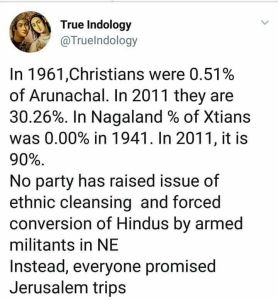
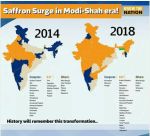
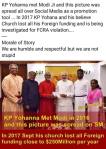

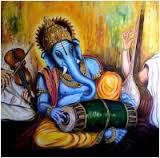






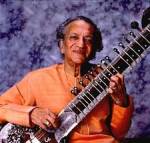
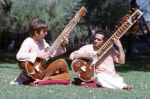
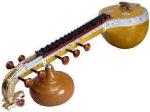
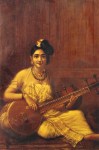
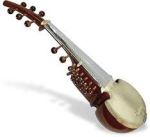
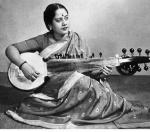

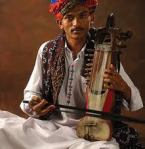
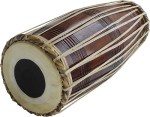
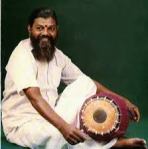


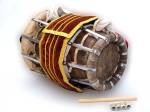






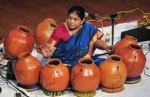
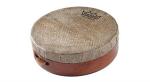





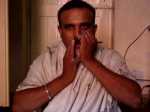
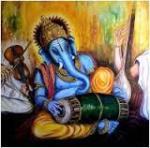
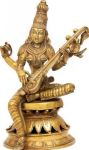
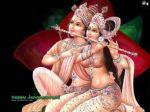

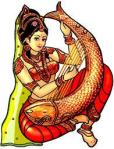

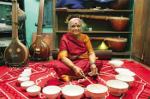
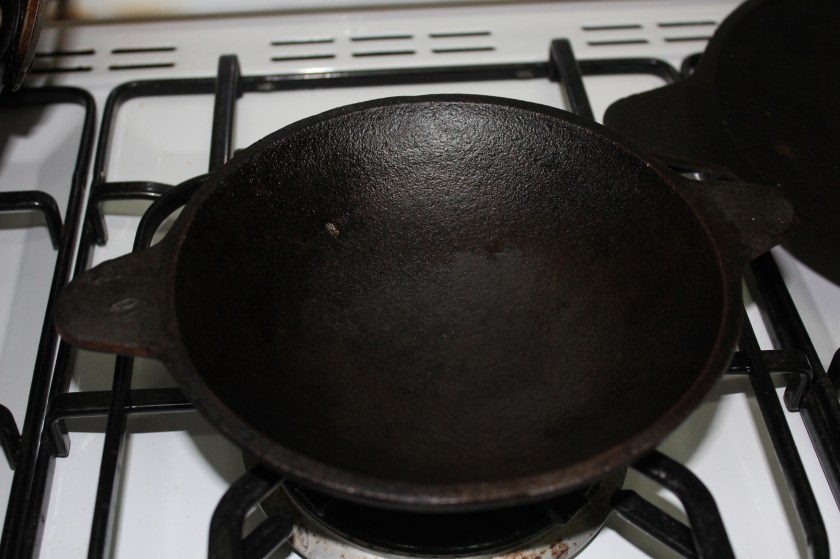





 vijiravindran's