(Repost of original blog entry of same title of date March 28, 2016 with due edits)…
***** ***** ***** ***** *****
‘Gandhi Kanakku’ in colloquial Thamizh translates to ‘Gandhi’s Account(ing)’ or ‘Gandhi’s calculation’ literally.
The origin of the dubious phrase remained vague. In Tamil Nadu, it was figure of speech widely in usage wherever accounts would not tally proper or when there was something fishy preventing closure (of matters). Bad debts/losses that could not be made good or ‘write-offs’ were referred to as ‘Gandhi Kanakku.’ A loan never returned. A hope lost. That was Gandhi Kanakku.
Why Gandhi. This kept playing at the back of my mind. Where was the connection and what was the logic. How could one attribute something as ominous as ‘Gandhi Kanakku’ to the Father of our nation who led us through the independence struggle with his non-violent Satyagraha.
This intriguing post cleared the air for me with respect to Gandhi Kanakku. How much of this is irrefutable fact is debatable. What follows is my good guess work with little evidence (sort of):
V O Chidambaram Pillai (aka VOC) was the first Indian to float a Swadeshi shipping corporation contesting the British which earned him the title ‘Kappottiya Thamizhan’ (the Tamil who floated a shipping vessel) in the year 1908. A lawyer by profession from Tuticorin (Thoothukudi, Tamil Nad), he was sentenced to hard labour in prison for a whopping 40 years during India’s freedom struggle movement. He was with Indian National Congress but was influenced by Bala Gangadhar Tilak and others (who Gandhi could have termed extremists) and fell out with the party on his release (granted early in 1912 before Gandhi’s return to India for good from South Africa).
When Pillai was behind the bars, his law practice licence was suspended by the British government. In the prison he was yoked to work the oil mills manually in the place of a pair of oxen, which made the Tamil poet-patriot Subramanya Bharathi shed tears of blood by way of verses,
(Did we raise this crop with water? No, Oh Lord, we nurtured it with tears! Can you let it wither?)
VOC ‘s health suffered, and family with it, which could have made him enter a plea bargain with the British (guess). Pillai’s legal licence was restored but he was barred from practising in Tuticorin. The shipping company had been liquidated in his absence from the scene, incurring huge losses.
V O Chidambaram Pillai and Subramanya Bharathi, the stalwarts of India’s Independence struggle in Tamil Nadu, hardly find a respectable mention in Indian history text books.
South Africa had a sizable Tamil presence, with Tamils having migrated to the continent as labourers chiefly who progressed to one of leading and successful (Indian) communities with whom Gandhi was well acquainted during his lengthy and remarkable residence there, when he represented Indians as legal counsel. The South African Tamil contribution is significant in the African nation’s struggle against Apartheid after Gandhi left for India.
Gandhi could not have made (personal) use of the donations given by South African Tamils meant for VOC’s family who were direly in need of help (the financial assistance amounting to some 5,000 INR, a fortune in 1914), but it is possible he could have held the funds and used the same for Cngress after (V O) Chidambaram Pillai withdrew from the (Congress) party. A chief reason could have been that Pillai was a Swadeshi like Tilak, Bharathi and Bhagat Singh.
Thus the account that must have been settled by Gandhi on his return to India from South Africa with V O Chidambaram Pillai was allegedly never settled. Hence the colloquial phrase that audaciously persists from the 1910s to 2010s – for over a century. Over course of time, the common man lost track of the origin of the word-phrase. No explicable rhyme or reason persisted. Nevertheless the idiom survived in the parlance of spoken language.
Let us take the case of Vijay Mallya We can say his bank loan repayment is now, Gandhi Kanakku. An other global Gandhi Kanakku: Lehman Brothers. What say Gandhi-bhakts?! ‘Gandhi Kanakku’ is like a local legend in Tamil Nad.
If indeed Gandhi had denied the legitimate and timely help to Pillai, then it must be viewed a grave crime. Pillai braved what no other Indian could dream at the dawn of the twentieth century. He spearheaded a bold and trendsetting Swadeshi movement in the south, sailing the first ever Indian merchant vessel, challenging the British.But Gandhi’s supposed treatment of Pillai is hardly surprising given his stern views on Bhagat Singh.
Did Gandhi dare to call the British ‘terrorists’ after the Jallianwalah Bagh? This is the flip side of Gandhi just like he remained indifferent to the interests of the South African natives who were ‘kafirs’ to him for a very long period of time (up until a little while before he set sailing for India).
Having read of his South African sojourn (‘Gandhi before India’ by Ramachandra Guha) I still hold Gandhi largely responsible for the state of affairs India is in today. Indecisiveness. Dilly-dallying. Complacency. That sums up Gandhi for some of us. Doubtlessly Gandhi was Mahatma, the Great Soul, with his endless patience, perseverance and his non-violent preaching all of which have more relevance in today’s world than ever before. At the same time, it might have been highly arrogant on his part discounting others’ ways and means of spirit and honest-sincere-selfless efforts as ‘extremist,’ overestimating his own false and fake ‘decorum’ with the British that was neither necessary nor helpful. An uprising could have easily dislodged the British from India, long before 1947.
Could Gandhi-Nehru have bet Subhash Chandra Bose to gaining independence for India by sheer strategy? The duo legitimized the British colonization-occupation thence. They gave the Angrez a face-saving honorable exit that Bose would not have. Win-win for both Gandhi-Nehru and the British.
Meanwhile we continue to refer to unaccounted money as ‘Gandhi kanakku’ in Tamil Nadu. Lately the 2G scam (starting with Bofors ) and others have joined the list. Remarkably all the involved parties are Gandhis (sic) (originally Ghandys these) !
Should Gandhi’s philosophy be applicable today, then the Indian State must be disbanding our armed forces and surrendering without terms to Pakistan and China to wait for them to relent in their own sweet time. In other words, Gandhi’s ideology should make us ‘sitting ducks’ direct in the line of fire. This is the ground reality Mr. Guha. Is Gandhi beyond reproach???
celebrating New Year the same day APRIL 14 every year: the Chola and Dharma imprint in South East Asia
The Unabashed Pride Of A Thamizh Hindu…
Something kindled up my memory about our long lost ‘Kudavolai’ (Kuda Olai) system of voting process, precursor to today’s Constitutional Democracy, dating back to Chola period (900 CE) in ancient Tamil Nadu. Democracy was put into practice in certain Hindu kingdoms with King as the chief ruler and his elected senate exercising powers of governance. Most importantly neither Christianity nor Islam had touched Tamil Nadu at this point of time.
Tamil text books introduced Kudavolai to me but without taking ample pride in it. Otherwise there seems to have been no mention of it in any national text book prescribed for school children.
Tamils never went on to perfect the system for two reasons: (northern) India came under Islamic reign before the British took over (there is a void in Tamil Nad history after the Chera-Chola-Pandya-Pallava era that lasted for over a millennium up until the 13th century CE.) As for Tamil Nadu, the Chola (Chozha) dynasty, the most renowned and resourceful one with lineage extending for over a thousand years, finally floundered followed by the Pallavas.
But not before Rajendra Chola became the only sea-faring king in Indian/Tamil history to conquer Kedah of today’s Malaysia (hence known as Kadaram Kondan).
This is proof to how developed and sophisticated the maritime trade-activities and armed forces and naval fleets were in ancient Tamil Nadu. Hinduism spread to Cambodia (Angkorwat) and Indonesia (Bali the reminder to this date) in this period.
Not surprising that Rajendra’s distant ancestor Karikal Chola had erected probably the world’s first stone dam on river Cauvery, the Grand Anicut (Kallanai) in 1st century CE which continues to irrigate the Cauvery delta in this 21st century.
The engineering, architectural and literary prowess of the great Tamil empires hardly find a mention in Indian history that celebrates and promotes Afghan (Taliban?) invaders like Babur who went on to demolish native Hindu temple, the birth place of our Lord Ram, whose barbaric action is defended today by converted Hindus (to Islam) sadly. Successful Congress governments managed to paint a rosy picture of Akbar to Shahjahan and Aurangzeb to Tipu Sultan who converted by the sword and by bloody wars, at the cost of underplaying Krishna Deva Raya of Hampi, Vijayanagar empire and Shivaji, the brave Maratha lion for instance. Not even the Gupta-Mauryas merit as much coverage in Indian history textbooks as these psychotic Moghul emperors who were none but Afghan descendants.
Unlike the north, the fag end of the Indian peninsula flourished with fertility and peace in every fold from lifestyle to culture and art and trade making south India a thriving and competitive center in the entire subcontinent, winning us a cherished place of honour in history. Cotton and silk weaving and paddy cultivation were customary occupations apart from stone masonry and even ship building. There was never a serious war in millennia. Only trivial battles between mostly peacefully co-existing neighbours. Quite like Bharat, considered one enigmatic entity of a mass of petty Hindu kingdoms, what comprises of today’s Thamizh Nad-Kerala was home to the famed Chera-Chola-Pandya dynasties and later to the Pallavas (coastal Tamil Nad) (Kerala was the Chera Nadu). (The Cholas ruled the Cauvery basin and the Pandya’s throne was Madurai, synonymous with the Meenakshi temple, a contestant for World Wonder).
Dating back to the 5th century BCE , the structured Tamil Grammar ‘Tolkappiyam’ surviving in tact for over 2000 years from Sangam Era of Tamil literary history could be more ancient than any other developed language of the west. Tamil language is the oldest world language on record and enjoys the Classical status.
Tamil Nadu has suffered the worst and partial treatment at the hands of NCERT text book drafters for decades. Hindu Tamil kings who held a powerful reign over the southern most region of India for over 1200 years never found an honourable mention in our national curriculum.
The Brihadeeshwara Temple (Big Temple) which is over 1000 years old that stands tall until today is one of the hundreds of thousands of architectural marvels that dot the south Indian terrainthat never got its deserving due as against mausoleums like the Taj Mahal (originally Tejo Mahalaya, a Shiva temple as some contend). (Qutb Minar retained the pillars of the demolished Hindu temple so not even the ‘sickularist’ Indian media can deny that it is raised on the ruins of a razed Hindu temple.)
As someone from Tamil Nadu who can never identify with the Taj Mahal as our national symbol, it is painful for me to see that Tamil history has been purposely brushed under the carpet denying my fellow Indians a chance to know about our glorious past.
Tamil Nadu was fortunate to escape the tyranny of the Islamists even if conversions by bribe and threat and brainwashing, to both Islam and Christianity have become rampant in the years since independence. Whatever I may criticize our Prime Minister Modi for, I have to give it to him for cracking down on unregulated NGOs flush with funds pumping millions of dollars into the nation for the purpose of conversion. Conversions might have gone down ever since the Bharathiya Janata Party (BJP) took over at the center, even if incidences like Kasargod surface now and then.
Why Tamil Hindu culture is important: for the preserving of ancient traditions of the classical dance, music and art and literary forms such as Bharatnatyam, Carnatic music, classical instruments like Veena and Mridangam and finally Dravidian temple and other architecture (such as Chettinad houses, etc.,) over anything.
There is no Tamil language or literature without Kamba Ramayanam and Siva Puranam. You cannot call yourself a Tamil scholar without singing the Thirupughazh and Thevaram and Thirumurugattrupadai and Naalaayira Divya Prabandham or celebrating the 64 Nayanmars and the 12 Alwars who find a pride of place in ancient Tamil Hindu temples.
Conversions extinguish everything native and original. What you may find or seek in lieu of pedigree heritage and cultural inheritance could be substandard import of foreign ideology that goes against the very grain of our motherland. No nation that eschews its native civilization can prosper as we are seeing from the fates of Afghanistan to African countries that strayed from their original cultures to embrace alien values on their own volition or by coercion.
Upholding of Thamizh Hindu culture is the way forward. Conversions are a bane for this reason.
The stone edicts of Tamil Nadu temples throw light on a parallel culture that prevailed in the south, far advanced and civilized than anything anytime comparable to Moghul India of the north.
The inscriptions unearthed at Uthiramerur in Tamil Nad reveal how superior ancient Tamil civilization was as far back as in 900 AD. The Kudavolai system where one had to inscribe in a parched leaf (dried leaf is ‘olai’ in Tamil) to be deposited in a pot (‘kudam’ in Tamil), the name of the committee/ward/council member to be elected for governance reflects how literate the Tamil society was.
I leave the rest to the reader’s inference. So the next time someone says, Democracy is a western concept handed over by the British to the rest of the world or is an invention of the Greek-Romans, throw the facts flying in his/her face.
I wish I had paid more attention to Kudavolai in my school days. Neither my teachers nor those around me inspired to learn more about it or take pride in Kudavolai.
I peeved for long that India lacked one qualifying factor even through its bloody history given our ancient heritage and cultured civilization spanning 4000 years – which was Democracy. The Kudavolai completely escaped my mind. Someone/something, contesting that India thought long and hard after independence to decide on adopting whether the American or British style of democracy reminded me of Kudavolai. I retrieved the word with a great difficulty from the back burners of my mind finally. Its long forgotten. It is like it never existed. Not even the so-called chest-thumping Dravidian dynastic parties have taken pride in the one truly Thamizh democratic process that predated the modern parliamentary system of governance both in the east and west. I understand, a few Hindu kingdoms in the north practised an equivalent version of voting process for election of senate/governing council/committee members.
With this post, I have managed to touch only the tip of the iceberg. Tamil Nadu is a virtual mine for researchers who may evince any interest in the multi-dimensional historic culture of the state. One visit to Kanchipuram temples and silk centers will suffice to convince anyone why native Thamizh culture is relevant and significant more than ever in today’s socio-political-economic context.
We regularly walk through the greeny green Museum of Islamic Art (MIA) Park, but following up the trail in day light is a visual treat like none other. Walking over the periphery covering gardens with exotic shrubs can stretch your daily walk upto about a robust 5 km but you may also take a detour cutting corners to a shorter distance of 2 km (not bad) if you so wish . Only you will be missing sight of myriad mynahs and chasing cats of all hues and sizes in the event. There are sweeping smooth grassy lawns peppered with trees transplanted from as far as the Amazon for partying and picnicking, and delightful play pens for kids, besides the crisscrossing walking-biking tracks and even a place of worship for believers, that make the park ideal weekend destination for families. There is ample drinking water and restroom facilities and further a cafeteria for light snacks and drinks.
When mercury soars to 51 C in this time of the year, you may hardly look forward to any outdoor activity, but MIA Park is as inviting as ever with its rich and breezy vistas that you don’t want to miss it even for a day.
Winter sights of the park bordered by a shallow sea on the rear merit a secondary write-up! December to February can see temperature dipping to as low as 4 C which is heavenly season. Crisp weather of perfect sunshine with intermittent balmy skies and a pleasantly chill air. Late evening walks are under delicately placed lamp posts and hidden lighting all solar-powered, subtly illuminating your way for you minus a glare. The skyline of Doha in either scenario is a treat from the far shore of the Corniche : beautiful in setting sun and lit up dazzlingly after sunset.
Walking through the lush emerald lawns, you may opt to climb a gently sloping knoll and/or stroll about the cobble stoned walkway meandering along the lazily lapping backwaters where water scooters to tourist ferry are regular recreational sport. Rocky boulders in the rugged sea coast define the contours of the park but are a pretty sight.
You may choose a serene spot under a shady tree (and there are quite a few date palms as well) or in the cool lawns or in the stony steps leading up to the sea waters to just unwind, read a book or relapse into a relaxing catnap… just like the feline creature snoozing right next to you in this heavenly abode…. Or you may simply follow up the trail for the very pleasure of walking through this paradise for health and fitness which is all the more invigorating and rejuvenating that you feel a lightness come over you…
Om Shanti ! Peace !
I salute the tiny state of Qatar that puts not only their citizens’ welfare first and foremost over everything, but also that of other residents (expats) like us. The quality of our life is greatly improved living for over 10 years now in this peninsular nation which is like a dot in the Persian Gulf .
My hometown is Chennai and once upon a time, we were touted to have the second most beautiful and longest sandy beach in the world. No more so, sadly. We in India are bestowed with natural gifts, but instead of appreciating our wealth, we depreciate it by misuse and mismanagement.
The kind of peace I feel walking around MIA park adjoining the sea in tandem with nature created with such a loving care in the midst of parched desert … is something I do not find in my own city/country. I cannot find a single uncluttered haven like this in Chennai where I can get lost. I cannot find a single secluded spot in my long seacoast to just stand over, gaze, ponder and laze about…. For such an absolute solitude and stillness and harmony with nature, I have to leave my city limits and travel over 60 km in ECR (East Coast Road). The degeneration of India in general and Chennai in particular pains me immensely.
Here are some visuals from MIA Park I would like to share with: Can you believe this is entirely man-made in Reclaimed Land from the sea. Doha is far greener than my city Chennai, feast to our eyes. Patriotism must not be a mere rhetoric. Nationalism must reflect in the way we nurture our nation and embrace nature, adding values – aesthetics and otherwise. Past lies in the past. Future lies right ahead. Today’s present will be our future history.
Museum of Islamic Art, Doha
Our walking trail starts right here after the car park…
the wharf…
the wharf with Doha skyline at a distance in the background…
Beautiful Doha skyline in the background…
Yes the Park and the Museum are entirely done in the reclaimed land
You can do the heights if you want to… here is the grassy slope…
Waterscooter thrills in the backwaters…
MIA in the bend…
American sculptor Richard Serra Art Installation : Minimal art, Magnificent structure
… weather and seismic proof….
Top angle view of the Richard Serra Art Installation…
en epic journey into the heart & soul of India via our native, eclectic fabrics & weaves…
Everyone says Paris is the fashion capital of the world. Or perhaps Milan is. Rome is. But if you ask us Indian women, we will say, India is the FABRIC CAPITAL OF THE WORLD. WEAVE CAPITAL OF THE WORLD. India may also be the ETHNIC HANDBLOCK PRINT CAPITAL OF THE WORLD. AND EVEN THE HOSIERY CAPITAL OF THE WORLD IN SPITE OF CHINA. No other nation on earth boasts of such a stunning range of fabrics and weaves of silks, cottons and blends (natural yarn) and none has the kind of Ethnic handblock prints and handcraft work that India has – hundreds or perhaps thousands of them strewn together right across the length and breadth of the nation sewing up a beautiful enchanting and magic carpet of colourful dreams. Handlooms still occupy a place of pride over mechanized textiles like rayon and polyester, the synthetic fabrics from the west. Indian cotton and silk BREATHE and are natural fiber. I love India for Her myriad colours, earthy native fabrics, weaves, ethnic motifs and traditional handblock prints and handwork as much as I love Her for Her ancient culture and heritage. INDIAN TEXTILES REFLECT OUR ORIGINAL CHARACTER AND INDIVIDUALITY.An open challenge to anyone to prove me wrong: come up with an equivalent exquisite fabric/print/handwork collection. Understanding the fabric of India may help one understand the very phenomenon and enigma called India.
Around the world Indians are going places as CEOs of multinational corporations, astronauts, medicos, scientists, mathematicians, engineers, teachers, nurses, techies… but if you look at the way we lovingly weave and wear, you will know why we Indians are able to make it good anywhere. Where does the inspiration spring from? Here is a peek into India’s Soul.
Pictures courtesy (!): Google Images
PART I : FABRICS AND WEAVES/THREADS OF INDIA
I confess to bad taste in clothes, wrong accessorizing and mismatch of colours so I must be the last person to attempt something like this. Still I wanted to document the varied, diverse fabrics of India as much (as I could recall) with their unique local dyes/hues and ethnic motifs. The kind of fabrics we have here in India is matchless, the desi cotton is our trademark. To others, clothes are matter-of-fact. Not for us Indian women. Every suit or kurtha/kurthi or top or a sari or even a salwar or pant an Indian Nari dons has a background woven into its history, with specific intricate details. Even in foreign labels like Marks & Spencer etc. abroad, we find the fabric happens to be basically Indian with finishing (tailoring) done in UK. Same may be true of Italian clothes as well. Chinese cotton is smoother than Indian with a clean machine finish: something that Indian fabrics may lack but that is exactly our plus point. Chinese cotton to me is one more industrial product. Never applies to my senses. Our desi pure cottons and cotton blends are coarser. Bangladeshi (Bengali) cotton could be the closest match. I also love the Pakistani lawn (as they call cotton) but I am not for their crowded patterns/designs. The fabric is super fine and flowy. The Pakistanis do not simply have the stunning range of fabrics that India presents to the world. So these are the four countries that dominate the world cotton and fabric market today.
Here I set about exploring what little I know from the fabric world. State-wise if possible.
KANJIVRAM, THE QUEEN OF WORLD FABRICS IS FROM KANCHIPURAM, NEAR CHENNAI, TAMIL NADU, INDIA. PREMIUM & NO. 1 SILK IN WORLD
KANJIVARAM, THE PRIDE OF INDIA
Let me start with Tamil Nadu, famous for its Kanjivaram silks (aka Kanchipuram or Kanchi), Arani silks (second grade), Chinnalapattu, Dharmavaram. These are just the silk varieties from my home base. Cottons include Chettinad and Coimbatore and Madurai. Wedding silk cannot be less than Kanjivaram silks for south Indian brides. Prices may range anywhere between 2,000 rupees to lakhs of rupees.
wedding silk
regular Kanjivaram silk
wedding Kanjivaram silk from Kanchipuram near Chennai
world’s most expensive silk sari – hand woven
Kanjivaram
Kanjivaram silk fabric
World record holder for maximum number of colours handwoven into a single Kanjivaram silk sari (or any garment)
Kanjivaram handloom silk weaving
Silk showroom in Chennai
a silk sari showroom at Kanchipuram, near Chennai
my favourite silk shop RMKV in Chennai
You have to be real rich if you want to stitch a suit in Kanjivaram silks. I do that once my silk sari ages. . For all special occasions and family weddings, silk is a must for us.
For paucity of space, I am leaving out the other silk varieties from Tamil Nad. Kanjivaram is most sought after through out the world. (In any case this is going to be one very long post). There are tourists who visit Chennai for the sole purpose of shopping for silk.
Coimbatore cotton sari from Coimbatore
Coimbatore cotton suits
Chettinad cotton saris from Chettinad
Chettinad cotton suit with Kalamkari (handpen) work patiala salwar and dupatta
Madurai Sungudi Cotton sari: light as feather; reminds me of my dear dear grandma.
Silk and Cotton make an interesting blend in various ratios. That gives rise to hundreds of different cotton-silk tissues that are every woman’s delight. Jute Silk, Raw Silk, Silk Cottonare hot favourites.
raw silk (the uncurated rough silk)
Jute silk, the latest craze
kora cotton-silk
silk cotton where silk thread count exceeds in good measure like some 60% . Prices go up as silk content exceeds cotton content in cotton-silk fabrics
jute-tussar silk suit material
jute-tussar silk suit material
raw silk with embroidery work
silk cotton (aka cotton silk)
raw silk suit
So here I have merely covered the silk and silk-cotton blends from my home state sans any handwork like embroidery or mirror or bead work. Also leaving out dyeing works like tie-and-dye, Kalamkari like fabric paints, block prints etc that I shall try to cover under ‘Prints of India’ (part II). My first section to deal with only fabrics.
HOSIERY INDUSTRY OF TAMIL NADU: TIRUPUR
India (Tamil Nadu) may be the world suppliers of Jockey to Victoria’s Secret and other global brands when it comes to underwear. You may go for premium inners from Australia to America but remember all of them come from Tirupur textile units. Mostly. Only you end up paying 10 times more in the west for the under garments made in India.
packing mens vests Tirupur garment factory
Your designer underwear may actually be originating from Tirupur, Tamil Nadu, India 😀
Tiruppur : world’s leading producer exporter of ladies braziers
Tirupur: world’s leading exporter of designer bras
Tirupur : world’s leading exporter of cotton T shirts men and women (branded and resold by importers)
INDIA ALSO COULD SHORTLY CLAIM TO BE THE DENIM CAPITAL OF THE WORLD INCHING PAST BANGLADESH SINCE THE ERA OF EXPORT TRADE TARIFF BENEFITS EXTENDED TO DENIM MANUFACTURE IN BANGLADESH AND PAKISTAN DRAW TO A CLOSE. I AM LEAVING OUT DENIM FROM THIS POST OWING TO LACK OF SPACE.
A typical Pochampally with Ikat print from native Andhra
Mangalagiri cotton from Mangalagiri near Vijayawada, Andhra Pradesh
Mangalagiri cotton
KARNATAKA: MYSORE CREPE SILK
Next Karnataka famous for its soft Mysore silk Crepe. As the name suggests, it is the only synthetic mix among the sea of pure silks and cottons otherwise you find in India.
Mysore silk crepe from Mysore – finesse at its best… a must in every woman’s wardrobe
KERALA: KASAVU
Kerala bride has to marry only in Kasavu sari whatever be her economic status. In all special occasions/muhurats, women in Kerala dress up only in off-white.
Kerala Kasavu saris
Kerala Kasavu mundu and Kalidar skirt
Kerala Kasavu salwar kameez suit with dupatta
GOOOAAA !!! MELTING POT OF MANY AN ETHNIC HANDBLOCK PRINT AND FABRIC FROM ALL CORNERS OF INDIA
Haven’t heard of anything such as Goan fabric. Rest of India fabrics get a new style in Goa to suit the tastes of visiting foreign tourists.
Colourful Indian fabric at the Anjuna Flea Market, Goa
flea market in Goa
local Goan Ikat print in cotton
MAHARASHTRA: PUNE COTTON, PAITHANI SILK
Maharashtra is famous for its Pune cotton. It is a very refined cotton compared to South Cotton.
Pune cotton sari from Pune, softest Indian cotton sari
Pune cotton suit
Bridal Paithani silk sari
handmade paithani silk saris
MADHYA PRADESH: CHANDERI
Chanderi silk and cotton are from Madhya Pradesh. Very popular with Indian women. A unique fabric going with a matching local ethnic print.
Chanderi silk from Chanderi
Chanderi silk fabric
Chanderi Silk Jacquard
Chanderi silk cotton
Chanderi cotton silk sari
Chanderi silk sari
Chanderi cotton suit
Chanderi silk anarkali
Chanderi cotton
Chanderi silk shawl – prized collection in every woman’s wardrobe
UTTAR PRADESH: BENARASI (Of course!)
Just as a south Indian bride may not marry in anything other than the coveted Kanjivaram, a north Indian bride may not marry in anything less than Benarasi.
Benarasi silks and cottons from Uttar Pradesh
World famous Benarasi silk fabric
Benarasi silk fabric from Varanasi, Uttar Pradesh
Benaras silk sari
Benaras silk cotton Patola
Benaras silk cotton
North Indian bride in Benaras silk lehenga choli
Benaras silk lehenga
North Indian bridal dress: Benaras silk Lehenga Choli
BIHAR: BHAGALPURI AND TUSSAR
Note: Tussar silk is also weaved in Bengal.
Bhagalpuri from Bihar, next. Tussar is another unbeatable Bihar’s specialty. I have to confess, of all silk weaves, Tussar is my No.1 favourite. Tussar silk with hand embroidery is my favourite.
Bhagalpuri silk with mirror work hand embroidery
Bhagalpuri silk sari fronm Bhagalpur
Bhagalpuri cotton
Bhagalpuri cotton suit
Tussar silk sari
Tussar silk sari from Bihar
Tussar cotton sari
Tussar silk cotton sari
Tussar silk suit material from Bihar
Tussar cotton kurthi (Fab India 😀 )
Tussar silk-cotton blend kurthi
Tussar silk kameez
Tussar silk suit
Tussar silk fabric
Tussar silk fabric
ORISSA: SAMBALPUR, BOMBKAI
Oriyan Sambalpuri is something I haven’t collected so far. Pending.
Sambalpuri silk from Sambalpur, Orissa aka Odisha
Sambalpuri prints
Bomkai cotton is tribal Oriyan cotton
Oriyan cotton with local Ikat print
Applique work wall hanging from Odisha. The state is popular for fabric arkwork
Bedding from Oriya in cotton prints
RAJASTHAN: KOTA & JAIPUR COTTON, BANDHEJ (BANDHANI)
Jaipur kurthis are most affordable, very reasonably priced, with hand prints (like block prints). Very popular with Indian teenagers. Kota saris are most preferred cotton saris for working women.
Kota sari from Rajasthan
Kota sari
Kota fabric with Bagru hand print
Tie & Dye Jaipur cotton kurthis
Jaipur Kurthi from Rajasthan
Jaipur kurthi from Jaipur
Kota Doria
Popular Jaipur Digital print
Rajastani Bandhani silk saris
GUJARAT: SURAT COTTON & KHADI , BANDHEJ (BANDHANI)
Surat pure cotton from Surat, Gujarat
Surat cotton
Surat cotton suit
Surat cotton kurthi
Khadi – handloom made popular by Mahatma Gandhi, father of the nation
Traditional Khadi kurti
Gandhiji could have advocated humble cotton Khadi but what I love is the chanceless Khadi silk 😀
In my working days I mostly draped a Bengal cotton sari at least once a fortnight to office. Favourite with working women. Bengal cotton suits, again a favourite. As I have covered Tussar under Bihar and Jute under silks of Tamil Nadu, I am giving them a miss here.
Bengal cotton ideal for fabric painting
Bengal cotton with Kantha (thread) work handwoven
Handloom Bengal cotton with Jamadhani
Bengal cotton suit
Bengal cotton suit
Baluchari silk from Bengal
Interwoven tales in Baluchari Saris….
KASHMIR: KASHMIR SILK, MATKA SILK, PASHMINA & CASHMERE WOOLEN AND RUGS AND CARPETS
Pashmina from Kashmir, world famous shawls
Pashmina-Viscose shawls from Kashmir
Kashmiri Pashminas
Matka silk from Kashmir
Matka silk kurthi from Kashmir
Kashmir silk kurta
Cashmere original from Kashmir, India
Traditional Kashmir carpet – another world famous export
Kashmir Rug
Kashmir Pashmina weaving
Pashmini shawl draped over Kashmir silk sari: typical
Kashmir silk sari
ASSAM: MUGA SILK & TUSSAR SILK
Muga silk from Assam
Muga silk
Muga silk
Muga silk kurthi
PUNJAB : KNIT WEAR & SPORTS GEAR, PUNJABI COTTON
Phulkari work Patiala salwar kameez from Punjab
Jalandhar sweaters from Punjab
Sweater from Jalandhar
Jalandhar sweater
Ludhiana sports shoes
School and sports knitwear from Jalandhar
Punjab pants for women
PART II: ETHNIC HANDBLOCK PRINTS & MOTIFS
AND NATURAL DYES OF INDIA
DABU PRINT FROM RAJASTAN / HAND BLOCK PRINT
Dabu print Kurthis are very popular with women. Handblock bed linen from India equally popular in fashion houses around the world, priced exorbitant.
Dabu blocks
Dabu printing
Dabu printed fabric
Dabu print kurtha
Dabu print sari
Dabu print top
Dabu print waist coat
Dabu print
Dabu print fabric
hand block print in progress
handblock quilt
handblock bed linen
handblock quilt
PHULKARI FROM PUNJAB
Phulkari hand embroidery from Punjab
Women knitting Phulkari embroidery in PUnjab
Phulkari embroidery in progress
Punjabi women weaving Phulkari
Phulkari fabric
Phulkari shalwar
Phulkari Joothi
Phulkari Joothi (slipper) handmade
KOLHAPURI JUTIS FROM MAHARASHTRA
JODHPURS FROM RAJASTAN
Kolhapuri Handmade Leather Jutis (Footwear) for Men & Women from Kohlapur, Maharashtra, one more Made-in-India produce that is world famous designer collection. Jodhurs from Rajastan originally need no introduction.
Kohlapuri leather
Kohlapuri
Jodhpurs Women’s
Jodhpurs (men’s boots)
AJRAKH PRINTS, KUTCH, GUJARAT
Ajrakh block prints from Kutch, Gujarat
Ajrakh print fabric
Ajrakh print dress material
Ajrakh print quilt
Ajrakh print shawl
Ajrakh print bag
BANDHANI PRINT FROM RAJASTAN, GUJARAT, KASHMIR
TIE & DYE
BATIK
If Kanjivaram and Tussar are my silk favourites, Bandhini is my No.1 favourite hand print. I have Bandhani in everything: silk, cotton, georgette-crepe be it sari or kurti or stole.
Bandhini dyes
Bandhani print
Bandhani print
Batik
traditional bandhani
tie & dye
In thing now: bandhani leggings
bandhani stole
Bandhani print skirt
Bandhani shawls
Bandhani kurta
Bandhini print in sari
Eclectic batik bed linen
Bandhani bed linen
KUTCHI MIRROR EMBROIDERY (MUTWA) FROM GUJARAT
Kutchi mirror work embroidery (Mutwa)
Kutchi woman weaving mirror work
Kutchi woman from Gujarat in traditional Mutwa mirror work hand embroidery dress
kutchi blouse
kutchi mirror work embroidery from Gujarat
Kutchi clutch 😀
APPLIQUE WORK (PATCH WORK) FROM ODISHA (ORISSA)
Applique work from Orissa
Applique worker in Odisha
Applique handicrafts
Applique dress material
Applique sari
Applique quilt
BAGRU PRINTS FROM RAJASTAN (JAIPUR)
Bagru is one more hand block print very popular with women.
Bagru print blocks
Bagru block printing
Bagru block printing in progress
Bagru block print from Jaipur (Bagru). Rajastan
Bagru block print kurti
LUCKNOWI CHIKANKARI FROM UTTAR PRADESH
This is another addiction of mine.
lucknowi chikankari embroidery
women in Uttar Pradesh making chikankari embroidery
chikankari kurta
chikankari sari
Hehe this is my collection of Chikankari kurtas. I have a good collection of cotton chikankari short kurtis in Chennai that i mostly pair with Patialas, my trademark regular attire
IKAT PRINTS FROM ANDHRA, ORISSA, GOA AND OTHER STATES OF INDIA
IKAT TRIBAL PRINTS & MOTIFS
Many states in India weave Ikat in different local fabrics like silks and cotton. Ikat is very much in fashion everywhere. Some Ikat prints here.
KALAMKARI FABRIC PAINT FROM ANDHRA PRADESH: SEEMANDHRA/TELENGANA
NO other Ethnic work is as contemporary now as Kalamkari (and Ikat).
Kalamkari hand painting on fabric in progress
Kalamkari fabric painting is traditional and divine art for Hindus
Andhra Kalamkari hand painting in Madhya Pradesh Chanderi silk fabric- the beauty of India
Kalamkari silk sari
Kalamkari kurtas
MADHUBANI FABRIC PAINTING FROM RAJASTAN, MAHARASHTRA & OTHER STATES
women painting Madhubani
Madhubani fabric paint work in Khadi cotton
Madhubani art
Madhubani fabric paint work in a silk shawl
classic Madhubani fabric paint kurthi
KHARI PRINT FROM VARIOUS STATES
Khari fabric print
Khari print kurthi
MADRAS CHECKS FROM TAMIL NADU
One more World standard from Madras, Chennai. Next time you wear a checkered shirt, remember, it is named after Madras from its famous ‘Lungi’ check designs. If Kanjivaram is for women, Madras checks are for men. GET INSPIRED. WEAR MADRAS ON YOUR SLEEVE WITH MADRAS CHECKS!
Madras Checks: right on your shirt 😀
SUNGUDI FROM TAMIL NADU
Sungudi is soft cotton from Tamil Nadu and Sungudi dying is unique and favourite especially among senior citizens. My granny always draped only a Sungudi cotton sari with sungudi dyed prints. Brings back loving memories of her. I do have sungudi kameezes, softest as they come.
Sungudi weaving
Sungudi dyeing
A Tamil woman in Batik cotton and Sungudi cotton & dyed saris
Sungudi dyed saris in sungudi cotton
ZARDOSI/ZARI WORKS ACROSS INDIA
Zardosi works in North Benarasis and Gold/Silver Zari borders in South Kanjivarams:
Zardosi work North India
Zardosi on Lehengas with Zardosi Juti
Zardosi on blouse
Kanjivaram gold border (gold threaded)
Kanjivaram silk sari with zari
Gold (thread) zari of Kanjivaram pure silk from Tamil Nadu
Kanjivaram silk sari pallu with gold/silver zari
Marriage of North & South: Benarasi Zardosi work blouse with Gold Zari Kanjivaram silk sari priced at Rs. 6 lac reportedly
GOTA PATTI FROM RAJASTAN
Gota Patti work in progress
Gota Patti work from Rajastan
Gota Patti Kurtha
KANTHA & JAMDANI WORKS FROM BENGAL
Kantha work from bengal
Kantha worked shawl
Heavy kantha work sari
Jamdani work in progress
Jamdhani weaving depicting Ramayan
Jamdani weave from Bengal
Bengal silk with Jamdani weave
Bengal sari with Jamdani work
…….
and on and on and on……..,
There is much more. Suggestions/Corrections/Improvements welcome. Would like to add to this collection of mine 😀
But before I stop, want to add this: Some cotton varieties from India may need regular starching. Some silks may need dry cleaning. Following the wash instructions is very important when it comes to fabrics/clothes from India with/without ethnic hand work. Not only the weaves, even the dyes could be delicate. Exercise caution for wash.
What a stunning range of fabrics and weaves we have in India: from feather weight muslins to class Kanjivaram pure silks to roughly hewn Khadi cottons. A staggering array of dyes mostly natural/vegetable. Put together the desi flavour of ethnic motifs of each district from every state: and work out the permutations and combinations. There you go! And I have not even covered a fraction of the ocean called Indian Textiles world. This is just the natural fabrics. There is the other world of synthetics like Georgette, Crepes, Polyester, Nylon, Rayon, (Denim) etc., etc., that I do not even want to attempt…
So that can give you an idea about India. It is not about mere fabrics. It is not about just dyes and ethnic prints and motifs. It is much more than all that. None can summarize India. I am trying my bit that’s all. May be I have managed some 0.001%.
I do not want to comment on others but I find Chinese materials very inferior and artificial and cold and classless and without a character. Plain. But very, very flexible. That I have to give to the chinese: for marketing themselves best and for catering to every taste and for being most flexible and economical. Well, Indians cannot afford to be like that. India is too complex if this post of mine is any indication.
As for Pakistan lawn, I like the fabric but I find it very plain and uninspiring. Designers and designs are similar and predictable. No individuality. Cotton on the other side of Punjab is surprisingly soft (or probably imported) compared to the cotton that grows on this side of the Atari border. Pak lawn makers mix at least 10% of synthetic yarn with their cotton. 100% virgin cotton is hard to come by. No special weaves or patent-worthy content like we have in India.
I guess most Indian desi original pedigree fabrics/weaves/threads/textiles/handblock prints are now patent protected, with Geo-Patent. For instance Kanjivaram silk saris from Kanchipuram, near Chennai.
Even our clothes should have a character. At least that is what I believe in.
As for Europe and America, they import fabric from India and China (also Bangladesh, Pakistan) and do the finishing (tailoring), customizing them to their regional tastes. Just as India is the back office of the world when it comes to the IT industry, India is also behind the fashion scene of the world very much although you may never guess…
some 5 elephants, 3 in the front row and 2 behind for Sri Bhagawati temple vela (pooram), cherukulangara, Thrissur – day March 28, 2013
(Originally published the 7th of April, 2013 in a private blog . Edited and Reblogged )
I have always been awed by the Pooram festivals of Kerala, my neighbouring state. The most famous one that attracts hordes of both local and foreign tourists is the Pooram Festival of Shri Vadakkunathan Temple in the town of Thrissur. This mega temple festival that falls in the end of the month of March stars over a dozen elephants parading the Temple Deities in hot, merciless summer sun of India to the loudest blares of ‘Pancha Vaadhyam’ – the five traditional desi musical instruments comprising drums and trumpets.
A devout Hindu, i am at loss to comprehend the logic behind this heartless, mindless cruelty inflicted upon these most beautiful and wisest beasts on face of earth, the elephants, in the name of religion.
Imagine what could happen to jumbos trotting barefoot in intense heatwave of over 40 C (over 100 F) with capstans weighing in tonnes on their breaking back, in front of tens of thousands of frenzied crowds to the ear-splitting thumping of the Pancha Vadhyam, with firecrackers bursting nonstop through the celebrations? Won’t the elephants feel claustrophobic in the first place for their size, away from their natural wild habitat?
During one of my trips to Kerala, I could attend the Pooram festival of a very small and beautiful temple in Thrissur – the Bhagwati temple of Cherukulangara. Even in this small event, some five elephants partook in the festivities. March was closing with April starting, and already the mercury was rising rather menacingly.
In the evening came the rudest shock: I was in the temple where in the backyards i saw the five elephants with feet chained loosely (the elephants i must admit looked healthy, well fed (which was a small consolation) and were not chained stiff; they could still amble about and i was relieved they did not look alarmed or disturbed. While Shakthi and Shiva are who I look upon like my beloved, respectful and benevolent parents, I wonder whether the same Mother Goddess of mine and the Father would approve of such inhumane torture and cruelty meted out to defenceless elephants in the name of religion in their holy abode.What is this other than man-invented frivolous ritual? ) The elephants were quietly feeding on leaves and fruits and seemed relaxed that somewhat pacified me. Given the hysteric beating of drums and the creaking of loudspeakers in highest decibels, i was slightly agitated. After all it was my first ever LIVE Pooram! (In Bhagwati temples (Devi temples), Pooram is referred to as ‘Vela.’)
Elephants are mammoth species that subsist on vast swathes of moving space. That is how nature makes them as well as any other wild life: nomadic and free-spirited. How claustrophobic the gentle giants must feel within the confined spaces and congested quarters with granite flooring and barred ventilation, having been ‘tamed’ and ‘taught to obey’ with the ‘tanda’ (stick)?
The time was around 7 pm in the evening and then started the fireworks. My heart skipped a beat but maintaining a cautious distance from the elephants I still fixed my gaze on them to check if they were okay. Thank God a million, the elephants seemed disinterested in the noise, the sound, the fanfare and continued feeding, unperturbed by the 500 wala and the 1000 wala crackers lighting up the skies for the next 1 hour or so. I went back to my friend’s house in haste and even from a distance of 1 km could hear the bursting of the crackers.
That night my friend, a native of Thrissur, and I were talking of the fate of elephants in the country for a long time. Mad pachyderms running berserk, going on rampage in our temple towns is not rare today in India especially in the state of Kerala. Under-fed in many cases in unbearable heat conditions, with their ‘mast’ season ignored and mating denied, where and who else can these giants vent their ire on?
What is the point in touting that some of us are vegetarians if we can knowingly inflict so much harm on other living species without an ounce of guilt.
Very few countries in this world are blessed to have elephants as native beasts and India is one such a rare country. I feel blessed for this reason that ours is this ‘Punya Bhoomi’ where lions, tigers and elephants roam freely perhaps only next to Africa. We are lucky in the sense that in spite of all the self-inflicting damages we do to ourselves, we have a few of them still (luckily)surviving (and even flourishing as in case of Bengal Tigers and Gir Lions) to this date. The Moghuls, the Maharajahas and the British occupiers have all had their share of trophies and the cheetah is long gone extinct since the British Raj days thanks to relentless hunting. A few leopards are all we are left with in the extended cat family. So its the first and foremost duty of every Indian citizen to ensure that these elephants, tigers and lions and leopards are treated with utmost care lest they might go extinct right in front of our eyes. And in the event of such a worst scenario becoming a reality, we can not excuse ourselves ever for the deliberate lapses that we never try to correct… I for one thing cannot imagine an India without elephants… its too much for me… But the wild life population in India is dwindling at an alarming rate. Often I wonder, why God did not plant elephants as native species in America and/or Europe where they might be loved and cared for and best looked after (in present times)?
Do we Indians realize what a bountiful gift God has bestowed upon us? What an insensitive lot we are…
While i have been awed simultaneously by the Pooram festivals i have watched in television over years, somehow it’s always been playing in the back of mind that this madness must stop sooner or later, at any and/or all costs. Grateful to acknowledge, a good number of Keralites share a similar line of thought as mine. Except perhaps for the temple ‘Devaswoms’ of Kerala and a few oldies, i don’t believe anyone wants this ritual to continue with all their heart. Still it is even more complex now than ever before to draw curtains on this cruel custom as even churches and mosques in ‘God’s own country’ have joined the bandwagon to count on elephants to find an expression for their overt-religiosity.
I have not been to the Mysore Dushshera either which is held annually in the Mysore Palace Grounds on the final Vijayadhasami day of the 10 day Dushshera Festival (as Navrathri culminates to the climax closing throughout India), one of our major national/religious festivals.
In the ‘Dubare’ elephant camp in the state of Karnataka, i was told the elephants in the camp would be partaking in the annual Mysore Dushshera. To be fair to our Forest Department, i concede, the elephants in this camp looked healthier too and well-fed, taking a daily dip in the river Kaveri that flows through these parts.
Later I learned, elephant calves in the forests of Kerala and Karnataka are routinely trapped and captured for the sole purpose of domesticating them to serve in temple festivals and Mysore Dushshera.
I have taken elephant rides in Thekkady and Munnar in Kerala, where domesticated elephants are used for elephant safaris and admit that I have enjoyed these rides. I was of course told these are the elephants that strayed from the forest cover as young calves. The ‘kumki’ or the trainer elephants are sometimes used to tame those wild rogue elephants that may stray into neighbouring/bordering villages destroying standing crops.
There is elephant safari even in Singapore Zoo (last heard it is scrapped). In the zoos of Kuala Lumpur, Malaysia and Doha, Qatar, i was pleased enormously in the first instance to see the Indian elephants enclosures, a natural reaction. While in Malaysia, the elephants looked happy, in Qatar desert heat, the single lone Indian elephant seemed to be reeling under the extreme temperature and climatic conditions …. it looked so bored that I wanted to touch it and make it feel better … The elephants were gifts from India by the then Prime Minister Mrs. Indira Gandhi on her diplomatic visits to these nations. What a gruesome (!) idea of diplomacy. Are elephants private properties to be gifted or traded in?
In Mysore zoo, the elephants are faring better, thank god for small mercies. Perhaps this is the only zoo in India where the elephants are treated fair. Weather seems to suit them and they are breeding well. I have no complaints for a change on this zoo.
Even so the typical diet that a domesticated elephant may be fed with is not what it may chew upon in the wild: leaves and twigs and fruits and melons and even barks and shoots from trees and bushes. Instead what do we feed our pet elephant: jaggery balls and coconuts!
In Tamil Nadu, I am aware of some temples hiring elephants for festival season. As a young girl, I have seen bedecked elephants walking down our streets asking for hand-outs, led by their mahouts. The unthinkable scene of an elephant walking a busy street can happen only in India, even as cars and scooters ply by without stopping to take a second look… I don’t know whether to be amused by that or feel sad….
Man-elephant conflict is forever on the rise because the elephant corridor in India is shrinking at an alarming rate and the water holes that are feeding and breeding spots for elephants are fast drying up. The beasts therefore have no option than to walk into human habitat foraging for food especially in scorching summers .
Here is an interesting article on an elephant photographer:
I share very much the photographer’s sentiments – like for him, the elephant is my most favourite beast on planet Earth. I also worship (!) elephants hahaha because i am a Hindu and to us, all animals and plants and even inanimate objects that help us in our lives are Gods, and elephant is our special god Ganesha Himself and none other!!! I honestly see such a divinity in cows and elephants – may be because i have been brought up with such beliefs and may be because their benign nature seems to affect and touch my soul …
I can also understand fellow Indians’ emotional, spiritual attachment to elephants – most look at an elephant as a divine creature – which could be our greatest probem! And we are one of those families that still leave milk for snakes in Shakthi temples ! Our love and devotion and REVERENCE for animals is so very complex, complicated that we are causing them more of harm and making their existence miserable, a fact we are oblivious to.The monkey menace in New Delhi and other cities of ours and the wandering cows in highways of India are glaring examples of what blind faith can do to a population.
My sincere wish is that, let the Pooram festivals of Kerala go on from millennium to millennium, but please play up the ‘pancha vaadhyam’ – the 5 musical instruments to the hilt and free the elephants into the wild where they belong ! This is what Lord Ganesha will want you to do, fellow Hindus, Kerala temple Dewaswoms, will you ever get it? The Pooram festival and the hapless trained elephants are big time money-spinners for Kerala tourism. The mahouts have to be educated and weaned off the vocation in a phased manner first followed by rehabilitation. A very complicated and sensitive matter we have here at hands – that which could have repercussions on the thriving of the local economy: a socio-political issue that presupposes a careful strategy on in-depth study and a smooth maneuver.
For those who would like to make parallels between Jallikattu and Elephant tourism: DON’T. It is not fair or equal.
I wish we have legislation introduced in India forbidding training of elephants for religious purposes and processions and ban on elephants from being raised as pets in wealthy homes or from being gifted to foreign countries where their adaptation could prove to be traumatic given the hostile local environment. I wish there is a statute that prevents capture of elephant calves from the wild and one that returns the domesticated tuskers back to where they came from: the wild.
And remember elephants are NOT our toys to play with and use for our amusements. I am guilty as anyone here for enjoying the song ‘Jiya Jale’ pictured with the elephants in the background… but i wish this cruelty stops forthwith… enough is enough…
And what is the need to get elephant calves from the wild to be trained by the ‘kumkis?’ Let every single elephant calf or rogue elephant that strays into human habitat in this country be sent right back into the wild. Elephants are very much social creatures that roam about in groups, not ‘lone wolves.’ Separating them from their herds is enough to break their spirit in one swift blow.
Elephants belong in the wild, elephants are very wise, sensitive, sweet creatures… let them have their bit of private space on Planet Earth like you and me… its their birth right. Think of the world WITHOUT ELEPHANTS… can you?
**This post excludes the serious issue of Elephant poaching, very rampant in Africa and also to some extent in India (or generally Asia). Recommended reading: ‘The tusk that did the damage‘ – a fictional work based on real life events, authored by Tania James. Poaching for tusks poses the gravest risk to elephants of both Asia and Africa, threatening to drive them down to near extinction in a very short span of time in future – say some 20-30 years.
**This post neither takes into account the elephant deaths recorded in India due to electric shocks sustained from electrified fences of farmers (thoroughly illegal) and rail accidents in elephant corridors.
continuing tragedy of farmer suicide in India… who is responsible?
This is a post I blogged private (original date of publishing: August 6, 2014) but in the heat of ‘Jallikattu’ protests would like to revisit the issue: Below is a reproduction of my original blog post with little editing here and there.
‘Karuvelam’ trees also known by the name ‘Veli Kathan Mullu/Maram’ (the trees that are fences) were once the rage of rural Tamil Nad. These are easily breakable firewood found aplenty throughout the state. What we did not know of them was that, these trees were NOT native to India/Tamil Nadu. It was easy to have them in our villages for the dual purposes they served: cheap fuel and the much-needed thorn fencing they provided without requiring watering or nurturing. Veli Kathan Mullu was no fodder for cowherds/goat herds, unfit for grazing that made it farmers choice.
There is a conspiracy theory doing rounds in recent times, that in order to off-set India’s record farm productions, to make us a foodgrain importer, some vested ‘western’ interests got the species clandestinely to Indian soil. After 3-4 decades the effects – disastrous – are already showing. The water-table has since depleted to alarming levels and the rainfall to southern districts has receded to a bare minimum. Research established ‘the culprit’ behind the debacle of once-fertile agricultural farms turning into parched dry lands – the ‘Karuvelam’ trees ( botanical name ‘Prosopis juliflora’ ). There is also another theory going that Tamil Nadu’s Congress Chief Minister Kamaraj introduced the vegetation to the state in drought times to provide for cheap fuel in the countryside. Whoever is responsible, the damage is done and the effects are now devastating.
Now finally efforts are on to root out the trees completely from native soil and try cash crops first to air and test the soil and bring to it a fresh lease of life.
சீமை கருவேலம் எதிர்ப்பு இயக்கம் / Juliflora tree abolish movement.
This page is in Tamil and the posts in the page allege that the US is indirectly engaged in biological warfare in India, no less.
Links from the page (videos are in Tamil) explain how detrimental the trees are to Tamil Nadu agricultural holdings and even to our entire eco-system. Without mincing words, the page and videos blame the western forces for the invasion of these ‘alien’ trees in our midst.
LEARN ABOUT BT COTTON AND OTHER Genetically Modified (GM) CROPS/SEEDS AND KARUVELAM TREES FROM THE FOLLOWING VIDEO AND HOW A PLANNED ORCHESTRATION OF BIOLOGICAL WARFARE AGAINST INDIA IS ON FOR DECADES CHRONICLED BY THE WESTERN FORCES. (Wish this video runs subtitles in English).
One more on court order on rooting out of Karuvelam trees:
When the trees were initially planted in TN (none knows where they came from to this day), the villagers took to them eagerly given the level of our rural poverty. The ‘karuvelam’ trees saw to that the kitchen fires burned, literally, which was and has always been a major issue with rural India till this day. In ’70s or ’80s, the availability of fuel to far flung districts was scarce and the costs were steep. So the popularity of the ‘Karuvelam trees’ as fuel-efficient fencing trees in the state went unprecedented.
The Karvelam trees, extremely invasive, spread faster than wildfire and soon they spread upto river basins. Not only did they, over decades, suck out the complete water table from our agricultural ‘bhoomi’, they also preyed on the very moisture content in our atmosphere. ‘Tanjore delta’ is the ‘rice bowl’ of Tamil Nadu and now what we have is, farmers selling agricultural lands to realtors because of increasingly failing crops.
The wake-up call has come a little late, still better late than never.
Any similarities we have here with BT Cotton, a GM crop we have in India today?
For a fact we know how many farmer suicides are instigated in this country by failure of crops due to unpredictable monsoons. BT-cotton takes credit for causing maximum life loss in the states of Telengana and Maharashtra as well as in rest of India, being a direct import from the west (read US).
While I am hardly a qualified expert to speak on the subject, from what I have read and learned (from media) over years, I can surmise these facts:
BT cotton is a GM crop imported from multinational corporations in the west/USA. The seeds need to be imported at high cost from America whereas the local indigenous cotton crop seeds are distributed free to Indian farmers by our government.
BT cotton seeds are like ‘china product.’ One-time use only. Use and throw. Cannot be harvested for re-use at a later date.
Most Indian farmers harvest a good portion of the seeds for future use. This is not the case with BT cotton or for that matter, with any GM crop. The farmers’ independence and security are forever compromised.
The patent for the BT cotton seeds and other GM crops will always be the property of these corporates and thus not only our farmers but even the Indian government could one day come to be at the mercy of the west/ In short, we could be held to ranson as a nation. Food security is one of our strongest points. And if there is going to be threat for that basic assurance to our masses, then none can save India ever.
Recall the Hollywood picture ‘10,000 BC’ here and how the picture ends: the film’s hero character D’Leh returns to his tribe with success – and with a handful of gifted grains/seeds for harvest from his friends/allies.
Highlights how harvested seeds, native to the soil, are always important to any nation. The harvested foodgrains/seeds are India’s future.
The american corporations have scrounged millions & millions of dollars out of poor, dying farmers in India (watch the above documentary). Just like Amway did, like in rural Andhra Pradesh to cite a case.
(Amway India is another track i will take up later).
BT cotton, the GM variety yield may be good and promising in the first couple of years. Thereafter the graph drops significantly as we have seen in the states that took to BT cotton farming. Bollworm which plagues the BT cotton gets pesticide-resistant in a very short period that leads to subsequent crop failures. The fact that this observation was NEGLECTED to be mentioned by US marketing to India goes a long way to prove how aggressive our modern day invaders are. And how gullible or corrupt perhaps Indian government has been always, sadly.
Given the high cost of acquiring the GM seeds coupled with uncertain monsoons and inability to tackle the bollworm infestation, thousands of poor farmers have been driven to suicide in Telengana, Maharashtra and Gujarat. The other complication is, once the soil gets the BT cotton plantation, it turns averse/hostile to native cotton varieties. This is like cancer – our own genes on a mutiny against our physical body leading to our ultimate death and destruction.
BT cotton seeds is patented and held to ransom by US corporations – so if GM crops is what India is to go after in a large scale, we are now having a trailer of what is going to come next. The native harvested seeds will be lost forever with the ‘antibodies’ multiplying and multiplying to an extent that our own defences will be down and become the weakest – an unmitigable loss to the nation and humanity.
BT cotton is a small example of how the west can twirl us around their fingers. While I have never come across a direct case of BT cotton farmer, over the years I have been watching a no. of tv news reports and newspaper findings and researches that point to the scenario. I believe in them because they have no reason to lie. This is not like an isolated incident either. This is a widely spread critical issue that has drawn the national headlines for the right reasons.
This blog is in response to the one on GM BT-Cotton that I recently chanced upon. While I welcome others views, I am surprised and hurt to see how our own blood is turning against us for ‘short term gains.’ So this is how the British came to usurp entire India. They played one small ‘Rajah’ against another – his neighbour, who gave in to excessive greed and selfishness. In the end, they/we all lost and how they/we lost!
What about other GMO vegetables and fruits like tomato and brinjal. These GMO food can contain genes from pigs and cattle – which can have significant altering effects on the very metabolism of us Indians, leave alone our vegetarian/religious orientation. We know of the ‘Mad cow’ disease which is not a surprise when you go against nature feeding the cattle with GM feed that contains meat products among others. When the cows, herbivores by the law of nature, ingest something that their metabolic system can never agree with like meat and chicken formula, their genes only have to mutate awful and gory, do we have a choice. Who says the results are not proved in the labs. And why should not they ever be suppressed or forged by vested interests/multinational corporations. Imagine the calves being born to these GM-formula fed cows and the genetic havoc they can wreck/unleash in the process. Imagine these calves growing up into cattle, giving birth to next generation with their original genetic composition turning awry. So are they the cow or cattle we know anymore? Or are they wolves in sheep’s clothes literally. This way, the whole biological/ecological chain can be affected in a manner unthinkable – and who knows where this will lead the world to. No wonder the beef products from the cows fed on GM food lead to ‘mad cow’ disease. Okay, this is all my deduction only, hahaha.
Soya bean is another GMO product that we can all do without. Touted to be an anti-cholesterol food, local doctors contend, if consumed largely under 40 years, the soy beans can lead to infertility in men. Not 100% everything soy is GMO but the GMO Soy beans have invaded everywhere.
So what are the long term effects of GMO foods in us humans. Already we are seeing an unprecedented spurt in the birth of autistic and spastic children in the country which we blame on use of fertilizers and pesticides. They say, GM seeds/crops have not reached India in a big way, but everytime I see a big eggplant or whatever in the markets, I have these misgivings. Because, Indian produce are by nature diminutive in size compared to the western produce. Indian vegetables and fruits come in compact sizes with a detectable and favourable taste – because I have had chance to sample them and cook then in both Malaysia and Qatar for years now. I have had a chance to compare the same vegetables that are grown in different climatic conditions, different geographic locations etc etc. While my views can be easily dismissed as ‘coming from a housewife’ I have this ‘life experience’ that not even the experts in the field may have. So over-size vegetables and fruits in Indian markets alarm me always. Some stores sell imported ones – Personally I take a great care never to buy the wax-coated rich-looking ‘Washington apples.’ Rather it is always the demure and unattractive local desi ‘Shimla’ apples for me.
So essentially this is the difference between desi and foreign.
As for long term use of pesticides and fertilizers, we all know of the Punjab and Kerala story:
For one thing, Indian farmers are poor and mostly illiterate, and it is not easy to educate them about the ill-effects of indiscriminate use of pesticides and fertilizers. But the case of GM crops like BT cotton is altogether different.
Overall, it looks like there has been some systematic, concentrated efforts to demoralize the Indian farmers that can have a direct impact in our food production and national food security.
India is tired, fighting a lone battle – with no SAARC nation to give us support. We fought and won the ‘Basmati’ case, we are fighting for everything Indian and desi from patents for neem to turmeric (haldi) to everything while our neighbours would rather sleep over these life issues and save their energies for ‘Palestine’ that is of zero consequence to the entire Indian subcontinent. What a waste.
Remember the ‘keezhanelli keerai’ (a type of greens) that is Ayurvedic/Siddha medicine that has traditionally been used for centuries in India for treating jaundice (hepatitis). The allopathy medicine uses the same elements in this traditional greens – so what is India’s intellectual loss already is incalculable. Daytime robbery is what is taking place in our nation right in front of our eyes and we are all helpless watchers.
Today poor Indians are buying patented ‘keezhanelli’ – allopathic medicine – at exorbitant costs to get treated for hepatitis.
Every nation on earth has its own interests to protect first. So if the west would want India to be accommodating to their self-interests, India in a similar fashion reserves her right to enforce her stand in WTO to ensure the food security of this 1.2 billion nation. To ward off the BT crops and seeds will be our greatest challenge in the forthcoming years/decades. It makes one wonder about small, gullible nations that must have already fallen prey to ‘powerful demands.’
PS: I am not a farmer neither do I own agricultural lands (prohibited anyway by law from owning farmlands as urban citizen of this country), nor am I a qualified expert to speak on the subject. This blog is merely a matter of interest to me, a housewife, with no background. In fact I unearthed this one from ‘Trash’ and re-did it to post it today, as the issue gathers momentum at the center. I am NOT a member of any political party or NGO.
Evolution in Hindu Philosophy and Scientific Temperament in Ancient Hindu:
Brahma, Vishnu and Shiva form the trinity of male Indian Gods just as their consorts Saraswathi, Lakshmi and Shakthi (Parvathi) form the female trinity. Maha Vishnu as we know, is the nurturer of this universe created by Brahma while Shiva is the destroyer. Destruction is as much part of evolutionary cycle in Hinduism as creation and survival are.
The ten Avatars of Maha Vishnu are Matsya, Kurma, Varaha, Narasimha, Vamana, Parashurama, Rama, Balarama, Krishna, (Buddha), Kalki. (Buddha finds mention in north Indian version. In south we include Balarama instead).
If you look at them closely, they may reveal to you the evolution pattern, which may or may not be provable scientifically for reasons I am addressing towards the end of this post.
The significance of the avatars (avatar is a sankrit word meaning incarnation) is that, Mahavishnu is Matsya (fish) (aquatic) in His first avatar. He is Kurma (tortoise) that can adapt to and dwell on both water and land (amphibian) in the second one. In the third avatar He is Varaha (boar) – the mammal that digs earth. In the fourth, He is Narasimha (half naran or human and half simha or lion). In the 5th avatar He is human – Vamana, but dwarf. Only in the sixth avatar of Parashuram, He is a complete human being still not fitting into a perfect civil society. The Varaha form of Vishnu was worshipped in temples in south until the turn of last century when finally Hindus moved to subtler avatars.
Even in Tirumala-Tirupati, there is first the shrine for Varaha avatar of Vishnu before you may proceed for darshan of Lord Balaji. Varaha and Narasimha worship continue in Andhra Pradesh (and in other southern states) till date on an even keel with Balaji worship.
Only in Rama avatar, we have full formed perfect human societies that are civil and disciplined as per unwritten Indian history. Ram is human form and is not defined as divine. He was the king of Ayodhya, born in a Kshatriya kula, and all the places He visited stand by the same name until today in the same geographic locations mentioned in the legend.
Krishna, the most popular form, followed next. Krishna was raised in Yadhav kula (herder) and again the places and events and characters mentioned in His life fit the bill perfectly. You can see the similarities here between Krishna and Jesus Christ. Even Christians will have to accept Krishna lived before Christ, the shepherd. So if anyone copied anyone, you may infer who copied who. The similarities do not end here. The shepherd Krishna while grazing his cattle always is playing the flute, as legends have it, surrounded by Gopikas (young lasses) none of whom He marries. In fact it is this image of Krishna that is most popular among Hindus captured in myriad media over ages. This reminds one of nuns of the church who claim to be the brides of Jesus.
Every avatar of Vishnu is supposed to be a constituent part of a Yuga after which the world stood to be destroyed by a ‘pralayam’ or what you may call Ice Age (natural catastrophe such as ocean wall crumbling over landscape or earthquake or fire for instance). Ignorance could be behind some poking fun at the scientific genius of ancient Hindu, but this is how evolution unfolded as per Hindu philosophy. ‘Everytime you may need me when Adharma gets too much to handle, I shall return’ said Lord Krishna, an avatar of Lord Vishnu in Bhagwad Gita, in the Mahabharatha war. (Also this is part of my everyday prayer to the Lord.)
Paritranaya sadhunam vinashaya cha dushkritam.
Dharma sansthapanarthaya sambhavami yuge yuge……..
(Loosely translated this means:
“For the up-liftment of the good and virtuous,
For the destruction of evil,
For the re-establishment of the natural law,
I will come, in every age….. “
The human face of the God becomes more visible with each passing/progressive avatar. Rama, the seventh is most popular equaled only by the eighth avatar Krishna. Even Rama and Krishna are mortals but not Parashurama, the one before them. As per legend Parashuram lives until today, deep in meditation in the Himalayas.
Check out the Hindu Yugas:
Tretha Yuga of Rama, Dwapara Yuga of Krishna… The earliest or the first one was Satya Yuga and the last and the current one is Kali yuga. After Kali (Kalki Avatar) we will have to get back to Satya Yuga – which means we will have to begin all over from the basics: from the aquatic. So what does this convey: that human society today is capable of self and total destruction that we shall be erased off the face of earth and the earth will have to start afresh once again from the scratch – without human race. Homo sapiens may evolve in due course … the survivors after the Kali Yug catastrophe may be just the amoeba… and the organisms shall mutate and form new species with time…
It is not an exaggeration when we say we invented the Phi . The speed of light is indeed mentioned in Hanuman Chalisa. Just as we first defined the whole number ZERO
Whether all this is hoax or not is left to the individual to decide. May be not accurate working to the last decimal but closest approximation.
And I don’t even want to revisit certain established facts of how Sushrutha was the world’s first plastic surgeon or how Aryabhatta, the world’s first known astronmer probably and how Baskara invented calculus and trigonometry a long time before Pythogorus gave us the theorem.
Modern India’s first/earliest satellites’ were named ‘Aryabhata’ and ‘Baskara’ as a mark of respect and tribute to these great scientific and math brains.
Ancient Indian medicine ‘Ayurveda’ is in practice even today and India’s gift to the world YOGA requires no introduction. Although Pathanjali, the sage is credited with giving us Yoga, Hindus believe Yoga came to us directly from Lord Shiva. Just like Bharatnatyam, our classical dance which Shiva danced first. What about our classical music forms and traditional musical instruments? How do we establish to the world where and how these originated? Hinduism is timeless.
Here is more food for thought: Krishna is more remembered for the Mahabharatha war and Ramayana sites have been recently excavated in Sri Lanka. No culture is free of myths entwined and enshrined into its formative history and Hinduism is no exception. Myths notwithstanding, most parts and characters and places of both Ramayan and Mahabharat tally completely with written records by sages and/or information passed verbally over centuries. If this is disputable, then how do we explain Vedas for which there are no written records and everything about them and Upanishads are mere recollection from verbal recitations (vocal transitions) passed over generations for thousands of years?
This simple truth explains the antiquity of Hinduism that has no known founders and most importantly, Sanathana Dharma is not the product of private whim and fancy of any self-proclaimed prophet.
The evolution process explained in Hindu philosophy always surprised me as a kid – the parallels one can draw with Darwin’s theory. I learned of Noah’s Arc very late in life. But Hinduism predates all this by many thousands of years obviously.
The last known avatar of Maha Vishnu was Buddha (although down south we cite Balarama with Krishna as the 8th and 9th avatars of Vishnu) as per some beliefs.
And we are stated to be currently in the last Yuga – the Kali Yuga as per Hindu philosophy before Earth shall be destroyed once again in total summation when Adharma reels its ugly head beyond a decent and permissible level.
Our bedtime stories in those days as kids revolved around Ramayan and Mahabharat with their branch stories, not to leave out the pre-curser : the Dasavathar of Maha Vishnu among other things:
How world evolved and how the human form came at last after the aquatic, the amphibian, the mammal, the semi-human and the mal-formed human (Vamana): although our ancestors did not talk about genetic mutation, what they have passed on to us as Hindu history/philosophy is phenomenal and pre-dates clearly the Darwinian times.
Amazing. Ram and Krishna were the perfect ‘nara’ avatars finally when world became a civilized place inhabited by perfect human societies. Still even these worlds were annihilated when their societies fell apart due to greed, war and destruction.
My granny used to round off the stories frightening us with the finishing touch: about the impending Pralayam – or a natural catastrophe that will finally submerge the entire world. When it is time for Kalki avatar, it could be the fire that extinguishes life and not water. In the present times of Kali Yug, crimes will increase manifold and man will eat man.
But the avatars always make us realize how wise our ancestors were. When I was narrated the Dasavathar of Vishnu in the 1970s in my younger years, I had still not learned of Ice Age, Dinosaurs etc. We had no animation pictures then nor as many science fiction writers. Steven Spielberg was still years away from making his ‘Jurassic Park’ and the information age was yet to set in (with the onset of the ’90s).
Let us consider river Saraswathi. Prayag or Allahabad(as Moghuls changed its name) is the confluence of Ganga, Yamuna and Saraswathi.
This is what we have been believing for centuries. However Saraswathi is only by name – in actual there are only 2 rivers mingling at this point. But in last few years scientists have unearthed Saraswathi river long gone dry under the earth in Rajasthan. How can the same names continue for eons? Saraswathi is one supposeld myth scientifically disproved or rather proved ‘to have been in existence.’
Only a ‘pralayam’ (catastrophe of an unspeakable magnitude) could have submerged Saraswathi that flowed in India in ancient times of which our scriptures all speak that was lost to a trickle that finally dried up with the last ‘pralayam.’ Fragments of human civilization could have still remained to be picked up by barely surviving human race enabling us to get back to civilization as the excavations at Mohenjodaro and Harappa stand to reveal.
The link speaks of ‘movement in tectonic plates’ as the ‘pralayam’ that occured in the said age, over 10,000 years ago. Hindu history gets authenticated with the date because ‘Saraswathi’ still goes for many a girl child’s name in India and Saraswathi is worshipped as Goddess of Wisdom/Learning in the country even in this 21st century. A single name gives the clue to the prevalence and usage of Sanskrit language with proper grammatical structure and hints at an advanced and mature civilization of those times.
Hinduism is not complete myth, only there is good or perhaps even substantial exaggeration at times which is fine. Why not, when one may believe in Noah’s Ark, the Immaculate Conception and in Resurrection after death of Jesus Christ?
The Kali yug is the most critical of all and it seems we as universe, are heading to the climax, with ‘adharma’ (injustice) rearing up its head like never before, with crimes soaring and with man killing man with a vengeance.
We do not know when precisely Kali Yuga will come an end – actually there are date calculations if we bother to learn. Every avatar supposedly lasted for a few millions of years.
This is copy & paste job from Quora: It shows with clarity how evolution progresses and how more evil human kind gets with each successive yuga.
the ten avatars of Maha Vishnu in a panel relief
Matasya Avatar – > Life originated in sea , fish is the first Vertebrates
Kurma – > This represents Amphibians , could survive on both and and water
Varaha -> Wild land animal – complete transition from water to Land , next milestone in evolution
Narasimha -> conceptualisation of Homo Sapiens , the next big thing on the part of evolution
Vaman -> Short human being , Still not complete evolved
Parsuram -> Living in Jungles , Started Using weapons
Ram -> Moving to civil societies , learning to living as community , Various Skills developed , still not corrupt
Krishna -> Society advancement in Political field , more complexity added , manipulation , greed .
Budha \ Mahavir \ Balram\ Jagannath \ Mohini > On the path of enlightenment , more evolved human being , trying to find answers within (many people blasting me for incorrect representation of this avatar. Avatar is not important, the message is.)
Kalki ->Human advanced to the level of self – destruction .
Interesting discussions out there. However I believe in the 10 avatars although I may not believe in Buddha as an avatar. Balarama is who is more acceptable to me.
As for someone (Himanish Ganjoo)’s comments on everything being a loose weaving of legends, the commentator must be aware by now of the discovery of Dwarka also under the Gujarat coast.
Another comment by ‘Anonymous’ clarifies why there are no evidences (like skeletons) excavated: for the simple reason Hindus/Indians cremated their death. Our philosophy is NOT to be a burden on Earth for an extra moment once we pass through our time in this mortal world. Nothing of us must remain on earth. Leave without evidence.
Besides, upto Ramavatar, the other avatars of Vishnu may be termed somewhat ‘pre-historic.’
No lie can be propagated without an element of truth in it for tens of thousands of years. Those faiths that were founded by mortals/individuals who commanded desert tribes and cults today are more in human memory for the reason they are recent developments and therefore it became possible to record their scientific history in a medium acceptable to us in this 21st century. Hinduism crossed this stage long, long back that we outlived our own history and evolution into a decent society many, many times since then. We have been reborn in last 5000 years to get to where we are today.
None of this however will find its way into our history text books and none of this will be authenticated by western scholars either for obvious reasons: it debunks the Aryan-Dravidian theory and makes the semetic cultures sound feeble and foolish. Over all it makes the Indian/Hindu History morally and intellectually superior that none wants to admit to. All civilizations go through phases and India was in the grip of such a terror reign for 800 years under Islamic invaders and another 300 under the British.
Picked up this link on Takshasheela, the world’s oldest university (now in Pakistan) which is a world heritage site:
Kailasa Temple at Ajanta and Ellora Caves for instance: advanced for the age that foretells of a very mature and intelligent civilization. How many millenniums must the structure be old contrary to the archeological beliefs that it is from between 5-10th CE. While parts of the complex could date back to 5th century, the most ancient Kailasa temple belies all archeological theories and is estimated to have belonged from another age, and probably from another plane of time? Could it have been an elusive survivor from a previous catastrophe/’pralayam’ that for instance swallowed Dwarka that lies under the sea today and buried river Saraswathi?
The question raised in the documentary is whether Kailasa was then created by Aliens/supernaturals? Now we have the legend of Ravana’s ‘Pushpaka Vimana’ that could fly. So when Kailasa was indeed possible for ancient Hindus, why could not Ravan have his Pushpaka Vimana.
Could the producer of the video have been reluctant to give credit to a superior Hindu civilization that pre-dated all other civilizations and was much more advanced to be lost forever to be founded over once again – whose remnant is the Kailasa temple we have until today? This is a very much plausible and likely scenario given the findings of Dwarka and Saraswathi.
This is what the Christian/Islamic cultures/thoughts have been trying to do to Hindus/India : undermining us of our scientific genius, unwilling to give our ancestors credit for their glorious civilization and denying the world authentic Hindu history.
The Kailasa temple bears an ‘X’ mark for aerial view, which means is it from an age when someone could fly over? In an other plane of time, an other age, when legends say, Ravana took Sita in Pushapaka Vimana to Sri Lanka, does it ring like myth now to your ears (after Kailasa)? Was India’s unwritten ‘itihaas’ the real lost world?
Where on earth you have a precedent like you have in India with a culture/civilization dating back to over 10,000 years easily? Can you pin down Hinduism with an exact date of birth or founder?
If I am a proud Hindu today, this is why I am. If I believe in Pushpaka Vimanas and in Hanuman Chalisa, this is the reason. Inspite of relentless conversions and demonizing of Hindu Gods, the fact is Christians and Muslims of India have a strange attachment and belief with/to Hinduism and their Hindu ancestors. The awe of Hinduism never ceases from caressing their soul.
Recently someone conceived through IVF (which is as normal these days as normal conception whereas normal conception is now like a miracle for urban Indian couples by the way) and the first thing her gynaec asked her to do was to stay away from restaurant and processed food, insisting on home food and fruits and nuts. In fact, the girl was asked to stop eating out right away when she approached a fertility clinic after being married for a couple of years. Until then the girl had been practically eating out almost every weekend. Working for a multinational IT company made matters worse with coffee machines and carbonated drinks and potato chips and fast food available aplenty to the staff working at all odd hours round the clock – sleeping through day time and keeping awake entire night going against the biological clock. How do you expect these stressed young couples always panicking about deadlines they have to meet in work – to engage in any act of procreation. They drop dead in their bed the moment they arrive home. The lucky ones have parents or in-laws to take care of their homes. For the rest, it is restaurant take-aways or home delivery for dinner.
No wonder not just this girl but many in Chennai today, women under 35, happen to come up with polycystic ovaries or fibroid in their uterus. This is the direct implication of foods loaded with chemical preservatives served in restaurants: with artificial colours and synthetic flavours. Reheated oil is not new. How many meat eaters are aware, even the top-of-the-line restaurants may procure poultry/meat mostly frozen that are shortly about to expire their shelf life. The day the restaurants serve you the menu, the meat you may consume already could be beyond the date of expiry, but the restaurants still tend to get away because they are violating no law of the land. Frozen food fast approaching expiry date are sold by supermarkets at throwaway prices which are bulk-purchased by restaurants. Now take into account the steroids injected into the poultry along with vaccines… If at all you have to have meat, look for country chicken or mutton.
Rather than wanting to be young, we ladies who are 40 or 45+ today are relieved we had a narrow escape living this kind of precarious life in our 20s and 30s.
Admittedly even vegetables and fruits and greens today contain residual pesticides/sprays but hopefully a good rinse in running water or Indian way of cooking at very high temperatures in direct fire helps in warding off most of the harmful chemicals.
Today if our children are fine, it is because we parents ate healthy food when we were young. We preserved our bodies and kept out toxic substances that could have had a damaging effect on the physical and mental health of our children.
What a harm the Pizzas and Colas and KFC chicken are inflicting on young Indians. Already in last few years there is a big spurt in children born with learning disabilities and other impairments. A good percentage of kids born after the millennium especially after 2005 are at least mildly autistic. With the air and ground water polluted to the maximum, what is happening to India’s future generations?
Whereas today, for younger generation, it is fashionable to eat out at the latest trendy restaurant – never thinking of future implications. It is not a one-off dining experience. It is year round, for every weekend, for decades. What happens with the cumulative effect.
Already we have pumped too many vaccines into our kids – that they have as such only a 50-50 chance for natural conception, the understated side-effect of life-saving vaccinations. Not to speak of the perils from radiation emitted from gadgets like mobile phones and laptops and appliances including microwave ovens…
The wrong kind of health and food supplements promoted in this country is further worrisome. Energy drinks are nothing but steroid and sugar 200 times over. Soya, the much touted super food, is GM (Genetically Modified) basically that can have a detrimental effect on the hormones of young men and women.Under 40 while you are in your productive years, it is not advisable to consume soya on a regular basis. It could make one go sterile.
Its true India has made remarkable strides in last 20 years, but often makes me wonder at what cost? Our men are dying of cardiac arrest at the age of 25 and 27 years and our women are reaching their menopause by even 29 these days.
The side-effects are felt like after-shocks after a mere 20 year since the opening up of the Indian economy.
What is making us forego our balanced, rich and diversified traditional food and opt for junk from the west? Is that affordability?
Recently I got my hair treated for severe hair loss. For the first time in my life I stepped into a unisex salon where the hair stylists gave me multiple options including going for straightening but out of the lot, I selected Keratin because it was stated to be organic, from Brazil. I am uncertain how far this is true but the word ‘organic’ worked for me. Not that keratin is helping in anyway. But after research I found that it is believably a better option than other chemical treatments. (On double-checking it is scary to note that any kind of hair treatment involves administering carcinogen in your scalp even if the names of chemical compounds may differ.)
Next to me I saw young girls tweaking, colouring their hair with chemical dyes (even if its Loreal it is still chemical). One was undergoing straightening. She said it was her second time and she could not have been over 20. I understand, the process involves a lot of chemical use, with the strong serums rubbed into your scalp to be absorbed by your skin cells. What a toxic thing to expose your body to, at such a tender age. I shuddered – even at 48, I was nervous about hair treatment. I am still wondering about the side-effects although I was assured mine was totally organic. Is it worth it. What if like Angelina Jolie, we are carriers of BRCA gene predisposed to cancer?
What about the long term effects on young girls subjecting themselves to such an unhealthy (formaldehyde) treatment?
What about the girls who undergo facial? Got my first at the age of 36. Upto 35 years never been into a beauty salon. Yes, we girls are old world plain Janes and we have poorest dressing sense and we are terrible in grooming and accessorizing, but it is also a fact that we the ladies on wrong side of 40s are much more fitter and looking a lot younger to heavily made-up and cosmetic-dripping 20-35 girls of today. Our faces have not matured beyond our age. One main reason is staying away from chemical cosmetics and relying heavily on coconut oil, henna, egg, haldi, sandalwood, neem etc that are our cheap and best and natural beauty aids. The other reason is our healthy dietary habits. And even if some of us do not get to work out on regular basis, we still undergo physical exertion by way of domestic chores, always on our feet to serve our families. No word to add for working women.
Girls, throw the ‘Dove’ soap out of your windows. Along with the shampoo and conditioner. Lipsticks have lead content while dyes contain arsenic or its equivalent substitute. Go desi, switch over to Margo, Chandrika, Himalaya and/or even Pathanjali brand neem soaps, sandal soaps, haldi soaps etc that are not only desi but come laden with least toxic chemicals. The more international you may go like Loreal and Pantene, the most toxic substance is what you end up buying. Desi cosmetics like Lakme are known safe players. Go for Lakme Kajal and skin care, if at all you have to. Do not use anti-ageing concoctions even if its Olay: these are very complex formula, remember they are very addictive and your skin could get even more elastic if you stop using them.
And if you can, wear loose fitting clothes that can breathe – like cotton if you are in a tropical country like India. Tight fitting clothes such as denim restrict blood flow to vital organs of our body and raise our body temperature.
It angers me to see mothers get their daughters as young as 6-10 years for haircut and grooming for weddings, birthday parties etc. Well, none of my friends did that to their daughters! Do not use anything other than a mild moisturizer in your face until 35 years. Even that light application, do not start before 20 years. Coconut oil before you shower will do.
Our health is in our own hands. Distracting little girls diverting their attention towards grooming will prove to be counter-productive. In an age when the girls have to achieve academically, they will instead start focusing on trivial, banal issues. They will grow up more conscious of superficial appeal.
Eating out and grooming: attractive to everyone not mere young ladies. Just ask housewives, how much we long to go out and eat and shop because we are bored of eating our own food day in and day out? It is not entirely possible to stop eating out – but make a conscious effort to cut down the number of times you may eat out.
Make a serious attempt to eat at home during weekends and shift the eating-out day to mid week for starters. Gradually it must be possible for you to minimise if not quit eating out even in midweek.
Eat a rich diet of vegetables, fruits, greens, nuts, sprouts, whole grains, pulses, millet and fish and lean meat that are a good source of minerals, proteins and anti-oxidants. Avoid the processed and baked and the deep-fried. Would you believe that we in the third world nation called India,still eat a lot better and balanced and healthier meal than those in the west? Our milk is fresh and pasteurized for not longer than 2 days. Most of our fish and meat are fresh and not frozen. Our vegetables and fruits plucked are barely a few days older before they reach our dining table. In reality, we are having a feast at home, fit for kings. Sadly, not many Indians reckon this truth. None in the world gets to taste the 5 rasas in their tongue like we Indians do: salt, sweet, sour, bitter and savoury. And which other cuisine combines and infuses the benefits of a plethora spices and seeds and exotic veggies and roots like ours does.
As for cosmetics, just quit it. Enough is enough. I am more worried about the powerful chemicals that may enter our body through hair dyes, face creams, shampoos etc. Shampoos: go for the mildest and desi.
Even those of us with cleanest habits still get cancer. I am not saying this is a 100% foolproof method of staying healthy for the rest of your life. But at least let us make a sincere try.
Recently got to check out Pathanjali toothpaste : full lavang (clove) like I have never tasted in any foreign brand toothpaste like Colgate, Closeup, etc. Many of my friends have moved over to Pathanjali.
There is no harm in parents telling their sons and daughters the harmful effects of junk food and chemical cosmetics. It is time we have a frank word with our children: it is time girls learn how anything and everything they do in young age will have an effect on their reproductive system in future. I don’t hesitate telling my son what I have to on the subject.
After 40, when your domestic duties are at least 50% accomplished, you may feel free to freak out, but even then keep a limit. By this time, your kids will be in high school or college, still you will be doing them a great favour by staying healthy.
And finally, WORK OUT! Exercise! Do anything that you are comfortable with: walking, swimming, cycling, aerobics, dance fitness, Yoga, Pilates, etc. This truly is the only beauty aid that cleanses your system from within. Keep your body and mind healthy reading books and with other interesting hobbies like music and art. Fitness is wholesome when you give it a holistic approach.
Last word: A happy mind is a healthy mind. A healthy body and mind is a reflection of your inner beauty.
Recently two Indian American kids hogged the limelight in social media for winning the annual Spelling Bee contest in the United States. A regular phenomenon now that’s no more a surprise. After all, this is the 9th consecutive year an Indian origin kid has claimed the prestigious title in America, one more feather to our cap, given that we are increasingly acknowledged now as a nation of human potential over anything. Gone are the days when foreigners conjured up images of snake-charmers and elephants whenever and wherever the name ‘India’ cropped up. It is undeniably an exhilarating feeling that the NRIs in the Middle-East may as well concede. The global Indian has arrived. It started with the IT boom in the ’90s and as India started churning out record number of physicians, scientists, engineers and techies to service around the world and we became the world’s largest ever back-office even as China became the universal shopping front for swiss knives to cell phones.
So it is no coincidence that Chennai-born Sundar Pichai is heading Google or Indira Krishnamurthy Nooyi chairs the world Pepsico. Or that Satya Nadella of Microsoft is from Andhra Pradesh.
The Indian footprint is there even in outerspace – from the moon to Mars.
Successful Indians have raised the bar for rest of us mere mortals to follow suit, especially the younger generation. Only resources are shrinking faster than ever before and the rat race is killing already.
As accolades for the young wizards of Spelling bee poured in at both international and desi media, there was finally a kind of oasis like sanity amid the blare of all the pomp – which read like the most sensible thing I laid my hands on in quite sometime. Basking for too long in the glory of Nadellas and Pitchais, the latest updates on Spelling Bee had bored me down with its insipidity and stale content until there was this break that came as a breather (though probably from over an year before):
Follows on the heels of Abhishek Bachchan trolled not long ago in Twitter ‘(Five sixers and One dot ball’)(the dot ball referring to him obviously) in the awards ceremony of the recently concluded World Cup T20 Cricket, for sharing the stage with stalwarts like his father Amitabh and Sachin Tendulkar, the doyen of Indian cricket. Now, why should Abhishek turn out to be as successful or as exactly as his superstar dad? The two men grew up in entirely different set of circumstances, so the environment that shaped them must have had a marked difference. Bachchan junior won my sympathy for the unrealistic expectation the nation pinned on him, trying to cast him in the same mold as his father. Very unfair comparison and cruel to an extent. Let him be him. Just him. Why are we Indians obsessed with the father-son succession story? Fathers may leave impressive footprints that sons may sometimes willingly follow, but why should the younger men have to travel the same journey as their illustrious fathers.
Not that I am a fan of Abhishek or his ilk including the Kapoors. The junior Bachchan is equally to blame for the embarrassing episode, for taking his undue place in a stage that did not befit him.
Still, extrapolating the single Bachchan story, it is easy to generalize the prevailing panorama in the Indian diaspora. Indian parents are pushing their kids beyond a decent boundary ‘to go and get’ and the strain is showing.
The unabated suicides at Kota, Rajastan of IIT aspirants among young Indians is a trigger for this post.
There is not a month that goes by without a fresh suicide story from the otherwise nondescript dusty town in the desert state of India that shot to its fame with its ‘distinguished feat’ of creating record number of IIT entrants. The heart-wrenching suicide notes penned by promising young talents to their over-ambitious parents underscores the insensitivity of us parents. The case of a young girl ending her life on clearing the IIT-JEE part I, qualifying for the advanced, raises troubling questions. There is a huge emotional cost to pay here.
But Kota hardly surprises me. Witness to equally grueling round-the-clock rigours of IIT coaching centers in Ongole, the head quarters of Prakasam district, Andhra Pradesh where children from the surrounding villages and towns got enrolled for months and at times years bidding to crack the IIT-JEE, the very arduous exercise of trying to tackle the entrance in a dogged manner would make me think. Coming from a city like Chennai, I least expected a laidback ‘taluk’ like Ongole to boast of IIT calibre children, and by this I mean no disrespect to rural communities. To my utter surprise and shock, not only was Andhra teeming with IIT aspirants, their success rate was also much over and above what you may generally expect to see in urban metros like Delhi, Mumbai or Chennai. The key to the puzzle lay in the grind the teenagers were subject to. The preparation was not scientific as it was laborious; it was more like kind of systematic, a foolproof method by which you just couldn’t go wrong.
A mother myself of a young man who is pursuing his higher studies, I am painfully aware of the stress the younger generation are subject to, at a very early stage in their lives compared to how we ourselves fared in the same age. The shocking statistic of over 15-20 fresh engineering graduates from his class sporting a receding hairline highlights certain socio-physical factors that desperately seek our attention, the primary reason being environmental degradation and resultant poisoning and pollution of our soil, air and water; the other equally important cause is the accumulated stress. The pressure starts right from high school. But hair-loss is hardly something we need to worry about when we have more pressing issues on hand: more than 3-4 boys had elevated blood pressure levels and type-2 diabetes when they had to undertake medicals in their final year, when they’re hardly 21 years old. It is this vital observation that upsets the cart, a clear pointer to the health of our nation. What kind of young India is in the making?
If we dig deeper, pressure for Indian kids starts right by 3 years. Indian school curriculum is heavy right from the start and it is not a surprise that by the age of 5 years in primary school, our kids can not only read and write full sentences in English language along with doing some basic arithmetic like addition and subtraction, they are also ready to learn a second language and move on to writing answers to printed questions in exam halls. The second languages are invariably local tongues such as Tamil etc which are tougher to master with advanced grammars. From standard 6 joins the third language as per the 3-language formula. Some say, this is the reason Indian kids perform well in foreign universities. The grueling exercise prepares them the best to stay ahead of many of their peers from around the world.
Most kids do adapt to the syllabus to various degrees, but there is also a handsome percentage in each class who cannot keep up. It is precisely this mass that is left behind in the rat-race that grows increasingly restless . There are now Montessories and IB schools that are steadily gaining popularity in Chennai and other cities. Although expensive, for those who can afford them the schools open a new vista of knowledge and holistic learning with a motivating curriculum. ‘Special children’ cannot be having it any better.
IIT may be worth it for those kids that have the aptitude. If children have the potential, there is no reason to stop them from applying the same to their advantage. But if kids show a lesser inclination to academics, it is unwise to put them through run-of-the-mill tech courses where 100% employment is still not feasible. The kids feel miserable and even depressed at times.
Where is the time to pursue hobbies like art or music these days for our children? It is only IPL that has saved cricket in India. Otherwise you won’t be seeing so many boys out there in the hot sun playing street cricket. IPL is a money spinner, a game-changer, so when I was talking to a kid he said, he did not want to play for Team India but said he wanted to pursue his dream of a stint in IPL! It is enough if you reach up to first division, you will be in for reckoning for IPL teams. Other than that, interest is waning in sports and other extra-curricular activities in Indian children. After standard 9, all other avenues are closed to them forever.
The news that the Swiss were voting for a fixed income as per government provisions came as a pleasant surprise last week. Even if the citizens voted down the referendum, it is laudable that the state wanted to spare their countrymen the drudgery of structured occupation so that they would be able to devote more of their time, energy and resources in passionate, creative pursuits of what really make for a happy humanity. After all, ancient man only hunted for his basic needs although later on, he went on to make his life as well as that of his community more comfortable. Human civilization did not dictate work-life as a mandatory doctrine for ages and centuries that rolled by. This present 9-5 routine is a very recent evolutionary phase. Homo Sapiens are the only species on earth that have to ‘work’ in order to make a living.
What a refreshing perspective of life. If all us are going to have to become physicians, engineers and astronauts, who will do the masonry, carpentry, hospitality, nursing, teaching, tailoring, accounting, why even scavenging works for us? How can we still hope to run the show???
To every Indian parent who relentlessly pushes his/her kid to perfection, I would like to ask, ‘why didn’t you do it yourself???!!!’
God’s Own Initials : Pillayar Suzhi & Other Holistic Hindu Symbols
No Hindu puts down a thing in paper with pen-pencil without first marking the ‘Pillaiyar Suzhi’ – to Lord Ganesh (Pillayar is Thamizh name of Ganesha). It is custom even otherwise to begin anything and everything in our culture after offering obeisance to Ganesh first. Ganesh worship precedes all rites and rituals which follow up later. One of the strict advices we are issued before our school board/university exams is ‘not to mark our papers with the ubiquitous Pillayar Suzhi’ (habitual with most of us) – specific instruction from our teachers and invigilators supervising the halls. We Hindus associate Knowledge with spirituality; Knowledge leads to liberation; Knowledge is the ultimate truth, the enlightenment we seek. And the light that dispels darkness called ignorance is the He & She for us. After all who would worship text books and instruments of writing and machine tools and musical instruments, and why even the automobiles, the way we do in India! For one thing this represents the respect and love a Hindu inculcates from birth both for animate and inanimate objects. Then again, it symbolizes the significance we impart to acquiring wisdom that we have a designated Goddess heading the department, Saraswathi! I bow to her here for the supreme knowledge that She is and for what She bestows us with.
Pillayar Suzhi
invoking Ganesha…
fresh tidings…
So from such a point of view we can derive at the curious custom of inscribing the Lord’s initials on our papers first – be it in the answering sheets in examination halls or in our accounting ledgers.
There are various ways we inscribe the Pillayar Suzhi. We each indigenise it to certain degree, to our style of writing. The first alphabet a Hindu child ever writes is this Pillayar Suzhi – with his/her mother or teacher holding his/her hand at the tender age of 3 years. Until recently our children wrote the alphabet in food grains on first day at school marking fertility and auspiciousness in learning and gaining wisdom. Even today many schools in India follow the tradition.
Origin of Pillayar Suzhi: The practice is since the ages when wise men wrote the Hindu scriptures in parched palm leaves with dried twigs/iron nails millenniums before. Pillayar Suzhi on top of the leaf was for testing whether the leaves were dried to optimum level before starting to inscribe in them. The suzhi that came with a stroke and curve and dot and line in its full form served as the judging sample for discarding/taking leaves for valuable inscription.
Pillaiyar Suzhi therefore came to mean beginning of scheme of things in general. On Diwali day which is the Hindu new year, traders open their new books after inscribing ‘Shree’ with words ‘Shubh Labh’ (auspiciousness & prosperity) flanking the Shree Mantra. In the place of Pillayar Suzhi, there is the tradition of inscribing ‘Om’Mantra or the ‘Shree’ Mantra on top of a page in North Indian communities. ‘Shree’ not only refers to the Goddess of Wealth & Prosperity Lakshmi but also to Ganesh again. So either way, nothing moves in India without Ganesh’s consent.
the Pranavam: OM mantra
the Shree mantra
Other famous Hindu symbols around the world include the ‘Swastika’ and the set of 2 Inverted Triangles overlapping each other. These are powerful as we know them today.
the Swasthika
the simple set of inverted triangles, the basic Sri Chakra
Kolams(in the south) and Rangolis(colourful Kolams done in north) are very precise arithmetic and geometric calculations, basically scientific in principle. The vibrant drawings they are, kolams are a varied expression of spirituality, a celebration of holiness whenever festivity is in the air. A work of aesthetics, the kolams are a visual pleasure for the right connoisseurs.
Kolams are geometric precision drawings done with aesthetics
some simple Kolam patterns
a beautiful Kolam
kolam by Anu, a friend
kolam by Anu
Anu’s Maargazhi Kolams: a page devoted to the passionate hobby of a friend who does a commendable job the entire Tamil month of Maargazhi (Dec 15 – Jan 14), the winter season. What a wonderful way to preserve, showcase and popularize our culture.
The kolams that still adorn every doorstep down south were meant to be mental practice for women who drew them with exact precision every morning in front of their homes to greet their ‘adhithi’ (guests). The kolams are good for nimble fingers even in today’s modern computer age, and weaving your way through the intricate maze-like artwork, mapping it out mentally with calculated precision could postpone the onset of Alzheimer’s in women. One sees innovative concepts in kolams keeping with changing times. The inner creativity (of the artist) – the ingenuity, the discipline, the harmony, the patience and the calm execution may well be important management lessons for youngsters today. Besides, the back-breaking exercise in early morning by itself is an uncharted but effective fitness regimen. It is a shame a good majority of us educated woman have given up the habit of drawing kolams.
Rangolis are more colourful creations compared to south Indian kolams (normally done with ground rice flour which doubles up as favourite food for winged visitors and insects and other pests.) Our ancestors had a reason apparently for every ritual we have adopted in our way of life. There is no Holy or Diwali celebration without adorning your home and carpeting your living with a Rangoli first.
Pookolam as the name suggests are floral kolams specific to Onam celebrations in Kerala. A group of women get together to create this enchanting masterpiece of peace and tranquility which is a feast for sore human eyes.
rangoli with swasthika
rangoli creativity
traditional rangoli
women completing the traditional Pookkolam for Onam festivities in Kerala
a rare white pookkolam
Which brings us to those special and divine kolams we reserve for the Puja (altar) in our homes. These are not for public display or to be stepped upon by foot.
The ambitious among us are also into computing the ‘Kubera Yantra’ kolam in our spirituality quotient! Literally meaning the Hindu magic square, it is scientific and one more proof to ancient Hindu genius. Yantra in sanskrit means ‘instrument’ or tool. The Tantra-Yantra-Mantra have imbedded cosmic elements which can have an effect on our beings. The astronomical, astrological derivations are not anyone’s fancy imagination but constitute a strict discipline of science.
The Hindu heritage is vast as the ocean and its depths. We shoulder the tremendous responsibility of keeping alive our precious traditions and passing on the wealth to future generations without a break. ‘Sanathana Dharma’ is not around for over 10,000 years without a logic. How many of us cherish our bountiful inheritance.

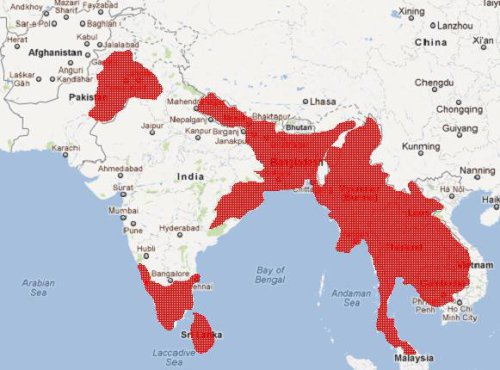
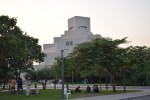
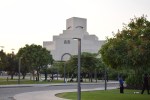






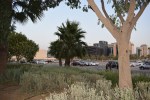


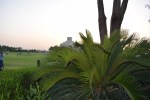











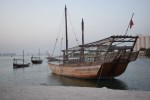

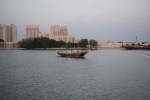












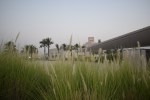
































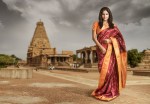
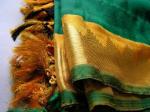






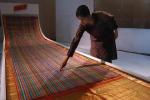



























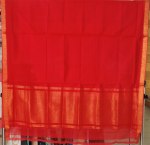








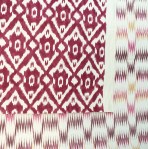





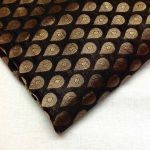

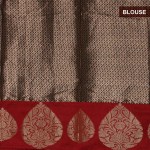
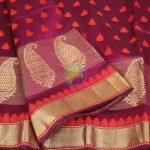
















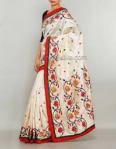


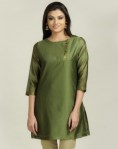



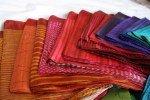

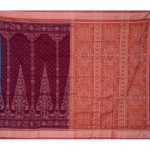


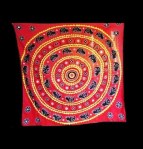
















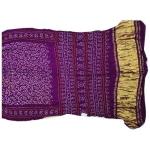

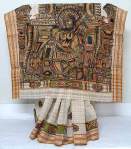
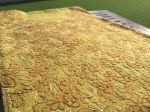
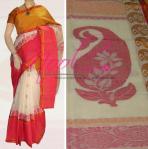



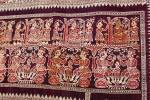
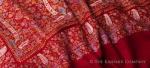
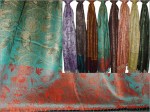






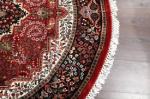




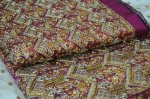


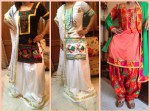
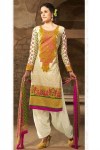






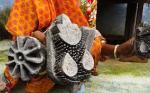

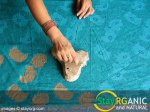






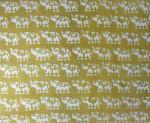
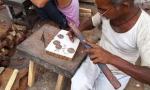
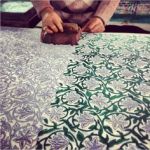




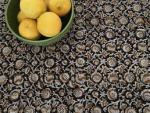




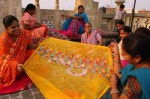
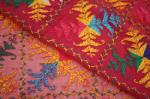

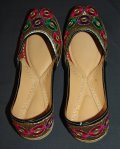





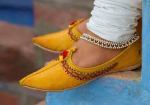





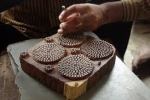
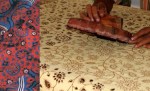


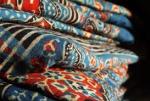
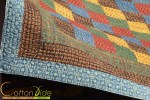



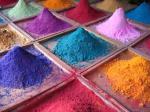

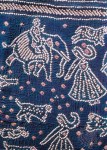














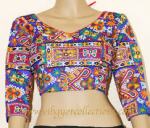


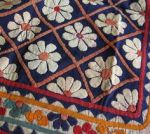

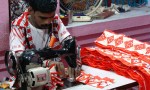







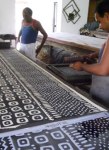















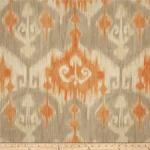


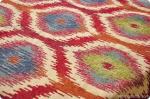




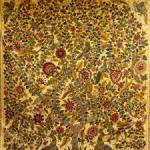

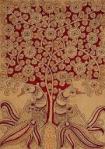
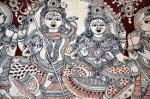

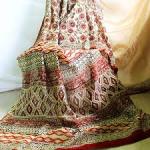






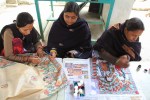
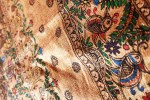


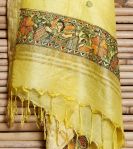



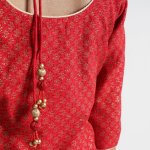





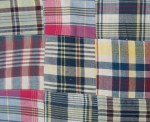


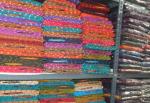


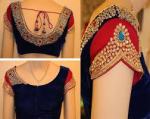


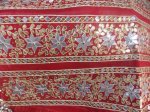


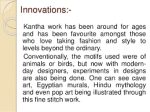

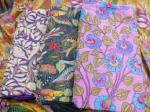
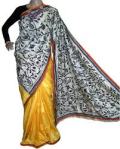

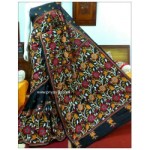


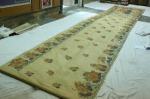
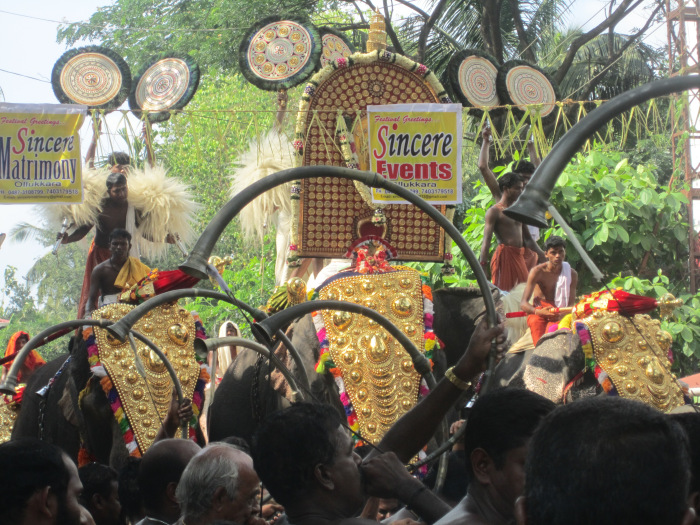
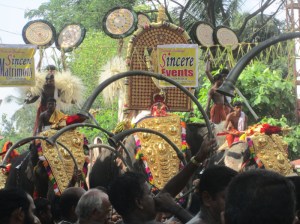
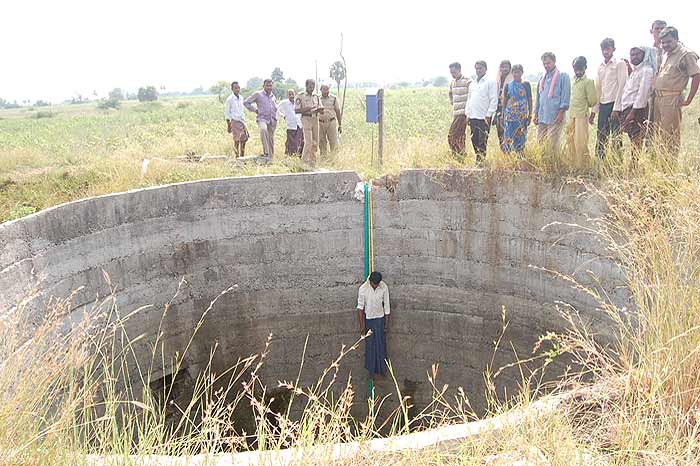



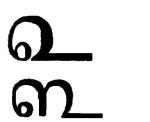






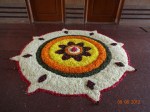


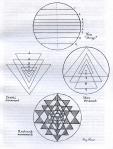
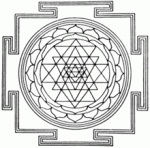
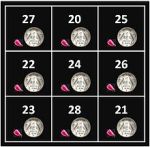
 vijiravindran's