Posted in Food For Soul

Bhojan Prasad

Thought I would make a list of temples where I have had bhojan prasad at:

  1. Of course first and foremost is Tirumala = Tirupathi. I am sure most would have had the bhojana prasad at this hill temple. I have had at least three times but that was all before the 1990s. Remember their paruppu podi with hot ghee poured into rice even now!
  2. Lunched at Shri Sharadambal temple, Sringeri twice: once in VIP hall in 2019 and for a second time this j an 2024 with general janata. Frankly I don’t like to eat at VIP.
  3. Bhagawathi temple, Chottanikkara, Kerala: best by far served with aravana payasam (kheer) jan 2023
  4. In the same temple when my cousin got married in 2004 had a fantastic feast that was served by the groom’s family. not temple.
  5. Thirunageshwaram : the one and only temple in Tamil nadu where I have had a full lunch meal in 2019
  6. Mookambika temple, Kollur,, jan 2024, VIP seating. dinner.
  7. Sri Krishna temple, Udipi, jan 2024. dinner
  8. Maha Kali temple, Ambalpadi, Mangalore ,, jan 2024. the lunch was very elaborate. Learnt the word saru for rasam!
  9. Anna Poorna temple, Horanadu, Karnataka, jan 2024 : had dinner and breakfast
  10. Annapoorna temple bhojana at Kashi Annapoorna Visalakshi temple, Varanasi, Dec 2024
  11. Shankara mutt, Kanchipuram, october 2023 . very nice lunch.
  12. Lunch at an Ashram that I don’t want to mention at Rishikesh. Healthiest food served with sweet meant for sadhus/yogis. Very sumptuous. Prepared by yogis themselves.
  13. During our residence in Malaysia 1997-2001, lunched at every temple we visited. KL temple that I don’t remember and Murugan temple at Maran were the rare ones. Always had dinner at temples in Terengganu without which the temple visits were not considered complete.
  14. In Kumbakonam, the hot venpongal prasad at the time of temple opening is unforgettable. Got a chance to have this breakfast prasad at Garbarakshambika temple at Thirukarugavur and at Thirumancheri temple. Lots more prasads from Perumal temples as well. But this list is about the full meal bhojan prasad.

Temple bhojan is very simple fare. Satwik naturally. An added kheer would be treated as luxury. In Chottanikkara alone, they made you wash the plates and tumblers in stainless steel and made us say the prayer to Hindu goddess of food and abundance Mother Annapoorna. In some temples the bhojana prasad was served in banana leaves. In some, the bhojan was served in stainless steel plates to devotees seated in rows and rows. At a time I am sure at least 500 ate in a batch. Food served in temples is not mere bhojan: it is prasad from the deity Herself/Himself. I feel most blessed to have had the bhojan prasad from this many temples. IN all other states except mine I notice that the general janata who have the bhojan prasad in temples come from mixed backgrounds where the rich and the poor eat together forgetting their social status. Whereas in Tamil nadu, only the poorest eat the temple bhojan. Quality of food served is also poorest. One more thing I want to underscore: i did not know about VIP seating and I really hated myself for eating at shiny stainless steel tables while the general janata were seated in the floor. Someone got me the bhojan token. I also noticed that the brahman bhojan is separate dining at Sri Krishna temple, Udipi. This discrimination is awful. Such a difference in the abode of god in this 21st century is unthinkable. Then there is no point in serving Annadhanam at all. VIP seating is bad enough but it is mostly for visiting dignitaries for security reasons or for those who cannot sit on the floor to eat, like very senior citizens. If you know someone at the temple, you can get a VIP token that can get you a table, that is all. For Udipi mutts I have this to say: hopefully you can find brahman bhojan dining in Vaikuntam with your caste card. But remember to flash it first at the gate. Otherwise Udipi is a great place. Been here thrice in my life. This last time, at the ratri puja, was seated before sri Krishna for over 3-4 hours. Singing straight to His face bhajans will remain etched in my memory for ever. Imagine my spirit souring right after the puja/darshans when the word brahman bhojan fell in my ears. Udipi is all about Kanakadasa. When you practise discriminations, the very purpose and logic of the Udipi temple is lost, is it not.

I would like everyone to try to simple temple bhojan prasad. Thousands of devotees have the prasad every single day and night even if its not a full, elaborate menu. We consider this as prasad fed by the gods themselves. It is also equally important to contribute generously towards Annadhana. Annadhana or the bhojan prasad schemes run on public Hundi funds only. We can also make direct/online contributions for Annadhana. Those visiting any Annapoorna temple must never forget to give donations for rice for Annadhana.

Posted in Food For Soul

Aadi Vibes: L R Eashwari.

The kids of ’70s and ’80mes couldn’t have missed her metallic voice: L R Eashwari. For years I found it difficult to believe she was born a Christian very much like K J Yesudas who got synonymous with Aiyappa bhakthi songs the very same way. KJ Yesudas’s ‘Harivarasanam’ still is No.1 chartbuster when it comes to Sabarimala season. Followed by Veeramani in Tamil Nadu who came up with his own Aiyappa songs such as ‘Bhagawan sharanam’ and ‘Pallikattu Sabarimalaikku’ we knew the months of Karthika to Margazhi with the flavour of the season. L R Eashwari blared from every loudspeaker loud and clear in every single street of Chennai that came alive with the month of Aadi. I am talking about the times when we were spared the Aadi sale by Kumaran, Nalli to Ratna Fan House and Vasanth & Co. Its not that these folky singers got to us with their boomeranging voices, there just was something about their bhakthi element that got embedded into the songs they sang. Listening to them thirty to forty years later, I still feel the goosebumps when they invoke for me my favourite deities. So far as we Hindus are concerned, our local deity or Kaval deivam or the Kula deivam has a significant place in our worship over even the Shiva Vishnu family. Which is why Bodyguard Muneeshwara sees the devotees turning up with their newly registered cars for Car puja! Every street in the Kanchipuram-Chennai districts comes alive in the month of Aadi reverberating with the L R Eashwari Mariaamma songs. Aadi is from mid July to mid August. Some Tamil communities prepare the koozh (porridge) with pearl millets and water it down with curd and onions and distribute it to the neighbourhood and the street Amman temple. The koozh or the millet porridge coming by the end of summer when normally epidemics such as measles may emerge, scientifically helps by cooling overheated bodies. The koozh is supplemented with Murungai keerai, the greens from the drumstick tree which is enriched with vitamins and minerals. So Aadi has relevance for this reason to be observed with such a religiosity by our masses. Needless to say, it is difficult NOT to spot at least a small chapel like temple dedicated to either Lord Ganesha or Ambal in Chennai. Temples take turns in organizing in-home Koozh collection and distribution days (usually a sunday) and ensure that there is a perennial supply of koozh every weekend that way for at least two months. With its medical and cooling benefits, the koozh cannot come at a more precise time. We had this koozh tradition in my parents’ side. We made the vegetarian Koozh and we poured buckets into the common collection at the temple. We also gave away jugs to our neighbours. Of course, everything stopped with my mother’s untimely demise. My in-laws are from Arni and they have never had any Aadi tradition! Looks like Aadi is so sensational only to us Chennaivasis. Anyway I miss the Aadi maasam in Chennai. Right on day one every year, my househelp excuses herself for an hour as she carries ‘Paalkudam’ for Ambal on her head. She even attempted firewalking once. An ardent Durga devotee, she has been doing the Rahu kaala puja for over twenty years now (on my advice, who else’s?!). Her children are now graduates, she has progressed economically and is doing well. Aadi for me means, preparing the sweet jaggery pongal and distributing it to devotees in temples. I used to prepare the jaggery pongal in my next street Vembuli Amman temple premises and then Mundagakanni Amman temple premises in Mylapore. For years I did it but in last five to six years, I find no energy to do it in the temple. So now I make the pongal at home and take it to the temples for Archana alone. Fridays and tuesdays mean Diya puja for me for over 20 years now with Lalitha Sahasranama recitation. The recitation started over 30 years ago. Now fridays have come to mean also Soundarya Lahari and parts of Devi Mahatmyam if time and energy levels permit. Taking a break from the ritualic Diya puja here for lack of facilities but the chantings go on. Of course as per Arni customs, we have Kuladeivam puja on an Aadi friday at home when we also do kind of Sumangali worship (Poovadaikari) (women ancestors who died sumanglis in our family) and Kanni (for the children departed too early in the family line). I have been blessed to see the Poovadaikari pudavai (sari), a cotton one preserved in a clay pot for generations spanning over 200 years in my father-in-law’s family with such a reverence. The family tree can be traced back by ten generations at least. Yearly thrice the pot is kept in view for the family guests: for Aadi friday Kuladeivam puja, for Deepam and for Mattu Pongal. The women who came in our lineage were Kula Patnis. No dilution of any kind anywhere. Explains why some of us are what we are and how we are even in this 21st century. We consider the matriarchs equal to Mother Goddess. One of the Aadi fridays also mostly will have Varalakshmi Vratham but it looks like this year, everything has gone for a toss. We have the occasion coming up a bit later, in August. Aadi Pooram is the bangling ceremony for Mother goddess who we assume is pregnant! Very special for Aandal in Perumal temples as well. As much as I can, i try to get Ambal some bangles on this day. We in our local street temple organize a small function for women who are trying to get pregnant. We observe ‘mock’ ‘valaikaappu seemantham’ for them and bangle them up in front of Ambal. Many have returned with babies within an year or two. Its such an emotional moment – doing the nalangu (haldi kumkum ceremony) for these young married ladies. Its a privilege being invited to bless these women. I as a grandmother and coming in the Arni line of matriarchs have my share of responsbilities. Aadi is a very sacred month and from this month the Tamil Hindu calendar starts getting busiest. Non stop pujas at home, back to back at times. My mother observed Varalakshmi vratham (and Gowri Kedara vratham on Diwali day) as well but these vrathams stopped for us with her. Yet they are special to me. They bring back memories because vrathams in our house used to be celebrated very grand. Four short young banana trees would be affixed to a small wooden stool on which would be placed the Kalasam. Trays and trays of fruits and flowers and bakshanams all homemade. In fact the flour used to be ground in a stone chakki at home. We had it until very recently. What I do these days is not even one percent of what my mother or grandmother used to do. But what I cannot do, I try to catch up with my little bhakthi quotient and puja. I think of the years and years when after starting the Aadi friday Diya puja early and completing it on time, I would be rushing to Mylapore. I and my Chithi both would then go to Mundagakkanni amma. We both cooked hot steaming jaggery pongal on our own bronze/copper pots within the temple premises on woodfire or using the cowdung cakes as fuel. Water we would draw from the temple well! We would have darshan by 2 or 2.30 in the noon. I would be famished because without offering Pongal to Mother goddess, I wouldn’t eat. I survived on coffees four or five in those days. But when we would finally distribute the prasad and return home, my heart would swell with such a sense of fulfillment. Cooking for Mundagakkanni is very important to me. My life mission. Before returning to my in-laws, when my son was just 1.5 months old, I first placed him on Her lap. Every baby born in our family has the first outing to Mundagakanni Amman temple only. Even I was placed in Her bosom by my mother when I was hardly one month I believe. I miss the Mariammas of our streets. As much as I may perform the rituals, recite the mantras, chant the slokas, I must say I also feel equally drawn to our rural or village deities who are deemed powerful – the kaval deivam, the Ellaisamy, the Aiyanar, the Kula deivam etc. Our Kula deivam in Arni is some 30 km away from the town – in the middle of an agricultural field in a village. Access was through farm lands only on ‘othai adi paadhai’ (by foot) – only now they have secured the place with a compound wall on three sides. There under the Neem and Peepal trees are our Kula deivams. There is aslo Muneeshwara, the protector of children closeby. The magnetic pull and aura of our rural deities can be awesome. First of all we picture our ancestors standing right at that spot some 150-200 years back. I feel emotionally moved. This year anticipating my absence from home base during Aadi, I finished my temple Pongal duties by January (in the month of Thai) itself. Thai (mid Jan to mid Feb) is also an auspicious month when most Tamil Hindu marriages take place. If possible I try to visit Mangadu, Thiruverkadu, Vadivudaiamman temple and of course Kapali temple and Perumal temple (for Aadi Pooram) in the month of Aadi. In our street temple, we have a ‘Dhandumari’ but as She shares the space with Shiva (the presiding deity of the temple), we have no ritual of ‘koozh.’ Instead we have ‘Kanji’ made with broken rice and a spicy mixed vegetable Vatha kozhambu. Its a hit with the street people. I look forward to Temple food always. Its the biggest blessing to eat what Mother gives you. Like, once I was asking my Mother goddess, why I never had a mother’s home to go and eat. Next week I was in Chottanikkara in Kerala. The archakas asked me and my friend to have lunch in the temple. We were just in time. We had had an awesome unbelievable and leisurely darshan of Bhagawathi. It was only two days I guess since I asked that question to Mother in my Puja. In fact I verbalized my question aloud. When we ate at the temple seated with the general janata, I was overwhelmed with tears and my friend squeezed my hands. I don’t need a biological mother to invite me home or give me lunch. I have eaten at the Sharadha temple, Sringeri. So what if I have not cooked one square meal for my biological mother who never lived to eat out of my hands, from my kitchen, in my dining? I feed Mundagakanni Amma. I feed Vembuli amma, Kolathamma with my jaggery Pongal. I am feeding the Universal Mother for years now. What more to ask for. By the way the meal at the Bhagawathy temple at Chottanikkara was simple but yum. Typical Keralathu Sadya. The Aravana Payasam was impossible! I thought they served it only at Sabarimala. Mother Goddess lives in my heart, etched in my heart. She is my mother and I have a special connection with Her. I reckoned She heard me and invited me home for lunch! I miss being in India now – but I see a greater purpose: I am seeing my Mother goddess is a sweet angelic face here. I see the goodness of my Mother. I see Her choicest blessings. People ask why India is not like China. How can we be? The electric wave of spirituality that sweeps through the Chennai streets in the month of Aadi needs to be witnessed to believe. Our energy is spent on thanking our Mother for what She is to us. A lot of self introspection happens. Self realization takes place. Materialism loses its prime importance at least for a brief while as folks vie with each other to feed the masses. Contributions are generous. Mother brings her children together. She is the Brahman. This is Her holy month. My throat is sore right now because of a cold, but I manage to silently chant as much Her name as possible. Just thinking of Her will suffice. In this special month of Aadi, I am grateful for all the blessings She has bestowed upon me, for I know I am far well placed than a vast majority of human race. I have no complaints absolutely. READY TO GO REALLY. If its my time, I am ready mentally. With or without me the world and my family will go on. To be able to say that, you must be blessed. You must be satiated. Folk form of Hinduism can be enchanting – this is taking down your faith to the grassroots where you can see the raw unadorned bhakthi that cannot be seen in elite Yagnas performed even in Agama temples. This kind of intense bhakthi grips me totally – the unshaken faith, as I see in my househelp. Her kind of devotion, i will never be capable of in a thousand years. I heard of their practice of anointing ‘vibhuti kumkum’ after cleansing every single step when climbing the Tirumala hills on foot. After that they would go for Dharma darshan and be out in flat one hour. I think of the time we the so-called well-offs spend in queues. God has a way of honouring this clean rustic earthy bhakthi that insists on no mantra recitation or the ritualistic puja. All that matters is, YOU HAVE THE HEART. This post of mine will be incomplete without the mention of the Aadi cultural scene. Karagam and Pulivesham are the highlights although they are fast losing out to entertainment shows of modern day. This is one long story that is better googled.

Posted in Food For Soul

The Hindu Key

Watched a you tube video where a tantrik spoke of realising Shiva. Not surprised as a practising Hindu. I have blogged about the ant and the boot story many times. The ant at the foot of a man cannot picture the boot of the man or the foot of the man or the man himself or the world behind him with the size of its brain cells. If it tries to exceed the limitations of its birth/janma faculties, the brains of the ant shall burst. In order to proceed further, the ant has to grow larger brains. In short, the ant has to evolve to next state of its existence for better perception of things. But if the ant does as a lowly creature break the ceilings of perception and happens to realize the boot of the man, the foot, the man and the world beyond, then the ant in its lifetime attains Nirvana. The ant merges with the supreme Jyothi or the super or collective conscience. Indian/Hindu saints have done that for centuries: from Ramakrishna Paramahamsa to Swami Vivekananda to Vallalar. Hindu Thamizh history is full of inspiring life stories of englightened men and women: the Nayanmar and Azhwars and others. However ignorance is a bliss. If you don’t have to concern yourself like one curious ant wanting to know what is beyond your realm in your present lifestate, then it is fine. Your world begins and ends with the boot mountain and universe in front of the ant-you! Otherwise this knowledge of the nether is attainable only upon giving up your physical body – upon your passing to the other world. Why is there now a frenzy to know more about Hinduism or Buddhism. Precisely this. Dharma keyed it in where the Abrahamics failed grandly. This is what led Annie Besant and others to India – to establish the key. We still have Besant Nagar as part of Chennai. Yes, the Hindu gods are realisable with powerful chants and some relentless upasanas (meditation practices or mind exercises) as the tantrik claims. Yoga is the tool that enhances your sensory perceptions and gives you the physical and mental fitness to handle the energy of deities you worship. Its much more to do with controlling your senses that can hone your power of perception. I have watched videos in you tube of practising Christians from around the world take to Hindu ways and seek deities. As a Hindu I believe that we live in a civilization that was lost and found. The helicopter markings in Kailasa temple for landing, the flying chariot of Ravana, the missiles mentioned in Ramayana and Mahabharatha, the Ram Sethu built by Lord Ram and ‘vanara sena’ discovered under the sea between Sri Lanka and India – all these are just a few pointers unearthed that suggest at an advanced civilization that once flourished in a different plane of time that was lost to an impending apocalypse. What we have today are remnants – pieces that we picked up and try to stitch together as Dharma. While so, it was disturbing to learn of research into transcendental meditation that paves way for a higher conscience like the (hypothetic) ant, breaking the glass ceiling and realizing the galaxy beyond its original imagination. Not everything is for marketing. The greatest accomplishment of Hindu Dharma is proof that the Abrahamics have wasted thousands of years chasing the wrong rabbit! Who says deities are formless. May be that’s why you cannot see or picture your imagined/cultivated desert god! Our deities are bodied and can be realizable the way they may be pictured. The temple rituals and pujas are merely the base of the pyramid called Sanathana Dharma. It is for beginners. You don’t get stuck up at this level if you want to see the higher dimensions. Hinduism with idol worship is easily relatable to simple folks – the peasants. The idols are mere focal point of our attention. If the mullah wants to make more out of that, then it means his entire nationhood is limited to the the tattered piece of his national flag. In short, an idol is to Hinduism what a national flat is for a nation. Representative. A symbol, no more. Just as we decorate the flag and celebrate it, we celebrate idols. Some religious forms came out in denial of existing, established ways of life. That is the basis of their survival. Anyway, most of the Hindu substance was guarded as ‘rahasya’ for centuries. Now with everything being googled, there is no more such a thing as ‘rahasya mantra’ that can be administered only to worthy few. However, the tantrik held out hope. Even if the evangelists want to seek Hindu deities with diligence covertly adapting Hindu practices, the number that can make it to the gateway for enlightenment for every age stays limited and thoroughly rationed! That’s some good news. Why a Hindu. This is why. A Hindu is a rare breed. As the world wakes up to the undeniable truth, Hindu spirituality gains momentum. Many ardent practising Hindus owe our growing faith to the ‘vibes.’ Hinduism is not sold door to door like Christianity is, like Stayfree and Harpic. Neither did Hindu Dharma spread by the sword the way Islam did and does. Seekers embrace Hindu Dharma finally on questioning themselves. Self realization is possible only with a tool such as Hindu Dharma. And as the tantrik says, an authentic guru with a good lineage can lead you up there. The global stars are not in India without a reason. It takes years for someone to get to this point. Being born a Hindu, you learn it growing up. You have the advantage of playing in the homeground so there is no excuse if it don’t use it well enough. If you are born in India a Hindu, you have to make most of it or you will be squandering a birthtime opportunity. Millions in India do remain ignorant still, pre-occupied with ritualistic worship and limiting themselves to their busy ant-life gathering and saving for a rainy day. Materialism has ruined things for Hindus. Our spiritual training has to give us the mental discipline and improve our capacity for ‘out of box’ thinking. Like the physical body can be trained to be fit, the mind can be trained to go beyond its limited faculties. Only sages and saints train themselves systematically to ‘realize the truth’ in their own lifetimes. How many of us have we laughed at the meditating Sadhus with the anthills growing around them (most as seen in old Tamil flicks). How many times have we poked fun of those who take ‘sanyas’ – the celibacy vows to become hermits. So if you are a non believer or an Abrahamic, do not force yourself. You are the ant that cannot imagine more than that level. You belong in the physical, tangible world. You need logic and reasoning and scientific proofs without which you can never see beyond the boot – to the hovering man or the world behind him. So the first obstacle in the thought process you have to do away with when it comes to finetuning your conscience is: dispensing with the sense of logic and be open enough to receive ‘vibes’ that may be illogical. Under other circumstances, only substances can give you the same result with hallucination or hypnosis. I am talking about the level of conscience that is realizable without substance use or abuse when you transcend realms. Not even those ants like me who know of the ceiling but who can do nothing about it can make a difference. Sadly for those like me, the inability looms like a tragedy as we realize we shall have to be reborn a thousand times to nurture a superior mind and break the birth cycle. By superior mind I do not refer to the scientific or engineering or money making business mind. By superior mind, I am referring to the ant brain that can break ceilings in its own lifetime and can transcend in to the other world. So as of now we are resigned to this state of existence nevertheless we try! Not adding fresh Karma to the load we already carry has a role to play in our punar janams (rebirths). Sometimes I wonder why are we Hindus so complicated. Why can’t we have simple food like the pizza or bread. Why should even our cuisine be so complex with so much of grinding and powdering and deepfrying and shallow roasting and masalas (spices) and lentils and a stunning range of veggies and food grains. But isn’t ours the best palate in the world. Exiting a world cup soccer match in Qatar via a mall, I looked around for restaurant table. The Indian Tandoor had a hundred plus waiting crowd comprising of multiple nationalities (that would have taken them hours before being served) whereas every other restaurant such as European, Chinese, Turkish, Arab etc., had table to spare. Why are our clothes so indigenous. That six yard unstitched piece of cloth that goes for a sari. That four yard unstitched white piece of cotton clothing that goes for dhoti for men. Would they ever dissappear from the face of the world? Why do we have our traditional native classical/folky music to dance to art and literary forms. What about our grand granite temple complexes? Why cannot we be so easily anglicized the way the Filipinos or even the Chinese are. In a similar way is fashioned the Hindu spirituality. It has labyrinths you have to traverse before you could get to the core. If you have to be discouraged by the skin and the pulp, you will never get to see the seed. The more materialistic you are, the farther you move away from the quiet world of inner awakening. As I said, some of us got the message but we have no way of going in there. We cannot figure out but we try to give our best. To those who haven’t a clue, its going to take that much longer to realize what is what.

Posted in Food For Soul

Shani Shingnapur

Shani Shingnapur near Nashik, Maharashtra was very much in news for the controversy surrounding women being debarred from performing the Abhishek ritual to Lord Shani (Saturn). The Shani murthy (idol) here is swayambu (erupted out of earth on its own). Tripti Desai led the march from the forefront to win rights for women to conduct/perform rituals for Lord Shani with their own hands on par with men. I had an opportunity to visit the shrine in the month of April. Saturn phase is on for me right now. To spell it out in Thamizh, ‘ezharai nattu sani’ going on for me. Its tenure is for 7.5 years. This is second time in my lifeline that saturn rules the house in my horoscope. This is on for over an year now. Shani period is supposed to be physically and mentally and even financial exhausting to most. A very testy period in one’s life where we may be facing health woes. We may get ourselves entangled in unnecessary troubles. So I exercised the privilege of anointing Lord Shani with sesame oil with my own hands and perform the abhishegam to Him during my visit to His temple. My two friends still disapproved of my move. There were about a hundred devotees. While most men performed the abhishegam, there was a general reluctance among the women to come forward for the ritual. Only a handful of us dared. The men (husbands) restrained their wives and daughters and stood in queue to partake in the ritual. But nobody frowned when some of us women stepped forward for the ritual. The fee for the ritual is 500 bucks. The oil price was 80 or 90 bucks. The ticket issuing clerk had a disapproving smirk pasted on his face as he handed out the token to me. I hoped to please Lord Shani asking Him to soften His blows or at least give me the physical mental strength to bear shocks and upsets if it comes to that. To anyone who questions change of age old customs, I would like to remind that once upon a time, women were not even allowed to attend schools, not divorce, not remarry. Women did not get a share of family estate/inheritance. There was even the heinous practice of Sati in India. Its not you and I who decide what should happen when. As a total believer, I trust that it was perhaps Lord Shani Himself who decided that the time was ripe for women to perform rituals for Him with their own hands. அவனன்றி ஓர் அணுவும் அசையாது. Whether it is Shani or Lord Aiyappa, the move or decision to grant women entry is decided by the deity not by humans. As an unshakable believer in and follower of Hindu Dharma, this is where I differ from my friends’ view point. My Kerala friends cannot agree with the reforms naturally. By change in norms, I do not state that any disrespect has to be shown to the deity. In Sabarimala, the court case was interestingly filed by a Kerala muslim for entry of women into the hill shrine while no muslim woman can ever share the mosque space with the men. Not a single petition is filed in Indian courts to win the muslim women their equal rights. The women who first broke barriers in Sabarimala were also non Hindus – with a muslim/christian woman throwing a used/soiled sanitary napkin on Lord Aiyappa when with police escort she became the first fertile woman to set her foot in the holy shrine of Lord Aiyappa. Can you imagine a non muslim desecrating an islamic place of worship and getting alive with it. This is my Hindu India. This is the level of our tolerance. We Hindus give police protection to muslim/christians to go in and desecrate our places of worship in the name of democracy and secularism. It broke every Hindu heart when the kind of desecration the woman subjected our supreme deity to, came to light. We left the offenders to their Karma. While I am for equality of sexes and women’s rights, this is a clear case of mischief no doubt. Its good that a film like Kerala Story happened. An eye opener. After the Sabarimala sacrilege, the very next year the entire Kerala state was flooded and crores and crores of property were lost. Washed out. When Lord Aiyappa is ready to receive women devotees in His abode, trust Him to move the earths and the skies not just the courts to make it happen. Lord Aiyappa is viewed as Naishtika Brahmachari by Hindus.

abhishek for Lord Shani at Shani Shingnapur shrine with my own hands…

Let me make it clear that, there was nothing rebellious about my Shani access or worship. I am a practing Hindu and I considered it a blessing to get nearer to Shani Bhagwan. I was full of reverence and faith.

Posted in Food For Soul, Political History

Jambudweepe, Dakshina Parve, Bharatha Khande, Bharath Varshe

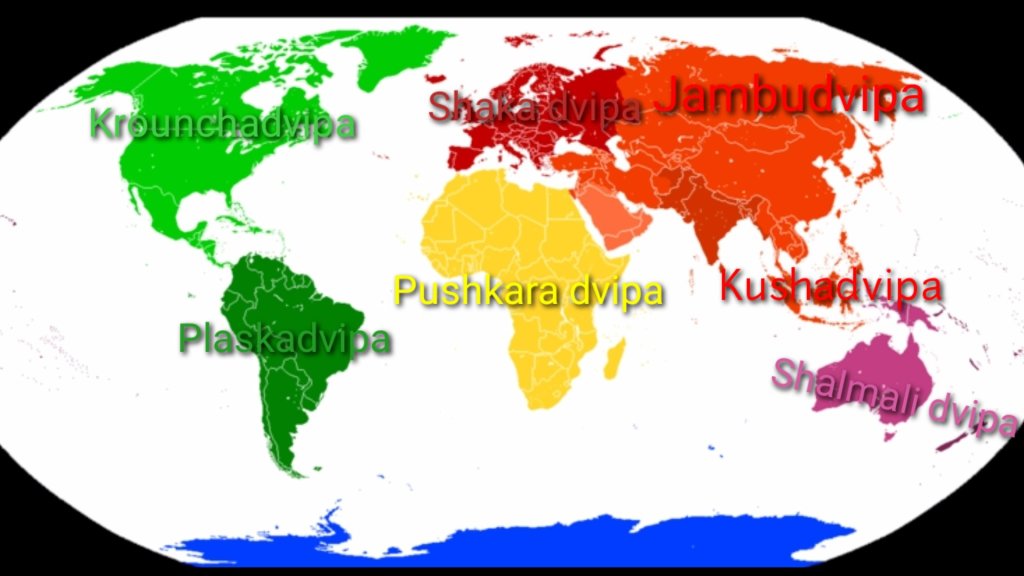
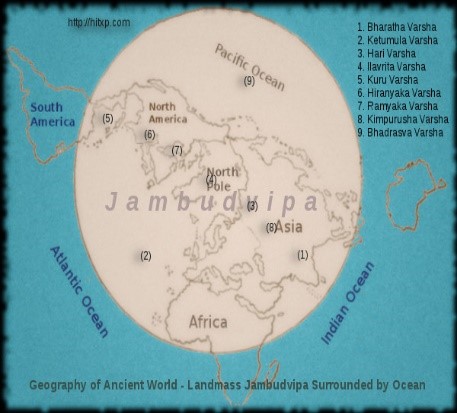
One more historical evidence from Hindu prayers and Puja rituals. Most of us are familiar with the Sankalp(am) we have to perform before starting a Puja or Homam (a ritual with the holy fire) or before going for an Archana (customized service-like) for the Hindu deities wherein we have to mention the place (our location), time, names of the devotees with their birth stars as per Hindu calendar. Until today we mention the place as Jambudweep (the large continent which was once an island landmass), followed by Dakshina Parv (south face) (southern part of the Jambudweepa), Bharath Khand (Greater India), Bharatha Varsha (Indian subcontinent). (The pundit/purohit invokes the deities with details usually on our behalf. In home pujas we invoke the deities with the minute details by ourselves). (This means we are summoning the deities of Puja to that particular geographical spot personally. Our identity or address is the geotag with our name, birthstar, Kula/Gotra (family/clan/lineage) specifics. The Jambudweep is the landmass that was once surrounded by water. It can be now comprising the entire Eurasia. Dakshina Parv refers to the southernmost part of the continental shelf. Bharath Khande is the Greater Bharat or Akhaand Bharat comprising of present day India, Pakistan, Afghanistan and even parts of erstwhile Soviet Union such as Tashkent (Takshashila), parts of Azerbaijan etc. Hindu Dharma was prevalent in Baku of today. There are Sanskrit inscriptions preserved. The old Sankalp that we have not edit to current times must be from primordial times.This was a time when the tectonic plates had not yet had the head-on collision, exactly where there was once the Tethys sea which later on was replaced by the mighty Himalayas, the newest mountain range in the geography and history of Planet Earth. Interestingly all our prayers OMIT the Himalaya region but mention the Jambudweep as a separate island entity (Dweep in Sanskrit means ‘island.’ (We have until today the Lakshadweep (a lakh or million islands – an archipelago) which is a union territory of India (in the Arabian sea near the coast of Kerala)). The name for the country is Bharat, after Bharatha, who comes in the lineage of Lord Rama. For millions of years, India has thus gone by the name Bharath. Bharat is the original name of India, not Hindustan which was the name given by the Persians. India presently goes by Her name given by the Europeans. I for one thing never paid attention to these details even though we go through these motions in most of our rituals. We blindly recite the sankalp hardly paying any attention. For our weddings and other muhurats (auspicious timings for occasions like nuptials, pujas etc.,) we strictly follow the Hindu calendar in India. Our stock exchanges open and close annual accounts on the Hindu new year day which is the Amavashya (new moon day) of Diwali. In Tamil Nadu we adhere to the Tamil Hindu calendar. Our new year is just around the corner April 14th and this is the day Bangla, Punjabi, all of South, Behari, and even most of South East Asia including Bali/Indonesia, Thailand etc., celebrate their new year. The sankalp mention of Jambudweep, Dakshina Parva, Bharatha Khand/Bharat Varsha succinctly omitting Himalaya region is an indicator to the rituals observed in another plane of time, perhaps preceding even the times of Ramayana and Mahabharatha. River Saraswathi discovered deep down earth’s crust buried in a supposed catastrophe that changed our planet’s geography forever is another indication that there was a robust Hindu civilization far advanced in different dimensions preceding the current human evolution. It is possible that we merely picked up the pieces left over our ancestors to start again from the remnant of an old world. I have always felt this when reading the Sundara Khanda of Ramayana where there are details of the chariot of Ravana, the king of Sri Lanka that went by the name ‘Pushpaka vimana.’ Didn’t Ravana play Veena which is still the revered ancient/contemporary/native stringed musical instrument for Hindus. Then there are the surface to surface, surface to air, air to air missiles mentioned in the Mahabharat and even in Ramayan. These disjoint proofs pointing to another plane of time, another world are available in Hindu texts/scriptures that cannot be from the recent history of the human race. Unfortunately they cannot be cohesively or entirely interpreted without scientific backing. Interesting that I got to listen to this piece of information from a lecture on Soundarya Lahari, composed by BhagawadPada-Adi Shankara in the 7th century CE. Sadly as this is Hindu history, no research may follow or even encouraged, because the Abrahamics are always bent upon disproving anything with Hindu origins. Lately there is a changed mindset wanting to know what is what, with an element of curiosity about assembling the jigsaw puzzle for a better understanding about human ancestry and evolution. This is why we need to study our scriptures in depth: they throw valuable information in every single verse. Ancient Hindu scriptures are a repository of knowledge and info that can shed light into the mindset, prevailing culture and civilization of human race that is not recorded history. The galaxy did not come into existence from the birth of Christ. Most Hindu customs and even everyday rituals must be contemplated for their purpose and antiquity. Some excavations shall never be carried out. Some exhibits shall never be tabled. Some truths shall lay buried and never be discovered. Besides, you can never relate to the lost world with the threads of evidences you unearth here are there. The vital connection is severed by time and space.

Posted in Food For Soul

Not for sale: Soul.

Moved to tears watching ‘the scent of a woman’ starring Al Pacino in Netflix. Too late I know. I don’t want this to be a review of the picture. I am using the filmy quotes just to record my perspectives. Hugs to Charlie Simms played by Chris O Donnel who takes the tough road risking his Harvard admission from the prestigious Baird not wanting to sell his soul for gain – even if he earned the place on merit. His entire future is at stake, given he is from humble Oregon. He is on scholarship at his school. The rich creamy society boy George Willis so easily succumbs with his weak mind, sells his soul without a regret to save his ass. It shows how some of us are BORN DIFFERENT. How our priorities determine who we are. And how some of us would rather slog it than have it cheap and easy with a price tag on our soul. Al Pacino’s riveting closing dialogues just bore into my very own soul. Says he, THERE IS NO PROSTHETIC TO AN AMPUTED SOUL. That is how pathetic are those who sell their soul, who trade in their integrity, who have no shame, no dignity, no honesty, no strength of character but actually have the audacity to justify their smallness. It may have just been a picture but it gives you still a great message. Its what some of us stand for. Fight for. I may not be the naive Charlie but I could very well be that colonel Slide! I am that!

We don’t read books or watch pictures for nothing. If you sing Bharathi, you must try to live like Bharathi. If you talk about Sangam literature, you have to try to adhere to the code of morals and ethics – the basics at least, in today’s context. VALUES ARE EVERYTHING. UNCOMPROMISABLE. UNTRADABLE. UNCHANGEABLE. You have to do justice to whatever you preach. You have to practise what you preach.There is no use going to temples or performing Pujas when our fundamentals are not sound. Following the right path, speaking your mind, alienates you from the rest. You are alone. Still, you are the only one who has the courage to call a spade a spade and you know that. It is worth fighting the lone battle than join the comfortable crowd of spineless cowards who are all sold out. The pied piper led hundreds of mice to their cursed destiny. There is no comfort in numbers so far as ethics are concerned. A clear conscience is priceless. The Puja phalan for those who sell their soul is like the water they may try to fill in a pitcher that has a hole at the bottom. Whatever you pour in will drain away in no time and it doesn’t matter what efforts you put in. It was the very first lesson on Aanmeegam for me, on why it is important to lead a clean life. When the roots are shaky, you cannot build a superstructure over it. My parents raised me in their absence. They never lectured me on anything. I felt this way even the very next day after my mother passed away when I was still in school.

All of us are aware of changing times and what that demand of us. I, more than anyone living abroad for over a quarter century in multi-culture society, am painfully aware of where one must draw the line. What you can trespass and what you may not violate even if your dear life is on the line of fire. We have a word for that: honour. Which in turn earns us something irreplaceable: respect.

Never mind. If someone has to be tutored on value systems, then they bombed grandly in the final exams already, before even the classes started or the bell rang.

Posted in Food For Soul

லௌகீகத்தில் தர்மம்

சில நாட்களாக என் மனத்திரையின் பின்னால் ஓடி கொண்டிருக்கும் ஒரு விவாதம் இது. துறவரம் தான் கொள்ள வேண்டுமா என்ன. எம்ப்போன்றோருக்கு இல்லறமே நல்லறம் தான். குடும்பத்தில் இருந்து அறத்தை மேற்கொள்வது எப்படி. லௌகீக வாழ்க்கை பின்பற்றி மட்டுமே ஒருவர் சத்கதி அடைய இயலுமா. இது சாத்தியமா. இது போன்ற கேள்விகள் என் ஆழ் மனதில் வந்து வந்து போயின. முடியும் என்று சொல்கின்றனர் நான் சந்தித்த ஆன்மீக சான்றோர். குடும்பமே யாவற்றிற்கும் அடிப்படை. குடும்பத்தை நேர்த்தியாக கொண்டு சென்றாலே நமக்கு மோக்ஷம் தான். குடும்பத்திற்காக அயராது சுயநலம் இன்றி உழைப்பது, ஒழுக்கத்தை பேணுவது, வயதில் மூத்தோரை மதித்தல், பராமரித்தல், அனைவரிடமும் அன்பு காட்டுதல், நம்மிடம் பணி புரிவோர் – வீட்டு வேலை செய்யும் பெண், வண்டி ஓட்டுனர், தோட்டக்காரர், சமையல் காரர் – போன்றோரை சக மனிதராக பாவித்து மரியாதையாக நடத்துதல், பிள்ளைகளை நன்கு பேணுதல், நல்ல குடிமகன்களாக நாம் பெற்ற பிள்ளைகளை உருவாக்குதல், பூஜை புனஸ்காரங்களை இல்லறத்தில் சிறக்க செய்தல், கோவில்களுக்கு நன்கொடை, வீட்டில் விருந்தாளிகளை நன்கு ஓம்புதல், நட்பு பாராட்டல், நேரம் கடமை தவறாமை, நம்மால் முடிந்த உதவிகளை அடுத்தவர்க்கு செய்தல், யார் குடியையும் கெடுக்காது இருத்தல்,ஒழுக்கம் தவறாமை, பக்தி மேன்மை, நலிந்தோர்க்கு உணவு உடை மற்ற தேவையான உதவி புரிதல், பண உதவியை காட்டிலும் உடல் உழைப்பால் மற்றவர் பயன் உறும் வகையில் உதவுதல், மற்றவர்க்கு நற்போதனை செய்தல், அடுத்தோற்கு நல் வழி காட்டுதல், உண்மையை உரைத்தல், பொய் இன்மை, மனசாட்சிக்கு கட்டுப்பட்டு நடத்தல், ஏமாற்று வேலை செய்யாதிருத்தல், பொறாமை வயிற்றெரிச்சல் கொள்ளாதிருத்தல், நம்பிக்கை துரோகம் புரியாதது இருத்தல், நம்பிக்கை, மரியாதை காப்பது, பேணுவது, பேராசை அற்று இருத்தல், மனசாட்சியை விலை பேசாதிருப்பது, போலி கௌரவம் கொள்ளாதிருத்தல், யார் வாழ்வையும் கெடுக்காதிருத்தல், வயதுக்கேற்ற மன முதிர்ச்சி, இனிமையான இயல்பு, நேரான நேர்மையான வாழ்க்கை, ஒளிவு மறைவு இல்லாமை, பார பட்சம் பார்க்காமை, அணைத்து உயிர் இனங்களை நேசித்தல், விலங்கு பறவை மரம் செடி கொடி போன்ற தாவர இனங்கள், நடப்பன பரப்பன ஊர்வன முதலிய எல்லா ஜீவன்களையும் ரசித்தல் அன்பு செய்தல், இயன்றால் பராமரித்தல், கற்பு, மானம் காப்பது, இன்னும் இப்படி பல நெறிகள் உள்ளன.நல்லவரிடம் சொல்லவே வேண்டாம். நன்னடத்தை சொல்லி வருவது இல்லை. ரத்தத்தில் வருவது. தாய்ப்பாலுடன் சேர்த்து ஊட்டி வளர்ப்பது. இப்படி ஒரு நேர்த்தியான குடும்ப வாழ்க்கை உங்களது என்றால், கோவிலில் கூட நீங்கள் தெய்வத்தை தேட வேண்டாம். கடவுள் வாழும் இல்லம் உங்கள் இல்லமாகும். உண்மையான பாசிட்டிவிட்டியே இது தானே ஒழிய தவறான போக்கோ தரம் கெட்ட வாழ்க்கை முறையோ அன்று. நம் நடத்தையே நம் குடும்ப மேம்பாட்டிற்கு அடித்தளம். ஒரு குடும்பத்தின் ஆணி வேறானா தாயே சரியில்லை என்றால் அந்த குடும்பமே பாழ் தான். பூர்வ ஜன்ம புண்ணியத்தால் தான் ஓடுவது ஓடிக்கொண்டு இருக்கும். நல்லோர் கூட்டு இதற்கு தான் அவசியம்.நல்லது கெட்டது எது என்று பகுத்து உணர நல்லவர் நட்பே முக்கியம். வீட்டில் பெரியவர் இருந்தால் பார் வைக்க முடியுமா. தர்மம் என்பது இடத்துக்கேற்ப நிர்ணயமாகும். லௌகீக தர்மம் நல்ல மேன்மையான நன்னெறி வாழ்க்கை வாழ்வதே. ஒழுக்கமே இங்கு அடிப்படை. கெட்டாலும் மேன்மக்கள் மேன்மக்களே, சங்கு சுட்டாலும் வெண்மை தரும் என்று இதற்க்கு தான் உரைத்தார். தலையே போனாலும் நெறி தவறாமை முக்கியம். இன்றளவும் இப்பேற்பட்ட நட்பை பெற நான் பாக்கியம் தான் செய்துள்ளேன். தவறை தவறு என்று சுட்டி காட்டி திருத்த உண்மைக்கு பின்வாங்காத நட்பும் சுற்றமும் அவசியம். நம் குழந்தைகளுக்கு நாம் விட்டு செல்வது இந்த செல்வத்தை தான் முதலில். நான் வேண்டுவது எல்லாம், என் குடும்பத்திற்கு ஒழுக்கம், நாணயம், கடின உழைப்பு, நேர்மை, கட்டுப்பாடு இவைதான். ஓரளவு வாழ்க்கைக்கு தேவையான பணம் போதும். அதிகம் இருந்தால் அதுவே ஆல கால விஷம். உழைக்காத பணம் இன்னும் வீண். லௌகீக வாழ்க்கையில் தர்மம் பின்பற்றாத எவருமே கடவுளை கும்பிட்டு பலனில்லை. ஒரு ஓட்டையான பாத்திரத்தில் தண்ணீர் நிரப்பி கொண்டே இருங்கள். நீர் நிறையுமா என்ன. அது போல தான் லௌகீக வாழ்க்கையில் அதர்மத்தை பேணுபவர் நிலையும். அதர்மம் நம்மை என்றும் ஜெயிக்க விடாது. நம் பாட்டிகளுக்கு மறு பிறவியே கிடையாது. கோவிலுக்கு சென்று வழிபட கூட அவருக்கு நேரம் இருந்தது இல்லை. பிள்ளைகளை வளர்த்து, பின் பேர குழந்தைகளை வளர்த்து கொடுத்து, சதா சர்வ நேரமும் அடுக்களையில் உழைத்து ஒய்ந்து தேய்ந்து, வீட்டுக்கு வருவோரை உபசரித்து அன்புடன் வயிறு புடைக்க உணவிட்டு விடைகொடுத்து அனுப்புவது, இதை தவிர எதை கண்டனர். இந்த லௌகீகமே ஒரு தெய்வீகம் தான். ஆலமரமாய் அதனால் தான் நம் குடும்பங்கள் இன்றும் விஸ்தாரமாய் கிளை பரப்பி ஊன்றி நிற்கின்றன. அதன் குளிர் நிழலில் தான் நாம் இன்று இளைப்பாறி கொண்டு இருக்கிறோம். அந்த ஞான பழங்கள் தான் இன்று உண்மையா நமக்கு சோறு போடுவது. இது தான் நாமும் நம் பிள்ளைகளுக்கு முதலில் ஆற்ற வேண்டிய கடமை. இல்லறம் நல்லறம். லௌகீக வாழ்க்கையில் தர்மம் கடைபிடிப்பது, அம்பாளுக்கு மிக பிடித்த ஒன்று. நம் கடமையை நாம் செய்யும் போதும், நாம் அற வழியில் நடக்கும் போதும், அம்பாள் நம் பக்கத்திலேயே துணை நிற்பாள். நம்மிடம் வேள்வி அவள் எதிர்பார்ப்பதில்லை. கோவிலுக்கு கூப்பிடுவதில்லை. நன்றாக உன் கையால் சமை. விருந்தோம்பு. ஒழுக்கம் பேண். நெறி தவறாது நட. இந்து பெண்களுக்கு கற்பு தெய்வீகம் தான். நல் வழி லௌகீகத்தில் அம்பாளுக்கு அவ்வளவு நாட்டம். எனக்கு தெரிந்த ஆன்மீக மக்கள் சொல்ல கேட்டு உரைப்பது இது. லௌகீக தர்மமே இந்த கலி யுகத்தில் உகந்தது, நடைமுறை வாழ்க்கைக்கு ஒத்து வருவது. லௌகீக தர்மம் பேணி நம் வாழ்வை செம்மை செய்வோம்.

Posted in Food For Soul

Vallalar: first saint in recorded world history to merge with the Jyothi.

i don’t own this image. from Facebook.

வள்ளலார்

அருட்பெருஞ்ஜோதிஅருட்பெருஞ்ஜோதி

தனிப்பெரும்கருணை அருட்பெருஞ்ஜோதி

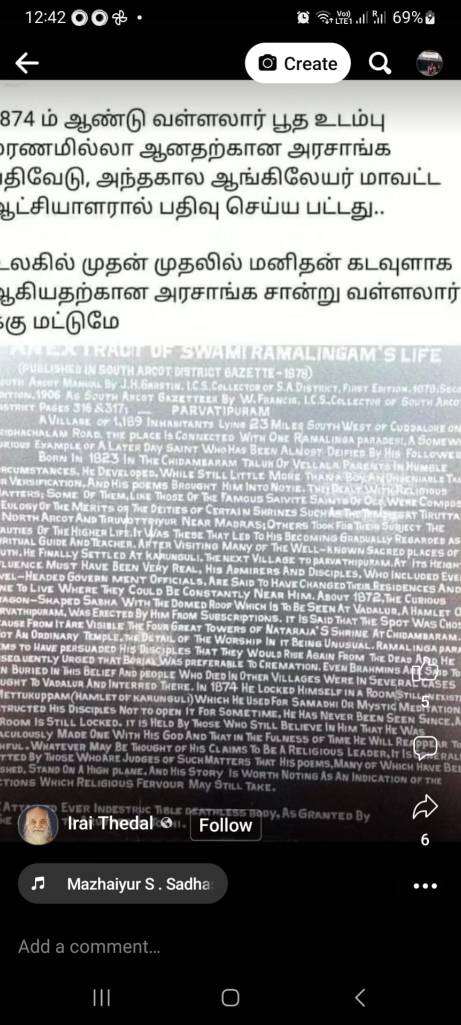
The Abrahamics speak of saints and prophets and god’s sons. Hindu Dharma has its fair share of enlightened men. But the merging of the saint Vallalar who lived in the nineteenth century with the Jyothi has gone down in history – to be recorded to posterity, with proper evidence, during British Raj in India. So that puts Vallalar in an entirely different league.

For Chennaiites, Vallalar is a well known saint. We in the city have two ‘Kaval deivams’ – or the protecting deities, as we say: one is Vallalar and the other is Paamban swamigal. I have heard of Vallalar story but reading it once again yesterday penned by a friend moved me totally. We refer to Vallalaar as ‘Arut perunjothi, thaniperum karunai’ in Thamizh always. Vallalaar born as Ramalingam Pillai later known as Ramalinga Adigalar, was known for his religious discourses and ‘samathuvam’ or equality in worship and humanitarian service, which were considered progressive in his times. One fine day, Vallalar asked his disciples to lock him up in a windowless room and throw away the keys and never open it. The room had no opening to anywhere. After months the police opened the bolted room to observe that Vallalaar had disappeared without a trace like a camphor dissolves in thin air. The British recorded the evidence to posterity so that makes Vallalar the first human in history to have merged with the collective conscience in recorded history. Never has this materialized with anyone in the last 2000 years and never has this feat been repeated by any of the saints including by the line of Achcharyas that India has produced or by the Catholics or the Islamists. Many Hindu saints have united with the Jyothi as we grew up learning, but Vallalaar became the first in history to have left irrefutable evidence to humanity with his merger with the Higher conscience, witnessed by locals.

We do have Pamban swamigal and Ramalinga adigal (Vallalar) in our street temple. Even when the archaka installed them in our limited Prahara, I was wondering whether our small worshiping place was getting crowded. Ours is significant because it is a Siddha peetam really with the siddha Nadamuni having had his jeeva samadhi (buried alive for Moksha) in the precincts over which the Shiva Linga (the presiding deity Kambahareshwara) was established. If you take the ancient south Indian temples, most have Siddha peeta or Siddha jeeva samadhis for base over which the Shiva Lingas were installed which lend the temples very powerful aura and strongest vibrations. Even Tirumala – Tirupathi temple was supposedly raised over Siddha peetas. So even if our temple is not popular or is very poor without funds (that we refused to hand over to Tamil Nad govt), we the street people restored it after a century of neglect and we have been ever since trying to manage it with local collections. Try to imagine the Siddha meditating here in my street under the peepal tree with the anthill growing over him and him attaining moksha, some two hundred years ago. India is basically such a holy land. War is the last option for Hindus.

I wanted to write this down originally in Thamizh. I shall try to back it up with Tamil version. This is for now.

My faith in saints (called Sants in Hindu Dharma) who are born Sants is always greater than in those who are ‘cultivated’ by mutts, etc who become ‘gurus’. To me faith is intertwined with service to humanity and there can never be a delink between the two. The rationality and secularism of Vallalaar were unprecedented for his times.

I am posting a link to my friend’s original write-up:

https://vijayabharatham.org/vallalar-2/embed/#?secret=ht9P6KGJb0

Om Namasivaya! Blessed day. Today is the last Thai Shukravaar, very auspicious day for us. Lalitha Sahasranama Diya Puja at home that I perform every tuesday and friday for 20-30 years now. Followed it up with a recitation of Soundarya Lahari. Jaggery Pongal homecooked offered to Mundagakkanni Amman in Mylapore before dashing for a closeup darshan of none other than Karpahambal at Kapaleeshwara temple. Rounded off the day with a sneak peak at Valleeswara from the street as well as at Renuka Parameshwari. Bliss.

Wishing all peace and happiness. Rise over pettiness and lowly existence to noble heights. Evolve.

Posted in Food For Soul

Reckoning Senility.

Although I have a long day today (even as a housewife) I feel compelled to blog this first thing this morning.

I unlock my doors when I have my first cuppa for my househelp to enter without knocking. By 7 am today I was wondering whether I should be going for a second coffee even as I was scrolling my phone. I heard my outer pair of double doors open first and was surprised because, there was time yet for my parttime help to arrive. Then the inner single door opened and an old Kerala woman in kasavu sari in her eighties stepped into my living. Seeing me on the couch, confused her and finally realization dawned on her. Then she apologized and left saying, she mistook my doors for the ground floor grills leading to carpark and entrance to our apartments. Her brother had passed away early this week. In this grand old age, apparently she had boarded the train to pay a visit to the bereaved family. I said it was okay but it hit me right then, what old age can do to you. There is no way one can mistake my double doors for an exit to the street. In a single moment I understood what it is about senility that is bothersome. But it is remarkable that the lady has traveled upto Chennai (in all probability with a companion). Physically she seems to be in a far better shape given her age. My guess is that, she wanted to take a walk as she could not be going to temple too soon given the loss in the family. That she is independent enough in the city or wants to be, seems promising. But senility can be really scary. The octogenarian’s confusion for a minute saddened me. She wore that bewildered look as if she was lost. There was even a hint of fear in those eyes that I did not miss. She composed herself quickly which means, her mind is still sharp. New environs and unsteady feet may have unsettled her. Brave of her to venture out and explore the place.

I do have older women in family. Much sharper! As we age, mental health may seem to take predominance over physical health. We can manage every single ailment or disease with medication or surgery. What must be preserved is our mental capacity from becoming casualty to dementia or Alzheimer’s. Working the brain is of even more importance over physical workouts. Exercising the memory power assumes far greater significance. Its a gift to die knowing that your time has come.

Posted in Food For Soul

The Charvakas.

The nine schools of Indian or Hindu philosophy are:

Samkya, Nyaya, Yoga, Vaisheshika, Purva Mimamsa, Vedantha (the Vedic school branching off into Advaita etc), Charvaka, Buddha, Jaina. The nine schools contain sub=schools within themselves.

Of the nine, Charvaka makes for interesting study. Charvakans deny everything that is not tangible and therefore for them, there are no five elements or Pancha bhoothas. They recognize only four and discount the sky because the sky cannot be felt by any of their sensory organs. Osho and similar preachers and their followers must belong to the school of Charvaka philosophy where physical pleasure overrides everything else. Bodily satisfaction, momentary satiation mean more to them, and their mortal body is their prime focus. This type of men and women live for physical gratification and hence they have addictions taking to the bottle generally. Sex addiction and substance abuse are widely prevalent among them. They justify their preoccupations just the way they argue that there are only four natural elements earth, water, air and fire but never the sky that they cannot touch and feel. The charvakas have no respect for boundaries and have no walls defining their boundaries either. Its free for all for them. Since the charvakas consider themselves beyond answering the questions on morality, they do not believe in Karma. Charvakas in short are Bhogis. Their entire lives get devoted to fulfillment of their physical cravings. For charvakas, not just morality, even ethics are an issue. Not always clean hands for them. They will not hesitate to grease palms if they have to move matters and they won’t mind if someone greases their palm to get things going.

So for Charvakas, nothing is sacred, nothing is sacrosanct and nothing is too personal or private. Typically, Karpu does not therefore apply to them. In colloquial terms, we call charvakas, loose characters (with loose morals and ethics). Interestingly, the charvakas can charm their way into your heart with fakeness. Charvakas may also be non believers. Needless to say the Charvakas sell their soul that they are not borne with, without a second thought.

Charvakas may exhibit the Rajas guna typically, being materialistic. Charvakas do not bother about collateral damages either in their pursuit of their physical pleasures. Supremely selfish.

How brilliantly Indian/Hindu philosophies study the human species for their weaknesses and strengths.