Posted in food as therapy..., Welcome to my blog!

Fresh Fruit Juice Kings

Nobody can make fresh fruit juice like us Indians. In Maharashtra, after Shirdi, on way to Shani Shingnapur, came across one whole village having sugarcane juice huts with the sugarcane being pulped by oxen, in one side of the highway, in mini grinding mills. Such a rustic setting it was as we relaxed in the hammock like cot (typical in Indian countryside) sipping the sugarcane juice filtered, with no additives added, and handed over to us. No ice cubes either. It was heaven really.

This week I was walking through a street near the famous Kapaleeshwar temple in Mylapore. Forgot my water bottle. Little apprehensive, dared to go for fruit juice in a shop to quench my thirst. I fear contamination in juice shops that’s why. The girl who was there said, they added no water or sugar. Instead with any fruit over there, they added freshly pulped sugarcane’s extract.

I chose orange juice from the menu. The girl did not pulp the entire sugarcane. The long cane was already in the mill. She ran it just for a minute and showed me the blender jar where she collected the necessary volume of sugarcane extract/juice. Probably the sugarcane is to serve a number of customers that day! To this sugarcane juice, she added two peeled whole oranges big size. Then she gave a pulse of 30 sec in the blender before filtering the juice concoction. What a taste that was! Imagine orange juice blended with natural sugarcane, sans water and sugar and no ice cubes. Never had anything like that in my life before this! It was served in a tall glass to the brim. Sugarcane normally gives me soar throat so I was a little worried. Also the place was only so-so. One whole night I waited for cough or cold to set in! Thank god, no infection I caught on. No wonder. The girl did not even use a glove. But she put the entire two oranges peeling them in front of me into the blender jar. The sugarcane extraction was also direct in front of my eyes. I needn’t have feared. This power packed and yummiest freshest juice cost me sixty rupees that’s all.

Then I wished I could have gone for pomegranate (90 rs)or apple or sweetlime or mosambi. All these I am reserving for future dates!

Mylapore with its congested streets is a heaven for vegetarian cuisine. If I have to have residence there in present times, I don’t have to cook at all! Cheap and best!

Posted in food as therapy...

Appetizing African Food!

Huge fan of Ethiopian cuisine here. Every time I go to the US I don’t miss eating out at Ethiopian restaurants. Curious, interesting menu on cards. Food is amazingly similar to south Indian, nutritious, sumptuous, yum, and so laboriously prepared. Value for money, no junk food. Highly recommended.

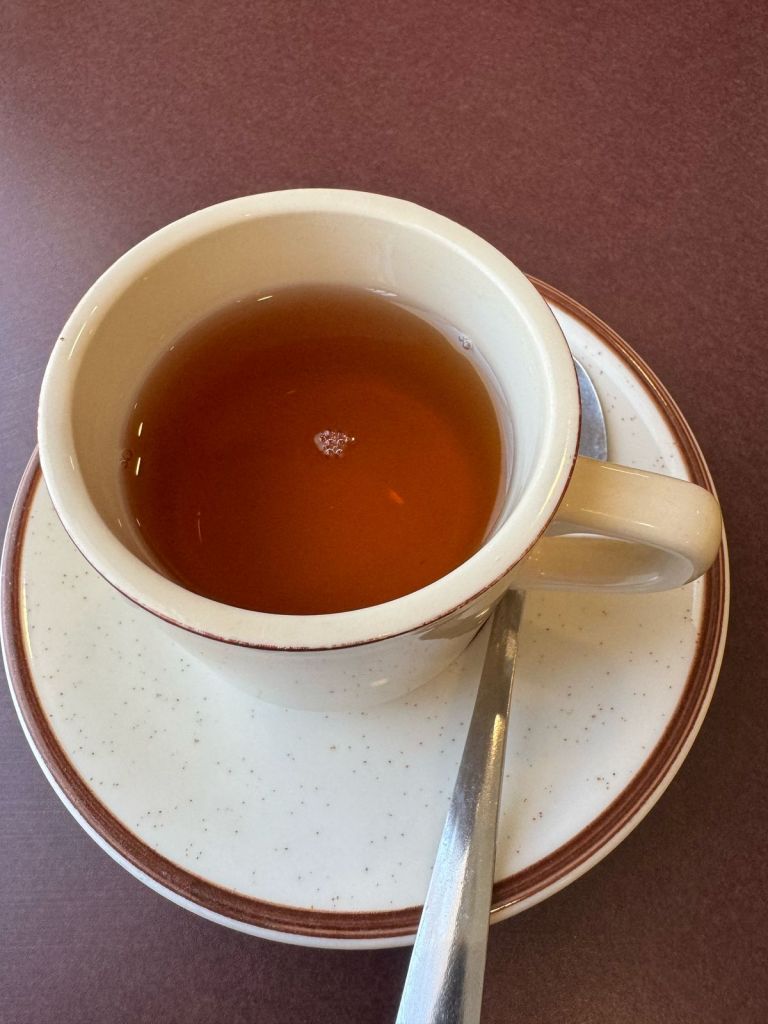
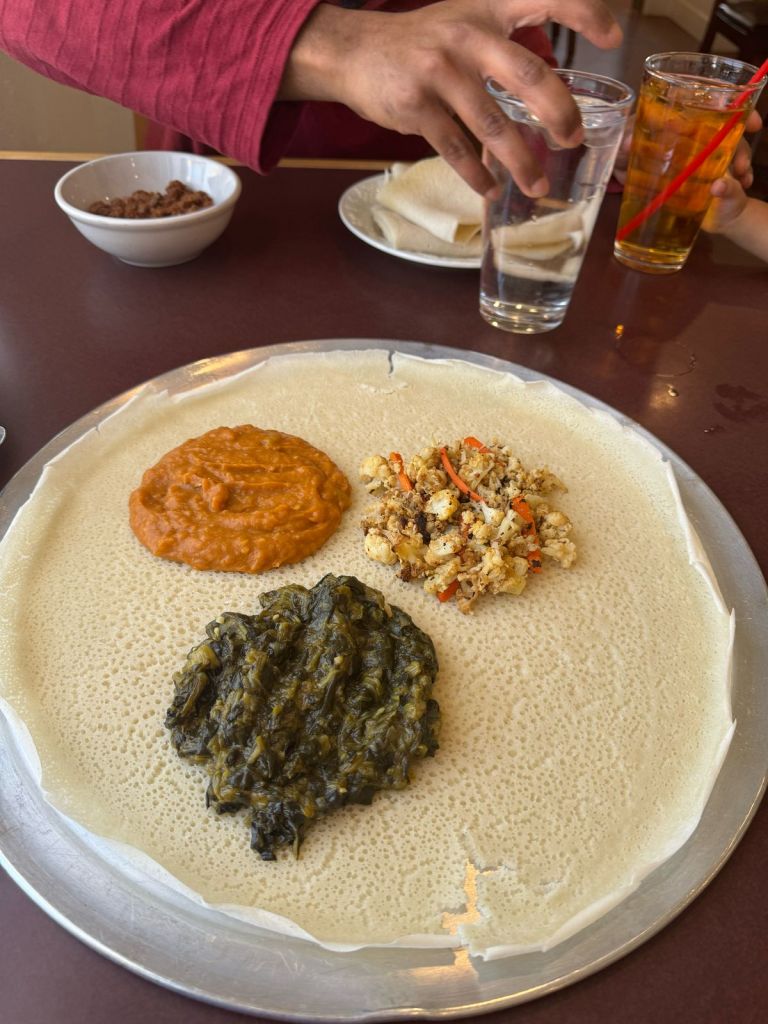
Simply love their Injera breads that are fermented to heavenly perfection. Made of maize flour, the staple African foodgrain? After almost 2 months in the US that’s what I desperately needed ! I chose the Ethiopian restaurant over Indian which is very expensive. Injera reminds one of dosa. The Shiro or the red chutney is typically like what we call ‘thokku’ or ‘thogaiyal’ in Tamil . In reality it is lentil chutney made spicy. What we call ‘paruppu thogaiyal.’ The spinach, the mixed veggies everything tastes like Indian. Spice level is left to your choice. Ethiopian food is so original, flavourful, seasoned with native spices, and is very affordable. Healthy as well. I opted for vegetarian fare but family had meat which they said was too good. I have eaten at a few more African restaurants that I don’t remember much about. I can only recall that every single one of them was GOOD. Authentic African recipes, sometimes simple (like their bread) and sometimes elaborate cooking very much like our Indian curry. Delicious. NEVER MISS THE EHTIOPIAN TEA POT! Runaway hit! However don’t expect the KFC McDonald Pizza hut Coke Pepsi culture to understand anything substantial, deep and meaningful in the real sense.

A dozen Ganeshas of various sizes greeted me in a 100% vegetarian Mexican restaurant. In most Mexican restaurants I find Lord Ganesha idols everywhere. Food was great here too. I really don’t care for the names of the dishes. I left the ordering to my family and only made sure that everything was indeed only vegetarian.

I come from a culture that is 10000 years old at least. We are the only unbroken continuous surviving civilization in the world. All around us the Mayan, the Greek, the Egyptian, the Mesopotamian all floundered. Only Hindu civilization survives to this 21st century and will survive to eternity. We appreciate and respect the goodness and uniqueness in every culture. That is how we grow as civilized humans. Beautiful Africa and Africans. African cuisine differs from border to border. Signature menus. The choice of breads and the accompaniments give one an idea about the healthy lifestyle of their local culture. Even the art on display in the restaurant served as a treat to our tired eyes.

Posted in food as therapy..., nature

Ayurveda has to be taken with caution.

Ayurveda is the ancient school of medicine in India practised by Hindus for millennia. Siddha is also an ancient school of medicine practised in Tamil Nadu. Both these schools of medicine are recognized by govt of India and have advanced medical universities with full capacity enrolment. Yet both these branches are not as developed as allopathy because of poor research facilities and no testing on animals. There are many restrictions if we are to follow Ayurvedic medication. Same applies for Siddha. I see Ayurvedic produce on display in the US, Middle east etc., where their locals don’t do thorough research on the Ayurvedic products and gulp them down without a second thought. For instance, the Siddha medication can be taken only if you forgo caffeine completely. Similarly Ayurvedic medicine is based on our Vayu, Pitha, Kabha (our body’s gas, heat and cold) each of which is contradictory to the other. There may be contraindications when you use ayurveda without doctor’s advice. The ayur products use plants and seeds that are extremely potent and can damage our liver and kidneys if used indiscriminately. Ayur sugar prescription is just a leaf powdered. Its extremely powerful prescription. Unless you give up the allopathic diabetic pill or insulin, you are not supposed to swallow this. I got a siddha sugar preventive seed. No way one can take this on empty stomach or with borderline diabetes. You chew this dried seed, you can sense your sugar going down dramatically within minutes. Both Ayur and Siddha are nature based but work very efficiently. Without guidance, one should not be taking them. Some ayur products may contain residual metals not harmful for human consumption. But if you already have a high metal content in body and are taking other mineral supplements, you must not take Ashwagandha etc. Should ashwagandha work for you, you need no further supplement in life. Even when you buy ashwagandha in India over the counter, they give you the caution to space it out and not gulp it every day. Same for Pankaja Kasturi, the ayur medication for wheezing. It totally stops for children but again long term use of pankaja kasturi is not advised. Like any branch of medicine, Ayur needs consultation.

About the turmeric misuse, I have this to say: We grow up consuming turmeric in our food from the times we are infants. Our metabolism has evolved in such a way that we Hindus/Indians can digest all spices without hickups. But I see the turmeric latte, etc., sold indiscriminately in the west. In our food, we don’t use turmeric beyond a pinch everyday. Its a very sensitive spice. If misused, it can give you jaundice. I am vegetarian from birth. What will happen to me if I am to become meat eater suddenly. My metabolism won’t accept that. My liver is incapable of ingesting meat protein. If god forbid I have to eat meat, I have to start slow. Its the same with exotic spices. You cannot rush.

Until I was upto to 12 years or so, I don’t remember usage of chemicals in our domestic everyday life. I used only besan (gramflour) for bathe after a mild daily rubbing of coconut oil in the body every morning. NO shampoo almost until my 30th year = only shikakhai. I used shampoo for the first time during our residence in Malaysia where I had no access to shikakhai. For cough, we were given hot milk with turmeric and peppercorn powdered into it with a pinch of saffron. There is this ayur thing called ‘athi mathuram’ which is extremely sweet. We added this too. Instant stop to cough and cold. No paracetamol. Only ‘kashayam’ made at home for temperature with herbs. My grandma grounded some spices and made this tonic like hot stew that we had to swallow. The toxic chemical doctor prescriptions I started following very late in life. Even today a friend of mine is taking only ayur medicine for very high bp.

I use mostly ayur skin care and minimal chemical skin care produced in France or wherever. I have used Bodyshop for a while in the middle east because they claimed to be organic. But I found them to be the contrary. I use ayur skin care that actually can decay within months. The lipsticks made of cow ghee cannot last for over 2 to 3 hours. But we have the western makeup materials lasting through the day. Same for chemical hairdyes that work well. We use mostly henna-indigo in India that may be totally organic without side effects. That won’t give you the chemical hair dye effect. Now I use minimum western skin care along with maximum ayur skin care. Works fine for me. Even the shampoos I try to use organic. If I am in India, ONLY AYUR SHAMPOOS. We get that now in middle east as everyone wants it. In total demand over the much sophisticated Loreal etc. Fastest sellout. That is why I am not bothered about international tariffs. A simple ayur shampoo wins hands down over international brands such as Loreal so effortlessly.

So much my parents made sure that there was least chemical usage in our broughtup. Yet I enjoy very poor health. That is because my constitution is weak from birth. Today I gulp maximum pills just to stay alive. Allopathic. I wonder what my parents would have to say upon this should they be around today.

Remember this from my 4th or 5th year. Got measles. NO medication. Made to sleep on a mattress made of neem leaves only. Drank neem water that was bitter. Buttermilk. Extreme food restrictions. Got well in a few days and returned to school. Even today in rural India, we don’t treat measles, poxes etc., with allopathic medication. Same for jaundice or yellow fever. Only a green called ‘keazhanelli’ used to be given the patient and oil had to be avoided. That centuries old natural medicine is now patented as their discovery by Europeans!

Even today millions of Indians are using only Ayur medication for even lifestyle conditions such as diabetes, hypertension and others such as thyroid, kidney stones, arthritis, asthma, skin diseases etc. For external applications, ayur is best. Ayur medication if used with caution can be the most natural way to treat ailments without side effects associated with allopathy. End stage cancer patients return to ayur because that can lessen their pain and extend their life by a few months. Even allopathic doctors in India advise that for them.

In miraculous cases, there have been complete cancer remission for patients on taking ayurvedic medication. For that one has to completely put the trust in ayur and quit allopathic treatment. Very few come forward to do that. For stage 1 to 3 of cancer, ayur works best but has to be practised with patience and perseverance, adhering strictly to doctor’s advice, giving up consumption of many comfort foods such as caffeine etc. No food intake with even mildest preservatives. Siddha medication can be taken only if you cook and eat food from clay pots. In the west, people buy ayur but don’t follow the rules underlined. Without following the basics, you cannot expect for results. Besides the medication can backfire and actually harm you in that case.

Someone known to me followed Siddha for conception. She had had many miscarriages. For 3 months being working woman, she even cooked her meals and ate from clayware without polishing (not using gas stove but woodfires). Gave up all her comfort foods. Its very tough practising siddha. Finally she did have a successful pregnancy delivering a health baby.

I got supplements for the first time in my life last year but yet to pop a single pill. Its vegan collagen. I thought I needed something extra for my bones and joints. Lost the nerve. Expiry date is next year. Lets see.

People don’t realize that whatever has more preservative chemicals and longlasting like lipstick for 24 hours, may contain arsenic, lead etc. The anti-ageing formula is actually addictive. You stop that for a couple of months: you will see your skin drooping badly. A mild moisturizer is all we need. Ayur fits my bill perfectly with its most natural ingredients. Cannot use it for over 10 months or you can see a moss forming in the lotion or cream. Whereas the western skin care lasts for years. Ayur skincare actually ROTS within months!! That’s what makes it organic. Now based on this, some countries actually rule that ayur is toxic or has high mineral content. Even the US etc., have banned some ayur prescriptions/medications/supplements. What is needed is strict advice on their consumption. They are most natural and least harmful to human body to be taken with utmost care. You have to drop every other thing for ayur to work for you. Everyday lipstick and shampoo used by women around the world contain most hazardous chemicals including cancer causing formaldehyde, don’t they. But these are all available freely everywhere. Only Ayur needs to be victimized because of its growing popularity in world market. Ayur supplements to be taken with extreme care and definitely not as an everyday dose for newbies.

Herbal medicine, herbal skincare etc., require enormous patience. They don’t work overnight. They are a lifestyle practice. If you are to follow the underlying rule, you have to change your everyday routine to make place for them. But with time, they can work wonders for your skin and health. Someone taking insulin for type 1 diabetes can completely give up the daily shots switching over to ayur/siddha. But you have to give up so many other things for that. I do see many in India making that sacrifice and switching over to healthier natural medicine. The insulin dependency is completely avoided. But how can you expect the allopathics to accept that? Unfortunately even the allopathic hospitals in India won’t admit you if you are on ayur medication. You need to follow allopathy for an admit and this is where we have the stumbling block. There are ayur hospitals too in India and even siddha hospitals. Some ayur treatments require extended stay of months in resort like settings that can completely cure the patient of illness. No outside food and strictly sticking to ayur procedures that include medication, food and massages. Its a complete package really. Many retired citizens choose such packages for overall health.

For me personally, I adopt ayur for skincare routine and mild cold, cough etc. Others require constant monitoring and strict adherence to their prescribed lifestyle that I cannot afford to. So I follow allopathy.

Posted in food as therapy...

Its the Methi-Dhaniya-Pudina Season!

May be not a gourmet chef but I love my simple sumptuous cooking with basic desi ingredients including aromatic native spices, and array of vegetables that are the natural bounty of this vast and varied Indian subcontinent. Any woman busy in her kitchen with pots and pans can swear by this October to March season dedicated to pursuers of culinary skills and interests ! This is the time when the fenugreek leaves (methi), coriander leaves ( dhania) and the mint leaves (pudhina) look lushest and greeny green without drooping or drying up! Nothing like coriander to garnish your dishes. That is one super Indian touch to curry. Methi is India’s magic food. Or one of India’s magic foods. Methi leaves are the evergreen crush of India! – we use methi in everything from parathas to dal and rice and curry. Even dried methi or fenugreek leaves (called Kasuri methi) are used in summer or off season for flavouring our dishes. Slightly bitter, with proper mixing, the methi can lend exceptional taste to our dishes. Methi leaves are my favourite, as my signature dishes include the methi-daal a top family favourite. Enjoying this season which is also the peak time for fresh green peas harvest. Also are there the double beans, the soya beans, the rajma, the butter beans – the entire beans family none of which you need to soak. Everything comes in pods that you can peel and stock up in freezer for the months to come. So that is what I do. Never buy frozen peas. For that matter I am that housewife who can afford fresh vegetables and need not have to live by the frozen groceries. The veggies are freshie fresh in India in these 5-6 months. In fact our roadside makeshift shops over pavement don’t even have refrigeration facilities. Our street vendors with push carts and some carrying the greens etc., on their heads on woven basket have it all the freshest. In Chennai I get the day’s plucking from that very morning brought door to door by street vendors in handle carts or baskets from surrounding villages in the range of 100-200 km. We get fresh desi A2 cow milk now patented by the US (with no native cows producing A2 milk) that even on refrigeration will spoil within a few hours. Many of us opt for this milk . Fruits in this climate are inviting as they never shrink or dry up! The cherries are here in purple and blood red. Best of it all is that, all are refrigeration free even in our warmer tropical country with mildest winters. The whole of India and why, even the entire world, may be blossoming so vibrantly with a variety of yields from trees, plants, creepers and climbers in this second half of the year. Of course the except may be the icy cold snow filled regions of earth. Fragrant flowers are in full bloom in monsoon countries. India is one super flower country. We have a stunning range of scented flowers from paneer rose to jasmine and hibiscus and oleander for pujas. May be Gods descend in these six months from October to March to Earth. Which is why the entire plant is resplendent with fusion of colours. The evening walks in parks will be pleasant. Here in middle east, the weather is just right crisp chill with sun kissing our skin warmly. Beautifully outdoorsy weather, just too perfect. Restaurants have outdoor seating in this part of the world unlike the colder Europe or America when summers see the patios filling up with guests for dinner.

*************************************************

METHI IS THE LOVE OF MY LIFE HAHAHA! Methi roti, Methi Aloo curry, Methi pulav, any Methi subji for me any day any time!

Decided to add Vendhaya Keerai (fenugreek dal) Paruppu recipe which is our family favourite. In my in-laws home when I was newly married, I was taken in by surprise by the curious kind of taste they had in veggies. Their recipes were different. I picked up my love for Vendhaya keerai from them that I didn’t capitalize on earlier during my Mylapore days where the markets used to have them in loads.

This following blog post of mine is originally dated Sep 27, 2012. Here we go.

Vendhaya Keerai Masiyal (fenugreek leaves-lentil mash) (methi-dal in hindi)

September 27, 2012

This is one of my tastiest dishes and most cooling and nutritious dish i must say.   Most healing one too.   Because if anyone has stomach ache or cramps due to body heat, we normally gulp a spoon of fenugreek seeds here with water that instantly reduces the body heat.   Fenugreek leaves with lentils (methi-dal in hindi and vendhaya keerai masiyal in tamil) is a yummy way to keep cool always!

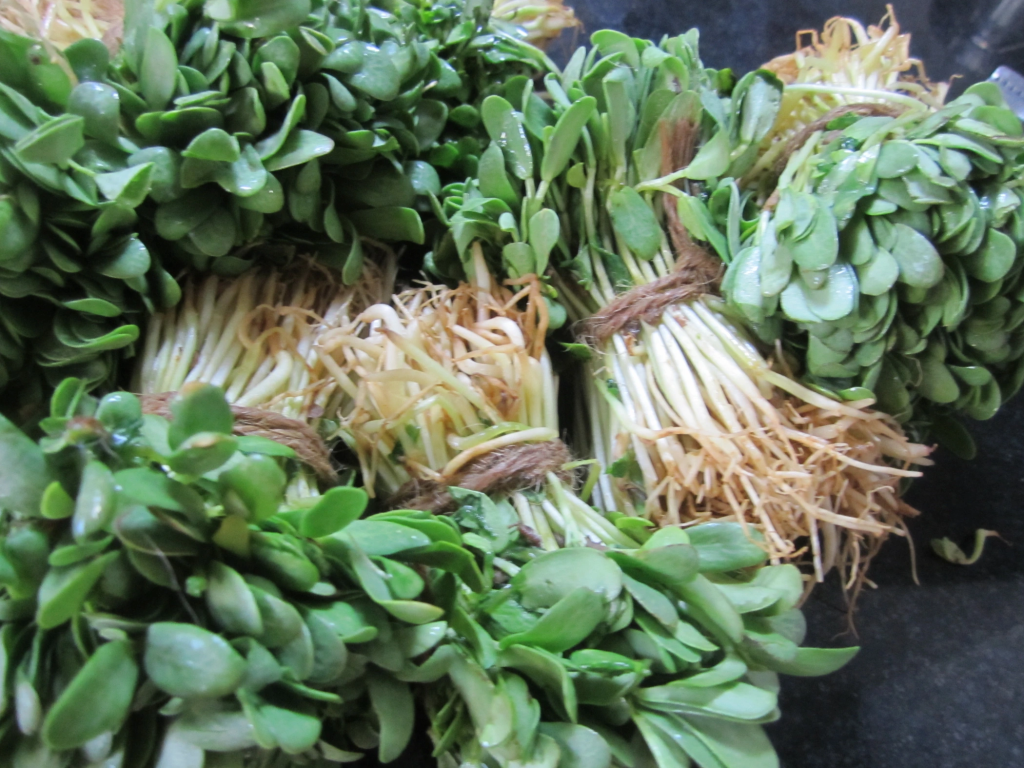
Ingredients:   6-8 small bunches of cut Methi leaves (small size) (see picture)  (we can also sow the fenugreek seeds in a pot and water it daily and keep in the sun.   In days we will have small sprouts of methi leaves at home that also can be made use of.  i normally buy off store shelves or from a street spinach seller).

1/2 a measuring cup of tuar dal (lentils)

1 mid size onion

1 mid size tomato

1 green chili

4-5 garlic cloves

For garnishing:   1/2 tsp mustard seeds, 1/2 tsp cumin seeds, 1 dried red chili torn and de-seeded

a tsp of oil for sauteing.

a pinch of turmeric powder

salt to taste

water

baby fenugreek leaf bunches (can also use regular fenugreek leaves available as one big bunch)
tuar dal or red gram/lentils

onion, tomato, garlic, green chili
adding the chopped onions, tomatoes, green chili and garlics to the dal/lentils in the pressure cooker
rinsing the methi/fenugreek leaves thoroughly in water
thorough rinsing of over 4-5 times…
adding the fenugreek/methi leaves on top of dal and onion, etc in pressure cooker..
pressure cooking until the dal is done…
pouring the contents into an earthern pot,,
mashed ! Fenugreek greens with Thoor dal
mash while the dal-methi is still hot…
mashing to a smooth consistency…
mashing the natural way…

Vendhaya Keerai Masiyal/Fenugreek leaves-lentil mash/methi-dal is almost ready for garnishing..
seasoning with a torn and de-seeded red chili, mustard and cumin seeds in 1 tsp of oil- so this is the maximum oil we use in this dish.
adding the seasoning and salt to the dal-methi

Vendhaya Keerai Masiyal/Fenugreek leaves-lentil mash/methi-dal

Vendhaya Keerai Masiyal/Fenugreek leaves-lentil mash/methi-dal is ready to serve…

Method:

Wash and immerse 1/2 a cup tuar dal (lentils) in adequate water in a small pressure cooker.   Chop the onion and tomato and add it to the tuar dal.   Add the garlic flakes and the green chili.  Sprinkle 1/2 tsp turmeric powder.

Cut the small bunches of fenugreek leaves (methi leaves) in a fine manner leaving out the soft stalks and taking out the leaves alone (with a bit of stalk otherwise).   Methi leaves or fenugreek leaves carry lots of soil dust which need thorough rinsing.   Rinse in 2 large bowls alternately and cleanse by hands atleast 4-5 times draining the soil-water everytime.   Repeat the process for more number of times until you are satisfied that the leaves are maximum free of soil particles.  (refer to the pictures)

Now add the washed fenugreek leaves to the dal and onion-tomato in the pressure cooker.    Give 4-6 whistles to ensure that the dal and the leaves are cooked smooth.   Wait for pressure release and open the cooker lid after ensuring its safe to open.

Take the cooked contents out.   Pour the same into an earthen pot.  Mash with a wooden masher to a fine thick consistency.

Transfer the mashed fenugreek leaves-lentil (methi-dal) (vendhaya keerai) into a bowl.

Garnishing:   Heat a tsp of oil in a shallow pan.   Add 1/2 tsps of mustard seeds, cumin seeds and a torn and de-seeded dried red chili.  When the seeds splutter, take out and pour this into the mashed dal.  Salt finally.

Now we have most nutritious and yummy Fenugreek leaves-lentil mash (Vendhaya Keerai masiyal in tamil and Methi-dal in hindi) to go with both rotis as subzi and with rice.

ABOUT FENUGREEK LEAVES:

This is readily available in small bunches (baby leaf bunches) in Chennai and in most parts of south India.  In rest of India, methi leaves are available rarely as small baby bunches but like any regular greens.

Homegrowing fenugreek leaves is best option.   Sow the fenugreek seeds in a pot and water it daily keeping it in direct sun. Within a week or two, you can see small fenugreek leaves/methi leaves sprouting up.   Take care to pluck the small leaves delicately.  This is the easiest way to get small baby fenugreek leaves.

(PS:  Can also do the same dish using regular fenugreek leaves or bigger vendhaya keerai leaves/greens.  the bitter taste associated with baby fenugreek leaves is totally absent with mature vendhaya keerai leaves/regular fenugreek leaves, but that does change the taste significantly.) 

**************************

About Fenugreek seeds and Fenugreek leaves I want to add this now: Native to India, Methi or fenugreek holds an important place in Indian native medicine the Ayurveda. Food as therapy – this is the ancient Hindu wisdom.

I just googled and have this as copy-paste job on Methi leaves: #IndianCurry #methisuperfood

  • Keeps Your Heart Fit.
  • Controls Diabetes.
  • Relief from Menstrual Cramps.
  • A Good Brain Food.
  • Prevention from Cancer.
  • Good Gut Health.
  • Helps in Weight Control.
  • Methi Benefits for Hair.
Posted in food as therapy...

Sweet Tomatoes: A sweet sensation!

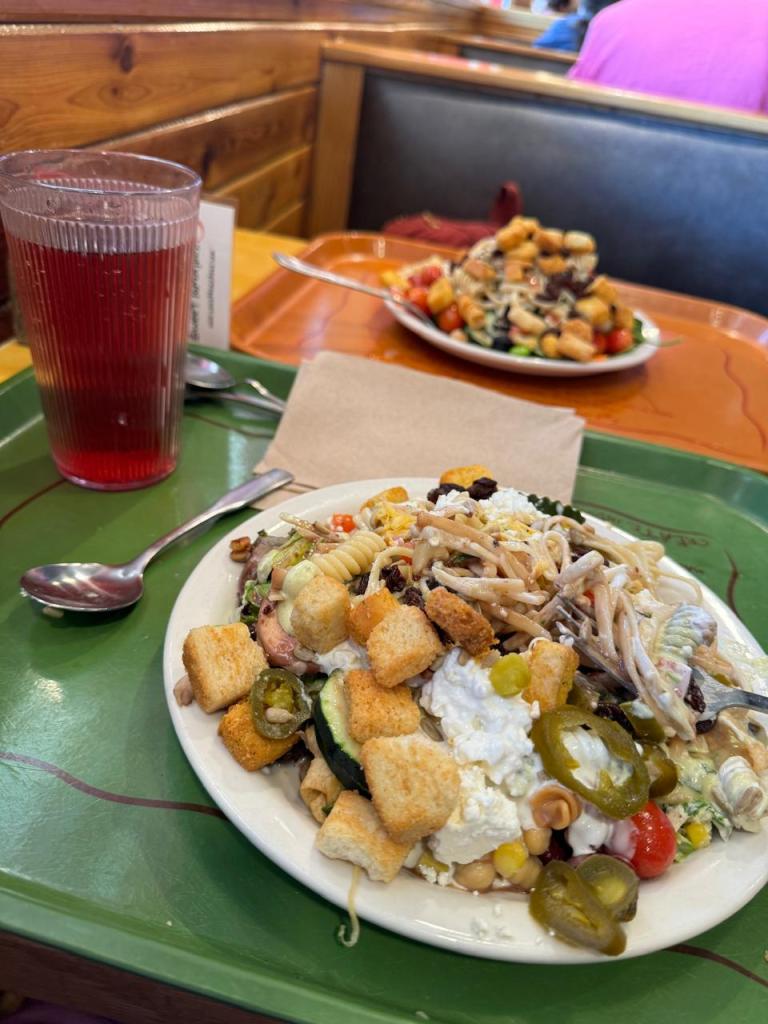
fully loaded! my salad plate!

For the first time had a buffet lunch at Sweet Tomatoes in Arizona. My daughter’s recommendation. Its out and out American, and therefore I really expected junk food frankly! But what a surprise the restaurant was. Packed to full, it had queues waiting for the weekend lunch. As a vegetarian from birth, I could not have hoped for better. Like in some buffet lunches in restaurants back home in India, the salads took the place of pride. There were dozens to choose from: broccolis and carrots and lettuce and mushrooms and beans and cheese and others such as pasta and raisins with meat portions and sea food combinations. Toppings were interesting. The main course had the regular breads after soups. I settled for broccoli my favourite anyday. My drink was Hibiscus green tea. Everything in the restaurant is farm produce freshly procured. I have never had such a healthy restaurant meal in the US so far. The dessert was tapioca one for me which was not bad. I had to settle for vegan choices as I had to avoid egg content. Otherwise the desserts such as brownies looked droolworthy! Sadly I had to miss even some bread selections for the egg presence. Even so, I had my plateful! The buffet was more than sumptuous. We paid only $66 dollars for four of us and the baby of the family was not billed. The men had good portions of chicken. I wish I had discovered Sweet Tomatoes a lot earlier. Food is a big issue for me given my vegetarian bearings. Even in breads and deserts I have to avoid those with egg as ingredient. I am a fussy eater. So Sweet Tomatoes came like a blessing. Truly a godsend! I am a huge fan of American coffee already. Had my fill as usual. I like their roasts with hazel nuts and macadamia nuts. Highly recommended chain of restaurants in the US. Worth the wait for your table and more than worth the bill. Healthiest. Love my Buddha bowl always with yum salads and Italian seasonings even in India. Light on your stomach. But Sweet Tomatoes will be the best salad restaurant I have eaten at to this date in my life.

Buffet restaurants are always known for their signature starter salads. Sweet Tomatoes was no exception. Even if the main course that followed was equally a vast spread, the salads won hands down. You have to go here for the array of salads. The meat eaters rejoiced over the shrimps. The drinks were non alcoholic and non carbonated herbal teas with infusions of floral and fruity flavours.

Would as well use this space to record my displeasure at the way the Absolute Barbeque in Chennai has deteriorated. Been here nearly half a dozen times. Our Indian grills can be somewhat unhealthy. As a vegetarian, here too my choice is limited. But recently, was shocked to see the crowds cramped in their restaurant space jostling for a foothold as the business house has grown greediest to take in more orders/bookings than they can afford to. No respect to time-slots. For 12 to 2 noon booking, we got our table by 1.30. The place is no more hygienic and is devoid of any ambience. If its Doha, Absolute Barbeque will be sealed for good, never given licence ever to open again. Food safety inspectors do a great job here. Tables have to have decent gap between them ensuring at least a minimal privacy for diners. Its chaos in AB and we regretted having chosen this place for a party celebration. The waiters are overworked. Avoid at all costs. Buffets to me have lost their lustre these days.

Sweet tomatoes appeared like an apparition really! Its changing the way I think about buffets. In India, buffets mean fries and grills mostly. Slick with oil and can be even unappetizing! Just forget the calory count! Over-priced in gaudy restaurants. Not much to say about ambience in Sweet tomatoes and not at all for romantic candle-lit dinners or cozy birthday parties, but can appreciate their purpose and efforts.

Posted in food as therapy...

Paatti Samayal.

Suddenly I remembered some tidbits from my grandma’s kitchen. I wish I had paid more attention to her cooking those days. We got a mixer grinder by 1980 but even after that, my granny used to grind the Coconut chutney or Pudhina thogaiyal only on the stone chakki. I remember the days when we used to grind the idli batter on the stone chakki as well. This was until we got our first wet grinder at home. For the Vraths we observed at our home puja, we had a ‘sacred ‘ (!) chakki that was used only to pound rice/wheat for making Neivedyam for the gods!

My home also had a small coffee grinding machine, manual, fixed to a wooden shelf. Coffee in the mornings always used to be too fresh. We got our coffee seeds roasted every week. The pounding by hand, my granny did every morning before making the filter coffee. This must have been our house practice at least until 1982. Moreover there were no coffee shops in those days like we have now. Many families owned this small and cute iron coffee grinding machine that was easy to operate.

But what I specifically remember about my granny is how she never used the ‘chakkai’ or pulp of coconut but only the first 2 extracts of coconut milk on breaking a fresh coconut. Like any south Indian home, ours always stocked coconuts by the dozen. No recipe in my home almost without coconut as ingredient – barring rare few. If fresh coconut was not used – the kopra (dried and desiccated coconut) was used. Yes, the kopra! My grandma used kopra in lots of dishes. Sambhar was never the plain sambhar that was podi sambhar with thaan like how we make now. Every single time, the sambhar in our house was ‘arachu vitta sambhar’ when not fresh coconut but always only kopra that was toasted and made into paste with red chili, dhania, etc was used. As for ‘thengai paal kozhambu’ etc., only the coconut milk was used freshly extracted, never the dense coconut pulp on wet grinding. So the stews in our home always used to be water thin, yet yummy, keeping with the consistency of the coconut milk. Sambhar or any stew/kozhambu would never form lumps or be mozhukku mozhukku as we say in Tamil. That consistency was brilliant. Hand coconut scraper meant, no brown dots from the kernel. We stopped just short of the kernel when scraping the coconuts, that the chutneys used to be as white as freshly bleached white clothes! Thumbai poo thengai chutney really. Now the grinding coconut in blender gives us the pulp that is like gravy with brown dots strewn all across. Sometimes I do try to make veg korma etc., with just the coconut milk like my paatti.

“Rasasambhar’ – this was my patti’s signature dish – which was neither wholly sambhar nor fully rasam. It came with tomatoes but no tamarind, very little dal like in rasam, no sambhar/curry powder but split green chilis. It was a hit in our family. Mostly for saturdays we had it. I really regret not having mastered this recipe. Its for the lighter days and for summers specially. Not too spicy or gassy. No onions, just plain rasasambhar with tomatoes, green chili alone with curry leaves and coriander.

The best sweet my patti ever made was Kaju katli – the cashewnut barfi although I didn’t know it by that name then. We simply called it mundhiri burfi or mundhiri paruppu paak (like mysore pak that’s all). She also made laddus, jaangiris besides making vathal or vadam (fries like papads) on our open terrace bottling at the same time mango and lemon pickles in ceramic jars (jaadis) that would be sealed off tightly with a piece of cotton rag to last us through an year. I loved the jawwarisi vathal koozh hahaha so my patti would give me one mug just like sabudana kheer – with the only difference being that it would be salted with just a squeeze of lemon on top! That is what paatis are for! Every summer vathal day means, a mug of vathal koozh for me just plain raw!!

Her lunch boxes in my school were hit. Her lunch boxes were also a hit in my mother’s school and my aunt;s school. How she managed to pack so many tiffin boxes so early in the morning = only now I am wondering. I am talking about an age when we had least facilities. No mixer grinder, no coffee machine, nothing. She packed lunch boxes for my parents, my aunt, uncle and we two girls. Besides that she laid out full meal breakfast for all of us by 8. We had this habit of eating whole meals by 8 or 8.30 am – no tiffin for breakfast. Again meals for lunch and dinner. Tiffins were only for the evenings. Which meant, we ate 4 times a day apart from fruit breaks and milk/coffee breaks! Paatti would keep tiffins ready by evening and give us dinner by evening 7. Well, 7.30 or maximum 8 used to be our family bedtime!

Friends came home just to eat her food. My mom’s colleagues, my aunt;s, the neighbourhood aunties (maamis) everyone loved her food. She was fondly called ‘maadiaathu maami; by everyone in the street. I was told that for my first birthday, my grandma cooked single handedly f0r 100 guests at home – without a help. She had made badam halwa for dessert, handgrinding the almonds. I was born an year after my mother delivered her first son stillborn. So I was a celebrated baby. (As for as birthday cakes were concerned, a strict NO. Instead paati actually dared to make big Kanjivaram idli for me to cut like cake on my birthdays!)

Of fondest memories are my patti’s Kali and Koottu that she would make for every Aarudhra Dharshanam. Then Pori urundai for Deepam. Deepavali sweets at least three varieties in hundreds. Murukkus, chaklis. Sometimes I think I wasted years not learning anything from her. During those times, we had only a single LPG cylinder. That would last us only 20-21 days maximum and during festival times, wouldn’t even last 15 days. We had no second cylinder. It meant, my patti worked in kerosene stove until the refill LPG cylinder arrived. Those days, it sometimes took a week or even 10 days for a finished gas cylinder to be replaced. All that never slowed down the kitchen activity in our home. Nobody left our place without eating. My house was known for hospitality. People had to burp and leave wholly satisfied! “Naalu ilai vizhanum’ was what I heard growing up. It means, 4 (banana) leaves at least must end up in the garbage bin. Banana leaves were the natural plates used for serving guests. Even today south Indian restaurants use banana leaves for serving food. No Hindu marriage without feast being served on banana leaves. Paper plates/crstals/dinner plates preferred by very few even today. So if 4 banana leaves fall in your garbage bin, it means you hosted 4 people for meals at your home that day. For all this generous gesture, we were a middle class family. That after generations, that hospitality is still remembered is something.

As it turns out, my sister is a gourmet chef unofficially who can turn out restaurant style north indian, south indian, continental, italian in no time. She is an expert self taught cook who also does baking, pickling, fries etc besides doing the same laddu and other sweets alongside murukkus, chaklis – being a working woman of managerial capacity at that. My aunt too is a gifted cook. She is too old now to cook. My girl cousins also have turned out to be great cooks. One girl is supposedly masterchef in non veg cooking that I cannot sample. All of these were/are working women.

We all developed our own ‘kai bhagam.’ I don’t know about mine but I do know that my family loves and appreciates my food. I don;t remember patti’s taste now but my aunt says none of us acquired her kai pakkuvam. It was lost with her. It was because we faced a storm in that phase that took our attention away from food. Our focus was on other important matters. Food was only for subsistence.

But when my friends still remember my lunch box to school and remember my patti’s cooking, it brings a smile to my face. I still do yam the way she used to slice and roast. She never skinned the carrots. EVen for potato podimas, she left the potato skin unpeeled. Same for potato in kozhambu. Came with the jacket! Kozhambu had even colocasia (seppam) sometimes – that ofcourse came with skin peeled! She neither peeled the skin of apples. No skinning the raw mango either. Just a thorough rinse under running water, that’s all. Not as paranoid about pesticides and fertilizer residues as we are today! But I think in her days, those were sprayed less too. Well, even vaazhaikkai – the raw banana was fried in our home with the skin unpeeled but sliced thin. For a fact, even the mango fruit we never peeled but always ate the ripe mangoes with the skin.

By my 13th year when I attained my puberty, my granny started feeding me urad dal laddoos. I can now deduce how she must have made it. Roasting urad dal on ghee, adding cashewnuts and almonds, she must have powdered it and blended the same with molten jaggery. This she must have made into fair sized balls that she neatly fit into tins. Every morning she gave me one urad dal laddoo to eat on empty stomach which she said was good for uterus development and for bone growth. Her value I realized decades later. This kind of nutrition is extremely important for vegetarians especially. I must have had this for at least 3-4 months everyday. Dal rice with generous ghee serving was a must in my home. Also thick fresh curds (yoghurt). We ate all vegetables and all fruits. I was a poor eater in my pre-teens. I never capitalized on my grandma cooking.

For our hair and body, patti made shikakhai at home for hair wash. She had us use besan for body cleansing. NO chemical soap or shampoo at all until atleast my 15 th year. Saturdays were ‘vilakkenai days!’ We were made to gulp down castor oil every saturday and we would end up with loose motion at times that would cleanse our bowels totally. On the same day we were to soak head to foot in coconut oil for hours before showering. It was a weekly ritual never once broken to my memory.

Neither do I remember popping pills for anything. Even for fevers only ‘kashayam’ for us and the temperature generally came down on its own. When I had measles in my primary school, I was never refered to a doctor. Only neem water. I was quarantined within my home and made to lay on a mat with neem leaves for mattress. For colds and fevers, my mother would pluck ‘karpooravalli’ leaves and ‘tulasi’ leaves from our terrace potted plants and ask us to chew. We normally got better with these home remedies. Paatti had kai vaidyam for everything – from stomach ache to sprains.

More importantly, NO eating out for us in those days. May be we ate out once an year and that too only at Shanthi Vihar, Luz, Mylopore that is no more. 100% home food. Only 4 sets of clothes even if both my parents were working. Very simple life. I later realized that my parents were well off compared to our neighbours. They both were placed better. Still we owned no phone or car. We commuted by bus only and if walking was possible, we walked all the way! The one thing my family spent on was on Tamil dramas and sabhas (for classical dance/music). That was the only luxury we enjoyed because, even a vacation meant going on temple tours. For my parents, holidaying in Madurai was for Meenakshi Darshan, Kanyakumari for Kanyakumari darshan, Guruvayur for Krishna darshan. Of course our yearly vacation was perennially at Tirumala Tirupathi! Why from Madurai, my parents never made it to Kodai escapes me! Anything over temple was considered excess!

My family was steeped in religiosity that much I can remember. Very pious. Spirituality was part and parcel of life. My grandfather literally lived in temples.

Our snacking also was different in those days: summer meant nungu and kirni pazham with sugar. Besides mangoes of course. Never had had junk food until by masters degree days. I remember the first time someone mentioned ‘pao baji’ to me and drew a blank from me! Neither did I know about parathas and all that are north Indian cuisine! Chennai even until then had only idli/dosa/vada/sambhar over 99%. Restaurants were starting to add north Indian menu slowly one by one with the arrival of the 1990s only. Otherwise local restaurant ‘barota’ I was aware of hahaha! That itself I used to think of as superfood and actually would crave for it for months!

Now we use garlic, ginger and garam masala in our kitchens but I don’t think we used them in our growing up years. Basically this is considered north Indian as none of their dishes came without these 3 ingredients. I started using these spices only from my 30s really! As we started eating out more regularly and as my son started growing up, to make food more interesting for my family, I started diversifying my menu. I don’t think my grandma can identify with most of what I cook now in my kitchen. One thing I do do like her but not quite like her (because I follow my own recipe) is her vaazhaipoo vada! Although I can’t remember, I remember the lipsmacking goodness of my patti’s vatha kozhambu and paruppurndai kozhambu.

Btw even tea entered my life only on my marriage. Evening chaya proved unpalatable to me coming from a family of die-hard filter coffee lovers but my in laws’ place had only tea for evenings. The switch over was initially traumatic to me! MY uncle who is no more would go to Leo coffee in Mylapore by 5 am on week days every 4 days to buy freshest coffee so as not to lose out on flavour. That freshly ground filter coffee, in first decoction with first boiled milk, is matchless. My uncle was the coffee master in my aunt’s house. He would not allow any of us to make coffee because he said we allowed coffee to go a wee bit cold! WE shoudl have filter coffee hot, hot! But may be that’s why he, being a teetotaler, was shockingly diagnosed with cirrhosis. Having food and coffee too hot, hot for years could have been a reason, said the doctor.

Anyway, we are such foodies in Mylapore. Its not surprise my sis is a master cook now. Its in her gene. However this gene seems to have missed me because I am so-and-so – not that great in cooking. Rounding off the post with thoughts of elumichai sevai, puli sevai, thengai sevai, uppurundai, thavala adai etc., that served as our grandma’s evening tiffins for us. That thavala adai I remember somewhat – and I have not found a similar one like hers all my life anywhere. Who says India is third world country. The kind of rich food we had, the rich life we led until the cell phone-laptop era dawned, was unbelievable. My life had only these elements then: temples, pujas, great home food, small circle of friends, and very tiny but tight circle of trustworthy, reliable and kind and affectionate relatives. Sometimes I wish I could go back to the days before 1982. Closing the post recalling images of my grandma walking home with my mother carrying baskets of raw mangoes and fresh ripe mangoes from Mylapore market. Also recall the days I had to settle for Nestle instant coffee and Maggi noodles when the good times ended with them. To me the women represented so much of goodness. My patti – who read every book still, read the Hindu newspaper, was generous with househelps and street hawkers. She who never owned more than 4 saris, who never did a puja after her daughter’s untimely demise, who never left home after her daughter except for her hospitalization – will always have a special spot in my heart. Gift of the joint families is this: bound by love and affection and care and kindness for a lifetime. Selfless to the core, supremely sacrificing.

****************************

  • mentioned many times in my blog: watched once my patti reading Warren report – the book on Kennedy assassination. i remember because i asked her what it was and she told me. she was the one who first told me about this nation called Pakistan. she told me about Bhutto hanging and showed pictures in the newspaper. its from then on I started reading papers daily.
  • my granny is best remembered by the neighbourhood kids for asking them to ‘lose the carrom game’ so that her granddaugther could win! that is what a grandmother is all about!
Posted in food as therapy..., Welcome to my blog!

what do we eat in India.

Before going to whole grains, I am making a list of veggies we consume around the year. Our Hindu meals include atleast three to four veggies or more every single day. Everything fresh from market or grocery stores.

Onion, tomato, ginger, garlic, green chili. Shallots or the baby onions are southern special

Carrots, beetroots

Cabbage, cauliflower and now even broccoli (for soups)

Okra (ladies finger), Brinjal all colours, drumsticks (not the chicken drumstick; this one grows on trees) (the poorman’s viagra)

Cucumber, radish, turnip

Capsicum or bell pepper all colours especially green

Potato, yam, sweet potato, colacasia

Broad beans, cluster beans

Fresh green peas, double beans, butter beans, soya beans – no need for soaking if you live in India. They come fresh round the year

Raw banana, banana flower, banana stems,

Rajma (red kidney bean), Channa (chick pea both brown and white)(these have to be soaked) though Rajma also comes fresh with no need to soak overnight

Corn, babycorn, mushrooms, soya chunks, lemons, gooseberries

Panneer the cottage cheese and tofu

Coconut, raw mango, jack fruit seed

Black gram, bengal gram etc.

Bitter gourd, snake guard, ash gourd, bottle gourd, ridge gourd, yellow pumpkins, chayote. Bitter gourd is good for diabetes control. Must in our food.

Greens: methi (fenugreek) leaves, mustard leaves, amaranth both red and green, drumstick leaves, spinach, mint, coriander, curry leaves, etc., just to sample. Keezhaanelli leaves are natural cure for jaundice but America patented it as we never claimed it as ours.

I shall add more as and when I recall. All these we eat atleast once in 20 days. That is how rich and sumptuous a Hindu meal/food can be.

Seasoning used in every day cooking : mustard seeds, cumin seeds, fenugreek seeds, black peppercorn, fennel seeds, dried fenugreek leaves, dry red chili, bay leaf, cinnamon, cardamom, cloves, asafoetida, etc.

Other natural seasonings/taste enhancers: tamarind, turmeric powder (for colouring and for its antiseptic qualities) (there is NO Indian cuisine without the turmeric)

For protein for vegetarians: all kinds of lentils and pulses.

Whole grains and others: broken wheat, wheat, brown rice, white rice, original Basmati rice, red rice, broken rice, atta 0r the whole wheat flour, rice flour

Millets: this is the native food of India. Finger millets, pearl millet, jowar, bajra etc., are making a come back in Indian cuisine.

Oils of India: groundnut oil, coconut oil, mustard oil, sesame oil . Sunflower oil is very much affordable. Palm oil is for the nation’s poorest being our bulk import from Malaysia.

Coffee and tea are alien to us but they have such a profound presence in India.

So this is how we raise our children in India.

Fruits native to India are mangoes, jack fruit, banana among others. Seetha pazham, vilaam pazham – I don’t know the English names. Have to google. These are found to have cancer fighting properties. Elantham pazham. Apple and oranges are believed to be imported but they might also have been growing in the higher altitudes of India like in the Himalayas and the Nilgiris that the plains people remained unaware of for centuries.

The stunning variety of the veggies we Hindus could be a reason for our global success in most of our opinion. Our breakfast Idlis which are pancakes from urad dal and rice get made from fermented batter that are natural probiotics. No Indian meal is complete without the intake of curd (Indian yoghurt). Similarly we use ghee or the clarified butter in daily food.

Hindu vegetarians lose no nutrition because of their picky food habits. My greatest regret is my son losing on the kind of vegetables and greens I used to cook for him after migrating from India.

I may be vegetarian from birth, but I learnt to cook meat for my family. WE always got fresh chicken and fish, never the frozen ones. My family loved king fish and hover’s carp. Staples for my son every week. Indian mutton too is rated highly over Australian mutton. Twice a week minced meat or mutton or chicken with a fish was in my son’s menu. On rare occasions father and son cooked for themselves sea crab. Fresh sea prawns also featured in the monthly diet list. I always rotated the menu and saw to that nothing was left out from our table. Eggs of course was like a pickle. Constant presence. Even so I would try to order country eggs. Instead of broiler chicken, I went for country chicken. We attached great importance to organic nature of food and nutritional quality. Frozen food except for panneer or the cottage cheese, was 100% ruled out. NO AERATED DRINKS AT HOME. If Indian cuisine is No.1 success story around the world, the reason could be the infusion of so many vegetables and greens in our food.

Sadly sometimes, our superduper food gets branded as curry by those who prefer the KFC nonsense and bland and stale and unimaginative food. This is the fate of anything too good to believe in this world. The kind of food we serve everyday in our family can be billed easily at 500$ in the US for instance. I know what I am eating.

After a gap I returned to Doha to join my husband. Our lunch yesterday was cabbage koottu – a stew made with cooked lentils 2 types. I added coconut milk to it ground with green chili and soaked jeera or coriander seeds along with a slice of ginger. I garnished the stew with madras sambar powder made of red chili-coriander seed-black peppercorn powder. I sauteed some mustard seeds, cumin seeds with split red chili, added asafoetida a bit freshly ground, curry leaves in a tablespoon of heated coconut oil. I added this to the stew bringing to a boil. Seasoned with freshly cut coriander leaves. For curry I made a roast of double beans shelled fresh, roasted with tomato, garlic, onion. Sauteed with mustard seeds with cumin seeds in heated groundnut oil. Seasoning was with curry leaves, coriander leaves. The beans got the spice from madras curry powder – a mix of dry red chili, coriander seeds and black peppercorn roasted and ground. For crispies I deepfried some dried tapioca pearl chips that are sold by homemakers. I got some packets from India. A simple rasam, a juice of tamarind and tomato with black peppercorn powder and curd completed our homemeal. This is normal Indian cooking. I did nothing special. In fact, my cooking yesterday was minimal and very simple. I cooked brown rice to go with it. Breakfast was millet stringhoppers sold by some Indian shops. Its best for sugar control. We watch very much what we eat. If you don’t want gluten, then you may as well go to sleep on empty stomach.

Hindu food is rich in content. EXcepting for meat, Hindu food is mostly SATWIK. Satwik food is the reason for the Hindu temperament.

I am blessed to be born a Hindu, blessed to be a vegetarian from birth and blessed to live in the great ancient nation Bharat/India. Hindu culture is the one and only unbroken and continuous civilization in the world for over 10,000 years now.

I see so many addicts to Indian range of cuisine around the world. If Indian food is priced exorbitant in foreign countries, it is for this reason: its exotic and the ingredients have medicinal values. ‘Food as therapy’ as we Hindus call it. Chewing betel leaves with areca nuts was custom to enable our ancestors get their continuous supply of calcium when they were vegetarians.

Years of living in foreign countries got my eyes opened to what really is quality of life: whether it is something to do with highways and malls and casinos and brands. Or something holistic , no way materialistic but that which leaves you with profound contentment. Where others see heat and dust, I see what really matters in life.

Posted in food as therapy...

Think twice before ordering milk dessert from Indian restaurants.

No, it is NOT The Irritable Bowel Syndrome.

*****

My uncle was telling me how when he went with his friends to Kodai, a surgeon friend of his got food poisoned. They were MMC alumni who were staying in a five star hotel in Kodaikanal. All were retired men and there were a few ladies. Since many had health issues, generally bland food was preferred. A particular surgeon thought he would play safe sticking to mere dahi chawal or curd rice. Finally he was the one who got food poisoned at the age of 65. His holiday turned into a nightmare with him getting admitted to a hospital in the hill station for a week. He had to be admitted to ICU as his condition deteriorated before he recuperated. Apparently the culprit was the curd that had been refrigerated for long as there weren’t many takers. Sometimes when you go out, its prudent to eat the hot food that might be heated up lately. That way you can avoid stale food consumption unknowingly. Any fungus in the food may be ruled out. In my case, I have had stomach upsets whenever I consumed milk based desserts in Indian restaurants. Having to share my time between two countries India and Qatar, my body has grown gentle and delicate over years as the food quality standards followed in Qatar are too good. So whenever I am in India, even though I may want to believe that I am immune to the Indian heat and dust and adulterated water, food and environment, I am still affected a little when I try to have my fill whenever I am carried over by the air of festivities. The allure of sweets is too much in India. YOu just cannot say no. As freezers face problems in Indian heat conditions with erratic power supply, the vegetables used in restaurants have to be dipped for a longer time in vinegar to keep them fresh from rotting. For my gentlest stomach therefore eating out regularly means food poisoning sooner or later. A big bout of food poison happened to me at no place other than the Club Mahindra five star restaurant at Coorg. This was unbelievable. I am vegetarian and whenever I am outstation, I pay attention to what i eat. Still some ten years back, I was confined to bed in the resort for a day, having dined on seemingly innocuous vegetarian dish. My family who gorged both on veggie and non veg fare were fine. I investigated the matter with my niece who is a gynecologist presently. She concluded that the vinegar soaking of vegetables must have rumbled my stomach. I started taking note of my restaurant visits after that. I found that the milk based panneer (cottage cheese) proved havoc to me after vegetables. Milk based desserts served in restaurants could do maximum damage. After this Kodaikanal episode of the doctor that can be traced back to the five star kitchen, we can see how preserving food for a longer time extending their shelf life by the restaurants can have a worse effect on our health. I had rabdi, a milky dessert, last evening. Rabdi can be easily put up together I know. Not a big seller. Restaurants here maintain very high hygienic standards. Food inspection is pretty regular in middle eastern countries where even the walking space between tables is regulated so that the restaurants are not cramped. Yet I had food poisoning last night and I threw up everything I ate. What started at 2 am went on until early morning 6 am. I avoid normally the desserts in our restaurants but still went for it when friends ordered. Interestingly and as usual, I was the only one affected. Others got away. Ice creams are fine from fast moving stalls and ice cream counters but again never from restaurants that don’t see consistent orders. Some of us would want to settle for the simple and easily digestible curd rice whenever we go outstation. This post is for them. Hot food is always recommended in restaurants and as far as possible curd rice and any milk based dish must be avoided as the age of the curd or the milk in question cannot be ascertained. There is a risk component. If the curd rice is from a busy popular mess that has no leftovers from previous day, then it is fine. Otherwise we must think twice about ordering milk based dishes and desserts from restaurants. Those with gentle stomach like mine who cannot tolerate vinegar soaked vegetables in gravies, must stick to hot rice menu as far as possible and minimize the subzis if not totally avoid them. For me personally, most restaurants in Doha are fine. Now I am so used to having unadulterated food here that whenever I visit India, it takes time for me to adapt. I do eventually but I play it safe going for steamed food such as idli in that case. Two or three days of continuous restaurant food can totally debilitate me. I still travel a lot within India and in foreign countries. Balancing the food intake is a big challenge for me.

Posted in food as therapy...

The International Vegetarian

Go Veggie Internationally!

Loving Mexican – as authentic as it can get… From the Tacos and Tamales to the Chipotle sauce… being vegetarian restricts your food choices but then Mexican has great veggie options for those like me. Fast food joints do a super service. Their tacos are even lighter and can be had on the run – so no wonder a hit with the local Americans. Exotic/ethnic cuisine gets distorted in other parts of the world as we see with even Indian curry masala. After my Pizzas and Risottos and Raviolis in Florence and Rome, never could I bring myself to touch the Spaghetti or Pasta again anywhere else. The US may not be exactly the right place to sample Mexican but this is the best that I could manage. Tamales are my No.1 and somewhat remind me of steamed south Indian rice dishes such as Uppurundai for instance, and Tacos come a close second. What makes Mexican special is that, it is a bit spicy to cater to typical Indian taste buds bred on red hot chili pepper and pickles. Neither did I find the Mexican junk. With rice and bean sauce and elaborate preparations, the cuisine can be a complete meal. A vegetarian connoisseur’s delight lies in discovering regional veggie cuisine. That way the Falafel is my hot favourite Arab signature dish with their dessert ‘Baklava’ now getting popular in India. Of course, the Sharia rice is irresistible to me, so filling and sumptuous tweaked with kismis and pistachios toasted on ghee. A curious twist of long grain rice and vermicelli, the dish is yet to hit the party circles. Egyptian Kushari is a welcome diversion as is their Babaganoush, the eggplant dish. Love equally the Lebanese veggie platter with ‘Labneh.’ Labneh or labaneh which may be the whey is my most preferred bread spread for last fifteen years. We live in the Olive-and-Date heaven so I make most of the flavour of the region. Sehlab the syrian ‘kheer’ and the Turkish ice creams remain my other top favourites. Life in Middle East is a blessing that way that I get to sample the original versions, as gulf countries teem with expats from every corner of the globe. Partial to cheese – and as much as possible I go for vegetarian cheese that is not made with rennet. We have a selection from the Mediterranean to choose from. Vegetarian from birth, I have been aware i can never get to taste most of the food spread the world has to offer and that my choices are enormously limited. But sampling the global vegetarian cuisine seems to somewhat make up for what I stand to lose on food front. Of course, of late I am loving something as staple as Mashed Potatoes and Spinach Potato patties from IKEA, so predictable and boring to most, served with Mushroom sauce. But only a vegetarian will know, what a luxury it is to find something as trivial as smoked potatoes in a world gorging on meat and fish. My exploration of vegetarian world dishes started with our time in Malaysia. The ‘Kuihs’ from ‘kumpungs’ of Malaysia, the rice dumplings steamed in Pandan leaves, were my first ever veggie foreign dish over a quarter century back nearly. Introduced to me by my Malay and Chinese friends, a wave of nostalgia washes over me as I think of kuihs and I can strangely remember the aroma of the pandan even now. May be smell travels fastest over light and sound! I was lucky to get my order of veggie Kway Teao (thick Malay noodles) done to my taste and preference in Malaysia. Come a long way since then. This as much breaks the stereotypes about nations and cultures. There is no doubt that India is the vegetarian capital of the world with infinite and unique recipes from practically every district and state of the country. A lifetime is not enough to experience and savour the phenomenon called India palate. But there is vegetarian aspect to every cultural cuisine as I have seen, that most of us Indians especially vegetarians tend to neglect. It adds a beautiful dimension to food theories. India does not monopolize vegetarian cuisine. Neither can we Indians reduce others to mere meat eating status. I have savoured Poori and Halwa, veggie Samosas and Channa-Dal in Pakistani restaurants and Bindi (okra) and Naan from Afghan. The latter to me offered the bestest bread basket ever, putting five star restaurants to shame. My favourite eating place is Chinese with its simmering Tofu on the grill with mixed vegetables and Jasmine tea. The variety of veggie cuisine the world has to offer with respect to regional and seasonal harvesting/vegetations makes for interesting menu. Survival is possible in any part of the planet provided we nurture an open mind even as a vegetarian. Help yourself to generous servings of global vegetarian. You will want to eat out of humanity’s hands.

Posted in food as therapy...

Biriyani Vs Thayir Saadham

Biriyani is soul food for connoisseurs of food not only in India but throughout the world. Touted the ’emotional food’ of the masses. Purportedly food popularized by the Moguls who invented it accidentally adding Indian spices to Kashmiri Basmati rice cooked with juicy mutton/meat marinated in herbs, Biriyani catered to rich man’s platter for centuries. It is only in last few years that the biriyani reserved normally for feasts, has come within common man’s reach with outlets selling it street to street with all possible variations one can imagine. Finally the dreamfood of meat lovers is affordable with the arrival of the broiler chicken. Loaded with ghee and spices and dripping with greasy oil, heavy meal meant for hard stomachs, biriyani is not exactly your health food on the menu. Overdoing biriyani is harmful to one’s health and there can be no two opinions on the same.

Thayir saadham (curd rice) on the other hand is the polar opposite. Cool on your tummy. Bland. Probiotic that aids in digestion and absorption of minerals and other nutrients, no south Indian meal is complete without thayir saadham. Although a particular community has branded it as theirs, the fact is that there is not a south Indian who does away with thayir saadham when he/she has not consumed meat with the meal. Curd does not sit well with meat, and curd with fish for instance can lead to food poision. This is the reason meat eaters prefer buttermilk to thayir saadham. Supposed to be the super brain food, I cannot though figure out how those who claim exclusive properties to thayir saadham have not still produced the Korean or Japanese or Chinese range of intelligence so far! Apparently the centipede and millipede and snake eaters win hands down when it comes to IQ! Some brainfood here!

So, it is not merely biriyani, even thayir saadham is overrated. If the ‘Rajas guna’ of the biriyani is indeed the reason for physical violence, then the ‘Sattva’ curd rice is only too capable of passive aggression that has been the characteristic trait of some Hindus for centuries. You don’t have to weild the sword like the moghuls and draw blood every time. The very opinionating nature in some is disturbing.

Men who work in tougher conditions involving physical labour need their quota of protein that can come best only from meat. Those who work indoors with not much of physical activity can forego meat for their own sake. Geographic conditions too dictate our food habits. High fat food is a must for those living in cooler climes. Availability of food used to be a primary factor in determining our dietary customs until very recently. Camel meat and milk were staple food for nomadic tribes of Africa and Arabia. Where agriculture flourished, vegetarian food habits developed with the harvest of food grains. Where maize cultivation was suitable like in Africa, corn became staple food. Islands had fish eaters. As we all know, the universally recommended diet is Mediterranean with its rich olive and cheese blocks and a fair share of fruit, nut, fish and meat. The Japanese formula is Sushi and the Mexicans spice it up with their herbs. The Chinese wash down the fat in the food with their herbal teas.

Personally I prefer saatvik food for health reasons. Easy to palate for a homemaker like me. Insufficient for a hardworking man like my spouse. Meat is a must in his daily portions. So that does make a man more aggressive or less intelligent. Each of us is bred with a different metabolism that may determine our energy levels. In my opinion, we must never disturb that equilibrium but must do with what works for us. Moderate meat consumption complemented with fruit bowls and sprouts/cereals may make for ideal balanced diet.

There are gentlest meat eaters I have come across in my life and violent vegetarians. One thing I can observe is that, the meat eaters have undoubtedly better stamina and libido compared to vegetarians. The nonvegetarian platter is more balanced than a vegan’s or a vegetarian’s. The nutrition content in vegetarian menu is skewed and most of us vegetarians including me lose out on essential proteins and omega fatty acids from fish. Plant substitutes hardly prove to be sufficient. Good number of kidney patients and liver cirrhosis and intestinal cancer patients are vegetarians surprisingly and not alcoholics or voracious meat eaters. So that must have a point for us. On the otherhand when we consume light food and our metabolism is evolved differently with less fat in our blood stream, our memory cells could work sharper. This is merely scientific evidence. Excess fat can make one lethargic.

A north based friend would say, biriyani or any meat diet carried the soul of the culled animal with it. So do leather boots and bags and belts. But the irony is that the friend’s family is into money lending business that is ruthless and preys on the poverty and helplessness of the borrowers. So this is what I call passive aggression which is worse than physical violence.

Biriyani today faces the flak because it is now identified with a community that is considered anti-Hindu. I am not biriyani lover either even if I can cook up a sumptuous and droolworthy biriyani adhering to health standards even if I am vegetarian by birth. Biriyani tops as the numero uno favourite food of my family. Whoever is against it has not yet savoured its flavours including me.

Neither am I for mushrooming of the biriyani joints in nook and corner of our country. Biriyani is on its way to become the national food or staple food of India and it is ringing alarm bells naturally. The health of our younger generation is at stake. Frozen meat pumped with chemical preservatives is used in tons to turn out huge mounds of biriyani to cater to the tastebuds of crores of our population. It was never this way until a few years ago when biriyani meant only ‘bhai veetu kalyanam’ or ‘ramzan.’ In those celebrations/festivals, no frozen chicken or mutton was used for biriyani. The meat cut was fresh with mostly animals sacrificed for the occasion. The proliferation of meat habits points to explosive growth of poultry industry, nothing more.

Thayir saadham is gentle on our stomach. For summers, every single day I have only the ‘baghalabath’ with grated cucumber and carrots and coriander in it. It is our family’s favourite too, as much as biriyani is. It is always our family lunch box food.

On meat eating days, my family have plenty of buttermilk to offset the spice consumption. In winters, I forsake curd rice and settle for stews and have buttermilk in the place of curd rice because I do not want to miss out on the spice in the chill weather. If it is not curd, it is always buttermilk for us. To my knowledge, this is how meat eaters consume curd/buttermilk. Who says they do away with curd totally. What is ‘raitha’ then. Having a divided family on many matters helps me in contemplating different perspectives.

Even north Indians round off their roti subzi meal with a little ‘dahi chawal’ after ‘dal chawal.’ The arabs buy curds (labaan) (both thick sour curds and the bottled buttermilk) in buckets literally and consume it alongside meat including that of camel. Compared to arabs, thayir or curd consumption in India especially among south Indian Tamils is dismal actually! So much for thayir saadham! Only difference is, the arabs consume tubs of yoghurt (unsalted/plain) straight away without having it with rice like we Indians do. Yoghurt both plain and fruity are popular throughout the world including in south east Asia and America and Europe. But nobody spun a tale on curd rice the way we south Indians do. Research departments in American universities picked it up because the research students there and the faculty are Indians and more specifically south Indians/Tamils!

Well there is an intermediary food called KAAAAARA KUZHAMBU !! I am slave to that! Call it Vatha kozhambu or Kara kozhambu, my vote is always for that and my signature foods that I am good at include this kara kozhambu made with tamarind extracts and red chili powder. Hot and steaming, nothing like our kaara kozhambu with dollops of gingely oil floating on top! Spicy and alluring! Sambhar too belongs in this middle range along with other vegetarian stews like Koottu. Most underrated are these day-to-day cuisines of ours. Much as my biriyani is popular with family and friends, my bisibela bath and baghala bhath too are equally rated! Not that i am a gourmet chef or foodie. Just a regular housewife who does nothing out of the ordinary.

I can agree with discussions of biriyani so far as it is limited to our health aspects. Once you bring in the religious philosophy alleging characteristics and properties to it, you violate a Dharma in the process. One man’s freedom fighter is another man’s terrorist. Whoever said, ‘kondral paavam thinnal pochu’ in Tamil. World operates on this conundrum.

Why do some of us feel the compulsion to judge everything and everyone. Why can’t we let anything be.

I do not know how far it is true that Biriyani existed as Mans-oden in Nala’s cookbook ‘Paka Darpanam’ but we all want to perfect our recipes like ‘Nalabhagam’ don’t we. Fellow hindus are now onto to ‘Jhatka’ in the lines of ‘Halal.’ Some ambition here.

I love my vegetarian Lebanese, Egyptian, Turkish, Arab, Italian, Mexican, Chinese, Malay food as much as I love my vegetarian Indian platter. I am keeping my options open and I am willing to experiment and grow, not limiting myself to hypocritic notions and boundaries. Pleasantly surprised to discover vegetarian Georgian cuisine in the shadows of the Ural. My meat eating husband loathed the honey and chocolate dipped meat and turned vegetarian during our tours abroad. There can be no single way of defining food or labeling food. Ingredients like spices and meat and vegetables can be treated in entirely different methods of preparation. Even the cooking ways are different from baking and boiling to tandoor/grilling to deepfrying. Variations even by slightest degrees produce entirely different dishes as we know. Food too is innovative in every step. First of all let’s stop sermonizing and learn to imbibe the best from others.

So why is biriyani the emotional experience and thayir saadham, not? Because once you try to attach the puritanical strings to it and try to own it, it loses it lustre. You make it communal. Food is first about sharing and caring. Biriyani excites a man’s all five senses: visual, aural, nasal and spiritual not stopping with tingling one’s taste buds. Friends and family have confessed to mood upliftment with Biryani. If there is not something matching biriyani in desi cuisine, invent it! Because the biriyani addict-crowd swells by the minute! You just can’t be sitting there in the high stool of your kitchen counter judging without sampling.