Posted in Books

The one and only book that matters: ‘Autobiography of a Yogi’ by Paramahamsa Yogananda.

Its a shame although I have known for years or perhaps decades, and that too being an ardent, born and practising Hindu, I still finally got to read this lifechanging book only very recently. Reading for months now from my desktop Kindle. About to finish. Who am I to even review God’s own writing. This book is not fictional and this book is for those who are born outside the Hindu India to understand about the Hindu philosophy/Hindu Dharma. Why, even all of us Indians could make the best use of Shri Yogananda ji’s excellent autobiography – the kind of which I have not come across so far. Not that I am a voracious reader. Being part of the Hindu society makes most things familiar to me. Still the book holds my interest totally and I kind of don’t want it to end. I have been reading rather slowly for that reason. REason for my slow reading is that, if I finish a book fast i forget it in a flash whereas slow reading helps me retain the subject matter for long.

Anyway, HIGHLY RECOMMENDED. Nothing more to add. Except that, in this dry desert that is my second residence, I experienced a total of 6 rain draps in a span of 2 weeks. 3 rain drops during a walk before national prayers were called for rain. That when I checked with my spouse who was walking besides me was refuted by him that I began doubting myself. As if to confirm my doubts, the week after the national prayers, 3 more subtle rain drops fell on me. Both the times, as it is my practice, I was chanting the Lalitha Sahasranama in my mind. I chant Sahasranama always in my mind while I go for walks. For me, IT WAS LALITHA ANNOUNCING HERSELF TO ME. Just cool 3. No more raindrops. Nobody else felt them. Just 3 + 3 = 6 that grazed my skin so softly, so feebly ,and that too the first one caressing my crown – my scalp. The beauty of faith. I leave it anyone who reads this to believe this or not. But I don’t have to be reading Yogananda ji to believe in my Lalitha. I am enjoying Her subtle leela with me for years now. Very recently She gave me another unbeatable vibe. A stone is a stone if that is what you believe in. An idol becomes God when you believe God dwells in the stone.

Blessed to be born a Hindu, blessed to have been born in my punya bhoomi Bharat (India). My birth is probably REQUESTED. Souls ask to be born in my country. Evolving of faiths happens only with the arrival of the Avatars. Only Hindu Dharma has been NON STOP producing saints and avatars, hundreds and even thousands of them, for centuries and centuries now.

Before I close this post, I add one incident from a friend’s life story. Her name was Bindhu. She was my bosom school friend’s sister. We met almost everyday at school. We drifted apart. She moved to her native state Kerala. Worked for a central government department. Became a mother to two beautiful daughters. Just into her 40s, she was afflicted with kidney cancer. Died within 3 months. But Bindhu was a follower of Sri Sri. She had completed her entire course of Art of Living and had perfected a particular breathing (Yoga) technique. As the course progressed, she was becoming detached from everyone. The course seemed to have brought in a change with her. Before she passed away, she told her sister that she was peaceful, she did not fear death as she kept seeing her last 7 births then for sometime or ever since she was bedridden (for a week’s time). That made her accept her current role and her current body as temporary abode. Her sense of attachment at that point of time sounded shocking to her parents and family. Her sister and my best buddy until today, was stunned. I am using original names here. Once she was detected with kidney cancer at an advanced stage and was not given any hope, Bindhu went to see Sri Sri for one last time. Gurudev paused for a moment at a distance and looked away it seems. HE KNEW without being told – that’s what my friend says. And Bindhu accepted her destiny. After hearing this real life incident, I think of the mahans, India is producing even today. Sri Sri – for the first time in my life, I want to listen to his speeches and follow his Art of living. As I have already chosen a path to nurture my spiritual instincts, I am hesitating that’s all. All this I am saying, happened just 15 years back. This is the beauty of my holy Bharat.

You missed something so precious and unmissable in your life, if you don’t read this book. So, it goes without saying that there is no excuse of any Hindu skipping it or missing it. I am too late but better late than never.

At the back of my mind is always the omnipresent Lalitha. Its like I cannot shake Her out of my system. She is there behind my thoughts and actions; behind my every second. The books has widened my horizons of thoughts.

The swamijis of the last century: Shirdi Baba, Ramana Maharishi, Ramakrishna Parahamsa, Swami Vivekananda, Shri Lahiri Mahasiya, Shri Yuketeshwar, Shri Yogananda Parahamsa, Shri Ananda Moi, Sri Aurobindho …. the list goes on and on and one.

Even in present times we have the Siddhas and great swamijis in our midst in India. Sai Baba of Puttabarthi is no more. His centenary anniversary was held very recently. Hindu dharma is the only faith in the world that has been producing avatar after avatar for millennia.

May Dharma prevail to eternity. Sanatana Dharma ki Jai (Hail Hindu Dharma)!

Posted in Books

Goat Days

Updated: May 11, 2024

I can’t help thinking about the spirit of our men who work in some of world’s harshest conditions to make life better for their beloved ones back home. I hear all the time about those working in oil rigs etc., at a 70 C temperature in peak summers. Rest of us can fly to our vacations because of these men.

**********************

Happened to read this online although never got to watch ‘Aadujeevitham.’ Its heartwrenching real life story based in Saudi. It suffices to say that until this day, we have Najeebs still suffering for no fault of theirs in Arab states. This Najeeb was lucky to get liberated after all his ordeals. Its a miracle he survived not only his master but also the harsh living conditions and his adventurous escape panning the most horrid and arid deserts of the world, one fine day. His trek through this uninhabitable scorching sand dunes lasts for weeks. His goat days unwittingly prepare him for this desert voyage just like his underwater tough existence prepared him for his goat days. His mental balance is admirable and his physical fitness cannot be underestimated given the poor nutrition he ingests by way of sparse food intake. Finally his freedom from the Saudi jail becomes the true godsend. It crushes our heart to learn that he has been held as illegal labourer after all by his employer, without a proper licence. Through all this I could not help noting how devoted Najeeb is. How he pins every responsibility on Allah and pardons every single offender with a grace that is extremely rare to find. He only bemoans his own fate never someone to come up with accusations. Its a big takeaway for me really. In short, Najeeb comes across as a very sweet soul. For the kind of torment he is subject to, anyone could be ending his life or ending up like his predecessor buried beneath the desert soil. For a soft creature, Najeeb also comes across contrastingly as an emotionally intelligent person who learns how to wait it out patiently and when to play his cards smartly. He makes his calculated moves avoiding risks. His calm acceptance of his situation, resigning to reality and then working doggedly but quietly towards a solution speaks volume about his strength of character. Even the book is a very reluctant version of the statement pried out of real life Najeeb after repeated appeals by the author. Najeeb’s personality is also enhanced from the fact that he is not glorifying his heroic adventure but wants to stay low key.

Only yesterday, I was reading about the Kerala maid sentenced to death in Yemen, because in her attempt to flee from her torturous employer, she had to end his life. What drives the employees to such a sad state of affairs losing self-control. What brings out their wrath. In the circumstances it helps to remember those like Najeeb who retained his sanity and wisdom under most trying conditions. Its his life saver.

Those in the lowest levels of hierarchy sometimes undergo the worst experiences in middle east. Their semi-skilled state makes it easier for exploitative employers to manipulate them and use them to their advantage. I hear many sob stories emanating from the Middle east. But the Goat days by Benyamin which was originally penned in Malayalam is a nightmare unlike anything I have come across. HOwever let not some unfortunate cases let you imagine the worst about gulf states. YOu have to remember that millions of Indians also at the same time make it good here and happily make the GCC nations their second home. Even in Malaysia, a friend’s employers took possession of the family passports as far back as in the year 1997. And this was that of a working professional. Legally its an offence in all these countries trying to strip of their employees of their basic human rights. Expats first much educate themselves about their own rights. Secondly, always stay connected with the embassy at least online. Staying in touch with the NRI community is a must for your own safety. Thirdly, air your grievances immediately and seek solutions. Or spread the word. Appraise someone of your living conditions. Have your communication channels open for instance with the local grocery, your co-workers etc. IF something is fishy, REPORT to the embassy or High commission or fellow NRIs. It may save you from tricky situations. Keep your family updated and equip your family to act on behalf of you if they don’t hear from you.

Again, we find Indians as top CEOS of banks and hypermarket chains and industrial houses in the middle east. Even hospitals and academies and schools and other businesses are founded and managed and headed by Indian nationals. We don’t find Indian labour much because, INdian labour is supposedly expensive. Even 25 years back in Malaysia I was told that Indian labour is unaffordable, so the cheaper alternatives such as Pakistanis, Bangladeshis were the options. Semi-skilled labourers like aircon technicians, plumbers, electrical workers, supervisors etc., may be the lowest rung of Indians employed in the gulf states. You can’t even find fellow Indians as billing clerks or selling garments and lipsticks in the malls. To that extent, the Indian employment levels have improved and gone far ahead. Indian medicos are most sought after. Indian restaurants are the most crowded. Normally we have only mostly good stories to relate. Very few unfortunate cases are out there calling for our attention.

Those like Najeeb must have ended up in the sorry state because of the cunning of some unscrupulous recruitment agents. Indian govt banned Indian women from working as maids since long. Those Indian ladies who find employment in foreign countries as househelp do it illegally. You cannot find INdian women working as housemaids in any part of the world. However poverty may push some women to get work visa in one category and work as housemaids in reality. Same may be true about Najeebs of middle east. Those who end up in such tragic situations must have violated the stipulated norms of Indian government for NRI workers.

You are talking about Najeeb. What about the Kerala women and women from Pakistan, Nepal etc., who end up in the red light districts of Dubai etc. Women don’t get employment permit generally in the gulf states. They are eligible to work only as nurses in hospitals or teachers. Other working women in middle east normally are on dependent visas of their husbands. From the point of employment, their visa status may change. But we hear stories of Kerala women getting work visas in gulf states and ending up in forced prostitution. Once they go into that line, there can be no turning back. Although I have not directly come across any such case, these news keep floating in NRI circles always. Women are the worst victims. They may be recruited as staff nurse but be held as hostage and introduced to flesh trade as bonded labour. Fearing persecution of the society, they resign to their destiny. Women must double check their employer credibility before taking up an oversees job. But again, these are semi-literate, semi-skilled women dying to make a killing in middle east. They won’t listen to words of wisdom.

This book fascinated me as we have made middle east our second home in last some 15+ years. NRI now since 1997-98 although I keep shuttling between Chennai and middle east. There is good and bad everywhere, is all I can say.

I have to round up the review (if I can call that) with the observation that I find it really strange that someone like Najeeb who is the son of the soil living so close to the holy abode of Lord Aiyappa must be a follower of Islam. It really makes no sense to me at all. Some countries like the Philippines for instance have no god so they have embraced Christianity in total. Bharat is the cradle of human civilization. Hindu Dharma is the mother religion for other faiths that are too new. If you have to find god in the deserts of Arabia forgetting your local deities, then I guess everything you do has to be removed from reality. The master of Najeeb is the reality check for Indian muslims. Kerala people are obsessed with gulf money. Although we ourselves may have made our livelihood from middle eastern job, I am very proud of the fact that my home state Tamil Nadu contributes to LOCAL ECONOMY and those in my state have built their lives from contributing to domestic growth paying taxes. Kerala is superficial in everyway. No local glory. Shut out the gulf channels. They are finished. Tamil Nadu on the other hand like the other states of India, is economically independent. We have a robust and well oiled machinery of manufacturing and production line and employment systems that guarantee the livelihood of millions. We create job opportunities and engage the masses productively which is important in the long run to maintain balance and prosperity. Overdependency on foreign sources can make you vulnerable to transitions at a later stage. Loyalty of Kerala muslims is NOT to Allah but for the dirhams that come with their middle-eastern positions. Life is much easier. But remember, there are millions of Hindus who also make a living in middle east, entirely employed on MERIT basis. These Hindus are mere employees and their loyalty shall always be with Dharma and India. You don’t have to become the slave to your employer. You can retain your dignity. It irritated me to read how Najeeb for no reason other than Islam tolerated the utterly inhumane treatment meted out to him. Would the same Najeeb have put up with his situation had his master been a Hindu and the setting was somewhere in Rajastan in India?

That is why I say, nobody can be loyal to India the way we Hindus are. Nobody can love India the way Hindus will. And nobody can bomb India and damage-destroy India the way Indian muslims can! Nobody can betray India like the Indian muslims would – not even the Indian christians. The Indian christians are an educated lot. They use their brains. There was also this news yesterday in the media: of how 10 Indian muslims set fire to forest reserves in Uttarkhand. If anyone is capable of this kind of sabotage to the mother country where they eat their food, sleep on the earth and breath the air, it is the muslim ummah. Loyalty and gratitude have no meaning in their dictionary. If world is taking a critical view of the muslims, its not without reasons.

REading the Goat days, my heart ached because I am human and human suffering does not make me differentiate between people. I find Najeeb to be an exemplery character. His is a beautiful soul. It does not matter to me whether he is muslim or Hindu. But it also pained me to note that so much of a Kerala muslim’s faith, loyalty, gratitude etc., lies with the merciless Arab to who he will remain nothing but the underdog forsaking dignity. Converts are the worst hypocrites you may come across.

Having said that, hats off to the Indian embassy. So many nations don’t care. But India takes best care of her citizens in whichever part of the world they may be. We have even insurance covers now. A tremendous spade work was done in this regard by Smt Sushma Swaraj who was our external minister. Last heard, even rich arab sheikhs now prefer enrolling their kids in Indian CBSE schools that charge a single digit fraction of the kind of fees levied by international schools. And kids attending Indian schools have the competitive edge like none other. You also see the Hindu mandir coming up in Abu Dhabi. There are two sides to every coin. But being an Indian citizen, you know you are in far more advantageous position than other nationalities. If a Najeeb still happens, its because of the foolishness of individuals in which governments have no role to play.

Posted in Books, Environment

Review: ‘The tusk that did the damage’ by Tania James.

I am re-blogging what I did in 2015 in yet another blog of mine. Poachers is the inspiration.

Book Review: ‘The Tusk That Did The Damage’ – by Tania James

August 29, 2015

ELEPHANT POACHING RESUMES IN KERALA/INDIA?

Felt a strange ‘deja vu’ reading this book. Read the excerpts in ‘The Hindu’ over an year back I guess. The synthetic achchan, Shakti mustard oil, sambar masala, the name Ravi Verma and then the mention of (some random) blogger and a few more could be the reason. Quickly checked out the first publication date: 2015 it says.

At the outset I believed the book was authored by an American American (!) I mean a caucasian so were surprised beyond limits that tusker names like Sooryamangalam Sreeganeshan must roll out so freely from the author’s imagination/research. This is possible only if you have an intimate knowledge and familiarity with the terrain and that kept playing at the back of my mind. The exact depiction of Kerala landscape, people, culture, toddy (!), elephants, wildlife parks everything was perfect. It was only when I was in the last 10 pages I cared to look up the author. Not a surprise that Tania James is an Indian American with roots in Kerala.

Aware of elephant torture in our temples, I still believed elephant poaching was rarest in India unlike it is in Africa where rampant hunting down of the species threatens the globe with their inevitable extinction in near future. Tampering/trespassing  with forest/wildlife reserve and/or any illegal encroachment is a serious criminal offence in the country.  I have observed from an NH project how even the highways are planned and mapped taking into due consideration the habitats of the native species and the flora & fauna of the land. The impression was, poaching stopped with the British barring one or two exceptional cases here  and there. Natives have captured stray elephants to train for battles, festivals in the past but rarely for tusks – or it was so believed.

A quick googling yielded the following links:

http://www.takepart.com/article/2012/10/09/indian-elephant-poaching

http://www.hindustantimes.com/india-news/elephant-poaching-haunts-kerala/article1-1366255.aspx

http://www.theguardian.com/environment/india-untamed/2015/aug/05/poachers-stalk-elephants-kerala-after-gap-of-20-years

http://savetheelephants.org/elephant-news-service/elephant-poaching-forest-officials-subvert-probe-india/

So almost after a clean dry period of 20 years, poaching has shockingly resumed in south Indian forests with forest officers hand in glove with poachers in the inhumane, dastardly act.

Indian elephants register casualty in unnatural circumstances owing chiefly to electrocution (by electric fences installed by industrious farmers) and rail accidents but elephants being poached in India in recent times is bothersome and shocking news. Elephant death statistics have recorded a zero to bare minimum under poaching so as not to make a headline. Until I read the book, I had assumed elephants were safe from poaching in India, with only our tigers having to live under the scare.  Single-horned Rhinos of Assam for another.

So the book has arrived just at appropriate time as a caution. A thorough investigation is mandatory in the poaching issue and offenders must be brought to book. Repeat offenders must be dealt with severely and if there does exist a network as alleged/illustrated in the book upto Dubai for tusks, the angle must be explored by all means.

The story is a moving narration, first person accounts of an innocent and aspiring young man, a woman film maker and the rogue elephant itself. Reminded of the tamil film ‘Kumki’ and to a certain extent couldn’t help wondering if the picture could have been a major influence with the book. Good sense of humour the author has interspersed through out the book. That helped in lightening up tense situations as the story was otherwise like one very serious affair.

My empathy is with Indian Elephants always- such a sad species. When the ‘gravedigger’ is made an orphan, it broke my heart. Every elephant killing is like driving a spear through my heart. To fell such a magnificent but a benign beast, one has to be a monster. Evil personified. Its not a matter of will power or skill. Its a matter of one’s heart. For what I hold for the Elephant is reverence, awe, affection. An elephant as we know generally is otherwise a gracious, gentle giant. Unless provoked, it never disturbs anyone.

I have had my share of jumbo safaris, elephants bathes but now regret it very much. Never imagined, how even the ritual bathing could be torturous to the animals. Someone tweeted: ‘Imagine yourself naked in a room and being fondled by a crowd of onlookers. This is how pet animals/zoo animals must feel.’ Ever since I am thinking  about even the zoos. Zoos are not pleasant places but they are the last refuge when it comes to conservation of rare species going extinct which can be bred in safety, away from poaching threats. And zoos have to be financially viable so opening them up for tours is necessary. How the human wave pressing from all over could be disturbing not only to the pachyderms but to all zoo animals. Yes, why should we wanna go near the tuskers? We can maintain a distance with them and enjoy from afar. When I did my elephant safaris twice, I kept caressing the elephant head, for the love of it. Its long hair almost 10 cm tall in the head was so prickly and thick. It was then I understood why people wear ‘ananudi’ (elephant hair) rings. I have seen them in jewelry shops in Chennai. Even the mahout (pappan) asked me if I wanted an elephant hair as souvenir and I was utterly taken back. Plucking one from the elephant must definitely cause it a lot of pain. I touched the old lady (in Elephant Park, Munnar), gave her fruits and asked her if she would remember me. Telling her I loved her was important then. In Thekady to our bewilderment, 3 of us were put over a single male elephant. The keeper said, elephants can bear weight, can carry logs. True, the young male did not even heave a heavy breath on carrying us triplet. The burden was no issue I guess.  But it did give us a guilty feeling. In Karnataka, limited myself to giving the elephant its bath in Kaveri. Recently from some Elephant Facebook pages I have been learning how Elephant Art (paintings by elephants), Elephant Safari everything is disguised and presented to tourists as acceptable/not inhuman. Good marketing by tourism industry with a keen business mind. In truth, even these are not appreciable. Wherever and whenever possible, the calves must be returned to where they belong – the wild. Elephants are not for our amusement.

Another thing, its irritating and again bothersome that wildlife must be so much photographed or filmed for someone’s thesis (for personal gains) or selling in the media (the telecast rights). Just how much revenue does our forest dept mint out of permitting foreign crews from recording the wildlife in their natural settings with their sophisticated equipment. Wildlife photography must be totally banned in India and elsewhere. Recall this from Night Safari in Singapore where we were warned not to shoot pictures in darkness out of concern for scaring the animals. But rigorous check was not carried out to see if anyone carried a camera. Some violated the rules and its true the night creatures panicked and scurried here & other when even the shots were captured in Night-vision mode. The purpose of night safari was lost.

Photography of trained/domesticated animals is okay perhaps. In Mudumalai wildlife sanctuary in Tamil Nad, we boarded a govt jeep that screeched in maximum decibels that no wonder none of us spotted anything in the park. But in the reserve shoulder adjoining the park, we luckily spotted a herd of wild elephants browned with mud bath. It was disturbing to see that even these were used to traffic noise and human scent that the herd tore the trees and munched away the shoots and branches without sparing us a glance as if they did not care who spotted them or clicked them.

I don’t feel good watching wild tiger pictures. That jeeps drive so close to them and that humans are no strangers to the big cats is distressing. For personal victories and gloating over Twitter and Facebook and Instagram, every dude with a DSL cam heads to our national wildlife parks & sanctuaries for shooting prize winning pictures that he/she thinks are his/her trophies. Why do we want audience for everything. I find the idea unsettling.

Treetop cottages in Wayanad (Kerala) and Topslip (Tamil Nad) are always in our mind. This is a quiet and undisturbing way to observe and enjoy wildlife. I guess most sanctuaries in India including Ranthambore etc offer this facility.

Top slip reminds me of a friend’s experience. You have to return with your jeep/car by 6 pm to base cottage there, for elephants will be on prowl in the wild with sunset. The friend’s family could not. They were near the summit when they came face to face with a herd of wild elephants. The head of the family switched off the lights and the engine, downed the windows just a fraction to let in breathing air as the family huddled closer to each other in the car. They were surrounded by 10-15 big bulls and cows and calves who were feeling all sides of the car with their trunks. The family held their breath and sat immobile, going to sleep without a sound as hours clicked, hostage to surrounding inquisitive wild elephants. Wouldn’t have taken the tuskers a minute to upturn the car. Finally only around the dawn the elephants left quietly and the badly scared guys made their u-turn. Next day they were warned by the forest dept for overstaying.

The so-called wildlife photographers, in my opinion, do much more damage to nature that they say they revere. Their pictures with tigers & elephants shall encourage a lot more travelers into the parks which is not desirable. This is one ground where I would not want awareness in our people. Lesser the footfall in the forest reserves/sancturies, the better.

The tribals living at the edge of forests face not only conversion threat (by evangelists) (!) but also find themselves mired at the centre of human-animal conflict. It’s a catch22 situation no doubt. The delicate balance existing between them who have lived with nature for generations and the precious wildlife has to be maintained at any cost. One more survey to carry out: conversion rates of native tribals by foreign sponsored NGOs & missionaries. Curious why the author has not made a point on that.

The author’s fiction, even if imaginary, serves what purpose. One more filming with light flashes amid fast disappearing wildlife, one more DVD, one more research grant – filling whose pockets, boosting whose egos, to whose advantage. What did the wildlife or even the tribals benefit from the outcome. Wonder if a single rupee would have gone towards the Indian elephant that the filmmaker (or perhaps the author) professes to care for. Raising awareness is a point. There is enough awareness without having to make fresh pictures, without having to venture a further kilometer within Indian forests or hovering around frightened captured young cows & calves in nurseries.

I did like the part about reunion of separated calves with their mothers. This has to be given impetus and the ingenious way of not touching the calves with human hands during rescue is good. Even those captured/nurtured by human hands finally seem to make it to the wild which is heartening. The way it must be.

Do we have statistical data on captured elephants/strays in India. Data on temple/church/mosque elephants. Because in Kerala, even churches and mosques use elephants for processions/celebrations. What is the exact figure of temple elephants in Kerala/Tamil Nad/Karnataka or generally in India/South India. What about private ownership, licencees. Why has not the forest department come out with a table on domesticated elephant population. Why not make the figures public.

The book did make an engrossing read only next to ‘The Elephant Song’ by Wilbur Smith. The characters, the dialogues, the setting everything was natural. Tragic was the death of Mani-Mathai and also that of Manu but then by now I have had enough of fictions that I know the twist always lies in ‘punishing’ the ‘promising’ ones that shall leave the reader with a kind of longing… More tragic is the fate of the Indian elephant…

Posted in Books

My respect for Wilbur Smith plummeted after reading his autobiography.

‘On Leopard Rock’ must have been posthumously published in Smith’s name. It is his autobiography. As a couple of his works as published/written/completed by third person after his lifetime, my favourite author’s lifestory also disappointed me thoroughly . I think its high time AUTHORS STOP AUTHORIZING ANYONE TO PUBLISH BOOKS IN THEIR NAMES AFTER THEIR LIFETIME. This is because I am sure, if the author may be around, he/she would be editing the manuscript until the nth moment. They may retract their earlier opinions, they may add more to the subject. Plus the pseudonyms of the fictions completed by third parties on behalf of original authors give away themselves. However in this case, my disappointment has got to do more with the author’s lifestyle.

Its true we must not associate the authors with what they preach in their books. Before coming to the subject, let me record here what I liked about Smith’s story. I liked his determination, self-confidence bordering on overconfidence! His fluid imagination and ease of language. His prose like none other! He chartered his own path and remained offbeat throughout his career. His AUTHENTICITY matters to me most. He wrote ONLY FROM HIS PERSONAL EXPERIENCES drawing very little or almost nothing from outside resources. This Smith reiterates in the last many pages of his book: of how it is important for writers to be AUTHENTIC AND PARSIMONIOUS – which means NOT DEPENDING ON INFORMATION SOURCES to build up stories. I think its a big takeaway for all aspiring authors. For me, even if I am just an amateur blogger, its a very useful tip. Even otherwise I don’t lift others’ ideas. But plagiarism is a big headache I know. There are quite a few who may want to slip into others’ shoes faking identities! The originals keep it low! One more thing: being parsimonious means keeping your resources limited, which is kind of akin to being authentic. Here and there you can quote and unquote but nothing more than that passing reference. We simply cannot hijack others’ imagination and intuitivity as our own. Only living a well traveled life and drawing from the experience of the deep well called life can lend your writing the stamp of authenticity.

Secondly I liked the zest for life in the author: how from fishing for marlin in the Atlantic/Pacific to salmon in Alaska, to hunting the king of the jungle lion (in self defence) and from skiing to snorkelling, Smith left no stone unturned when it came to living life to its fullest is awesome. This kind of spirit is infectious. It proves how successful he was around the world that enabled him to live life kingsize. Why he even owned a piece of exotic island in the Seychelles! Got himself a fourth wife half his age! But there stops the admiration for Wilbur Smith the adventurous author for me.

For all the African love that Smith professes and showcased in his works, and for the way he grew up and drank Africa literally, I wish he had done something more to Africa. It looks like he consumed every single penny he made – as connoisseur of choicest wine to big shopper and world class traveler that he was. True, creative people need an alcove to bury themselves in to discover themselves. Still how really empty and hollow his lifestyle sounds to my ears after all his heroics with words. From someone who talks too much, you expect REAL SUBSTANCE IN LIFE. Its not just Smith. Many artistes disappoint us with their actual persona when they cannot measure up to the image they create in the public mind with their works. Their selfishness bores you and saddens you after a point. Its I, Me, Myself out and out. Absolutely zero empathy for any cause. How Smith sounds almost uncaring when writing about apartheid in South Africa appears callous to me. But cleverly he seems to balance it with his reference to kinship with Mandela and at the same time Jon Botha who he incredulously credits with easing the racist policies. He never seems to take a side. He must have been one very politically correct fellow who bothered about only one thing: his name and fame and money. He though seems to have learnt his lesson rubbing shoulders with celebrities of America. In short, there seems to have been the big void of SOCIAL RESPONSIBILITY IN WILBUR SMITH that sounds sorely disappointing.

Until he lived, I had not a single book of his unread. Post his demise, I found that the book published in his name WAS NOT REALLY HIS. Couldn’t have been. Someone killed it. May be a hired author. Or may be a similar author who was writing for a fee his autobiography from notes/manuscripts left behind, left out some good portions that would have shown Wilbur Smith as a better man, a compassionate, empathetic human being.

What always gets on my nerves is how these Brits hunted down virtually most of the stunning wildlife of Africa, India etc. In India, an Englishman drove herds of elephants into ambush and killed over 330 Indian wild elephants in one single day with rifle shots. Its a historical record. Today it is these people who are lecturing the world on conservation. The damage done to Africa is worse. The way Smith talks about his landed estate in Africa also got under my skin. Whose bloody property! Finally he seems to have moved to UK – which sounded good. And look, who is talking about immigration these days.

I respect knowledge, sense of adventure, skills, mastery of arts and sciences etc. But those who don’t have these abilities are in no way less. Its not an open invite for the bolder ones to go and conquer rest of the world. By the same law, reverse immigration is taking place now as Africans and Asians are pouring into Europe and America – in the age of passport and visa. Nature will balance everything and restore the equilibrium. Course correction will happen, whether we like it or not.

All said, the Smith characters are etched in my heart: especially Taita. Thanks to him, I am more and practically educated! Read his books years and years back so I don’t remember details. Incidentally, his first books is what I read first of his as well: When the lion feeds. Sean Courtney is someone I can never forget in my life! Almost fell in love with him in my younger age – never mind he is fictional!

I grew up adoring Smith which is why his lifestyle to me is a big disappointment. I expected him to live a more fruitful life that would have benefited humanity in some way other than by way of his writing. Social responsibility must be the basic commitment for individuals who may be highly influential in any society. When I wrote a review on one of his books ‘the Seventh scroll’ on Egypt, I had an uncanny feeling that Smith read that. I saw many hits from South Africa and UK. There were repeated hits going on for days. I can’t explain how or why. I just knew in my heart that Smith read my review. I think I got a mail also from his office or whoever, may be his agent, asking how much I liked Smith. I don’t remember because in those days, my son was in standard 12 or Engineering I think, so I paid least attention to these things. In fact even Jeffrey Archer was in Landmark signing his books. I didn’t go because I had to cook and do puja at home! Now I can’t believe I did that! But at that point of time, home came first always! I don’t remember what I did with the mail about Smith. Whether even I replied, I am not sure. But that confirmed to me that somehow he must have come across my review and that he read it personally. To my knowledge, he remained a very tech savvy person updating himself on all frontiers. His demise also I was aware of. It was well reported in Indian print media. With Seventh scroll, I always believe in my heart that my lifetime favourite author read my review and probably thought of me for a second!

I can’t help smiling at Wilbur Smith writing about Taita wanting to plant himself somewhere in the picture, portraying himself quintessentially in his murals to mark his place in eternity.  Isn’t the author doing the same with frequent reference to himself on many occasions in the book?!  Perhaps Wilbur Smith thinks he is the modern day Taita.  His vivid imagination and detailing of things is spellbinding.  Its like i was seeing a 3D picture!  I have loved each and everyone of his books right from day one and so ‘The Seventh scroll’ also lived up to my expectation.

This is part of my review and somehow I believe right now that this inspired Smith to refer to himself as Taita in his autobiography! Like, he is confirming my suspicion!

Anyway a life lived too well, exuberantly! All round! Nothing lacking really. What an amazing amazing life filled with adventure and good fortune and creativity and sheer happiness and contentment! For this I have to hand a trophy to Wilbur Smith posthumously! Gifted author, gifted human being. One in many billions. Lucky. Old and limited edition. They don’t come like this any more.

Posted in Books

Review: Points of Entry – Nadeem Farooq Paracha.

Well, I am just done with this one, I took all the time I could to read it because I live with my books for days. If I finish a book too fast, I forget it fast. To let a book seep deep into my psyche I read it ever slow. That way I retain its pages and memories for days and months to come. Over time you forget details, but slow-reading helps keep what you read fresher in mind and for longer.

This is my second book by the author. Frankly the first one to me sounded amateurish. Understandable, as the author was stepping onto new tarmac, writing books. But I have been reading the columns by the author for long, may be some 10-12 years now, that I have developed or acquired a taste for this style of writing. What made me come back for more in those days was the political satire and trademark sarcasm. I never expected such a firebrand from our neighbours who I always imagined to be dour and boring lacking inspiration and mirth!!!

So from journalism to authoring on research is a natural progression I guess. I think in my mind, I gave nicknames to the author in his prime blogging days: postmortem specialist (!) (for the way he analyzed matters throwing everything threadbare especially about Cricket). His blogs were winding!

But I would like to now commend the author for keeping the book short and sweet. Just the right volume, crisp writing and good finishes. Nice correlation to the subject or theme of the book. Different approach.

The language is an awow! I love the prose, the flow, the grammar, the idioms and phrases, the metaphors, the simile or whatever! In fact I try to copy from the author (i am amateur and very private blogger)! In my early blogging days, the author was my psychological guru (of which he may have had no idea)! Anyway, who am I here to review any book. Just a housewife me past my prime with too much time in hands. But books take my mind off a lot of matters and give me a strange sense of peace. And this is one of a kind.

As for the book, I guess the author has come of age. May be this is his third? So what did I miss. I read the first in my kindle. This one I got as hardcover edition in India.

Normally I don’t subscribe to Pakistani views (!) in many matters because, there is this conflict of interest in anything of India-Pakistan nature. But the author is neutral kind of. Rational. This I have inferred over years reading him. I think I can go with him.

I like the lucid prose as I said. I like the precise narration interspersed with personal touches here and there to the right measure to add spice and credence to the story. Here is one window into contemporary Pakistan history and culture on broader spectrum. May be a bit unofficial, if I must add. The author could have drafted the volume in more official form editing parts, had he wished to make it a text book for young Pakistanis in near or far future. How about building this aspect into future works? This can do for a nice non-detailed read for English literature (and not history) for standard 11 & 12 in my opinion. Or even class 9 and 10. I mean, by Indian standards. I would want the drug details to be edited. And I would ask for more specifics.

My particular love is Indus Raga. Indus raga is the raag called Sindhu Bhairavi literally in classical Hindustani/Carnatic, the native or traditional music of India. It is also a raag very close to my heart. I liked the sync the author made with the chapter and the raga that took the name of the magnificent Sindhu nadhi, albeit unwittingly. Anyway loved the sindhu folk music and thanks a ton for the reproduction of the verses. Of particular interest was also the entry from the west on Pakistan pop and sufi pop in specific. This one authentic Pakistan music/art form has millions of followers from India and I am one among them even if I am not as knowledgeable. If I can have a say on this matter, I would like Pakistanis to master the Hindustani classical. The old doyens must have done that, but the current crop may not be keeping up with the classical. You will lose the sound base when you don’t take care of the foundations, in my opinion. Western music is totally a different scene. And dear author, don’t call it eastern music please. Have a heart and courage and intellectual honesty to call Hindustani classical by its name. You have every right to stake a claim in undivided India’s Hindu cultural past. You cannot write Pakistan history without mentioning India. You are Pakistan only from 1947. For 4000 years you were India and for 3000 years or even 3800 years you were Hindu. You are muslim and Pakistani only for a decimal fraction of Hindu Indian history. Of course, this is the point the author has been trying to score in his entire book. And unlike southern India, what constitutes Pakistan was prone to multiple foreign invasions. Has it ever struck any Pakistani that, had the British been like the mugals spreading faith by sword, they would all be christians today?! You can ask the Filipinos. They were muslims first, but with Spanish conquest, they converted from Islam to Christianity. 200 years or so of being muslim and then becoming fanatical christians. Yes, this is also history. This is the history of the vanquished. Now there are no pious catholics like our filipino brothers and sisters. Soon they will grace the world with a pope!

My favourite Pakistan pop was Junoon that I was crazy about in my Malaysian days. Not a day went without listening to them. I love the deepthroated base voice of the Pakistani male vocalists.

I wish I can visit Mohenjo Daro someday. Otherwise I have to satisfy myself only with the Bollywood flick with our desi Hrithik Roshan hahaha! King Porus was actually the Hindu king Purushotham who Alexander defeated. A word here. I had this ‘de javu’ reading the book as the content sounded familiar to me from the author’s columns in their national newspaper.

The book is an insider view of Pakistan in 1980s. My first memory of Pakistan was about Bhutto hanging. It was in the Tamil daily ‘Dhina Thanthi’ and even ‘the Hindu’ I guess, that my granny read aloud. That was the first time I heard the name or word called Pakistan. I don’t remember the year. I remember my parents discuss this though I cannot recall the finer details. I do recall the fireworks going up in my neighbourhood when the Zia plane crash news was out. I too jumped up and down with friends in celebration! I think we friends assembled in our terrace celebrating the demise of the monster. The last moving news was Benazzir’s assassination which felt as worse as Rajiv’s. I am not lying when I say whole of India wept for her. We did mourn her in our holiday resort for the year end. It spoilt our picnic mood. It was a moment to reckon for me and most of us in India the way the shock permeated us. At that time, we felt a connection. But why should that happen with a tragedy of such mammoth proportions. Why can’t we just be friends.

To my knowledge, Indians in general see Pakistanis like siblings in spite of cultural differences. India is naturally protective about the entire Indian subcontinent and we may feel responsible for the SAARC nations. You will understand this only when you are Indian by birth. For us the other five to six nations carved out of one landmass Bharat Varsha – Nepal, Bhutan, Pakistan, Bangladesh, Sri Lanka will always stay Bharat or extension of Bharat. But gladly there is no India anti-thesis in this book. I am weary of Pakistani writing for this one thing. They all implicate India in some manner for something. It was a relief reading the book with no reference to India mostly. Not even the Nazia-Zoheb connection to India through Qurbani made it to the book. That is very thoughtful on part of the author. Nazia Hassan was my mother’s favourite before she passed away in 1982. I could sing Nazia’s and Runa Leila’s in that year in the generally non-Hindi speaking Tamil Nadu procuring cassettes. This demonstrates the reach of Pakistan pop in India.

What is my general take on reading the book and on Pakistan: you need to work a lot more hahaha! I do sometimes find the flair missing, please don’t get me wrong; I mean, the flair is missing about the nation. I find this in amateur video edits, news bulletins, etc., where I find the finishing not upto the mark. I find the professionalism lacking. I find the same issue with Pakistan produce that I come across in middle east. The packaging and even the substance leave a lot to be desired. I can’t pinpoint reasons. May be there aren’t many motivational heroes. Inspiring personalities. See, it is not about the size or ethnicity of a nation. You must have that spark. If you don’t have it, light one up.

I may not have traveled as widely as the author but I am also an NRI (non resident Indian) on and off for over a quarter century. We meet Pakistanis in our everyday life in the middle-east. Our men work together in the same professions. Generally we are polite and civil towards each other. North Indians especially enjoy such a bonhomie with Pakistanis as they speak the same language and even share similar cuisine. Every time I pick a Pakistani produce such as fresh green peas or green tea or a kurti, I think of the Pakistani farmers and not of Musharraf or Kashmir or the nuclear missiles or even Modi! I see Pakistanis buy lots of Indian stuff. There is presence of Indian manufacture and even Indian automobiles in middle east, but never have I come across a made-in-Pakistan industrial product. Brand building is not an easy exercise. India did not have it cheap or easy.

Traveling does open avenues of your mind. But the essence of you always stays with you wherever you may go. I agree with the author that their economy is in doldrums, far worse than Indian. I have heard of widespread corruption putting even India to shame! But the pot cannot call the kettle black. So I stop here!

The book is a breezy read – like even a coffee table book. Refreshing perspectives. Is it too much to have expected pictures?

Its okay, enjoy being called an Indian, buddy! I am happy you are mistaken for one! You are after all Nadeem = mitr = mitwa = dost = snehidhan(e) !

Posted in Books

Dear Jeffrey Archer.

Dear Jeffrey Archer,

You are one of my hot favourites. But I am disappointed this time in you for having included a cheap Bollywood episode in your work ‘Cometh the hour.’ I have not yet finished the book. I have enjoyed all the sequels so far. I love your simple language. I guess I have read all your fictions and even nonfictions and short stories to date. Only thing I can’t help observing is that, I sense you are a bit nostalgic about what we may call the British Raj days when there went a saying, ‘the sun never sets in the British empire’ – from the way you glorify that age which is rightly befitting too. Well, the Great Britain you so vividly write about is now a spent force as you know. I haven’t so far toured UK but I would like to once the covid surges run low. The adventurous and analyzing spirit of the English is still something I admire. How the British surveyed and mapped every square inch of Indian geography and drew up our census cataloguing every single of the diverse Hindu community is a stupendous task undoable today. I don’t want to go into British conquests in India or wherever. They may have hunted down our wildlife, with some exotic species driven to even extinction, yet their contribution to identifying our flora and fauna is another area that is unparalleled. They even dug up our oldest manuscripts for us and scriptures and archeological sites. To some of us like me, the British were godsent unlike the Moguls who ravaged India. But even the moguls I view these days as the necessary antidote to wring the sting of the communal poison that was fed upon some unfortunate classes of Hindus. Finally everything will balance itself and social justice will prevail. There is a lot for you to write about India. I would suggest you begin with the Mullai Periyar dam history in the south. I missed you Sir when you visited Chennai as part of book tour. I was aware and I was in the city, and I was thinking of you as well imagining you answering questions and signing books in Landmark some years back. I don’t want to review your fictions (and in any case who am I) (but whether i matter or not I review some authors hahaha). Just wanted to address this note to you. Now India and UK share a very polite and good relationship. For decades now the Indian grads were going to the US for masters. Of late however I see interest again in the UK. India steel magnet is a billionaire in your country and Indians have been faring extremely well there as we all are aware. Indian industrialists have carved a niche for themselves in your country. Indian medicos serve in NHS in droves. Hundred years back who would have imagined this scenario. Before I close I want to comment on the Bollywood chapter in your book. It sounds fake. Did you just lift it out of some Hindi picture. It is unlike you to script anything like this. I am just continuing reading from Priya’s death in Bombay airport. Yes, this is quite probable even today in India but I must say this is like some 0.1% possible today in my country. We have come a long, long way. Now Indian boys and girls especially Hindu young men and women look like hotcakes in international stage. I have an American bahu myself. I am Hindu. Loved all your books that set a kind of standard. I am not a voracious reader, but I like your prose and your dignified elegant characters. This is old world goodness. I have never noticed disrespect in your characterization. Even the perverts and the cunning are not portrayed cheap but treated well by you. I guess, this is because you belong in my parents generation. I also like your ‘all is well that ends well’ kind of finish: the final fairytale ending. Looking forward to more from you, Sir. Take care.

Posted in Books

Review: Sapiens – Yuval Noah Harari

Finally finished this lengthy book, thank god last 40 pages were glossary! Pretty dry, especially for me the regular fiction reader. However, I picked this book as it is critically acclaimed. The book traces the evolution of Homo Sapiens and the proliferation of the species as dominant living organism on Planet Earth before rounding off with wonderment at what lays ahead for these so-called self-made Gods! Much of the thesis though must be predictable to most of us but we have to credit the author for laying it all down in a way we can identify patterns and come clear on fuzzy issues. Some ideas are though a lot like original – or perhaps sound new to us. For instance, treating Communism like a religion. Creating an order. I have never thought of an arrangement like that all these days. A willful political agreement. The book opens with how it all started, how from Cognitive revolution, human beings or homo sapines in the word of the author, advanced to the agricultural revolution and then galloped to the scientific revolution. So far so good. The rambling sets on after this.

I would like to recollect some gems from the book:

Homosapiens killed most other species without merging with them. (Like how mules are born infertile when horse mates with donkey. The genetic mutation plays a part here). This theory clearly proposes how Neanderthals etc., from the same human family could have gone extinct. In my opinion, this is a very valid point, food for thinking.

I wish I really could get back to the hunter-gatherer carefree days, the way the author sounds buoyant about them! The limitations forced by agricultural revolution on such a nomadic species sound pathetic! I liked this about wheat domesticating us and not the other way around!

Domestication of the bovine, canine and the fowl follows. Of the fowl, i would like to draw a point from the last couple of chapters: of how the chicken or poultry of today with slow demeanour and stocky build was probably genetically engineered by the ancient man (from the days of agricultural revolution)! So it is not that all the harm is caused by the current generation of homosapiens. The destructive streak caused by selective breeding of crops and animals and birds has been a part of human evolution.

One more gem that makes you think loud: how a species that may be going extinct like rhinoceros for instance, is still happy and living a good life in the bush, compared to machine-copied like poultry, bred miserably for slaughter, even if the chicken can go on to survive millennia after millennia long after the last of the rhino is gone off the face of earth.

A lot of discussion (hypothetical) on Babylon, Egypt, China, Mexico etc., but a big hole here missing out ancient India and Hindu race. Hinduism is mentioned for caste system nothing more. India/ Hindu culture and civilization could be the only surviving continuous civilization uninterrupted for over 10000 years. Parallel to the Indus valley was the Thamizh culture down south where we had structured grammar and literature penned before the birth of Christ. Such a language as Tamil has not gone out of usage like Latin or even Sanskrit. Tamil is still a spoken language and is touted the world’s oldest language. A big miss by the author here. Or was it deliberate by overstressing isntead on Buddhism, an offshoot from Hindu Dharma. Hinduism also spread to south east Asia without violence. Pretty interesting to be told that the meditation techniques are Buddhist. Of course they are, but after they were and are first Hindu. The first legal perfecter, owner, practitioner of meditation could be Hindus. Yuval tell me who founded Hinduism. You know who founded Judaism, Christianity, Islam, Buddhism, Communism. You know who founded these when. Where exactly. You have written volumes on Sumeria, Greece. Why have you failed to do justice to Hinduism. Realization of self and mind control without a mention of Hindu Dharma sounds hollow.

To Yuval I would say, if for Jews Auschwitz could be holy pilgrimage site, then Taj Mahal could be the image for representing the majority Hindu India by the same logic.

To Yuval I ask: why should God have to come only from Middle East. For Hindus God comes down from the Himalaya.

Ok I get it. Yuval picks up Buddhism, Islam and Christianity for suppositions nothing more.

Discovery of ignorance: This is too good that prompted the scientific revolution when pushing limits became the order of the day for the Homo sapiens.

Some great information from the founding of Peugeot as limited company in France for the first time to launching life insurance by two Presbyterian clergymen in Scotland, Alexander Webster and Robert Wallace in the year 1744.

Masterstroke by Yuval: in one shot he says why we have the adage in the world that the sun never sets in british empire:

“The Chinese and Persians did not lack technological inventions such as steam engines (which could be freely copied or bought). They lacked the values, myths, judicial apparatus and sociopolitical structures that took centuries to form and mature in the West and which could not be copied and internalised.” (Harari, Yuval Noah. Sapiens (p. 314). Random House. Kindle Edition.)

I started laughing at this because, that day finally arrived in the 20th century with the chinese turning tables on the west. Looks like, each one of us has a different timeframe when it comes to evolution of our mental faculties.

The conquest of the Americas and Australia are poignant. In this context I want to refer the quote from the author in the book:

Rudyard Kipling’s words, ‘the White Man’s burden’:

Take up the White Man’s burden – Send forth the best ye breed – Go bind your sons to exile To serve your captives’ need; To wait in heavy harness, On fluttered folk and wild – Your new-caught, sullen peoples, Half-devil and half-child. (Harari, Yuval Noah. Sapiens (p. 336). Random House. Kindle Edition.)

This is a gentle reminder to all of us colonials of what return gift we received from our occupiers.

The author conveniently washes his hands off slave trade that he terms an economic enterprise that got nothing to do with politics. Sad. Aren’t the invaders given a similar benefit of doubt with Rudyard Kipling.

I loved the part about the standardization of working times, industrial hours, school days etc., in a structured pattern starting with the arrival of the steam engine pulled passenger trains. The gun powder and the energy-force through distance made the difference. This is a big takeaway from the book for me.

I do agree with the author that perhaps we live in the best of earth’s times: we have lasting peace and a kind of universal empire now. More common interests than glaring differences which are a reason for sustaining peace. It is only in this century that we have running water in our kitchen faucet and women need not have to rush to the river to fetch drinking water in a pot over their head day after day (at least in developed countries of the world).

The book closes with the chapter on bionics and cyborgs which held the potential to transform homo sapiens into organically different species and that the future sapiens could find us the last few generations very much the way we found the neanderthals! Will the tinkering with bio-engineering actually pull the Frankenstein out of thin air? Who knows wonders Yuval on the finishing note.

Worth reading. Old wine in new bottle, but this is good brushing up of facts that were right before your eyes but that you missed making connection with.

Posted in Books

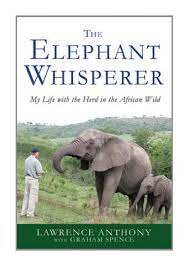
Review: The Elephant Whisperer – Lawrence Anthony.

My awareness of Lawrence Anthony’s work was purely incidental. I would be looking out for elephant news and he was always there in You tube in a time when we still did not have whatsapp or google. I am sure i have watched the video of elephants mourning his demise. What a blessed life. He could have lived longer, but the stress of running the reserve must have told upon his health. This we understand as we turn page after page of his book ‘the elephant whisperer.’

As Anthony makes it clear at the outset, the elephant whisperer is not him but the elephant in question that spoke to him. This book has been on my reading list now for years. Finally got my hands on it (kindle version). Comes second to Tanya James’ ‘the tusk that did the damage’ on the elephant scene in India that centers around the menacing poaching issue we have in the country for the precious tusks of the elephants. (Same is true of Indian single horned rhinos as well in the state of Assam, similar to the precarious situation of the double horned rhinos of Africa that are nearly hunted down to extinction already. Anthony’s ‘the last rhino’ is on the rhinos). Until this book happened I believed, the Indian wild elephant escaped poaching even if unhealthily domesticated at an alarming rate.

My introduction to the Zulus and Bantus, the native tribes of South Africa happened in my ninth standard I guess, when I read for the first time a James Hadley Chase novel ‘the vulture is a patient bird.’ It is because of the content i remember the title and the tribes. I can say this may have been a chief reason for my interests in Africa including its wildlife. Later on of course, there was Wilbur Smith. Literally every single trilogy or whatever of his I read with, mainly for the wildlife info even if it was all fiction. ‘The elephant song’ of his was special. The matriarch comes through in Smith’s works. I would like to skip his latest works that I wouldn’t attribute to him, probably penned under his name by someone else (like in the case of Sidney Sheldon). They don’t carry the same Smith stamp. If you have been reading Wilbur Smith, you must be familiar with entire Africa from Sudan, Egypt and Ethiopia to Congo, South Africa, Zaire and Zambia (both of erstwhile Rhodesia) and more. You learn of the languages such as Swahili. You discover the native tribes, the shortest men, the yellow men, the spear throwers, the trackers etc. You develop a deep respect for the dark continent that has been mindlessly exploited and now made a complete mess. I agree with Anthony on the violence aspect about Africa which has to keep with its wild nature. Apartheid is long since over. Afrikaners and the other remaining whites are doing a wonderful service to the conservation causes in Africa in the present, even if it was their ancestors who nearly brought the native wildlife to the brink of extinction in the first place. Still the current conservation efforts must not be underestimated or disrespected. This is very much the need of the hour.

Unlike fellow Indians, I am totally against domestication of our Indian wild elephants for Hindu temple service and for gala events like Navaratri-Dusshera celebrations in Mysore palace grounds in the name of culture, heritage and traditions. I have been vociferous over this capturing and taming of wild Indian elephants from the jungles, earning quite a few adversaries in the process. But here end my feeble protests. NGOs for wildlife and elephant lovers have to take the mantle from well-wishers and whistleblowers (!) like me at this stage.

My piece on temple elephants in India captured from wild for domestication, inspired by Lawrence Anthony’s ‘the Elephant whisperer’

I wish India has someone like Lawrence Anthony to save our wild elephants from poachers, regain the lost elephant corridors and conserve the population from going to extinction inevitably in a century or two.

wild Indian elephants faring no better…

The book is a treat to elephant lovers and naturalists and conservationists. It is enjoyable and good learning guide for anyone for that matter. Those of us who are keen on safaris must know what it takes to run a show.

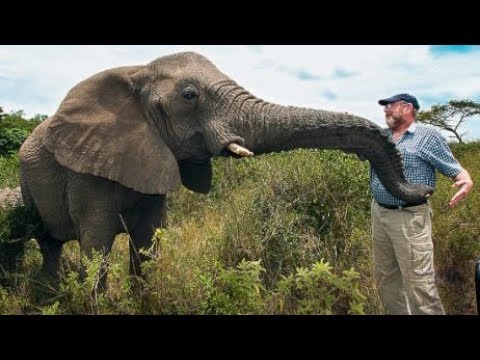
Lawrence Anthony confirmed what I had read about the pachyderms over years: that the elephants communicate very intelligently in a unique way both physical and metaphysical, with their stomach rumblings in a very low frequency inaudible to human ears that therefore fail to pick up the jumbo communication. So that way, quite like the whales, the elephant community too may be much more evolved than us homo sapiens when it comes to tele communication. It is not without a reason that these giant mammals have survived and roamed planet earth many millions of years. The other way the elephants communicate is by tactile contact in the bush. The infrared waves of elephant whispers probably serve as transmission conduits to reach over herds spread across entire landmass of Africa which is stunning! Science may prove theories in labs but here was this dauntless conservationist living the experience to relate his story to the world. To me his well lived life and real time observation suffice as authentic proof to elephant telepathy we talk about including the long elephantine memory. The tuskers’ moving vigil for two days on Lawrence’s demise is the testimonial ultimate for what Lawrence recorded in his book: “The most important lesson i learned is that there are no walls between humans and the elephants except those we put up ourselves.

Anthony also in the course of his writing introduces us to the lush and rich spectrum of his natural reserve Thula Thula:

  • mongoose, warthog, tawny eagle, martial eagle, impala, zebra, wildebeest, kudu, nyala, baboon, black mumba, black python, bark spider, leguaan (african monitor lizard), duiker, southern white rhino, honey badgers, crocs, barbel (fish), cape buffalo … and of course elephants
  • (noctural creatures): bush pigs, giant eagle owl, vondos, bush rats, nightjars, bats, bushbabies, hyenas, leopard, lynx, serval
  • reptilians: Black mumba, puff adder, mozambican cobra
  • trees native to Africa: Acacia robusta, marula, boerbeen, fig, umbrella thorn tree
  • the winged nesters: plum coloured starlings, european rollers, bush shrike, narina trojans, gwala gwala, vultures

What a spectacular life Anthony lived! Added bonus was his elephants whispering to him accepting him as one among them. Nana and Frankie, the matriarchs in particular shared a wavelength with Anthony, able to reach him. Here i have to mention Anthony’s intention of keeping the wildlife feral and so his deliberate breaking up of connection with the tuskers so that the herd moves deeper into the bush far from human contact for their own sake. This was also necessary as Anthony felt that this way, the elephants will stay wary of poachers (or any humans for that matter).

When I was reading about the way Anthony was spending long and perilous nights in the bush to safekeep the elephants in the boma when they were traumatized, rowdy and tyrant, i couldn’t stop myself from admiring the man for not only his courage but also for his big heart that did not hesitate to sacrifice creature comforts to settle down the disturbed gang in his reserve. The herd mistrusted human beings having been subject to witnessing massacre of their family members. The move by truck and darting (with tranquilizers) had dazed them and made them more violent and edgy. Anthony however focused only on rehabilitation of the elephants on their new home winning their confidence and trust gradually. In the process he did not lose his patience or hope even for a minute. He believed sincerely, the elephants deserved a chance. It was a painstakingly done work worth its rich dividends. You have to be gifted for sharing such a compassion for wildlife to be going this extra mile. As Anthony himself says, one has to probably grow up in the bush with the right mindset to be able to work or live in this kind of nature’s setting. It is a tough but rewarding life for those with a passion for conversation. Only that, your physical fitness must match the demanding conditions of the life in the veldt. And African tribes like the Zulus of warrior blood naturally fit in their roles as armed rangers of the reserve. Having to share their living space with Africa’s rich wildlife and having a history, they are the natural choice for the maintenance and running of the Zululand sanctuary in the heartland of South Africa.

Anthony speak:

  • Living rough in the wilderness is a salve for the soul. Ancient instincts awaken; forgotten skills are relearned, consciousness is sharpened and life thrums at a rich tempo.
  • No matter how heart-wrenching the situation, we never interfered with nature. Brutal as the food chain is, that’s the balance of life in the wild.
  • Interesting observation on fright-flight distance, innovative game keeping methods, round the clock alertness and an equally enthusiastic team of rangers, merit a mention. Bush piloting and crane lifting on darting are familiar with us in India where latter methods are employed when it comes to dealing with the tuskers.

    What I consider firsthand research material about Anthony’s work may be the elephant communication information and Askari (male elephants led by an ageing patriarch) observations in particular apart from breeding habits of different fauna. Valuable input for future wildlife studies and conservationists. Kudos to his diplomacy with the native tribes. In today’s highly jingoistic egoistic material world, we need this kind of trendsetter. In another part of the book, Anthony says, it is the elephant who is the tone setter for the relationship shared between him and the herd. He goes on to narrate how each and every member of the family enriched his life and added dimensions to his perspective on the African elephant.

    Serious poaching threats from armed gangs and sharpshooters fitted to their teeth, the uneasy relationship Anthony shared with Nkosi Biyela and the Indunas in general whose ancient zululand is the reserve, the epidemics waiting to devastate wildlife if unchecked, the brutal forest fires, the rogue beasts on prowl (like the male elephant Mnumzane in musth that had to be put down) endangering not only safaris but also other wildlife (with Mnumzane shearing white female rhino to death with his tusk), natural disasters such as river flooding and breaking banks, the maintenance of full length electric fence with low voltage just to stun the wildlife from crossing over but not kill, the challenge of balancing the wildlife population that ensures the survival of the fittest in accordance with the food chain, nerve wracking dealings with the superstitious African tribes not antagonizing the sons of the oil, the law and order issues to be taken up with law enforcement, the follow up with KNZ of whatever, the wildlife departments and reserve sanctuaries of South Africa, … and much much more need to be addressed on day-to-day basis running a wildlife reserve as vast and teeming with diverse wildlife as Thula Thula.. And if the reserve is to boast of a safari lodge like Thula Thula, the challenge is many more time magnified, keeping in view the safety of the tourists. The days start well before dawn for a safari and end with the last of the tourists hitting the sack as Anthony explains. Lawrence’s wife Francoise now in charge of Thula Thula seems to have lent a French touch to the holiday resort with her exotic cuisine, a big draw with the visitors naturally. Game sighting is adventure like nothing else. Only those who have sampled this heady brew of thrill will know why nature and wildlife can be such a humbling and invigorating experience at the same time, making one even spiritual. You connect with your basal instincts when you confront all forms of life from the millipede, centipede and scorpions and spiders to the crocodiles and rhinos and bucks and antelopes and the giant elephants under trees as ancient as you can imagine, with their gnarled roots and spread branches sporting myriad coloured winged nesters. A profusion of life in the natural element. Nightlife in the wild is another symphony. What a welcome break from the cacophony of our urban materialistic life.

    birth control not for Indian wild elephants…

    Hopefully land acquisition for expansion of Thula Thula is now done with, which can provide the wildlife in the reserve more of room to amble about. Anthony also gainfully employed the local manpower which is mutually beneficial. Let’s see. I have always dreamt about a Kenya or Tanzania or even an Uganda or Zimbabwe safari, but never South African. My interest in South Africa got piqued with the Netflix serial ‘the penguin town.’ Now I have ‘Thula Thula’ too in my bucketlist! Hopefully i can make it with my entire family there in a couple of years, along with my grandchildren in tow! How i would luv to show my grandkids Nana and Frankie!

    My first ever elephant write-up. The original draft may be from over 10 years back…

    Anthony not a serious contender for Noble prize in lit still his south African lingo is something! Good sense of humour there. That supersized vacuum cleaner of an elephant trunk! Menopausal rhino!

    Rounding up with Lawrence Anthony quote: THE BEST CAGE IS NO CAGE. Om Shanthi!

    Posted in Books

    Review: The Spirit Of Enquiry: Notes Of Dissent : T M Krishna

    Recommendation: Buy this book, read this book!

    In the spirit of the book ‘The spirit of enquiry’ by TM Krishna, I feel obliged to make the following enquiries with the author:

    • Since you are so brash and bold, and are such a hi-fi social activist, may I expect you to take up the matter of liberating the temple elephants held captive in Kerala please? Your communist friends and none less than CM Pinarayi Vijayan may come to your aid here. You may take up the issue right from your next concert in a Kerala temple be it Vadukkunatha temple in Thrissur or Sri Padmanabhaswamy temple in Thiruvananthapuram! Please start a campaign to this effect because it looks like a lost cause already. I am willing to make a decent contribution. I shall sponsor your team’s t shirts and logo expenses plus others. Only Aug 12 we observed the World Elephant Day bro. Observed, not celebrated, because what is there to celebrate. Our elephant population is dwindling at lightening speed that for next generation, we might be able to show elephant only in museum or biology book. And when the elephants go, they will take away with them the bees and the trees, do you know that Krishna.
    • Since you are against Guru Shishya Parampara and at the same time also against institutionalizing music with a set syllabus and university and text books, would you please research and educate us how to go about both imparting and learning Classical music to enthusiastic aspirants. Or more specifically Karnatic music.
    • Is there anyone preventing by legal means or by physical means the general janata from learning or mastering carnatic music or instrumental? You can name and shame the parties here for further action by concerned authorities!
    • Is there anyhing sacred to you at all? You don’t respect or probably recognize national anthem, notion of nationality… in short anything that is an arrangement or discipline or institution. How about the institution of marriage? Should this also be dismantled by mankind. Already it is being done just that in many parts of the world! Wait it is coming to India!
    • Answer this: How many islamic nations are there in the world? How many christian nations are there ? How many Hindu nations are there officially as of today.
    • From Jerusalem, what stopped you from meeting with the Yazidis on your way back to India??
    • Who told you World war II or the year 1947 is the defining line for everything. That we cannot change anything after that. When did Bangladesh come into being. How many temples got razed in Pakistan after 1947. How many temples got razed even in Malaysia. If you are to quote the constitution, let us make some amendments then.

    Having said that, let me add some salient points from this fine book. Let me make it clear, i am just a housewife past my prime, and I am here only for timepass.

    At the outset, I have to give the author a standing ovation, for the way he has thoughtfully constructed each and every sentence with such a depth, insight, meaning and essence to leave a lasting impact on the reader. Exceptionally articulate and versatile, I have never read such a profound writing in my life, especially coming from an Indian author. I must confess I am not much into non-fictions. Even so, I can vouch this is one very fine assessment of so many, many faculties of human brain and behaviour. I share many of the author’s abstract views that he has so artfully captured into precise words, phrasing them just exactly as I would have wanted them to be and working out unimaginable permutation of ideas and possibilities with that skillful penmanship of his. Proud that he is a fellow Chennaiite, a Thamizh, and a local Alwarpet Andavaa 😀 I really feel like adopting this fine young man as my kutti brother!

    Now when I finally finish the book, i get his formula. He is like, proposing an idea, treats it to various interpretations pro and anti, discusses it thoroughly inside out with his self-confessed spirit of enquiry and then tries to deliver a balanced judgment. Or I must say, which side he thinks is heavily favoured. Judgment is one word anathema to this author! The author has paid attention to the voice of the dissent that we seldom get to hear in every single idea he discusses chapter after chapter. That treatment deserves respect and commendation. The spectrum of the debates is varied and priceless covering Karnatic to Kashmir.

    I liked the way he discussed how and why Karnatic music came to be the classical and not the vintage folk or tribal for instance that also may have a matching antiquity. The same words that come to his mind when he thinks of classical Karnatic also keep coming to my mind: ancient, hoary, superior, intellectual, elevating, traditional, religious, complex, difficult, subtle, sophisticated. So that sets apart Karnatic from the rest. Like Kamal Hasan the author never gives a definite conclusion! I had to keep looking at TMK the way I was looking at the limping man fading away in ‘Anbe Sivam’ as the screens went down! Anyway, that was one brilliant way of thrashing a point and closing the chapter. Kudos!

    I never so far distinguished between stage art (live rendering) and, the kind of art where the art object seems to be independent of its creator at the point when it is received (as in the case of an oil painting or cinema). Thanks for reminding us of this quintessential difference. This is the reason I have started reading TMK. He draws my attention to things I took for granted all this time that I forgot their existence. I do remember this point from his last book ‘Sebastian and sons’ when receivers of art (such as musical instrument Mrdangam for instance) have this disconnect with makers of the art. But is this not true of every profession. Do teachers and doctors and builders exercise proprietary rights over their produce. I am at loss to know why the author cannot make that professional distinction. That detachment or sense of separation for the creator from his object or art is necessary in some sectors (but not all). In this digital age when the stage concert can come to our living rooms, even Karnatic classical is being packaged an art that can be delivered like celluloid cinema. Covid has altered many equations. As TMK avers, this may be a step in evolution of Karnatic.

    The author has a valid point on computer generated music that can do serious damage to the musical sense in humankind once and for all. In his words, “The composer today has become more of an arranger, a choice-maker, a compiler …. The composer in gaining technological mastery is losing musical relevance ” Which is kind of sad. I made up my mind never to enjoy the sax music or keyboard in future. Or even the steely sounding ear-piercing drums. This is very educative to layman like me although I had had an idea.

    Hard-hitting truth: ” .. most of the time it is the item number that musically echoes the subaltern sound, further polarizing musical understandingIt is also true that the section of the population that will probably for certain have ‘Kolaveri’ on their list will never be asked their all time favourites.

    On an entirely different tack now: Zero tolerance for plagiarism of traditional, native, ancient Karnatic music which is divinely Hindu by heritage. Let TMK not confuse appropriation of art with inspirations of art.

    Loved the use of metaphors and simile comparing original Karnatic compositions with variations to the handblock handmade textile prints and dyes and weaves of India that come with a human error which is charming. On this, I have to agree with the author cent percent. Such a rich tapestry of choicest words and eloquence. Masterpiece. And cute!

    In any society the dominant class determines authenticity, quality and standard.” The author simply drove home a brilliant point, point blank. The ensuing paras need a careful contemplation from the book.

    …. Nada… is metaphysical…. . The idea of nada is not interpreted only as an abstract experience of transcending sounds, it is considered also a sound that unifies man with the paramatma.” Can’t put it in better words. A layman can make out what classical is all about or get clear picture about its components from this dissection on Karnatic.

    So is Hindustani more refined than Karnatic. May be. It could be the difference between the sweetish bhasha Hindi and the tongue twister called Thamizh.

    The technicality of the raga, kriya/laya/tala is fascinating to layman like me. Thanks for this explanation. I think the quality of my understanding of music can get better with this. Raga not to be bottled up in any one context representing a particular emotion? This is tough. Because I always associated Todi, Mukhari to despair and despondency and meloncholy thanks to our T Rajender !! But classical is definitely an emotion. No two opinions on that. The chapter on classical is too good even if its too technical.

    Classical is abstract. I find this abstract thing always a curious thing that I can’t figure out. True of abstract form of art (oil on canvas) as well. Without deep thinking, I just imbibe the honeyed melody and move on. To me personally carnatic is…. peace? harmony? calming? soothing? balm? divine?

    The author has laid specific emphasis on the state of the Isai Vellala community which gave the finest classical art forms of Bharat Natyam dance and Karnatic music to Thamizh Nadu, India. He does have a valid point here. I must say that from the community which is now engaged with economic emancipation via university education, we can expect a flowback into Karnatic as socially forward generations will have more time and resources to take up art once again among them. And this time, they shall command respect and attention.

    The author’s take on the concert scene is also realistic. Let us hope things will change for the better in future.

    The book is too technical in places and a bit rambling (!) but all is well that ends well! With TMK the prose is matchless and authentic and inspiring and motivating and even enquiring! He opens up avenues of my mind that hitherto remained closed to introspection. Intense and heavy, saturated with dense inside information, this print is a collection of previously published articles of the author in media, with or without edits.

    I am leaving out the political discussions here AS WELL AS THE CONTROVERSIES as our author is known for his penchant for mischiefs. This post in winding! Many stalwarts will be reviewing this gem of a book of his. Still I thought I must also review it hahaha whether the author likes it or not!

    I will close with this personal note to the author: Even the intention can go a long way when it comes to a good deed which may or may not materialize. To borrow from Paul Coelho, ‘when you want something , all the universe conspires in helping with you to achieve it!’ Best of luck, but do not forget the Indian wild elephant and the temple elephant.

    *

    Posted in Books

    Sebastian & Sons – TM Krishna

    First of all before I go into review let me caution:

    I am not at all musical, music though brings me peace in whichever form: carnatic vocal or instrumental, bhajan or even filmy songs. Partial to latino foot-tapping beats hahaha! So I am hardly fit to review this masterpiece of TMK but as I have loads of time in my hands and I really want to review this book, I am doing just that here.

    Anyway I keep playing music all 24 hours that when my hubby returns home from work, the moment I open the door when he presses the calling bell he tells me, ‘down the shutters of your Nair tea kadai please!’ so that’s how my playing music the whole day is viewed by my workaholic worst half who relaxes with Ilayaraja music. I think keeping open the Nair tea kadai is qualification enough for me to review this gem of a book (although prescisely it is this caste prejudice TMK is resisting)!

    Lots of emotion and personal perspectives mixed in any review of mine.

    ************************

    A woman/housewife/mother, many view me as sort of rebel but I found the best in the town in TMK. So very grounded, oozing with knowledge in and out, expert in his chosen vocation (vocal carnatic), his compassion for fellow humans and anguish at the apathy of the society for the inhuman ways some of us are treated initially took me by surprise (given his birth privilege). I haven’t identified empathy as one of the chief characteristic traits of most of my countrymen. I guess Hindu gene is defunct of this DNA. Not that I am unaware of the author’s past history. In such an young age, he has carved a niche for himself not only in the carnatic music world but also in social work (and media). I came across his posts in Twitter years back when I was there to read interesting tweets. Then I closed my account and lost touch.

    But TMK, there is no need to self-deprecate yourself as you have done in the book. You are good enough. You don’t have to prove anything to anyone. Turning into a meat eater, denying this sense of repulsion in abattoir and confessing to not being moved by the death of a maker of Mrdangam, were not necessary. Unscientific? Says who? You surprise me with your forced meat option that I find frivolous. It is perfectly okay to feel squeamish in the literally bloody environ. You don’t have to become one of your subjects to talk or write about them. You can stay who you are, what you are without a compromise. Or do you think, only by embracing meat eating habits will you sound convincing.

    I believe, the tormented atma of the killed cattle/goat still gets trapped in their skins that we use in leatherware. Same holds true of silk. A Jain friend told me. Then what is the use of being a vegetarian from birth. Given your background, I can’t believe you didn’t bat an eyelid when the animal went under the butcher’s knife in the abattoir. This is my only peeve against you. But in a way you seem to agree, with the atma staying residual in the leather skin. You wonder whether the animal comes to life through the vibrations/beats from the mridangam in a musical way.

    Your talk of keratin and collagen really got me though! Makes me kind of sad. This lingo I am familiar with from my salon visits. To associate the terminology with butchered animal is shocking. The javvu you are talking about must be gelatin under the skin.

    I am neither a voracious writer or reader, I am mostly into fictions even then. Rarely go for non-fictions. But I guess this time I picked gold. Local authors are always a delight. Their proficiency makes me proud that a son/daughter of the soil is coming up with something so very substantial. In case of your book, I guess this is one of a kind. That’s what made me go for it. With my layman acumen, I can still certify that this material could be thesis subject for PhD. What an in-depth on-field research and analysis, hands-on approach and complete know-how. I particularly loved your prose. Such a simple styling with effective use of language. No effort to glamorize your text with superlatives or hollow jingoism. Where is the need for such a window-dressing. Nothing cliched. Stark naked reality. So neat and precise and honest and profound from heart. Honesty. This kind of intellectual honesty is rare even in seasoned authors (in my half-baked knowledge).

    I learned quite about Mrdangam, my favourite native percussion instrument. I have been like a blank sheet until now. Tabla and Tavil come close second. To mention that the book is informative is such an understatement. It is an encyclopedia not only on Mrdangam making but also on the makers of the most sacred percussion instrument of Hindus. Valandhalai, Toppi, Varu, Ul Sattai, Veli Sattai, Pinnal, Sadam, Kottu hahaha … various Thattu…. Never imagined so much complexities went into making this divine instrument that finds pride of place in Hindu temples and festivities. The skin part is common knowledge but the kind of expertise and manual work that goes into creation of the instrument really came like a bolt out of the blue. Never prepared for this bit of info. The wooden body of the Mridangam is a craft as well. The semi-mechanised process of turning out the shell is well illustrated. I did lose my way though through the maze of pull-heave-tug part of bringing the toppi and valandhalai together with the Kattai. When I emerged out, I felt dizzy but could appreciate what a fine work of art Mrdangam indeed is. The search for Kittankallu seems like an adventure. Your sense of humour comes through when you say the sadam part resembles idli with its concavity! Dig at the nightie being south Indian leissure wear is another point scored! Reference to C V Raman was punctuated with the erasure of the creator of the experimental mrdangam from the scene. This is what I would term ‘vaazhai pazhathla oosi etharadhu’ in your language.

    I have a point to add here. The lingo lapses to chaste Tamil when it comes to Mrdangam terminology naturally. Is there a way this can be made adaptable to international readers. This can be a dampener to even other state readers. I am reading you on Kindle. I went through the glossary in the end. This list will not do. The book will go places and may be contending for serious national and international awards. While the local vocab may make it sound very realistic, too much of its usage without apt/spot translations can dispirit interested readers. But I have to give it to the author for making the work standout with this kind of vernacular approach, not trying to anglicize the book for wider audience. The tamil terms seem to reaffirm the solid and indisputable authenticity and nativity of the very instrument Mrdangam. My recommendation: go for a 100% Tamil edition. It will benefit even the makers on whose behalf you have taken up the cudgels. The reach will be up to grassroots level.

    Neither have I given thought to the resonance of Mrdangam. I never knew the toppi part was reserved only for bass effect but after reading about it, it all rushes back to me from various concerts I have watched over years. Music to me is sweet pastime nothing more. More like an addiction. I have loved Drums Sivamani hahaha in the past! Hereafter NOOOOO !!! (Fine-tuning of the percussion instrument is no cakewalk as I get it now. Once again a thorough learning process when it comes to the nuances of the bass-beat-stroke emanating from the traditional percussion instrument that has evolved over decades to its present form. The finesse of a master’s stroke is the outcome of dozens of variables and components, permutations and combinations as you have shown.

    There is a little confusion over how the author goes back and forth with the Thanjavur family tree names and the Madras Muttu makers. Establishing characters in mind and relating to them exactly is proving difficult. Then I spaced out reading the book so that I would remember everyone. Finally still I resigned to the fact of losing track and settled for mere identification with Thanjavur family by names. Parlandu and Selvaraj and Melgies and Antony and Soosainathan are like Rajni and Kamal to me now 😀 However, I don’t find such an instant kinship when it comes to the shell makers such as Somu Asari. The skin workers are the ones who move me. To me they seem to be doing the actual work.

    You could have added one more index detailing Mrdangam parts for the benefit of those who have no inkling on the subject. The local Tamils who are on familiar terrain may get along. However, non Tamil/international readers can do with a good illustration of Mridangam with parts neatly earmarked. I didn’t find one such in the Kindle edition. Let me recheck.

    Having been born and brought up in Mylapore, I was shocked to learn there are still avenues that I never knew existed! Appar samy kovil street for one. It is in the northern end of Mylapore so I may have missed much about it (i have known it), coming from southern Mylapore closer to Mandaveli. Plus I was put off by your spelling for my fave deity of Mylapore. She is Mundagakanni Amma, please correct it in your next edition.

    Neither have I given thought to those living in the fringes. May be being on the spot gives you access to something not visible to most of the general janata. Still, unless you have a big, big heart and sheer will to go about it, you just can’t be doing it. What it takes to think the way you did, pour down your heartfelt thoughts into words and bind everything into this volume – i feel difficult to imagine. I am lost for words. Caste buried the dignity of labour sadly. Its one of the cruelest offences that can be committed by humanity – this denial of dignity and respect to fellow humans. No apologies can mend it in a 1000 years.

    Kudos to the author for bringing to light the extensive and backbreaking backend work that is never known to the outside world. Commendable. Where credit is due, it has to be accorded. We cannot snatch others’ glory just like that trivializing their contribution to anything majestic as mrdangam. Such a shame! This story needs to be told, no doubt. Someone has to do it, and it is puzzling why none took the initiative until now. The human aspect of the any good work needs to be not only recorded to posterity but also be retold and appreciated. The glaring insensitivity in some of us is deplorable.

    But the reason for such a work not making it to public sphere so far is guessable. This is greasy work. Not many have appetite for what the author has managed to pile forth. Standing ovation for the meticulous research and untiring efforts and zeal and enthusiasm to tell the story in the first place. How did such an idea even germinate ??? What an inspiring read! At times, your simple but profound words that pack truth brought tears to my eyes. Like how you relate the makers shrugging off mistreatment, taking disrespect in their stride. When dignity is stamped over for generations with such a brutality and souls get tired and bruised, this has to happen right? Passive aggression. This can be killing.

    The gender bias is covered nicely with the Kappi and Kuchchi distinction. News to me again but no surprise. Mridangam has held forte in entire south. The Vizhianagaram, Bangalore and Peruvemba angles open fresh vistas that might otherwise have remained unknown to most of us. The snide gender remarks are there from bank jobs to stage kutcheries. Kerala work being neat is on expected lines as well. Same holds for enterprising Keralite women.

    But TMK must have ruffled the feathers of some stalwart mrdangists who may or may not be around. Naming and shaming somehow I am never comfortable with. I agree there is no shaming but naming is damaging enough. I concede there is no other way out. Still, one has to be real brave to mention names. The book might not be going down well with everyone connected to Carnatic. You threw caution to the winds TMK! I am proud of you yet concerned at what you have done to yourself. You are already an outcast. No bother I know. Still.

    But you did go on to highlight the geniuses of the mrdangam artists if that can count as any solace for them. Hope Palghat Mani Iyer and Palani Subramanya Pillai are not turning in their graves! You have brought to life Parlandu in such a vivid manner that I want to go see him and shake his hands!

    It is interesting to read anyway about generations of musicians of Tamil Nadu. How the music culture was cultivated and bred. No surprises about Thanjavur being the epicenter of classical carnatic. Spellbound by the intricate details and versatility of the carnatic music. I wish there had been no collateral damage when it came to Carnatic achieving this supreme greatness in world music arena though. After viewing You tube uploads of the author, I can understand why he is up in arms against classical status conferred to carnatic. To him social justice about EVERYTHING matters. Street art is equally worthy and appreciable which I can’t deny. I loved TMK’s Narayanaguru renditions and the Ashoka inscriptions being brought to life with carnatic. A contribution to society like none other. One of a kind. Road less traveled. TMK seems to back up his genius authoring with real life music.

    Was there so much casteism in Mylapore. I am not sure on this. I agree the middle level non brahminical communities were the worst perpetrators and practitioners of divisiveness among us. Even in present times, who is committing honour killings in Tamil Nadu. In friends’ circle they call me ‘lady kamalahasan (actually I don’t see eye to eye with Kamal at all in many issues) so I have toned down a lot of my usual rhetoric. One reason for leaving Twitter is that. As a woman, i found that it is easy to be threatened. (Now I think I have a new ‘naam ke vaaste’ kind of twitter account).

    To hold your pen and author such a heart-tugging tale, you have to be blessed and gifted … is all I can say. At the end of the day I am just a housewife with too much free time in my hands, what else. My words may mean nothing to you. Never has someone left such an impact on the way I think. I guess I have been somewhat right all along when it comes to certain social issues.

    I look forward to reading more of this author.

    Salvation truly lies in this. How many will agree with me. This book is true Nirvana with its sincere attempt to restore dignity to those who are denied that, and respect and credit to truly where this may be overdue.

    *********************

    PS: Where is that villa in Goa 😀