I am #Pulwama I am Charlie I am Paris I am Orlando I am Brussels I am Nice I am Munich I am Berlin I am Westminster I am Barcelona I am London I am Norway I am Manchester I am Kabul I am Uri I am Mumbai I am Madrid I am New York I am Ankara I am tired …
**************************************
Where did the 300 Kg of Explosives come from for one of the worst terrorist attacks in Indian soil. Of course from Pakistan, where else. Now cross check the Pakistan connection to all these terror attacks around the world.
Jammu & Kashmir is a landlocked state of India with Indian army troops guarding the Himalayan paradise from our terrorist neighbours. Kashmir shares borders with China and Pakistan. The explosives for the Pulwama terror attack on February 14th could have originated from only one source: Pakistan. Smuggled into India through our porous borders. This is if we are to give the benefit of doubt to China, unless otherwise China is hands in glove with Pakistan in masterminding terror attacks. China anyway has been blocking India from getting the terror chief Masud Azaar on the docks for a while now, at the United Nations. Role of China cannot be entirely ruled out in acts of terror given their nexus with Pakistan. At the least, the financial arrangement is a possibility given the Chinese vested interests in Pakistan.
India is the wise old Elephant that shall neither forgive nor forget. For a first step, river waters flowing from India to Pakistan will be summarily stopped forthwith. Not a single drop of water. Taps to be turned off for Pakistan.
The pro-terror tweets and social media comments of our desi anti-nationals to be viewed seriously by government and dealt with accordingly, because facts can be misconstrued easily here. Men and women who are terror sympathizers are losing their jobs and livelihood left and right with their misplaced loyalty. The idea is to make clear the India stance against terror ideology. Either you are with us or against us, that is it. All Indian citizens must furnish our government with proofs of any pro-terror remarks and posts in Indian mainstream media and social media for necessary legal and criminal action as deemed fit.
Indian Army may be given full control of Kashmir shortly. India will choose where and how to bleed Pakistan and to what degree. Before the turn of the century, there won’t be a nation ‘Pakistan’ – India will erase the terror state from world map. This is a distinct possibility now.
Security cover to Hurriyat to be withdrawn laying them bare to decimation anytime, and stone pelters to be shot dead at sight. Very soon this will be a reality. Kashmiris were being funded with fake Indian currency notes (Rs.500/- denomination precisely) by Pakistanis who are notorious counterfeit currency printers and suppliers in the world blackmarket. PM Modi’s overnight Demonetization of higher denominations of our currency brought the stone pelting to a grinding halt in Kashmir as supplies dried up from our terrorist neighbour.
It is also time to throw out the Kashmir undergrads and post grads and research assistants from Indian universities into their own hell hole. Kashmiris to be stripped of their employments /positions through out India and businesses to Kashmiris to be actively discouraged.
In 1947, before the state of Jammu & Kashmir acceded to India there was a looting and raping spree by Pathans and other Paksitanis in entire Kashmir that the Maharaja of Kashmir begged PM Jawaharlal Nehru to rescue Kashmir and drive out intruders. As winter closed in, Indian army secured the rest of Kashmir except for what remains today as POK (Pakistan Occupied Kashmir) driving out rapists and looters. Maharaja Hari Singh of Jammu & Kashmir signed the letter of accession of Kashmir to India LEGALLY. If not for Indian intervention, there would be no Kashmiri left in today’s Kashmir with his/her dignity intact. Pakistanis would have resettled in the valley reducing and depopulating ethnic Kashmiri race. Present day Kashmiris have forgotten their turbulent past and especially the aftermath of 1947 and what could have happened to them if not for India. If not for the solid weight of India behind them, Kashmir would have been the next Afghanistan by now.
Kashmir has had a Hindu ancestry from before the time human history got recorded. Kashmiris were force converted by Aurangzeb as late as in the 17th century CE at the point of sword. It is not uncommon for Kashmiris to sport their surnames Butt/Bhat or Guru for instance even today, a telltale giveaway, as their ancestors never wanted to remain for long in the converted alien faith. The Kashmiri forefathers hoped for one day to return to their Hindu Dharmic roots, so they adhered to their surnames doggedly for centuries. Today it is the same Kashmiri Pundit and Baniya who are transformed into worst world terrorists. Three centuries of foreign faith seems to have erased the complete good of Dharma from their bloodstream. Thousands of years of Hindu roots destroyed beyond recognition. Kashmiri terrorists later ethnic cleansed the state of their Hindu neighbours in the 1980s, at the instigation of slain Pakistan PM Benazzir Bhutto. Kashmir is one classic case of what can happen to you if you are ‘infidel.’ Your own neighbour can take your life before raping your daughter in front of your eyes and setting your home to fire. Just ask the Kashmir Hindu Pundits driven out of Kashmir, forced to live as refugees in makeshift camps in their own native country India.
If Kashmiri terrorists are in the right, then Germany and Canada may follow suit and become Caliphates in near future. Canada is teeming with terrorists drawn from every corner of the globe. It is a pressure cooker waiting to burst anytime. This is what happens when a wrong ideology is supported baseless and the essential truth is brushed under the carpet.
Kashmir needs to be repopulated with Hindus, recolonized with Hindus once again. So long as Hindus formed majority of Kashmir, the region was peaceful. Along with the Kashmiri Pundits, Government of India must rehabilitate retired army personnel with their families and Biharis in Kashmir.
All Kashmiris living in other states of India to sign in nearest police station every fortnight. All Kashmiris with Indian passports working in foreign countries must be asked to sign in Indian embassy every month. This will help keep track of their sleeper cells of terror, just in case. Kashmiris are tainted blood who just cannot be reformed. Terror corruption runs deep in their veins. We Indians have been in denial of this acid truth for long. Time to let reality sink in and remove Kashmiris from Kashmir in entirety. These traitors belong in Af-Pak or in Middle East or wherever. No place for them in the land named after Hindu sage Kashyap or in the valley of Mother Vaishno Devi with capital ‘Sri Nagar.’
India to warn world nations to limit their business interactions with Pakistan. India must take up with each and every Arab nation in middle east on this on warfooting basis. Pakistanis need further isolation.
India must reduce trade contracts with nations which engage with Pakistan on favourable conditions. India must review relations with nations sponsoring or sporting Pakistanis or Pakistani businesses.
India should disrepair and undermine the CPEC project of Pakistan with China, but why bother. India will benefit hugely as Pakistan sells itself more and more to China like some African nations have done. Day is not far when the entire strip of their territory leading up to Gwadar will not only be under Chinese control but also under Chinese sovereignty.
Mutilating Pakistan must be first priority for India, breaking them to bits and pieces. Balochistan is ideal ground to start with. Not in a million years can Pakistan tear away Kashmir or Punjab from India. They know it well.
A low key but severely debilitating war that will bleed Pakistan slowly and surely to death is the best viable option. India has been steadily breaking their wings: stalled the sale of F16s to Pakistan by America, annulled the US aid to Pakistan among other things. Pakistan is steeped in debts and economically crushed already, head barely above waters where it concerns China. Last year India dealt a severe blow to Pakistan by way of Uri Surgical Strike that reportedly vaporized a Paki terror camp of 400 armed corps deep in their terrain. In 1971, India bifurcated Pakistan into two parts carving ‘Bangladesh’ out of the eastern one.
Hopefully Modi sarkar will be analyzing issues from all feasible angles and arrive at a tangible solution/plausible conclusion.
We cannot let this proxy war against India to go on forever. Let us get it over with.
My part-time maid lives off my street. Hers is a dead-end. No thatched roof can be seen within city limits (except in north Madras extension areas that are fishing colony) but since this is a fag end of the street with no traffic, the civic authorities have spared the little murky corner. Coming from a dirt poor family, it is also true that my girl’s home stands out like a sore thumb in the otherwise crudely made out cement and concrete lower middle-class neighbourhood of hers. Most constructions here were originally unauthorized but gradually regularized by the corporation who routinely ratify illegal tenements/housing/encroachments within city limits. Is there any other way of providing decent shelter to the poorest of poor in our metro (other than in Housing Board colonies that have sprung up for the purpose). Displacing the masses is unthinkable. One has to consider their livelihood.
Let’s call my girl ‘S.’ She lives in a single room thatched hut – the walls are exposed brick work cemented in patches and whitewashed here and there. Her husband is a house painter. She shares the meager living space with her husband and 2 grown-up children. Her In-law occupies the adjoining room. She says there is a 4 feet verandah running in the sides where she has built a rudimentary toilet. When the Jayalalitha government installed for her a free hand pump, my maid’s water woes were temporarily solved. Now in harsher times, once again in her late thirties, she is back to running after the water tankers to fetch precious potable water for her family. Minimum of 20 times a day that is. Tanker stops at the street turning. Calculate the distance of one street, the weight of each plastic pot loaded with water, the carrying time and energy. This is going on for years sans a small break in good monsoon years. The girl suffers greatly with painful hips and excess bleeding thanks to the ordeal. The hand pump was a blessing to her. Now it is useless.
Water tanker dispensation is also not free. Is in’t strange that a valuable two rupee is levied by the tanker crew per pot (officially or unofficially) from the poorest whereas we the upper middle classes have all along sat back to enjoy the corporation water from our sumps paying a flat tax and water charge. Pittance compared to what the lowest and most unprivileged menial work labourers have to shell out for water. In fact this is a good part of their daily wages.
My girl was using wood/coal for cooking. I booked an LPG connection for her over 10 years back when she started working for me, and got her the first gas cylinder. I did not know then how much it saved her money and energy. Thankfully, she gets her subsidy credited to her account these days.
A day in my maid’s life dawns at about 4 am. She cooks and cleans for her family, packs lunch, leaves food for in-law (rich or poor it is a must in most families in India to take care of husband’s elderly parents; and parents prefer staying over at their son’s over their daughter’s). Later she comes to work for me. Returns to her home to do the dishes and wash clothes. Goes to sleep with the lights on by 10 pm. Her husband is the chief earning member. Daily he brings home 200 bucks which is big sum for them.
During monsoons (lean season), the husband whose painting job is not regular but seasonal, opts for any kind of manual work like cleaning homes, water tanks etc in the neighbourhood. It is predictable he is out of job for over a month or perhaps longer whenever the skies open up. That is when the family suffers the most.
Husband and wife are hard and sincere workers. Whether standing in queue for hours to get their rations supply from the govt PDS shops or taking care of their children and aged parents, they discharge their familial duties without a murmur. Beach and cinema happen once an year during vacations. Holiday means a 2-day bus trip to Tirupathi Balaji temple, a bi-annual pilgrimage for the family. For lower middle class India, temple towns are the Himalayan hill stations.
Even if poor my maid’s family celebrate all our festivals as it fits their capacity and are very religious. My maid fasts many more times than me, and her kind of unadulterated raw piety always impresses me. When I chant the Lalitha Sahasranama, she would adjust her work near my pooja so she hears me. She comes to work after showering, so makes fresh flowers into garlands for my Mother Goddess. She is always my temple companion. I tell her, Shakthi will be more delighted with her than me – because it is her devotion that is matchless. Mother sees what we the mortals cannot see. Mother notes what we the earthlings miss.
Even as she is steeped in such an abject poverty, my girl’s cheer and zest for life always bowls me over. There is so much to complain if she has to. But she never does that. And no gossip either. Virtues you find nowhere these days.
The family though suffers from a strange but severe stress:
They sleep with their single tubelight on during the nights – as otherwise they have to deal with rodent menace. Once their boy’s toe was bitten by a furry rat and he had to get a shot to overrule any viral/bacterial infection. Ever since the family do not dare switching off the light when it is bedtime.
‘How do you manage to even get a wink of sleep’ I ask my girl and she says as a matter of fact, ‘now I can’t go to sleep with lights off!’
Sleeping with the lights on…
I have no tears left in my eyes to shed for my girl. The single factor that she and family sleep with the lights on was on my conscience for days when I learned of it the first time.
Monsoon times leave her place with damp walls, wet floors, drains overflowing. I try to help by giving out blankets, food etc. Whatever we do is simply not enough I know.
My heart goes out to millions in this country who jostle up in dungeon-like quarters for shelter that they call ‘home.’ My girl is a lot luckier – she has someplace to call ‘home’ and she owns her small plot of 600 sq ft which is still a good bet in a city like Chennai. Think about the homeless.
*********************************************
I ask my girl about her daughter always. I still love and long for my unborn daughter.
‘She is still bed wetting!’ said she the last time i inquired.
Her 15 year daughter, was in the habit of wetting the bed during sleep. I keep asking ‘S’ to refer to a doc but she says, she had had such an anxiety problem herself. Now combined with her menarche, the problem has worsened for her daughter. ‘Why didn’t you tell me earlier?’ I asked her totally perplexed. The girl’s bed-wetting had totally slipped my mind. I could see the agitation in my maid’s face. I gave her a bunch of blankets. ‘Throw away the soiled ones. Use fresh ones, how much ever you want, ask me’ I said.
‘Akka my hands are aching washing the sheets day in and day out!’ she said, ‘our little house stinks and everytime my daughter has to change her napkin, we all have to troop out of the hut. Even if its midnight.’
How many ever bedrooms and bathrooms and wardrobes we have, we want more. How much ever clothes and jewels we own, we want new. Is ours the latest car? Cell phone? Well now, welcome to poor and miserable India. Come meet my girl ‘S.‘
We all come across so many, many stories in daily life, media and internet, but nothing moves me like this girl’s. I could get her a washing machine but its not advisable given the nature of their muddy damp walls. Besides there is not a square inch to spare. As such they live like cattle in a shed.The single room-hut serves as my maid’s family’s bedroom, kitchen and living. There is a tv, a fridge, a steel bureau and a cooking counter. Too many electronics and electricals to my comfort. There is barely any moving space and they sleep in the floor in a row. Any guests may mean, the family have to squeeze them in that cramped hole they call home. They don’t even use a ceiling fan – only a pedestal is possible in the low-roof thatched space.
My heart goes out to the little girl who has blossomed into a young woman last year. Where is the privacy the teenager desperately needs in this hour. The girl is upset and crying because she knows her condition and she is ashamed about it. She has no control over her bladder having slept with the lights on since the day she was born. And now onset of the menstrual cycle complicated matters for her. She is still a child – of 15 years.
Quarrelsome abusive grandmother , alcoholic grandfather (who recently passed away), and an impoverished neighbourhood, the little girl seems to suffer from some suppressed emotions surrounded by misery from all sides, leave alone the economic condition.
I remember my doc’s warnings to me when my son was an infant and I was a working mom. That was a long, long time back. His first advice was to strictly keep the lights switched off after 9 pm so the baby learns the difference between day and night. My son stopped bedwetting in night hours under one year. He started sleeping the whole night around the same time, not keeping awake, giving me complete rest and full night’s sleep that I badly needed in those days. Many years may have rolled since, but whatever concerns my son as a mother, I never forget. (One more reason is, the Pampers (children’s napkin) commercial I see in tv bombarding Indian homes with misinformation and harmful ideas on parenting. Unhealthy things are wrongly promoted in the name of hygiene, soaking wet in diapers for hours is advised against quickest disposal of soiled napkins. Mothers of my generation never did that.) (My diapers I used for my son were my FIL’s old cleanly washed and cut white cotton dhotis! My MIL made a fine job out of them!) (That’s a keepsake for another blog post in future!) Anyway, things like these strangely remain in your memory forever for whatever reasons…
I think perhaps the girl would be alright with time. Would outgrow the habit. My maid who endured the same problem got okay only with her marriage. She was bed-wetting until her 18th year that is. Sudden thrust into married life must have done something to her psychologically. She says with her wedding night, she lost the bothersome habit unaware. I did not tell her, the reason was perhaps marriage freed her from her miserable existence easing her anxieties and giving her a sense of security. She needed no more to toil for hours in hot sun in farm lands in her village and walk back the long distance home to slog the rest of the waking hours until she went to sleep. Urban life was easy neither but comparably less daunting.
On my advice and on doctor’s the mother tries many remedial measures with the little girl. Like not giving her liquid food from the evening hours. From rousing her from sleep to take her to toilet every 1-2 hours. Still nothing works.
I said may be her daughter’s problem is hereditary. Then I suddenly remembered and asked her ‘Did you tell the doctor about sleeping with the lights on?’ She said no, she never thought that could be a reason. I said perhaps that is the main reason. My maid is too scared and shy to approach any doctor or psychologist any longer on the issue. She feels her daughter has grown too old for that. She is concerned about what her neighbours may think,. whether it would later on affect her daughter’s married life. How much ever I try to convince her to come with me to a specialist, she refuses. She believes her daughter will be fine some day as she herself grew out of the habit over time …
May be she is right, we must try to ignore the problem. And the girl who is self-conscious up until now about the bedwetting would get alright on her own…
The mother and the girl – and their dreams and trials and tribulations… Its a moving story. I am ashamed of my nation, my society, of the class divide, of the insecurity of the masses, of the injustice they suffer from and more than all by the way they meekly surrender without a fight. They know they have lost it. What it is to be really poor and at receiving end in India – I am seeing before my eyes every single day.
The little girl’s menstruation coupled with the bedwetting habit totally funks me. Sleeping with the lights on…
The silver lining in the cloud is that hopefully one day in the future the teen girl will become a graduate – the first woman to earn a degree in her entire clan. So its high time her medical or psychological disorder is dealt with with the seriousness it deserves. More than anything, hygiene is important. If a qualified expert says all will be well without treatment, I am willing to consider that. Or whether the girl should wait until she marries as her mother says… Is it alright to meddle in others’ life. These are the questions I ask myself now.This is why I stop right here without overstepping certain boundaries.
What are the long term effects on health of individuals who are deprived for years, fitful night sleep. Is it normal to be in light all 24 hours a day – in sunlight during the day and electric light by the night hours. What are the psychological side effects. Very disturbing to think.
I keep calling my maid from wherever I am as I divide my time between places. Never fail to ask her about her daughter. She is getting her regular monthly periods. But the bed-wetting continues… The mother sometimes sounds tired and hopelessly sad. The men in the family – her husband and son are suffering in a way too. The little girl’s habit has now multiplied many times over. And then there is the grandparent to consider … ‘We all are keeping awake the whole nights for 5 days now every month’ said ‘S.’ Never have i felt more sick.
How many of us even bother to spare a moment to think of the lives of our house helps or drivers or cooks. Many times I think about helping the family with their housing needs but I decide, helping with the children’s education is more important. The family as I said, is very proud even if poor. Any extra help you may want to give them, they shy away with shame cursing their own helplessness. They are the kind of rural folks who can be easily wounded. They don’t want help – beyond a certain point. I am actually happy with that. How much they value self-respect, honour and dignity even in their desolate living conditions unwilling to compromise. What a difference from our politicians. And even our FCs who want to compare themselves with this poor lot of the nation. ‘Akka when my son starts working, he will raise a loan and build us a proper home’ says my maid.
I have tried to sleep with the lights on – never succeeded.
India’s issues are very complex, complicated. Poverty and gender discrimination and illiteracy compound to our woes. Those of us who are lucky are so very insensitive to care for those on who we tread over. Our greed snatches away the poors’ just share. Every 2nd or 3rd flat or house we buy, we are pushing the unfortunate into a further cramped dark corner. Their petty world is bleak and hopeless. The day my maid told me she washed as many soiled sheets and mats of her daughter in their dirty bathroom after the night bed-wetting by her daughter on her getting her periods, I could not sleep in my comfortable bed. I tossed and turned for hours thinking of the girl, the family sitting or lying with the lights on, and mother and daughter making numerous trips to their dingy bathroom… the whole night… If I don’t feel guilty after this, I am not human.
Modi government, please think twice before any big decision/ruling. Be it Reservation or Land Acquisition. This is my hearty, earnest request to you. We can beat the mute and the invisible black and blue and they can take it, but it breaks my heart to see this happen to them. Industrialization, urbanization is necessary, but please do it without trampling upon our poor and squashing them into pathetic pieces. There is nobody to take their sides, nobody to argue their cases, they will give up easily – but think of the spirit we crush, the hopes we dash, the lives we crumple… I am certain my government will have some humanitarian considerations… If you have to uproot anyone at all, relocate them favourably. Ambanis can have 27 storied palatial houses. The poor of India are not clamouring after big bungalows. All they want is to be left alone and not disturbed.
Giving the FCs of India equal footing with the suppressed and downtrodden communities of the nation is the most heartless injustice one can do to them. To be clubbed with their exploiters in one economic bracket is the worst thing that can happen to the poorest of India.
I have never felt as hopeless about my nation as I do now. Social Justice died a cruel death in India yesterday right in our parliament.
So Modi has come out with 10% reservation for economically backward FCs fine. So is it now time to throw open the doors of city’s elite bunch of schools Churchpark, Vidya Mandir, PSBB, PSSS, Shishya, Lady Andal, Chettinad Vidyashram, DAV, SBOA, Maharishi and Rajaji Vidyashram to BPL family kids by the same logic? A reservation of 10% to start with? After all in India, discrimination/disparities stem right at pre-school levels. The school you attend defines who you are and your future. The rags-to-riches stories of Abdul Kalam and Ambani are one in a million. Otherwise for average Indians, it is rat race all the way. The gulf the society creates right in our Kinder Garten stage among the future citizens of the nation is already unbridgeable and extreme that under-devepment and poverty and the resultant Reservation criteria will have to become a vicious circle, with no option. Reservation comes into play where recommendations or carefully accumulated/cultivated intelligence of generations of well bred forefathers/ancestors cannot come to the aid of certain sections of our society. Reservation is thus the lifeline to the hopeless lot of poorest of Indians.
What reservations could not provide, recommendations/references have been taking care of for the upper middle classes. Schools to autonomous/deemed universities, the better-off of India have not been left out in the cold even in the so-called suffocating climate of Reservation. My autowallah makes almost 20-30 k per month in current times. He has always been able to give his family a decent living, being their sole bread winner. One of the things that touched my heart about him was, how his children were denied good schools because of his profession and because he and his wife were illiterates. Finally, he fought with a school management and secured his kids admission. Of course, they started with a clear disadvantage. Could not keep up with peers, could not follow up with brutal academics being first generation literates in their lineage. The poor father relented, pulled them out and enrolled them with a heavy heart in corporation school where the children at last could make some real friends. Denied bank loans as he can never produce a salary certificate, my autowallah still pawns his very source of income and livelihood : his auto (the three wheeled tuk tuk) if ever he has to change it/go for a new one or has to meet up with unexpected expenses. Whereas how generous India is with Ambani family, Mallya, Adani group.
Is not reservation meant for those like my autowallah. It is easiest to find excuses like the third generation dalit IAS benefiting out of quota system, in our urge to deny social justice to those who really deserve it. My maid who works for me for last 13 years for another thing. How come these men/women are in these menial professions, I ask myself. Where in India do we have dignity of labour about anything. Why is my subzi wala a subzi wala. Why is the corporation scavenger/sweeper in my street what he/she is. Why is not a FC working this profession. Why is a chakkili a chakkili. Why is a vettiyan a vettiyan.
Every FC who is rejoicing in Modi’s (anticipated) announcement today must ask these questions to himself/herself. And by the way if you are ever to enjoy an ancestral home, estate, heirloom, all the more reason to ask yourself, who and how your ancestors blocked from his/her path to progress that you could make it big today. Well, I do not know about my compatriots, but I sure do ask myself these tough questions.
These days one sees communist-bashing happening in a large scale in India. Communists are not a mushroom that sprouted out of nowhere. They may have become unfashionable today in the world of capitalism, but thanks to them, a lot of injustice has been corrected in the past as well. Someone has to ask the questions. Someone has to advocate. The ones who dared to ask difficult questions were probably called communists. Trade unions fought for just rights. Capitalist cronies can never figure out what it means by social justice and equality.
So reservation is social evil? Then why is reservation still practised in Agama temples throughout length and breadth of India, will Modi and Yogi answer? Not even the constitutionally granted Reservation Quota system could break the jinx could it? Salvation comes in many ways. But would it ever, to someone who by virtue of his birth (alone) has in fact the cheek to imagine that ONLY he was gene-selected and pre-programmed by God to serve His purpose in His abode over others.? How about opening a Vedic school cutting across communities and training priests for Agama temples impartially.
Recommendations can make an auditor an RBI director in India, so why should such a pampered community seek reservation. Recommendation plus Reservation to the privileged class could prove to be a deadly combo – lethal blow to India’s underprivileged. Very conveniently, Recommendations do not go into records.
Jayalalitha Jayaram, when she was Tamil Nadu chief minister, mandated a penalty of Rs.20,00,000/- for government medical college students who enrolled for their PG course at state expense – in case they were to opt out of three to eight years of rural health service on completion. Not sure whether the bond system still holds good in Tamil Nadu (after the NEET introduction in post Jayalalitha period: the only way they could do it). PM Modi must similarly enforce a strict penalty of minimum Rs.30,00,000/- on FC IIT undergrads and post grads and PhD scholars who graduate at the expense of tax paying citizens, if they want to flee abroad after having received the finest education the nation has to offer. Bond for IIT grads to be made mandatory.
Reservation for FCs can be compared to something like borrowing out of the beggar’s bowl. Though, Reservation is not a concession we are offering the most downtrodden and suppressed communities of India. Reservation is the compensation that they justly deserve.
Modi has been wrong in many matters. NEET for one. NEET they said got you medical seats on merit basis. Only that private medical institutions have since upped their antics in the knowledge of pricing it right for the right candidates. True medical colleges are accessible to aspirants today more than ever but there is a collateral that has been overlooked in the process.
Medical degree is unlike the technical engineering course. Medicine necessitates practice and intuition. Rural candidates in Tamil Nadu stood a good chance to medical admissions before the enforcement of NEET. On graduation, they went back to their villages and served the purpose, filling up void in the far flung areas and rural outposts. Reservation worked well on these grounds. How many NEET medicos of present times would serve rural India on graduation, will Modi answer. How long before Ambanis and Adanis take over our scattered village, taluk and district government hospitals and turn them to corporate businesses.
Like medical schools and hospitals, government of India also had established a banking network of thousands of service branches to cater to rural population along with post offices – not with a profit motive. Serviceability was the goal. Nation building was the idea. This is how the state owned banks have functioned for a good 30-40 years since the late 60s’ when the then PM Smt Indira Gandhi nationalized them in one stroke.
MBBS doctors in pre-NEET days were accorded service-record based MD/MS seats in government hospital-colleges after a customary entrance, on serving rural health centers for a length of time. No doubt quota doctors benefited immensely out of this which they passed on to the rural pockets they serviced. Depending on the discipline the MBBS doctors worked, their super specialty area was determined . No wonder a friend was 40+ when he won his PG seat finally in Madras GH/MMC after a 15 year practice. Experience counted and made difference. Now experience has no relevance as one sees how NEET has been securing the academically brilliant but practically nil experienced medicos the coveted PG seats. The friend who turned 45 when he finally added two alphabetical letters MD besides his MBBS is an epitome of knowledge with hands-on experience, no wonder. Diagnosis was accurate without the help of machines for these doctors of old school. The man served government hospitals in rural sector as stipulated by Tamil Nadu government for nearly eight years before he quit. Today we see under 30s so easily clear NEET PG entrance and secure the super specialty seats and MD seats in the state/country. And then making their way straight to swanky five star hospitals that bill /milk us patients in lakhs. Starting pay for these new age MDs is 1.5 lac, experience zilch but for a short stint that may be with private hospitals as well. Machines think for them. Thank you a ton Prime Minister Modi, what a great service to India in deed. And what a medical fraternity you have helped create for India’s future.
You think the former prime ministers of India, the men who drafted our constitution, the men who drew up our reservation bills did not do their home work? Probably they did a far better job than you. And a fair assessment.
I once had a procedure done with a lady gynaecologist who may not have been the brightest or ultra sophisticated in the block, but she was good with her hands. Quota doctor of course. She knew what she really needed to know. Just like midwives served the purpose until very recently not only in Indian but world history. More than learned knowledge, I understood it was a knack that you had to perfect in. A surgeon’s job is essentially a butcher’s. Only that, he/she knows the names to the blood vessels and arteries. Medical acumen comes from experience, practice, not to be gleaned out of mere journals and bound volumes of books. The community doctor’s ease and expertise, I did not find even in my regular hi-fi gynaec who boasted of a hotshot career. This one was known to me and she worked for a primary health center that charged me nothing. I was treated free. Ever since I have changed my opinion on reservation category doctors who muster experience with skill. This kind of medicos work with rural poor basically. They develop excellent rapport with nursing staff and paramedics. Primany health centers run by state government in Tamil Nadu are best in the line, run and managed very efficiently. The teams see infinite number of cases anyday. NEET just managed to destroy such a beautifully orchestrated, carefully constructed and self sufficient medical system in my state. I wonder what will be the future of these government health centers in the age of NEET aspirants. Whether the BPL family women will be comfortable with the suave NEET MBBS doctors who mostly pay their way to medical colleges?
Very soon, health care in rural India – the meticulously nurtured catacomb through the length and breadth of the country – will be replaced with sophisticated corporate business-like hospitals. Modifications? Ever since the IT boom in India from the 1990s, health care is already a mega buck maker, with health insurance companies playing an ace role in the scene. NEET is good, but the side-effects of NEET will be felt by poor rural Indians in the long run.
Indian judiciary prides itself that it is unconcerned of the guilty going unpunished using loopholes in the legal net. It takes care to ensure that not a single non-guilty is served with injustice.
Reservation in India must be viewed the same way. The idea has never been to exclude the creamiest but to include those disadvantaged by design. those living in the fringes.
India’s Karma is this. I , as an individual, cannot do much about it than empathize, given my limited capacity. But it is reckless of those in power to absolutely misuse their power.
For one thing, caste based quota system was enforced because social discrimination in India has always been and still is caste based. Reservation was devised as a formulation to correct the historical injustice done to certain sections of our society. For another, it is easy to manipulate one’s economic status and cook up figures. Reservation has still not been able to stop the FCs from furthering their goals because they have already established a deeply entrenched support system that will see them to economic safety whatever the circumstances. Things are in proper place for FCs.
Reservation is like parking slots for the disabled. Those who cannot get in can drive around and park elsewhere. They can still make their way to their destination. The disabled cannot, without difficulties.
I am based in gulf where it is not uncommon to see a particular state people from India holding advantageous position. A network. Some of us have not had such a helping hand in life. More than anyone, I have more merit and moral rights to air my views on Reservation.
*****************************************
PS: Having said all this, I still hope, reservation of 10% for FCs materializes, for we can shut them up once and for all with that. Today, there is a tendency in India to downplay the achievements of the backward/stagnated classes who have made good with or without the crutch called reservation, fighting a tough battle all the way. First generation literates are mocked at, berated by those who have had headstart in academics and other arenas with plenty of opportunities thrown their way. India has never had a level playing field for everyone. After this move, the FCs will have none to blame for their stale genes or mediocrity.
Found on the dashboard of the tuk tuk I hired this morning (a very regular sight in India) :
Ganesha and Jesus and Mosque will reside and hang side by side only in Hindu institutions in India never in Islamic/Christian
Needless to say, the autowallah was Hindu. Glittering on his forehead was a bold Kumkum (vermilion) dot over dried sandal paste and Vibhuti (made of incensed wood ash). The picture was one good testimony to the so-called ‘Unity in Diversity’ we practise in India. Of harmony and peace. Of tolerance and acceptance. Of equality and secularism and mutual respect. The only snag about the framed picture is, this is something that adorns only most Hindu/Hindu managed/run schools, hospitals, hotels, cabs, shops and business establishments. Something that can never be spotted in a christian or muslim institution of whatever kind. Apparently, secularism and tolerance is one way street in India. Limited and advised and restricted to Hindus. The minorities of India viz., christians and muslims are exempted by all means and secularism loosely translates to ‘majority bashing’ in this nation.
Striking up a conversation with the autowallah, I came to hearing him narrate a story that explained the difference between the Sanathana Dharma (universal faith or Hinduism) and the Abrahamic folds that originated in Middle East (Christianity and Islam).
A ‘sadhu’ watched a scorpion drowning in a pond. He quickly pulled it out of water when he got stung by the poisonous creature. He let out a wail in pain and in the hand movement, the scorpion slipped back into the pond. Unfettered, the sadhu once again took the scorpion out of the pond only to get stung once more by the vicious one. A bystander walked upto the sadhu and asked him, why knowing the scorpion would sting the sadhu decided to take it out of water. Why couldn’t he let it drown.
The sadhu replied that, stinging the hand that saved (or fed) it was scorpion’s DNA. Saving its life still was his human nature knowing and expecting the pain of the sting and venom.
The simple autowallah explained to me how noble Hindu dharma is. We Hindus historically took the pain and miserable suffering in our stride refusing to retaliate even in self-defence. It is only in last few years, you see the Hindu resurgence. Even now we are only in the defensive. The Hindu is sick of being trampled upon and terrorized and betrayed and taken for a ride. The dormant, complacent Hindu is waking up to bitter reality. Unlike the sadhu of the story, the Hindu has no further options to save himself. If he does not strike back, he may have to face extinction.
I told the autowallah, that was super. ‘So I hope you won’t convert if bribed or coerced or terrorized?’ I asked him hopefully. ‘Nope’ he assured me, ‘M’am I know the Abrahamics are predatory but I can take care of myself.’ I need not have worried. The young man came across as a wise and strong individual. ‘If even the Hindus and Buddhists have to rally to protect themselves today, it means the end of the world is nearing’ I told him. He nodded his head in affirmation. ‘I feel good seeing this picture in your three wheeler but I know i will never see it in a christian/muslim cab.’ ‘Sad reality’ he agreed, ‘we Hindus are always the givers and the others are always the takers. Finally there comes a breaking point. This cannot go on forever. When there is no mutual reciprocation, balance will have to be restored. Things have to be set right.’
the only place on earth where you may find Zam zam together with Ganga jal is a Hindu’s Puja – this is mine…
I bid a happy good bye to the fellow as I alighted from his rocking auto (not a comfortable ride really). My Puja already has a sealed copper urn of Ganga jal (holy water from river Ganga) sitting aside Zam Zam from Mecca that came from an Arab friend. Couldn’t refuse such a gift when it was offered without asking. I thought it was a sign and put it in my Puja. That must have been over ten years back. In spite of criticizing Islam and muslims and Christianity and christians, I cannot bring myself to show disrespect or disparity to Zam Zam treating it any different. I revere both the holy waters in my Puja. The Hindu in me would not allow anything less than that. In every cathedral I came across in Europe and Georgia, neither could I stop myself from saying a prayer to Christ. I asked for His pardon for deriding the faith that He founded. He must guess as to what drives passive Hindus like me to take on our adversaries headlong. Of course, I also asked Jesus to stop Vatican from converting Hindus and other natives forthwith!
I originally blogged this in 2013, at least an year before BJP govt of Modi was sworn in after 2014 Lok Sabha elections, so this has nothing to do with current Sabarimala crisis. Reproduced with some ‘edits’
Let us get offended for right reasons. It’s not anyone’s prerogative to harm Mother Nature, and champions of the environmental cause are green warriors, not pseudo liberals.
***********************************************
April 28, 2013
An ardent Hindu, I am still not blind to how environmentally polluting our ways of worship are.
Everytime i light an oil lamp in my Pooja, i think of the billion homes lighting up the traditional diya all over India morning and evening just like me… and of our million temples lighting millions of lamps for their part….
I am worshiper of the sacred Diya myself – the lamp, the DEEP, the DIYA, the JYOTHI SWAROOP, that which dispels darkness which is supposed to be the manifestation of the very ‘light of knowledge’ we seek…
Still how many of us stop to think, how much we are heating up planet Earth with our religious practices that were perhaps once justified but may not be justifiable in present times… how many degrees we keep adding year after year to our annual average temperature without any second thoughts? India has definitely warmed up like never before in last two decades… to which how much exactly is our religious contribution any guess?
I know its next to impossible even for the rational me to stop lighting the ‘diya’ in my home – its unthinkable, inauspicious… Age old custom, its pretty tough to shake off this practice in a day, granted. So i can imagine how others around me must feel like on the issue… and as for our temples that light tens of thousands of lights every single day… what will happen to them without the ‘deep?’
Hinduism without the lit lamps is hard to imagine. The flame, the ‘jyothi’ is the light of our very own lives. Everything for us focuses on ‘light’ – the lamp. After all, our biggest national festival is‘Diwali’ (Deepavali), the festival of lights.The lamps are our identity, like the bindhi (the dot) on our women’s forehead and the sari we drape… How to put off the lamp ever in this nation of ours without a whisper?
So when we have to rethink even about our oil diyas in my opinion, the question of chemical fire crackers does not even arise. A green Diwali and a cleaner chemical-free colourfulHoliare the need of the hour. Immersion of painted Ganeshas (Ganesh Visarjan) and Kalis in our water bodies killing the marine life in the belt also has to be stopped forthwith. Is it anti-Hindu when we sound sane and logical.
One keeps hearing of Global Warmingeverywhere, especially in India. In my city, even the lower middle class homes can afford at least a single air-conditioner in harsh summers, so think of how much we are heating up planet earth every summer. Combined with the religious effect, think of the sum total warming up of our immediate ground atmosphere… (Not even taking into account the air pollution owing to vehicular traffic and fuel exhaust here).
So its ridiculous that year after year we must be complaining of erratic monsoons and melting glaciers and deficient rainfall, or in short Climate Change. Try explaining to our masses, the heat that must be generated by a billion lamps through out the country for years, for decades, for centuries and their effect on our environment … but this is one country where reasoning never works!
Invoking the Rain God Varuna : Parjanya Yagna at Paanchnaath Mahadev Temple, Ahmedabad (2011)
While i am kind of a believer in most of our rituals (i am not saying they are completely meaningless), which i understand have hidden contexts, I am increasingly concerned about the harm we are doing to our environment with our rituals. The rituals mean more to me for the Sanskrit mantras chanted which are supposed to have neuro linguistic and psycho linguistic benefits. Look at the Yagna here that is using up so much of precious potable water, a scarce product in many arid Indian states that might be reeling under drought wrought in by failed monsoons. (One may come up with argument about bath tubs at homes and hotels).
TheYagnas or the Homas. No Hindu marriage or housewarming or whatever is complete without this great Hindu religious ritual in which fire plays a major role. The holy fire I mean. In our wedding muhurat, the couples have to walk around the holy fire ‘Agni’ for seven times that will be alight for hours as sanskrit mantras are chanted in chorus by priests …. and for most of our ceremonies like death anniversaries, birthdays for children etc, again the homa fires in the homagunda will be lit for hours raising a big smoke… into which we pour everything from ghee (clarified butter), dried twigs, Nava Dhania (the nine food grains like pulses), flowers, fruits, even silk clothes, coins (gold if you can afford)…. because we believe giving the holy fire these things means our offerings will reach the Gods directly though the Agni medium which is one of the purest, and one of the five major natural elements of Earth (the other four being the air, the earth, the water, the sky)
Not denying i have participated in homams in my own family, but even the staunchest believer in me keeps questioning always why should so much be put to wastage by our religious practices. Isn’t there a different way? Can’t our Gods hear our prayers by any other means? Should our Gods have to be essentially bribed this way?!
One of our greatest temple rituals is ‘Abhishegam/Abhishek.’ This means bathing our ‘Murthis’ (idol or vigrahas) with water, curds, honey, milk, panchaamirtham (made out five fruits), etc after application of oil to the dieties. Imagine this done to all Hindu deities through out India in thousands and thousands of temples. After the ‘abhishek’ or’abhishegam’ is complete, we decorate our deities with floral garlands, silk clothes and gold and diamond jewelery. An ‘Archana‘ follows which means invoking the Lord’s and/or His Missus’ names 108 times or so with floral tributes. While i until today revel at the darshan of my Mother Goddess and Her Consort Shiva (and other gods and goddesses as the case may be) in their finest adornments in our temples, i can’t help wondering at all that which go waste in the name of these rituals…
Fortunately, a Hindu mind is trained in a way never to get carried over by superficial adornments of our deities that despite all the finery glittering in temples, we are still able to focus on the One Supreme – for in the bright ‘thejas’ face of the Lord and/or His Missus, we see infinite contentment, happiness, well being, prosperity, wisdom, health, all goodness of the world. So that’s one thing that eludes me completely…. that despite my skeptical views on temple rituals, i am unable to draw myself away from all this, that i am drawn like a bee to the nector when the abhishegam and archana are complete and when its moment for the ultimate ‘Darshan.’ …
I have stood in hour long queues for ‘darshans’ so who am I kidding. Yet i wonder, is this the way it is supposed to be, like whether we have reduced it all to one over-powering physical ‘darshan’ – a view of the reigning deity in all His/Her grandeur….
I wonder if its blasphemous to even write like this… but then i am a believer in a forgiving God always, a reasoning God and NEVER IN A PUNISHING GOD. One of the greatest advantages of being a Hindu is, you can be an atheist and still you are a Hindu! The very nature of Hinduism which is all encompassing, permits this!
Quote unquote :
…… No two paths need be alike …… that one is most a Hindu when one is least a Hindu. Hinduism’s propensity to absorb a multitude of thoughts including even atheism makes it, at times, inscrutable to its own followers….
I am not pro-Kumbh and it saddens me terribly to see how we mindlessly pollute the life-giving rivers of our land with our blind beliefs. Respect and reverence shown to our water sources is best illustrated with maintaining the water bodies clean and the water potable and useful for irrigation purposes for which they are meant. Rivers are our lifeline. Millenniums ago, perhaps we could afford the luxury of a Kumbh Mela, but can we in this 21st century wherein future wars are predicted to be fought over water?
I don’t want to add here how some north Indians dispose off their dead in the flowing Ganga. Its too distressing and gory. In our families mostly we cremate the dead. We have completely switched over to electric crematorium at least in cities these days which is a big relief. Even in our death, we seem to add smoke to our clear skies ….because in villages all over India, the dead of this billion strong nation are cremated with fresh wood cut from trees. The wealthier you are, the costlier is the wood for your pyre like the sandalwood.
Having blogged about my disgust on use of elephants in our temples only very recently, i wish to make the point once again:
Elephant habitat has shrunk drastically over years in India. When ‘Ashrams‘ spring up in elephant corridors we do not condemn them because we have the bargaining chip called Tourist Resorts. Finally, we shall wake up when the last Lord Ganesha will vanish for good from our Punya Bhoomi.
After all this i confess, i am a passionate Hindu at heart always….while i believe most of our rituals held some hidden meaning centuries back perhaps, time is now ripe for a revolution to redefine our beliefs in rituals. What is wrong with self-introspection?
I am for aGreen & Eco-friendly Hinduismalways if that can be made possible in my lifetime like a miracle somehow. I deliberately miss lighting my lamp twice a week atleast – my small contribution for a start to keep global warming a bit low. I wish we could be Eco-Friendly Hindus somehow.
There are many ways we south Indians are eco-friendly by culture. In our weddings, we still serve feasts on washed banana leaves and not on plates. The used banana leaves used to be fed to cows in the sheds in olden days. I am not sure how the used banana leaves are disposed off these days.
To a population that reveres nature so much with worshiping the flora of fauna of the universe, why is not there the realization on the flip side of this ancient culture?
Having said all this, would it be ever possible for me to go 100% green with my faith…. i do not want to lie, the transformation will be tough and testy but can be done step by step over a period of time. I wish i get encouragement from family and friends. I wish i could cut down on rituals boldly without being labelled an outcast and keep my faith at heart with just my prayer Mantras …. the Gods i believe in will be more than happier for the new believing me…
Convincing a billion Hindus around the world on the subject is another impossibility. How anyone should go about it is not clear, because like Christianity or Islam, the world’s oldest faith Hinduism does not have a religious book like the Bible or Quran, does not have a governing body like the Church or the Mosque and has no prophets or messengers from God like The Christ or Mohammad and no religious head like the Pope or the Maulvi….,,, Hindu Dharma is a way of life, way of life for over 6,000 years or perhaps older without all these elaborate set-up or disciplinary control… Sanatana Dharma has no founder, no founding date and is no man’s private or personal invention.
My earnest wish is that Hinduism evolves as it has been doing for centuries, for eons, to a greener way of life, less polluting Mother Earth, less harming Mother Nature. I appreciate the freedom my faith allows me to think rationally in all circumstances. At least, ‘a fatwa’ won’t be issued on my head, hopefully! I am today blogging like this because, Hinduism is still the most tolerant practice in the entire world, its all absorbent, most flexible, and grows with every merciless onslaught, much more powerful and stronger than ever before…
This is a country that celebrates vegetarianism where masses still worship ‘The Tulasi’ (basil) as a goddess, who marry the neem tree to the peepal tree who we think are like gods, who never slaughter the cows that walk on our highways, and who worship even inanimate objects like machine tools and musical instruments and books because they are creations anyway! I believe my tribe of like-minded Hindus is an ever-growing one.
LET’S NOT ALLOWHINDUISM TO BE TAKEN HOSTAGE BY EMPTY RITUALS THAT HAVE COME TO CONFINE OUR FAITH, ERODING ESSENTIAL SUBSTANCE OVER PERIOD OF TIME AND OBLITERATING THE TRUE ESSENCE OF DHARMA. HINDUISM IS FAR ABOVE AND MUCH MORE THAN ALL THAT – AN ENIGMA, A PHENOMENAL EXPERIENCE.
Let us allow Sanatana Dharma the vital lung space it deserves to evolve and flourish without our narrow, crooked-minded and low level of thinking.
“Sometimes it takes your Heart a little longer to accept
What your Mind already knows….”
Can India risk losing valuable man hours debating issues like Sabarimala. Hindus are the most literate lot in India anyday and this is the case with the best educated in the nation. Alternate views not welcome, dogged and rigid persistence with values of bygone centuries, and dogmas inapplicable and impractical in the modern 21st century not allowed to be questioned. In this environment, how can research ever be conducive in India. What is the value edition of these worthless protest campaigns. How many of those who talk big in social media have actually teenage daughters or daughters who will be ruling the corporate world in near future.
All it takes is, daughters to be born in the family, widows in the family, divorced women in the family, the abused and the bruised – to revise our views on Shastras and Sampradayas.
For instance, how do you define the so-called ‘Karpu’ the supposedly most revered virtue of a Tamil Hindu woman. How do you define the ‘karpu’ of divorcee Hindu women, who may be innocent divorcees. How do you define the karpu of the Hindu women who are taking a second shot at life, remarrying on divorce or widowhood. Don’t these women have karpu.
Karpu made sense for millennia, but has lost relevance ever since women in India are on equal footing with men in every arena of social development. It is not a stigma on women to even cremate the dead these days. Hindu women have come a long way.
This is why I keep out of debates on Karpu or never share in social media anything on karpu. Some of us have friends and relatives who are once or even twice divorced – innocent divorcees. There are children borne out of second marriages. We Hindu women today are violating the most basic shastra-sampradaya called the institution of marriage with the help of law, when it becomes inevitable. Should we even be debating Sabarimala now.
Most Hindus suffer from selective amnesia. Barely a century ago, Hindu women in Kerala mostly went topless. Maximum, a small blouse even some 40-50 years back. How many Kerala Aiyappa bhaktas can allow their women to go topless in present times. Don’t we change with times.
Antagonism to new ideas, unwillingness to give up inexplicable dogmas will forever keep research in unfavourable climate in India. Voice of the dissent is suppressed by mass hysteria movements.More taboos were broken under the British. In Independent India, strangely, it is lot tougher to bring in social reforms. Emotions and prejudice must not be allowed to cloud rationality and judgement.
If 1000 fools jump into a well, should we also jump in without thinking twice. Numbers should not be allowed to deceive our sixth sense of reasoning.
Hindu Dharma is not an organized religion like Christianity or Islam. Sanathana Dharma literally translates to ‘Free Will.’Which is more so reason for us to go flexible and adapt ourselves to changing times and situations.
Either that, or we have to keep our women 24 hours behind doors, not educating them or allowing them to earn a living. That truly is Hindu sampradaya!
Let us women refuse our rightful inheritance as equal legal heirs in landed estates. That is Hindu custom.
Clamping down on progress, ridiculing the logical, and persisting with legalizing and sustaining a totally unacceptable and dated notion, double mind in stepping out of conventional comfort zone will not take India anywhere. I am closing down further topics on Sabarimala because it must not take any more of our time. Sanathana Dharma is not single edition. If you have your version, I hold mine custom-made.
Research necessitates lots of questions to be asked. The old theories have to fall flat at times as new dimensions emerge. That is how world has come this far. From the days of Galileo and Copernicus. Sabarimala is one good reason why Research will always be a casualty in India and why the ‘India growth story’ will never take us beyond TV news bulletins. The tangible realizable development will record ZILCH.
Without unlocking doors, without feeding our curiosity, without questioning, we will forever be the CLERK GRADE. Innovations will be impossible. Are we Indians made-to-order to be subservient. That is why India will produce more Sundar Pitchais and Satya Nadellas but never a single Steve Jobs or Elon Musk.
That the most literates in India are the ones stalling imagination and diversification and growth is the most worrying aspect.
PS:
Updated: October 7, 2018
Kerala Court has ruled now that supporting the ideology of a ‘ dreaded world terror organization’ is not illegal. Let us get enraged for right reasons. Let law demarcate the line between what is lawful and what is illegal or criminal. When we lose focus squandering our energy on resources on trivial issues like Sabarimala which are nothing but a phase of evolutio, we will lose perspective and struggle to fight the real battles – as a community, as a nation.
Too much is happening too soon in India. Landmark judgments in quick intervals. As the first batch of verdicts arrive, here is my take on the vital historic benchmarks which will go a long way in characterizing the Indian society as we see it today. The socio-economic impact is bound to leave an imprint on each and every Indian citizen.
****************************************
THE SABARIMALA CASE
At the outset, I would like to point out that the honourable Supreme Court of India must also make it possible for Muslim women in India to pray as equals in the mosques across the nation by way of a statute.Now that is equitable justice. PIL if any? Or our media houses like the Hindu or the Scroll can take it upon themselves to address the issue next, on warfooting basis. There are soldiers like Shekhar Gupta and others to take forward the agenda. Hopefully, the guys hold ample insurance cover!
We did have our Tripthi Desai who fought for women’s entry to Shani temple who though dropped the matter like hot potato when it came to Sufi shrine. Desai is smart, aware of consequences?
Interesting, the PIL for entry of women into Sabarimala Aiyappa temple was filed by one ‘Naushad Ahmed Khan’ ! It cannot get more macabre than this !
Decoding Sabarimala: Why restrictions on women into Sabarimala:
The Supreme court of India has ruled that, women in their fertile years between 10 and 50 can now go on pilgrimage to the shrine set deep in the jungles of western ghats of Kerala, south India. For centuries, the hill shrine’s doors have remained closed to women for specific reasons. Chief most among them is that the Lord Aiyappan, the presiding deity of the temple, is viewed by His devotees as a living deity. Low profile son of Lord Shiva, Lord Aiyappa is revered for his strict ‘brahmacharya’ (bachelorhood) as he kept away from women all His life, the way legends have it.
Sabarimala is nestled within the thick jungles of Western ghats whose rough and moist terrain even today is infested with a variety of wild life including elephants, tigers and leopards. Very recently the holy river Pamba in Sabarimala was flooded in monsoons and the temple had to close down for an infinite period. A pilgrimage to Sabarimala meant fasting, foregoing footwear, sleeping on floor, donning saffron or blue-black clothes, practising abstinence from all worldly pleasures, and intense Pujas (prayers) for a ‘mandala’ (40 days) and then finally walking on foot to the Hill temple. Of course nowadays, modern means of transport take you almost to the base of Sabarimala. Still, devotees have to climb on bare foot the final 50 km stretch or so uphill in rain or shine carrying their own food, fuel and water and Neivedyam (food offerings for Lord Aiyappa) and other such basic necessities. In olden days, a pilgrimage to Sabarimala did not necessarily guarantee one’s return. Wild elephant/tiger/cheetah attacks have statistically claimed many a casualty as also snake bites. A second reason was attributed to infections and epidemics in the forests during the monsoons flush with Malarial parasites. Thirdly, the mountain terrain was itself uninviting that hiking was perilous with devotees succumbing to heat strokes and/or heart attacks. Therefore, before someone set out on pilgrimage to Sabarimala, a big Puja was always done, with the mother of the pilgrim giving him Vaikkarisi (last rice – like last rites before cremation) before leaving home. Now this custom may sound banal, but not until a century ago. The Vaikkarisi custom still continues to be followed among Aiyappa devotees. Women obviously could have been discouraged from going to Sabarimala for these varied and valid reasons.
Sabarimala is one more milestone for Hindu women:
However Hindu women have crossed many hurdles in the last hundred years that the present Sabarimala seems not to be a daunting task. The very Manusmriti that the puritans swear by is against women’s education and employment and also holding/owning/inheriting of estates by women. Women in some states of India also were forced to commit ‘Sati’ – jumping into the funeral pyres of their husbands for centuries It took someone like Raja Ram Mohan Roy to champion the case against Sati. Every social reform in India is thus hard fought for. There is a crusader behind every legal and just cause.
Hindu women also continued to shave their heads when widowed, donning the saffron or the white robes. Last I saw such a ‘mottai paatti’ was in my school days. Do we women still stick to this cruel and ugly ‘Sampradaya’? No divorce was allowed either in Hindu society. Women got ‘separated’ – never legally. This meant no alimony. A man could marry more than once and could have more than one wife. Every single flaw was rectified in our recent history with the help of litigation only. Divorce is the greatest independence that Hindu women can exercise today against exploitation and abuse. I have friends who have won their freedom with this option which was impossible to gain in my mother’s generation.
Hindu women also now enjoy equal rights to property as men – which had to be legally sanctioned. Hindu practices deny rights to real estate to women. Daughters do not inherit as per Hindu family customs. Once again the courts had to intervene when our own mothers/sisters/wives/daughters had to suffer the injustice.
Every step the Hindu women have put forward has been difficult and uncertain – women in India have not walked over a bed of roses like women in every corner of the globe. What the Suffragettes have gone through to elevate the quality of life for women is a heroic tale of valour and justice. No battle has been easy.And most often, as now in the case of Sabarimala, it is women who are primed against women sadly.
When Hindu women can have access to education and employment and most importantly can attend schools and work during menstruation, one cannot understand the logic in continuing with the ban on women at Sabarimala in this modern age. Back when we were teenagers, at least partial quarantine of girls/women at the times of mensus was strictly followed in an overwhelming majority of Hindu households. Not any more.
Last two decades have seen the emancipation of Indian women to highest degree possible with the advent of the computers – and today India boasts of largest number of commercial pilots in the entire world. We have had a woman prime minister. We do now proudly have a woman for Defence minister. It is absurd and hypocritical that women must continue to be barred from Sabarimala for the only reason they are in their fertile years.
Hindu Dharma has in practice, some weird customs and prejudices against women. Women cannot enter Puja/perform Puja/go to temples during the time of menstruation. Conditioned from birth to adhere to these unwritten norms, most of us women find it difficult to go against these unfair practices. The tide is turning, albeit slowly.
So I can understand the furore the Sabarimala verdict has unleashed in our midst. Quite understandably. Let it be the individual’s choice therefore, to go or not to go to Sabarimala (when a woman is between 10 and 50 years). It is unfortunate that even the very learned Hindu mind cannot distinguish the difference between religiosity-ritualism and the essence of spirituality. Both may be mutually exclusive! Just like most Hindus cannot differentiate between Shastras and Sampradhayas. Shastras may be the fixed code but the Sampradhayas are localized customs changeable from time to time. Shastras hold over eons, not the Sampradhayas which are enforced practices and disciplines.
The courts in India have been interfering in Hindu affairs for long. This may be for good and bad. After all,we had to enact a legislation to allow the Dalits into our temples so the courts have ever since had a defining role to play in the case of Hindu worship as well as it when it comes to Hindu women. However, the same courts seem to be blind to the fate of Indian muslim women. Or is it a deliberate lapse? Who dares to bell the cat???
May be one day not in long future, we may be able to look back at Sabarimala and laugh our hearts out. After all, my mother had attended college in early 1960s. Fifty two years back my mother (who is no more) was not only a working woman, she was also legal heir to landed estate inheriting her parents’ home as their daughter. Hindu women did not decry equal rights to property or right to remarry/divorce or right to education/employment. So why now the hue and cry for Sabarimala.
Hopefully the dust will settle soon in Sabarimala as women and men in India wake up to reality and discovering true spirituality. God really cares whether we are menstruating when in His abode?!
REPEAL : IPC 497 AND IPC 377
The Supreme court also has scraped the Adultery Law and legalized the Same Sex Relationship. Kudos to Indian judiciary!
The decriminalization of Adultery and Homosexual relationships is seeing the social media having a field day with abuses and guffaws traded freely online.
A flurry of activity, as if, if not for IPC 497, every single Indian man/woman would now be engaged in extra-maritals! Section 497 that most of us were blissfully unaware of all these days in its existent form, is now hot topic for debate. Repealing of the Act is ‘believed’ to upset the apple cart of the typical Indian family, with restraints thrown to air. Legal sanction for unholy nexuses !!! Just like America !!!
The other landmark ruling pertains to legalizing the same sex relationships. It takes one single faulty chromosome after all, to determine whether you are a homosexual/lesbian or a heterosexual. The third sex has always irked the conscience of the custodians of morality in Indian society. Never mind, homosexuality is NOT taboo in Hindu dharma.
Why must our judiciary have anything to do with morality and ethics of individuals? The courts business is legality of matters, nothing more. Indian society is now mature enough to appreciate and respect individuals’ space and freedom and conscious choices. The courts can have no more say in our private matters.
AADHAR : REPEAL OF SECTION 57
There is not a single one amongst us who have not had to rush for linking Aadhar (identity) Card with our bank accounts, IT (income tax) Returns filings, PAN, Investments, Insurances, Property documents etc., etc., in the last couple of years. Running from pillar to post to meet deadline after deadline, it comes as relief that Aadhar will now be INCLUSIVE and not exclusiveas it was supposed to be. However, acquiring one’s PAN (personal assessment number) and filing of IT returns make Aadhar reference/identification/authentication mandatory. The catch is there but the relaxation comes as a breather. Exemption is granted for opening bank accounts, acquiring a SIM card, securing school admissions etc. Once again a good judgement which will make Aadhar less rigid and intimidating and more functional and user-friendly.
However, keeping in view India’s security, whether the supreme court verdict will have an adverse impact is something to keep a tab on. Let us leave it to the hands of experts or Arnab Goswami 😀
I have never given much thought to EVR or ‘Periyar’ as Ee Ve Ramaswamy Naicker is remembered by the masses in Tamil Nadu. The ‘Vaikkom Veerar’ was limited to my text book knowledge.
Now and then my mother-in-law would burst, the old man was responsible for mixing ‘Paarpan’ and ‘Parayan’ – mutton and curd rice that did not go together. Like any privileged community, mine was principally opposed to the Dalit entry to Hindu temples with the dawn of India’s independence.
Character assassinated with a vengeance of late, my interest in the ‘Pagutharivaalar’ the reasoning philosopher, perked up very recently. All I had to do was ‘Wiki’ – that made for an interesting read.
But for EVR, I discovered, the dalit community in Tamil Nadu would have entirely mass converted to Christianity or Islam. He was at the threshold to Hindu temple at the defining moment, that was kind of make-or-break moment for India. Shame, we needed a legislation to admit a section of our own people into our supposedly sacred temples who we believed would defile the worshiping places. Social reformers were raising a banner in the north India as well, Ambedkar to be specific.
My own grand mother was bitter with Periyar as he had supposedly garlanded the Ram vigraha with chappals and thrown shoes and stones at Ganesha.
All my spirituality garnered over years can only lead me to believe, how Rama would have accepted the chappals as floral tributesand how Ganesha would have looked at his favourite son fondly for his immense service to humanity and Sanatana Dharma. Hindu Gods DO NOT punish. ‘Makkal thonde Mahadevan thondu.’ One need not have to chant the Vedas or go to temples, one could be as earnest and reasonable and justified as Periyar was. My respects and reverence for this man have since grown manifold. ‘I may not step into temple myself, and I am no believer, but here you go the masses!’ said he to the simple samaritan lowest caste Hindus, throwing open the temple doors to them, showing them the God like never before. Neither did EVR convert to Christianity/Islam nor did he change his name (he was named after Rama). His anger to Hindu Gods was the liberty he took with them, because he was born a Hindu. To me, there can be no better ‘bhakthi’ or devotion to God. Pradosham or Vaikunta Ekadesi, does it really matter if you dare to stop someone from stepping into a temple? How can even God reside in such a hollow/shallow stone structure? Is this what God adds upto? Your Abhishegams and Aaraadhanais ? Your Andhadhis and Aarthis?
I tell myself, the power or the aura of the temples is not because of the chanting of the Vedas or the ‘Achcharam’ – the strict rigours followed. Rather it is because of the footfall and faith of the millions who bear the shame and discrimination, yet who do not give up on God brushing aside the indignity they are subject to.This is why Tirumala-Tirupathi, Guruvayoor, Sabarimala, Arunachaleshwara, Madurai Meenakshi temple, Tanjore Brahadeeshwara, Ranganatha of Trichy are powerful mantra temples for hundreds of/thousand years. It is the devotion of the masses that is responsible for the aura of these peetams, never the ‘achcharam.’
To what lows Hinduism has been reduced to? From accepting and celebrating the nude Aghoris (feasting on the dead dwelling in the cremation ground) as the most spiritual among us, we have come to name-calling a man who wanted to right the wrongful historical injustice prevalent in our society.
EVR must have followed the footsteps of Ramanuja, the only true saint I have come to accept. I have never had much to say on the Shankracharyas. My devotion is towards the likes of Shri Ramana Maharishi and Shri Satya Sai Baba who never divided a community, who never judged one on the basis of birth. Service to mankind to them meant justice and equality over anything. And actual humanitarian service not LECTURES. When I questioned a friend on the same on Maha Periavaya, an ardent devotee of him she admitted, the Periyavaa only belonged to ‘their esteemed community’ and was no Guru to Hindus enmasse. Well, that was what I wanted to know. It was a relief hearing that out.
At the doors of Kailash or Vaikunth, I don’t think any Shankaracharya who did not preach equality among humans would have won an entry. I too recite the Kanakadhara stotram. But everytime I sing it I am dazed that such an enlightened soul still failed to see all human beings as equal and was instrumental in promoting the worst divide among the Hindus. As uncrowned heads of the great Hindu diaspora, the Acharyas could have done a lot more to Sanathana Dharma. Caste system is not prescribed in the Vedas. No Hindu God has ever gone into records saying only a particular community can have access to the sanctum sanctorum of temples or to education. All this is man-made, predictably by the dominating community.
So l shall leave this to the smug self-appointed guardians of Hinduism to decide: whether the man who sent to temple millions of cast-off Hindus would be in the Kailash or the Shankaracharyas who barred millions of HIndus from entering the temple, denying them their worshiping rights. Right to God.
Time and again I am reminded of Sabari who bit into each fruit she gave Lord Rama during his Vanvaas. Ram accepted the bitten fruit with love and gratitude.
Does it really matter to your God whether you recite your sanskrit prayers with ‘enforced achcharams’ or whether you walk into temple in ‘panjakatcham’ or ‘lungi’ ? The peasantry’s best temple attire may be a lungi, but there is this raw bhakthi about them, something that the sophistication of education shall never bestow the elite with. Would God bother who is touching Him/Her. Whether you have had meat or liquor or whether you have smoked. A code of decency is fine but it is this enforced achcharam that makes matters worse. Are Hindu Gods that vain as to accord importance to things as superficial and skin deep and not to the essence of spirituality which is much deep and far and above all that that can be prescribed by the dominants. (I am not mentioning a text book as Hindu Dharma does not have one). I am aware, as a Hindu I can take for granted the Hindu Gods, ridicule/admonish/criticize them – something forbidden to Abrahamists, punishable with death. In that I am proudly a Hindu, despite our fault lines. But then these divisions can be patched. We just needed a social reformer who could knit us together and EVR was one.
Watching the televised Tirumala Tirupathi Brahmotsav, i could not help thinking how the top notch priests who reigned over the Devasthanams happened to believe that a common man either Sudra/Panchama could actually contaminate the sanctity of the holy shrine with their touch/presence. All their spirituality came to naught, this was my thought. It is a sad affair that Hinduism has come to mean only rituals today where spirituality hardly figures.
There is now a story going on in Whatsapp that ‘Thayir Saadham’ (curd rice) is responsible for the IQ of a certain community. How this community which had had exclusive access (call it reservation) to education for over 2000 years still has not ‘progressed’ like the other rice eaters of Asia like the Chinese, Japanese and the Koreans is a billion dollar question. Over-rating is their biggest problem. A similar reservation exists in the Agama temples of Tamil Nadu/India. (Never heard of the Chinese/Koreans/Japanese proclaiming their intellectual genius at the drop of hat as our ‘englightened Tambram bros and sis!’)
Exposed to education for less than 100 years, the downtrodden SC/ST communities have been faring remarkably well, even if there have been ups and downs in the course. Someone was talking of land grabbing by their politician say, T an imaginative figure. Here is a question for thought: every developed city/town in India was centered around a Hindu temple surrounded exclusively by Agraharas. The Bania street and the Sudra streets formed the next circles and of course the Kshatriyas lived in palaces. We needed a Lord Maccaulay to bring in reforms to include the dalit community in schools and our cities. The torch bearers since were EVR and Ambedkar and even Mahatma Gandhi himself. The British allotted the Panchamas (the dalits) agricultural lands which are also now taken over by corporates and the neo rich of India depriving them of their livelihood. Who is grabbing whose land, I would like to know.
Mastering and memorizing the Vedas and other scriptures for centuries, how can a community boast of having carved a niche for themselves in the society, having denied others knowledge and wisdom through history. Theirs’ is ‘cultivated genius’ that cannot take one past the IITs. Which is why the community that pats itself with the success of Sundar Pitchais of the world, has not progressed beyond this degree. This is why India has not seen great inventions and discoveries beyond the touted first six centuries since the birth of Christ. Those who have been in the race for less than 70 years, the other RICE EATERS (!), are fast catching up with those who have had millennia of headstart, beware!
The great temple builders of Tamil Nadu/India similarly buried their architectural acumen unwilling to share the engineering secrets with others. The Kshatriyas failed their subjects losing their kingdoms. The Vysyas fleeced the poor. The Brahmins remained sancto-sanctified within the four temple walls and Gurukulas.
One injustice however cannot be reversed with another injustice as it has happened with Mayawati, ex CM of Uttar Pradesh, for instance. Reservation quotas can be limited to basic language majors at entry level. In the employment scene, the ‘tehsildar’ offices and corporation/municipal offices can be cent percent reserved for the categorized communities. Some departments in state governments like the Electricity and Water distribution can be similarly reserved to varying degrees for SC/STs. Strictly no reservation when it comes to medical/engineering course seats and for science/tech/medical jobs.
Why again reservation must be an issue in India. Coming from a family that has donated valuable real estate during ‘Bhoo dhaan’ movement as late as in 1970s when the Land Ceiling Act came into force, I have first hand information on sacrifice by the landlords for the sake of the nation. The Vysya banks were nationalized in one big sweep by the then Prime Minister Mrs. Indira Gandhi. The rulers of princely states of India had to give up their palatial luxurious Maharaja lifestyle and rich family heirlooms for the sake of the nation. Did any of the communities continue to grumble about their sacrifice like the Brahmins do? Do they flee India for greener pastures abroad? Ever heard of May Bank of Malaysia, also founded by a Tamil Chettiar, nationalized by the Malaysian govt one fine day since long? The Chettiars were prime lenders in the south east Asian nation and in neighbouring Singapore. Every single Hindu temple in this part of the world was/is funded and raised and maintained by them. Every single temple in Chennai at least was raised and maintained by the Senguntha Mudaliar community. We never have beaten breasts to proclaim how much we have lost. Much of our landed estate was donated to upkeep of Hindu temples.
Today, reservation is a raging issue in India. I can only say this: so long as we want to cherry-pick schools such as Vidya Mandir, PSBB etc., for our children, (in Chennai, for instance) and we do not want to enroll our kids in corporation schools, we have no moral rights to criticize reservation.An Indian kid is already a winner or loser depending on the school he/she attends. The unbridgeable gap stems as early as when the child is 3 years old. What the expensive elite schooling cannot give the poorest of this nation, Reservation tries to compensate with, addressing the issue of social injustice as fairly as it can.
Recommendations to higher offices and management quotas are equally if not more evil than reservation (as perceived by the forward communities).
You can see no brahmin/mudaliar/pillai/chettiar working as a scavenger or servant or barber etc., in the city/state. No blue collar labourer from this category. This must say something on their elevated status that has come from centuries of good living. This is why they do not need reservations and they will never go beneath their maintained subsistence levels. Whereas, can our housemaid, our milk man, our auto wala, our roadside tailor, our watchman, our day labourer ever hope or dare to dream of reaching our living standards in their/our own life time? Pity, they can never. They can never become our next door neighbours, not in this janam. My maid is my maid because she was born in such and such a family whose first literate is her son who is now studying for a degree? Is it not my duty to ensure that this family sees the light of the day in our own times?
Sorry, this is the God I know, this is the spirituality i have ingrained, and this is the justice that matters to me. If i have to sacrifice whatever for this, I will willingly.
EE VE RAA is a phenomenon that cannot be sullied by character assassinating him with references to his personal life. Are bachelor politicians mere bachelors or true brahmacharis. To put it straight, are they male virgins really? Someone’s private life cannot be matter for political discussion.
Very recently there was blasting of DMK for corruption: very much deserved, no doubt on that.
At the same time, from the Anna flyover to Kathipara flyover, from free medicals to pensions for govt teachers, from every single flyover in the city to landmarks such as Valluvar Kottam and the Anna library, largest in Asia, from the superspeciality hospital (that was originally built as new state secretariat), from laying foundation for Koyambed bus terminal (largest in Indian subcontinent)/fruit-vegetable market to Chennai Metro Rail (both inaugurated by JJ), every single street in the city bears the Karunanidhi name. Jayalalitha’s is inscribed only in the Nehru Stadium and Amma Canteen. Corrupt or whatever, functionality is more important to me over ‘vetti jambam.’ This is not to justify the wide scale corruption prevalent in Tamil Nadu/India. Administration and law and order were best under Jayalalitha Jayaram. I do miss her. But there was a lot she left undone, that she could have accomplished as the state CM that she was for a fourth term (or fifth) when she passed away…
As Kerala reels under unprecedented monsoon flooding that has displaced millions wiping out their homes, with over 88 dams opened up and threatening to burst at seams, I am re-blogging here something I penned over three years back when my hometown Chennai was trounced exactly in a similar manner when we feared, the seas would actually wash out our city. Of course, with due additions and editions.
Kerala reportedly is now hundreds times as worse as Chennai/Tamil Nadu was then. That Kerala is mountainous mostly adds to its woes, triggering landslides everywhere. Whether this disaster is natural or man-made is a billion dollar question. Onto my original post now:
GOOGLE IMAGES
**************************************
NAVIGATING THE NON EXISTENT WATER BODIES OF CHENNAI
December 17, 2015
“ARJUNA PALGUNA PAARTHA KIRITI SETHUVAHANA….’
would plead my grandmother to the skies, everytime it thundered during monsoons when I was a little girl. It was a fervent appeal to the lords to spare us poor souls from worst fates. The thunder accompanied by lightening so would not strike us down.. Going to beach every other day especially in summers was routine for us back then. And my mother would whisper a silent sloka to the sea god Varuna taking a fistful of salty water to spray on our heads as we girls played with waves washing our feet. Small prayers. But they reveal to me how our parents and grandparents never took nature for granted, how they dreaded the wrath of the five elements that held the power to determine our life and death. It was a time before the landscape of Chennai was to be significantly altered by our realtors. One or two mistakes were since committed here and there perhaps but things were still under control, perfectly manageable.
******************************
Folks back home tell me I do not know what I missed. They say I can never even imagine. Over 150 cm rainfall in 48 hours, with reservoirs filling up at lightening speed threatening to breach their bunds and canals and minor river channels criss-crossing the city overflowing into downtown and suburban neighbourhoods all alike, Chennai proved to be sheer hell and nightmarish for residents this Nov 26-27th of 2015 which marked the second and wettest spell of the current North East Monsoon season… The meteorological department did their part, no blame game here. They say, El Nino for the first time has approached the east coast of peninsular India and from hence forth, we shall remain in the eye of the storm for a long time to come….
THE LOST WORLD
Cyclonic storms are not unusual or unheard of in the city where I grew up. The one raging season in my memory was that of the year 1977. They said Madras would be swept under the sea just the way Dhanuskodi, near Rameshwaram, was in the year 1964 in south Tamil Nadu. The storm changed course in the last minute and hit Ongole, 300 km away from Madras, in the Andhra Pradesh sea coast.
The peninsula coastline resounds with tales of tragedy from Kanyakumari, the southernmost tip of the Indian continent, to as for as Odisha. Each year, a different part of the coast may bear the brunt but the story is the same.
Dhanushkodi, the city of the dead
Mahabalipuram aka Mamallapuram is a seaside resort town a mere 40 km from Chennai. The Pallava temple architecture and stone sculpture make it a tourist heaven drawing visitors from around the world. The shore temple in Mamallapuram is the 7th one erected by the Pallava king, with 6 already swallowed by the sea.
Shore Temple Mahabalipuram, near Chennai, Tamil Nadu, India
The shore temple dating back to 9th-10th AD is now a world heritage site preserved with utmost care. Corroded by salty air and threatened by erosion, it will not be a surprise if the waters wash away the final surviving one against all odds. The temple escaped Tsunami in Dec 2004.
Even the famous Kapaleeshwar temple of Mylapore is said to have been taken away by the sea from its previous site and the temple with main Murthis was moved to the present complex only hundred years back.
Kaviripoompattinam aka Poompuharwas the Chola capital during 2nd century BC. It is one more Tamil township taken by the sea.
We come to know of Poompuhar through ancient Sangam Tamil literature dating back by two millennia wherefrom the great literary work called ‘Silapathigaram’ unfolds. Poompuhar was a very busy maritime port of those times. Having read ‘Silapathigaram’ composed before the birth of Christ, as a school girl it always amazed me how very well advanced and civilized ancient Tamils were. The epic is based on a true life incident concerning the king and his ordinary subjects who are delivered a hasty and wrong justice. How the accused man’s wife proves the truth to the king in the court and absolves him off his crime is the crux of the tale. It is this kind of rich and prosperous and knowledgeable society that the ocean waters swept away even 2000 years ago.
Kannagi, the real life heroine of one of greatest Thamizh epics of all times has a statue standing in Marina beach, Chennai, 2000 years after she lived, and thus has become immortal in our minds. None can face up to a woman scorned!
(Dwarka, Krishna’s birthplace, has recently been unearthed from under the sea in Kutch coast.
If verified and proved scientifically by research, Dwarka could pre-date Indus Valley Civilization by thousands of years. It is possible that after the lost world of Dwarka, ancient Indians picked up the pieces yet again from fragments and built the Mohenjadaro and Harappa, starting all over. There are indications that river Saraswathi mentioned in ancient sanskrit texts also vanished with whatever catastrophe sunk Dwarka. Discovery of Dwarka also disproves many myths carefully constructed by western minds about the origins of Hindu religion. Dwarka is ultimate proof that Ram and Krishna are not mythological figures but most ancient Indians who lived in and graced the subcontinent whose children we all are today.)
THE TSUNAMI
The last heaviest damage from the sea was inflicted by the Tsunami that struck the southern coast in Dec 2004. Thousands perished – cricket teams of boys and coaches in the Marina beach of Madras having been whisked away in blink of an eye that fateful morning. Devastation was upto Andhra coast. But after what we saw in Indonesia’s Aceh and Thailand and Sri Lanka, the local statistics never mattered to even our Indian media. Entire fishing hamlets were swept off in Kanyakumari district.
Cuddalore is the most cursed town in Tamil Nad. There is not an year when it is not lashed by ferocious monsoons. Kadal = Sea in tamil, very apt name.
It is now once again the turn of Chennai to face the wrath of the sea gods, looks like.
In over 78 years of her life, my mother-in-law says she’s seen nothing like this. My 70 year old aunt confirms the same.
DEBATE IS ON WHETHER MUCH OF CHENNAI’S RECENT MONSOON DISASTERS COULD HAVE BEEN MAN-MADE
Heaviest downpour recorded in any single day in a century no doubt, but the city still has had a good network of waterways like canals and rivers that traditionally and historically emptied vast volumes of rain water from spilling lakes and reservoirs through time-tested routes ino the sea. In recent past, these functional water channels have been hampered and littered with rapid urbanization resulting from hectic pace of industrialization that has not only got our water and land polluted but also choked some crucial bottlenecks whose existence had worked as barrier preventing many a natural calamity from shaking the city.
We can say, a combination of all the three did us in: the heaviest rains recorded in 100 years plus overflowing rivers and canals coupled with opened up lake-reservoirs that were about to breach their banks.
RAIN WATER HARVESTING: A TAMIL TRADITION
Ancient Tamils were good and knowledgeable about irrigation canals. Karikal Chola built the Kallanai, the world’s oldest dam across river Kaveri that stands good until today (with some minor improvisations in the British period).
Kallanai, the oldest dam and reservoir in the world history, on river Cauvery in Tamil Nad, built by Karikal Chozha before the birth of Christ
There was a scientific way our ancestors harvested the rainwaters in.
How the rain water percolates: Rain water harvesting in ancient India/Tamil Nadu
Now the lowest channels of spillage like ‘Kuttai’ no more exist. Kuttai means a small pond. Where are ponds in the city or in surrounding 100 km radius today. When was the last time we heard of the frog in the pond. In bygone era, rivers swelled during monsoons spilling into lakes. From lakes, the waters were fed into ‘Kanmai’ and other various lower degree holding capacity channels and finally reaching the village ‘kuttai.’ Homes had wells built in to draw waters for domestic use. It was a healthy distribution of water and it helped in preventing drought. Today we have the rainwater harvest system working in converse pattern. The quickest to overflow (if at all they exist) are the ponds or kuttais. From receiving from superior waterbodies, the lower end of irrigation/drain/water storage systems have transformed into primary flooding sources. Wells wherefrom water were drawn has been replaced by tubewells and motors to pump out the ground water.
This is a chief reason for Chennai getting flooded; we could have still withstood the 150 cm rain in 2 days had we had an efficient channel of networking of rain water harvesting and storm water drain system working.
WATERS THAT FEED CHENNAI
In order to understand how the lake-reservoir-river-canal system works in the city and adjoining Thiruvallur and Kanichipuram districts, we have to first understand the complexities involved in rain water spillage and distribution in these parts.
Major feeders to Chennai Metropolitan City:
CHEMBARAMBAKKAM LAKE & RESERVOIR
POONDI LAKE AND RESERVOIR
VEERANAM LAKE
PUZHAL LAKE AND RESERVOIR
The main lakes/reservoirs supplying water to Madras/Chennai are Chembarambakkam lake and Poondi reservoir. Adyar river has its source near the Chembarambakkam lake while Poondi reservoir spills into the Coovum river. Kosasthalaiyar or Kosasthalai river with other minor tributaries flows into Poondi lake/reservoir Buckingham Canal has its origin in Andhra Pradesh, constructed in the British era. All the 3 waterways viz., Adyar river, Coovum river and Buckingham Canal criss-cross the city to empty finally into the Bay of Bengal.
Chembarambakkam lake, major feeder to Chennai
Chembarambakkam reservoir
Poondi reservoir
Canoeing in Poondi lake
Canal from Poondi Lake
A dried Poondi lake when once Monsoons failed …
Puzhal lake at Red Hills, Chennai
Red Hills Reservoir
Veeranam Lake
(Veeranam lake is one more vital source of water supply for Chennai which I am leaving out as it does not fall under the flooding zone of the terrain. Similarly Palar is another major but non-perennial river of Tamil Nadu which also I am skipping. I have seen it only dry but recently even Palar was seen flooding that made the locals rejoice inspite of the damage the monsoons wrecked. Kosasthalai flows through Thiruvallur district that adjoins Chennai. Puzhal in Red Hills is the fourth major water supply for the metro.)
http://www.jollyvideo.com/1154 – this link details the various waterbodies such as lakes, rivers, reservoirs and canal systems of Madras/Chennai city. Excellent educative video.
ANCIENT HUMAN SETTLEMENTS MAINTAINED SAFE DISTANCE FROM WATERBODIES
Man has always lived away from waterbodies, making home in dry patches of land, even if it was to be by river bank or seashore. Low-lying areas were scrupulously avoided. Which is why, the oldest settlements of the city fared well and stood up to the monsoon fury while the latest developments faltered.
Noticeably in the recent drowning of certain residential neighbourhoods in the city, we can observe the following pattern: those along the Coovum were least affected while those close to Adyar river were taken by surprise. Both parts of the city regularly get an average and manageable level of waterlogging in some low-lying pockets but 10-15 feet high levels of water rise is so far unheard of.
I live in a relatively safer zone where surprisingly through all this, there was not a single drop of water stagnating. Same goes to the street I grew up in Mylapore, the oldest part of Chennai. Our 20 feet lane is normally cursed by motorists who get vexed maneuvering their latest sedans, but humble as it is the settlement could be existing for over 300 years who knows. The property has been in my mother’s side family for generations. The foundation stone for the tiled house with trees in the front yard was laid in 1947. Through all the bleak news pouring in, the one about the oldest streets in Mylapore not being water-logged came as a morale-booster.
The main streets of Royapuram near harbour similarly saw very least water related issues.
True when most of the city was inundated in unprecedented floods this Nov-Dec, there were certain parts of even Mylapore and Royapuram that went under. This is because of some new highrises in these areas in these recent years.
So it gets clear how the oldest inhabited areas of Chennai that were planned proper were least affected by the floods. Even if India (including Chennai) may have very poor capacity for sewage treatment with no capacity expansion executed in last many years, life goes on. For a 8-10 million strong city with densest population in congested localities like Mylapore and Royapuram, the grand old parts really pulled it owing to proper streamlining of drainage systems that could be as old as nearly a century.
A SUCCOUR BY WAY OF TEMPLE TANKS
In Mylapore I remember a silk sari showroom (P Maniammal Textiles) being opened in North Mada street in a vacant corner plot, when I was in school. Even at that time the public opinion went that, the concerned square plot had been deliberately left open for generations as it was catchment area for rains in Mylapore that were routed underground to Kapaleeshwar temple tank (reasons being geological). Given that Mylapore is an area of middle-class street/row houses, we can understand the significance behind leaving the source of the temple tank open to skies. How the property changed hands and construction was managed there remained a puzzle. There were fears that water would stagnate in the ‘Mada Veedhis.’ The sari shop closed on making loss and then a bank branch came up there.
Kapaleeshwar temple tank in Mylapore, Chennai
The temple tank of Mylapore Kapaleeshwara, being weeded out in summer, preparing for monsoons
I never saw the Mylapore Kapali temple tank go dry in my younger years. But it did for the first time after the opening up of the showroom and even then locals blamed corruption behind the illegal (or otherwise) construction for what they thought until then was ‘impossible.’
Tamil Nadu is a state of ancient temples and Madras is a city of temples. There is no Hindu temple in India that does not stand beside a lake or river or man-made square tanks. In urban areas, it is mostly a constructed tank that harvests rain water as is the case with Kapali temple in Mylapore, Parthasarathy temple in Triplicane, Marudeeshwar temple in Thiruvanmyu, Kandaswamy temple in Parrys’ just to name a few of the dozens within city limits. The storage in temple tanks was actually meant for ablutions to be carried out by devotees before entering the holy places but it has now been learnt that it helps in recharging groundwater in surrounding areas.Whenever the Mylapore tank holds full capacity water, water-table in Mylapore rises nearly upto the surface. Whenever the tank runs dry, the water-table also considerably falls – sometimes to below 70-80 feet as it did in 2-3 continuous dry seasons when monsoons failed. So there seems to be a direct correlation between tank water storage and ground water content as it has been observed over years.
Although it always pleases devotees to look at lotuses and lilies in the tanks when they are brimming after a productive monsoon, we are also concerned of the imminence of weeding out the undergrowth should the tanks go dry. In Mylapore, there are actually more than 2-3 temple tanks, Kapali temple’s being the largest. The second one is Chitrakulam also close to our house, attached to Kesava Perumal temple. There is a third one within the premises of Madhava Perumal temple, a beautiful one, inaccessible to anyone from the street. This highlights the importance of water storage in our culture in past history.
Likewise every single area/neighbourhood in Chennai has atleast 2-3-4 temple tanks with good holding capacity that have been silently benefiting communities for generations. Even now if the tanks run dry, it is only because the sources to these tanks seem to have been taken over for construction-habitation. Now the tanks have solely become rain-dependent. The empty patches of land that served as catchment areas no more exist.
Penathur Subramanyam Iyer (after whom the 100 year old PS High school was named – which my father attended) seems to be the brain behind the storm water drains of the era in this part of the city.A lawyer by profession, he served as the Commissioner for Mylapore division in the Madras Corporation from 1890 to 1901.
DRY LAKE-BED TO SUBURBAN NEIGHBOURHOOD…
Nungambakkam, the heart of Madras does have a ‘Lake Area‘ by name so it is not a feat guessing how and where Nungambakkam came into existence. Looks like entire Madras was once a city of lakes and small rivers. Unbelievable.
Thygaraya Nagar(shortly referred to as T Nagar) is also one of oldest parts of Madras but then it went under water as well in recent storms, why? All these years I had no idea T Nagar was also originally a lake area.
Similarly Gandhi Nagar, Adyar and Raja Annamalai Puram which are prime residential neighbourhoods are situated perilously close to Adyar river that is on its last leg of journey in meeting with the Bay of Bengal. Near Chennai coast, Coovum river, Buckingham Canal constructed during the British period and the Adyar river form a delta.Adyar creek with its estuary sustains a very sensitive and fragile ecological system which is under dire threat with mounting scale of pollution.
In late 1970s, one of my precious memories is visiting with family, the Anna Nagar Trade Fair. In those days when transport facilities were limited, going upto Anna Nagar by bus was like visiting the next town for those of us Mylaporeans. It was a month long affair that we toured in groups – adults and children together. What is unforgettable until today about Anna Nagar is, how we went boating there unbelievably in Coovum river which was deep and expansive so far as I can recollect. It was the highlight of our picnic.
Soon Anna Nagar, one of the best planned parts of urban development of the city became another core business as well as residence center. The Anna Nagar West Extension area is as such referred to as ‘Rettai Eri’– the twin lake. The SBOA schools sit exactly on lake-bed besides a booming middle-class colony. So one more wetland taken over for human settlement when dry spells of monsoons persisted for 2-3 years together in the past when the waterbodies ran dry.
Even in very recent years there has been the ‘Eri scheme’ in Mogappair, less than 4-6 km from Anna Nagar, touted as the next Anna Nagar. ‘Eri’ means lake which is a dead give away. To begin with, the scheme was mooted by none less than the state government as MIG and LIG housing plots.
ENCROACHMENTS IN COOVUM RIVER & ADYAR RIVER AND BUCKINGHAM CANAL
Coovum river in Mylapore in the 30s
Coovum river, Chennai
Buckingham Canal in OMR, Chennai
Coovum near Chennai Central
Filth of the Buckingham Canal
Buckingham Canal, Chennai
Adyar river
A bird’s eye view of the Adyar river and overbridge
A map of Coovum river, Adyar river and Buckingham Canal, Chennai
Coovam and Adyar rivers with Buckingham Canal with the Chembarambakkam lake in the backdrop
Back from my workplace in early 1990s, from the 4th floor windows of my office building, I used to look upon on buffaloes immersed in Coovum river in the Ethiraj Salai (not a strange sight in India 😀 ) In fact I wrote a blogpost once on the blissfully ignorant peaceful animal that always used to capture my imagination. All mothers in Chennai also have this habit of calling their thick-skinned sons as ‘Erumai madu’ (buffalo)! There is Coovum flowing through Mylapore as well but over years, encroachments have shrunk the breadth of the river canal. One of the sights I retain from those times upto the ’90s is that of the black beasts enjoying rain or shine neck deep in the waters – which reminds me how much navigable these waterways were once upon a time.
My mother-in-law talks of a time in her childhood when people used to take boats from Chetpet (which lake and river canal are surprisingly preserved to these days) to as far as Mylapore through Egmore. It is only in last 30-40 years that the development has been haphazard with no consideration to the damages inflicted upon ecology and surrounding environments.
This July-August as we were taking the newly laid bridge over the Coovum from Shoban Babu’s house in Nelson Manickam Road, we were exactly discussing about the unauthorized constructions flanking both sides of the waterways. My husband grew up in this area so as an outdoor lad in his younger years and now as an experienced civil and structural engineer, he has a precise idea of how much encroachment has been effected in river/canal embankments in his immediate locality as well as entire city in some 25-30 years. The Ampa Mall and PVR Cinemas had their retaining wall sinking when construction was going on – in the Nelson Manickam Road – P H Road junction. It was set right overnight. It is one more grand violation that has been since regularized by CMDA perhaps which sits right on Coovum.
Even if Coovum is a narrow river, it has never been this much restricted as in recent years that there is a fear that in very near future, it’s flow into the sea could see total curtailment at some traversing point. This could spell nothing short of disaster for the city. Coovum could run dry in summers but it is an important channel to empty storm waters in monsoon times, the lifeline of the city. With Buckingham canal, it forms a critical network carrying sewer (untreated or partially treated) water on release from our treatment plants.
Areas adjoining Coovum saw least damages this year because, Poondi reservoir that is channelized into Coovum river was opened well in time before the second spell of heavy rains started in November end this year. Poondi handled it better than Chemberambakkam. If Poondi had deferred opening up even by a single day, then entire Chennai city could have been swept away by now (including our area) under water.
Underscores, how vital critical thinking and effective administration must be. Lax in either resulted in Chembarambakkam fiasco.
Chembarambakkam lake is perennial source of water supply for Madras (and Veeranam steps in as the second source). Ever since the lake bed went dry, it looked like a jungle had sprung to life in the midst of the lake, with trees growing furiously amid bushes in the vast expanse of the waterbody. Heavy unauthorized encroachments from all sides was hard to miss and the lake itself seemed to have shrunk in size. Clearly the lake was not weeded in time for monsoons just as no other waterbody in the city/state was either. The unpreparedness resulted in lakes and tanks filling up too soon with water overflowing into adjoining neighbourhoods.
CHANGING FACE OF CHENNAI : FROM FERTILE WET LAND TO DRY CONCRETE JUNGLE
the tell-tale 1982-2015
Next we come to the other far end of the city, an extension of South Madras – the IT corridor OMR (Old Mahabalipuram Road) and its parallel one ECR (East Coast Road) that abuts the sea.
The satellite picture of the same area clearly indicates how the water-retaining areas and water bodies of the region were taken over by multinational IT companies over years whenever monsoons failed and the area went dry. Unauthorized dealings were also systematically regularized by government as the city became a place to reckon with in software industry. Even during normal monsoon spells, the roads here choke completely as the highway storm water drains here are a mess. The 200 ft IT highway OMR has a lower road level, a serious lapse in construction and design of the highway executed at exorbitant costs from tax payer money. Rainwater harvest/storm water draining system has not been fit into most parts of this major arterial road that leads to a super economic zone where billions of dollars are earned for the nation by the techies. The neighbourhood also has been prospering with high-end apartment complexes offering latest lifestyle comforts. But with the failure of the most basic infrastructure such as storm water drains in the connecting nerve highway, the multinational corporations have since come face to face with the dire risk of sinking. Was risk analysis ever done before the estates were acquired for development? Did the civic authorities factor in the once existent water bodies that were plotted out and handed over in silver platter to corporate lobbies.
Siruseri where TCS has its upmarket corporate office is prime agricultural land as well. Right upto Tiruporur, this area has been rural and wet during monsoons. Even as far back as in 1997, the area was heavily inundated in moderate downpours. It was well known that the right hand side of OMR which is the rear of Velacheri/Pallikaranai constituted a low lying area. Pallikaranai Marsh lies right behind, which is a listed avian sanctuary (protected forest reserve) with a variety of winged visitors making it their nestling grounds during breeding season. The Marsh has also shrunk in size most significantly.
More shocking is how part of Pallikarania has also now been turned into dumping yard for the entire city. In pic: the vanishing Pallikaranai Marsh with the highrises in the background with the spoils of the day dumped in mountains.
Pallikaranai IT and Real Estate development in Marshland
Pallikaranai Marsh
Waders and ducks in Pallikaranai Marsh lands
SEWAGE TREATMENT
Untold damage has since been done to the city’s precious waterbodies that have been precious and natural storage points for potable water. Similarly the dry beds of seasonal lakes/tanks/ponds etc., that have been acting as absorbing sponges during flooding monsoons have been turned into concrete jungles. Where is room for flowing water to meander its way through this mess to the Bay of Bengal? The waterways have also been turned into clogged channels for untreated/semi-treated sewage which has wrecked havoc with the aquatic/marine life like fresh water fish in the canals/rivers, sludgy all the way to the sea. H2S-high toxic sewage and filth, froth as the water channels of the city rush to greet the ocean like one long line of slush and ash. How can any healthy eco system survive in such a polluted environ.
Toxic wastes dumped into Coovum and Adyar rivers and the Buckingham Canal poison ground water and air in the city
Sewage treatment plants in India including Chennai have very limited functional capacity, if at all we have any. Further more they are outdated.
Today the opposition parties of Tamil Nadu are asking for CBI enquiry into why the Chembarambakkam lake was opened up belatedly, without prior notice by midnight. This single lake thus is responsible for bringing down the major part of the city. Inefficiency of the bureaucracy coupled with ignorance is the chief reason.
If we have to start investigating matters, we have to start with Veeranam water pipeline times of Karunanidhi period, beginning with 1968 when he served as PWD minister in the state government. Since then, not much has been done for capacity expansion of sewage treatment plants or holding capacity of reservoirs.
Jayalalitha carried out some water pipe and drainage pipe replacements in key areas of the city including my street. Now that has saved us from much of water logging. I guess we benefited because we live in the heart of the city.
In her second term as CM, Jayalalitha also carried out prompt RWH – Rain Water Harvest – that the successive Karunanidhi’s DMK government failed to keep up. When ADMK returned to power and Madam became the 3rd time CM, there was no time for her for administration (for a variety of personal reasons) and RWH has been since long forgotten. But most developers seem to be incorporating RWH in new projects, not because of any legal or corporation statute or rule book, but because they happen to think it is good and prudent to keep the water table replenished periodically with every monsoon. While weeding out of waterbodies was done systematically in previous JJ regimes during summers, nothing of the sort was carried out in the present term.
PRE-MONSOON CRITERIA: WEEDING THE UNDERGROWTH & MAINTENANCE/UP-KEEP OF WATERBODIES
Sometimes, citizens themselves take the initiative to weed out dense growth from lakes, tanks and ponds, sprucing them up for storage from an impending monsoon. NCC units for instance have been rendering such a selfless community service with young men involved in the good job for years. Chitrakulam, a small temple tank in Mylapore was thus cleared of weeds and made good by school students for a project. Similarly a few years back, my cousin and his friends weeded out the temple tank attached to Nitya Kalyana Perumal temple in ECR (30 km from city).
When the government is dysfunctional, it is finally upto us countrymen to fend for ourselves. This is what happened in Coimbatore (refer the above link).
IN THE EYE OF THE STORM
A wild thought: is it possible to reclaim the lost waterbodies of the city ever? Soon sanity returns. Those regularized settlements like Nungambakkam, Anna Nagar and Mogappair were after all government layouts principally when the lake beds ran dry in off-seasons or harsh summers. Not saying the private promoters had no role to play. These encroachments on natural water bodies have since long been integrated into the corporation limits and constitute the heart and lung of the metropolis today. Even the highrises/tech-parks/complexes in OMR cannot be reclaimed, even if falling under various Panchayats situated in the outskirts of Chennai. But someone somewhere will come to foot atleast a part of the bill : and that someone could be our maid or driver or cook or tailor or bus conductor or factory worker or carpenter or plumber or mason who would have spent his/her entire life savings in procuring patta for that tiny square bit of land parcel he/she may fondly and proudly refer to as home, bribing officials at all levels… I am talking about the encroachments in Coovum and Adyar and Buckingham Canal banks… It is these hapless residents who will pay dearly with their lives and livelihood in case of manmade disasters, and never the upper middle class residents of Nungambakkam or T Nagar or the corporates of OMR/ECR belt.
Very shortly expect to see bulldozers smashing to smithereens whatever is left off the pathetic wash-out of the lower middle-class subsistence that will be once again be thrown out of the city, forced to start life from scratch…. Rest of us can still pick up the pieces from where we left and move on…
CHENNAI’S WATERSHED MOMENTS…
A friend in Pammal recounts the harrowing night. The locality boasts of new constructions so did not go much under the deluge. The friend’s house stood 1 meter water (only) for a single night and she and her husband were forced to flee to the top floor. She says there was running water in the street like a rivulet but they did not fear it getting in. Without power, the couple were planning to retire to their rooms for the evening. Just then their neighbours knocked alerting them to a rise in water level and seeking refuge. Their old house next door lying at a lower level already had over 4-5 feet of water and they panicked. Water was starting to enter my friend’s place. The 2 families moved furniture, locked doors and barely had time to disconnect electronics before fleeing up the stairs. Within minutes says she, the entire ground floor inside the house had about 1 meter water in which snakes came swimming.
They spent sleepless night in the open terrace at third level, abandoning even the middle floor, worried about rising water level. In mid-morning next day my friend says, flood water finally receded completely in her place. But had had done enough damage by then. She is still scouring her grand house clean. Lots of re-fixing have to be carried out which will cost the family a fortune.
It has been raining nonstop for days in the city from even before Diwali. There was a light respite in the 3rd week of November but the rains resumed with vengeance by 24th.
Chembarambakkam, the largest reservoir supplying water to the city, had not been opened up in time by officials as CM’s signature was pending as well as the Chief Secretary’s. For 2-3 days, valuable time was wasted in exchange of correspondence. Inefficiency and indecisiveness cost the state dear. The lake had neared its full holding capacity by the first spell of monsoons itself. The delay and official apathy destroyed much of Chennai. By midnight the officials realized they could not postpone opening the floodgates – and when they did, it caught the napping citizens by surprise. Without power and with phone lines down and communication channels cut, many lost their lives as well as valuable assets.
With much of Chembarambakkam water discharged, now the retained capacity is merely 60% avers the friend who fears a water crisis in the city by next year this time, should the monsoons fail in the following season. Had the opening up been gradual and regulated, the standing capacity could have been maintained at a safe and healthy 85%. Too much of water in November and water scarcity by July, is it? What a reversal of fates.
Mismanagement of the highest levels where the government, official bureaucracy failed miserably but the good samaritans of Madras rose in a single wave giving humanitarian help.
‘No crimes reported during relief operations, but do not expect the conditions to persist’, warns the friend. ‘As reality sinks in, the state/city is left with millions on pavements without a roof over their heads and not a pair of clothes to change.’ Next few years will be very difficult for Chennaites predicts she, when crime-rates will zoom and murder for gain will become commonplace. And this is not counting the Epidemics. ‘Wait until January when the slum dweller feels the pinch, the owner of the cornershop who’s lost his stocks and customers in one go starts counting his losses and the labourer lacks his tools to go back to work. This is not about individuals, this is about a society where everyone’s livelihood has been crushed. This is not about rain or floods; this is about the morale of the city/state, this is our destiny.’
It is very irresponsible on the part of any political party in India/Tamil Nadu to turn the beach into tasteless and macabre mausoleum for our dead and long gone chief ministers. As a resident of Chennai where my family is rooted for generations, I have every right to object to this shameful and selfish act of our government. A bad precedent was set and it is being nurtured by the day. It is time we the public, put a complete full stop to this dangerous, maniacal trend.
Moreover mausoleums are for muslims who celebrate their dead as we see from remnants of Moghul India, brought into practice by the Afghans who seized Delhi throne by terror just like their contemporaries today who are intimidating the world.
Hindus over 95% cremate their dead. Now even the funeral wood pyre is prohibited for environmental reasons and only electric crematoriums are in use. The electric ones burn the dead to ashes in matter of minutes and don’t even leave bones that remain in manual wood pyres. The second day the ashes are collected (along with bones if any) by families to be immersed in the sea. Some may safe keep the ashes for immersion in river Ganga or the Indian ocean or to be strewn in the Himalayas. That is it. No trace of you. Only records can prove your existence. Leave without a trace not burdening Mother Earth even for an extra second. This is unwritten Hindu philosophy.
Only ‘Mahans’ and a very negligible percentage of Hindus bury their dead. Mahans mostly opt for ‘Jeev samadhi’ – preferring to be buried alive as in the case of Hindu saints and sages. Modern day Gurus suffering from selective amnesia however conveniently pass this off! How interesting it would be to watch today’s glam gurus rolling in billions embrace Jeev Samadhi (in future)! In fact I challenge Baba Ramdev, Sadhguru, Sri Sri, the leading spiritual gurus of India to attainment of this unparalleled and supreme height of spiritual elevation !!!
No Hindu king has a memorable Samadhi or burial place like the Moghuls do or the ancient Egyptians have until today in the form of Pyramids. Building a memorial may not be exactly anti-Hindu as we do not have a code of conduct or laws to adhere to – it suffices that this is just not the case. Mahatma Gandhi and independent India’s first prime minister Jawaharlal Nehru are rare exceptions to have memorials even if they were cremated. Most of their ashes were immersed in and around India and a small token may be resting in their Samadhis, nothing more.
The Dravidian leaders might have called themselves atheists in spite of their covert Hindu beliefs and with their families clinging to faith contradicting their ideologies, yet they were also against rituals and memorials for the dead. In that case, why must they want to remain immortal. Why this clamour to go into history. Is this useless vanity Dravidian like Ravana’s? None in my generation cares for Anna Durai the state’s first Dravidian party CM. Neither did we know of Kamaraj or Rajaji except from our text books. Even if the past leaders may get familiar with our school children through history classes, it is not possible for the future generations to connect with them on any plane. Our next generation cannot even identify with the thespians of Tamil film industry MGR (MGR also our ex chief minister) and Shivaji Ganesan even if the timeless heroes’ images are etched in celluloid for posterity. Public memory is shortest and the attention span is sinking to pathetic new lows. Ten to twenty years from now on, who can identify with our ex chief ministers Karunanidhi or Jayalalitha. If we have to have memorials, we have to have from ancient Tamil Kings from millennia before. History and literature is all we have to remind us of them and narrate to us their glorious past. We never needed the graves. The graves are for the insecure who desperately want to go into history like the Moghuls. This is not our Sanathana Dharma. Mahans and Sants especially the Jains are selfless truly spiritual wonders of India who are a rare exception. Their breed is dwindling and almost non existent today.
Hopefully Tamil Nadu elects a responsible government in near future that will see the idiocy and sycophancy behind the erections of these mausoleums and raze them to dust one fine morning.
Let the Marina be free of scheming politicians and their dirty politics. Let the breathtakingly beautiful Marina of yesteryears be returned to the public – to walk on and play and enjoy evening life that comes free of cost to our citizens. Chennai is the world’s uninterrupted second longest beach on records. These graves are not only an eye sore but are totally an illegal encroachment (even if Chennai corporation may ratify things later), harmful to the natural environment of the city.
It is my dream to see the beach restored to its former pristine beauty and returned to the public – tax paying, honest citizens of India, residents of Chennai. At the end of a tired working day, the beach is one place we can unwind without having to expend much from our pockets. Beach is free entertainment, especially for the lower middle class. Cruel and thoughtless on anyone’s part to deny even a part of the beach to the public, closing it to lawful denizens of the nation.
Growing up in the sea side of Mylapore, walking 2 km to beach thrice or more times every week in summer was no big deal for me. As a PG student at University of Madras, my class room overlooked the beach, lulling us girls and boys to afternoon siesta, as the sea breeze would set in by 2 pm. Memories of the beach are like a treasure even if I may not be a regular to Chennai beach these days. We have a beach here in Middle East, but this is shallow. Chennai beach is dangerous with its monstrous waves. Super exciting. The beach is a rich repository of sea shells and crabs. Waves on New moon/Full moon days may reach over 6 to 10 feet in height. No wonder the city was devastated by the Tsunami of 2004 washing away cricket playing kids and morning walkers/joggers in hundreds into the sea. Every time there is a cyclonic storm (which is many times every monsoon), the sea level rises menacingly and threatens the metro with destruction, yet a Madrasi’s love for the beach always remains a constant. Some parts of the city beach especially the far flung areas, are nesting grounds for Olive Riddley turtles. The suburban beaches are now private property leased to posh beach resorts. Which makes it all the more unfair for the government to clamp down on the public space of beach erecting unwanted mausoleums on precious sands of the Marina. Every square centimeter of the Marina lost to a Chennaiite is a huge, immense irreparable loss to humanity, in violation of the Environment and Human Rights. Politicians and bureaucrats and their families can vacation in Singapore, Australia and Switzerland. Where will the middle class Madrasi go.
Note: Chennai is also a natural harbour, a very important port in Asia. After Chennai, the next approachable port is the faraway Singapore.
Ariel view of Chennai beach
Ariel view of Chennai beach
Chennai beach
Chennai Lighthouse, been to the top with my school friends
Beach at ECR the east coast road. Beaches here now private property held by posh resorts, closed to public.
A fishing boat at Chennai’s Foreshore estate, a prime fishing hamlet in the city coast
Santhome beach was my everyday haunt in childhood. Lovely memories of sitting on these Catamarans of the fisherfolk and spending quality time with family and friends. Cattamaran is btw a Tamil word. Means Kattu Maram, a bundle of woods. This is all what our fishermen called boats for fishing deepsea. Of course now motorboats have partly replaced the traditional Katamaran
Rounding off this post with a beautiful beach duet shot in the Marina in the 1960s for the runaway hit musical ‘Kadhalikka Neramillai.’
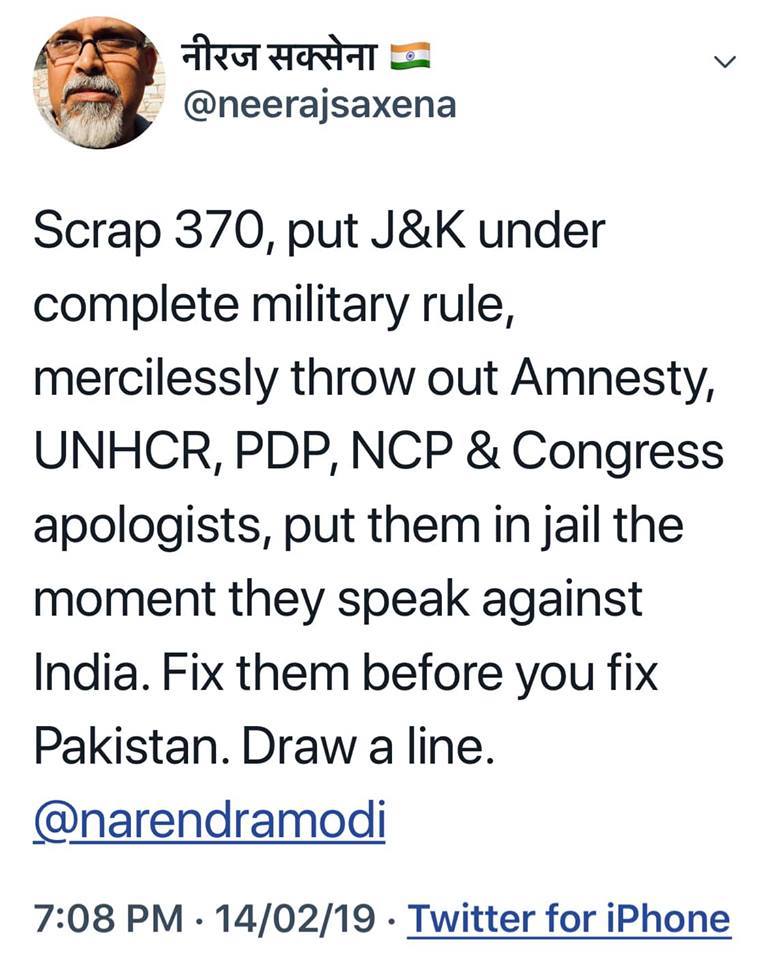

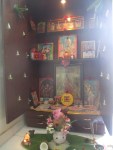
 I originally blogged this in 2013, at least an year before BJP govt of Modi was sworn in after 2014 Lok Sabha elections, so this has nothing to do with current Sabarimala crisis. Reproduced with some ‘edits’