Bhagavad Gita is misquoted in Oppenheimer. Well I haven’t yet watched the picture. But in an English fiction (by Ken Follet?) I recall reading about the developments leading to the atom bomb that stopped the World War II.Hiroshima and Nagasaki in Japan were bombed and until this date, there has been no other parallel act of violence and bloody mass murder to this scale in written history. The award goes to America always and the Caucasians to be specific. No other race in the world is capable of this kind of mindless destruction. In fact this was the reason I stopped reading Ken Follet. He kind of justified whatever Americans did and never elaborated the Japanese point of view. The word ‘terrorism’ wasn’t yet invented, lucky for Americans. Lucky for the Germans too is it not? Lucky for South Africans. For neither the holocaust nor apartheid got labeled as terrorism! Lucky for colonists from Europe as well even if they wiped out to extinction numerous aboriginal races in Australia, Latin America, Northern American and Africa. Look who is preaching.

If you read Arthashastra from 3rd century BCE penned by Chanakya which is a standard textbook across the globe and reference book until now on politics, administration, governance and diplomacy, you will learn that Hindus follow(ed) a four fold method when it came to waging war. First of all wars needed to be avoided at all costs. We followed the ‘Sama, Dhana, Bedha, Dhanda’ the four steps that helped in preventing wars between nations. First method was Sama which meant coming to truce with dialogues and understanding. Negotiations may be made to resolve issues. Trade pacts and treaties may be signed. Even marriage alliances may be forged to have peace at any cost, to bring hostilities between two warring nations to an end. This was a widely adopted practice throughout world history including in India. This was why the very religious and pious Hindu Rajput kings from Rajasthan entered into marriage alliances with the Mugals. Jodha Akbar precisely.
When the first method failed, we went to the next step. This was Dhana – and this meant gifting or giving up something to appease your adversary which meant a sacrifice on your part. You would have to sometimes cough up a big price. You do it anyway to maintain peace. It may mean among other things, giving up territory. The smaller princely states may agree to become vassals paying taxes and excise duties to a larger kingdom with dominant king or emperor. This may they do, unwilling to take on powerful adversaries. Indian princely states of Mysore, Trivandram etc., became vassals to the British raj paying a handsome sums to the British periodically. When first two ways failed, the third one came to rescue. Bedha means to differentiate or give differential or even preferential treatment to different parties and tactfully secure peace. Bedha is therefore NO level playing field. This is nothing but the knack of diplomacy. For instance, the ‘divide and rule’ method practised by the British during the British Raj days by having different sets of rules or laws for the Hindus and Muslims to maintain stability can be said to be the effective ‘Bedha’ diplomacy that helped them deal with two volatile and sensitive communities. In some cases, the Bedha can be stretched to playing up two parties against each other for the benefit and peace of the mediator. This is how traditionally hostile nations or arch rivals/adversaries are created in colonies: by pitting friendly communities living together in harmony for centuries, against each other. Erstwhile neighbours become deadly enemies overnight.
The fourth and the last resort would be Dhanda or the punishment of taking up the wand (or arms) to strike a blow: which meant waging war on your adversary. Only when all other channels of diplomacy failed and the demands of the adversaries were unjust, the fourth method was resorted to. So that is how ancient India treated adversaries and waged wars. Which was why Hindu kings lost to the Islamists and the British who were never bred on the kind of ethics or codes of conduct when it came to war, like our far advanced,literate, civilized and progressive societies of those times.
India never annexed foreign territory. Hindu kings were also pioneer ship builders and seafarers. The Hindu Chola Kings reached upto Indonesia (Bali is still Hindu) and even China, with the world’s largest Hindu temple being Angkorwat in Cambodia (which was later converted to Buddhist) but spread Hindu Dharam by peaceful means not by bribe (as Christians do) or by sword (as Islamists do). King Vikramaditya reached upto today’s Saudi. Merchants from south (Tamil Nadu) sailed upto Rome even before the birth of Christ trading goods and merchandise.
In Mahabharatha war that cannot be dated (anywhere from 6000 to 10000 years ago BCE), the Kauravs refuse to give Pandavs even five houses, leave alone five villages or provinces. When all means of negotiations fail, the Mahabharatha war, the greatest war of all times, ensues. Interestingly, an array of supersonic missiles find a mention in the Mahabharatha. Very casual reference to surface to surface, surface to air, air to air missiles with descriptions on speed and distance and accuracy! They are called Astras in Sanskrit. Astrology and Astronomy could have had sanskrit root words for names.
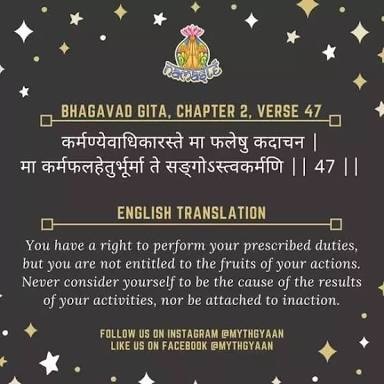
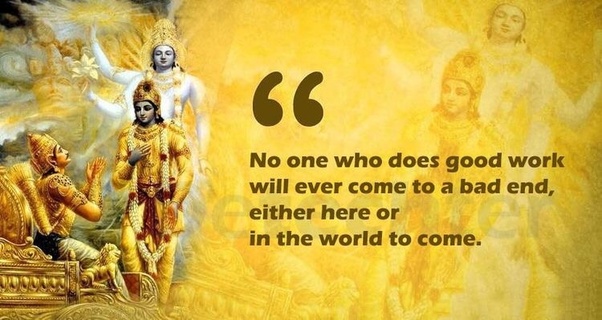
The Pandavs are unable to overcome hesitation because, who they are taking on war for territory, were their own blood, their first cousins. It is at that time Lord Krishna who is the charioteer for Arjuna explains that sometimes, ADHARMA HAS TO BE TAKEN DOWN WITH EQUAL ADHARMA. :Like how a thorn must be pulled out with a thorn. Dharma is the way forward but sometimes, Adharma also must be practised for the sake of establishing Dharma. It is in this context Krishna says that, He himself is death. After Krishna’s ‘upadesh’ Arjun is ready to fight the Mahabharat war and takes up arms to wage war against his cousins. The Pandavs go on to win the Mahabharat war killing all their cousins. But in the process none of the children of the Pandav survive either. So this is the bitter end of a war.
By deliberate misinterpretation of our sacred texts and by out of context quoting, some forces and especially world media want to create a wrong impression on Bhagavad Gita, which is much older than the Bible or Koran. Its exact date of writing is unknown. We believe it to be over 6000 years old – as ancient HINDU DHARMA THAT HAS NO FOUNDER, NO VATICAN OR MECCA, NO BIBLE OR KORAN AND NO FOUNDING DATE but that which continues to be the one and only continuous and unbroken civilization on planet Earth until now.
Are we staring at a third world war? Irresponsible on part of any nation that abets wars. The costs are too high and the collateral damage will have to be borne by the rest of the whole world. Russia has a moral highground in the matter no doubt. Its none of the business either for America or Europe. War mongering is no more small mischief. It can be a big, big irreversible mistake.
Swastika is Hindu symbol. The set of inverted triangles too is a Hindu symbol. All that is now associated with wrong parties.

 vijiravindran's