I don’t know a,b,c in western music. My ears are tuned in to mostly Indian classical – which is Carnatic (south) and Hindustani (rarely) (from north). Even the music instruments I am familiar with are ancient Hindu instruments such as the Veena, Flute, Tabla, Mrdangam etc., barring violin which has amazingly adapted to classical Carnatic. Apart from that, devotional bhajans that are classical based, and Bollywood/Tamil filmy songs are my favourite light music. Sadly world sums up the entire Indian music as the last one line of mine.
So when son was listening to this album I was really surprised. The video seemed to be out of Jungle Book. The music was clearly Hindustani. Fusion no doubt. He says he is listening to this artiste for a while now. The artiste took an year to make this Indian themed/classical Hindustani based album in which Anushka Shankar and even the veteran Asha Bhosle have recorded a number. I am loving this more as I listen to it. I have a little granddaughter who already has a fine musical taste. I am introducing her to mostly devotional bhajans such as those sung by our young Soorya Gayatri for instance. Looking at Krishna, she feels inspired already to learn flute, not yet 5. Plus she sings along with her dad most of what he plays or sings. Its a treat to watch her sing. By 3+ she was already crooning to Mona and the Frozen. We all love this Gorillaz album that I am sharing here. I think it has beautifully captured the essence of classical Hindustani in the Indian jungle backdrop. India is a phenomenon that cannot be bottled up by a single definition. But whatever the artiste managed to capture sounds good. My son has an ear for western music and keeps attending concerts. He was learning keyboard as a little boy that he left even as he was making great progress. He used to refuse to listen to Indian classical when he was still in high school saying that it was elitist. I never preached him anything. He used to read a lot even then and he decided that he would skip Indian classical that is not for the masses’ consumption. (Surprising that for the ritualist religious person I am, he is agnostic/atheist.) For the same reason, he loves rap even though he is also tuned into varied genres of western music – like jazz, rock, metal etc., i think. I am not familiar at all with this kind of music so I don’t qualify to comment on western music. I am merely sharing this beautiful piece of totally different genre of Indian classical fusion music that I am loving more and more with each passing day. The album is pretty new, published in last 1-2 months and I think my boy has placed order for old type vinyl record. Last time I saw that was in late 1970s in my Mama (uncle)’s house.
Very few cultures in human race are gifted with rare acumen of producing, creating soulful music. Hindus are one such a gifted and unique species which is why India is home to not just one but two genres of Desi Classical Music: the Hindustani stream of the north and Carnatic classical of the south (apart from native classical dance forms from every other state that merit a separate write-up in their own right).
The aim of this post is to make a brief, if not complete, record of Hindu contribution to world music (by way of music instruments only). So this list is not exhaustive. There is scope for future additions.
India’s native classical instruments comprising the Stringed ones (like Sitar and Veena), Percussion (drums such as Mridangam and Tabla) and Wind (like the Bansuri) command a special place in global music stage, with Sitar and Tabla adapted by a wide range of western music followers. An array of other instruments vastly remain unpopular, although thriving in local scene, with the music tradition dying a slow death in some cases as in rural/folk country.
Hindus revere musical instruments which find a place in ritual worship by way of ‘puja’ (service), the highest respects, tributes, mankind can ever give these finest creations of God who gifted us the basic ‘Sapta Swaras’ (the seven notes of scale) that form the core of all sounds/tunes and beats (raags and taals) in universe. Simply everything is contained in ‘Sapta swaras.’ There is no sound or vibration that is out of scope of ‘Sa Re Ga Ma Pa Da Ne’ right?
musical instruments along with books and other tools find a venerable place in Hindu worship; this is Saraswathi Puja aka Ayudha Puja celebrated on the 9th day of Navrathri in the south.
We Hindus believe, Veena is the instrument of the very Goddess of learning/knowledge/wisdom Mother Saraswathi. If Saraswathi reigns supreme, Lakshmi, the Goddess of wealth/fortunes and Shakthi, the Goddess of power/energy/strength cannot be far behind.
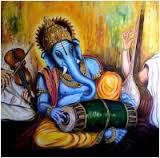
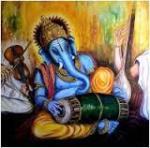
Lord Ganesha is revered as the master of drums.
India thus is this divine home where we view everything – including inanimate objects like music instruments, as life.
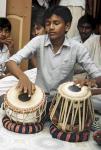
tabla
playing the tabla
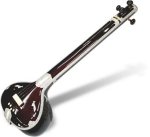
tanpura (thambura in tamil)
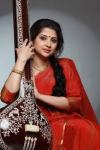
playing the tanpura
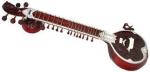
sitar
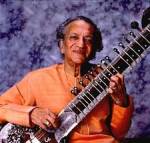
Pandit Ravishankar with the sitar
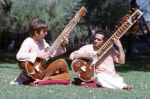
George Harrison learning to play sitar from Pundit Ravi shankar
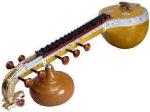
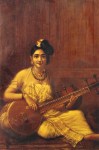
veena
a Raja Ravi Verma print of a 19th century woman playing the veena
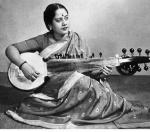
sarod
India’s first woman sarod performer Sharan Rani
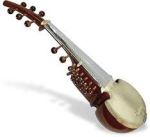
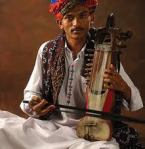
sarangi
playing the sarangi
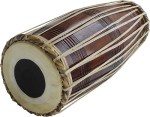
mridangam
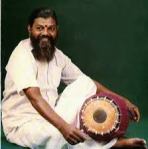
Karaikudi Mani playing the mridangam
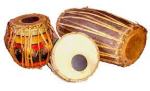
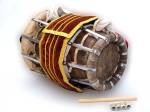
tabla mridangam
mridangam tabela thappattai
thaarai-thappattai in folk music, tamil nadu
thavil, not mridangam
nadaswaram
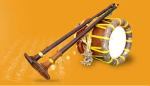
nadaswaram and thavil, signature wedding music instruments in tamil nadu
no south indian hindu wedding is complete without playing the nadaswaram with thavil as accompaniment
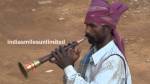
shehnai or shenoy is played in north Indian hindu weddings
a shenoy player
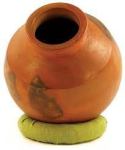
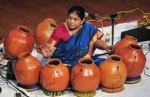
ghatam, the pot
Indian Nari, the multi-tasker playing multiple ghatams at the same time
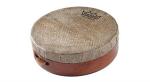
kanjira
Guruvayur Dorai playing the kanjira
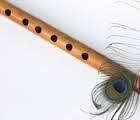
bansuri
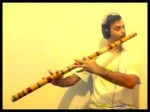
playing the bass bansuri
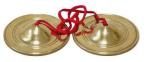
manjira
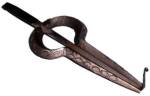
morsing
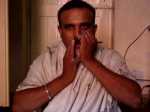
playing the morsing by the mouth
Our classical traditional instruments have less and less number of learners, teachers (gurus) and followers these days which is a big concern. This precarious situation endangers the transition of our native and pedigree music passed on over the millennia from our ancestors, to next generation. The music scene in Chennai, the gateway to Indian culture, is vibrant. Chennai is home to Carnatic attracting thousands of classical music exponents and disciples from around the world during the famous December Music Season (Margazhi). But of late, even here we see vocal music gaining an overwhelming predominance over instrumental music which is kind of sad. Very few youngsters take to Indian instruments these days and interest is waning.
In Hindu culture, music translates to spirituality. Music is essentially a form of ‘bhakthi.’ Bhakthi and Music intertwine in search of the ultimate bliss: Nirvana. That is why we have Meera Bhajans for instance or even the Thiruppavai-Thiruvembavai (in Tamil Nadu). The ‘Divine Being’ for Hindus revels in soulful music.’ Meera sang to her eternal love Krishna and her renditions are timeless.
a painting of Ganesha playing the mridangam
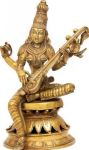
an ancient bronze statue of Goddess Saraswathi playing the veena
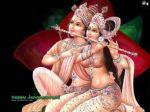
a beautiful print of Krishna and Radha playing the bansuri together in moonlight
Bansuri, the flute, is also the instrument of Lord Krishna, played in India for eons. The western flute version differs slightly from original desi version. Called ‘Pullankuzhal’ in tamil, the south Indian flute is also a tad different from the northern Indian bansuri. Thus there is not a thing that Hindus did not discover or invent in an ancient civilization that pre-existed the current one.
The amazing north-south sync in the Indian classical music versions north & south of Tropic of Cancer is brilliant: The Sitar of north’s equivalent in the south is Veena. The Mridangam from down under finds a mate in Tabela (tabla) up north. The Nadaswaram (nagaswaram) played in south Indian weddings is substituted with Shehnai or Shenoy without which there is no north Indian wedding.
‘Yaazh’ (as proncounced in ‘Yaazhpaanam’ a Tamil city in Sri Lanka) is a unique ancient Thamizh stringed musical instrument. ‘Jalatharangam’ also specific to India played with bowls of varied sizes with different levels of water, gives a rare musical vibration.
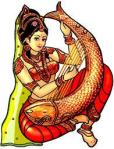
yaazh, the ancient tamil classical music instrument
a painting of an ancient tamil woman playing the yaazh
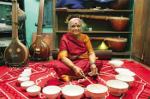
jalatharangam (jal tharang) playing with bowls of water
a veteran playing the jalatarangam effortlessly
Pranaams to Hindustani/Carnatic Classical and Folk Music traditions of Bharath (India)!
Computerized synchronization is killing traditional and native classical instruments of India in such an obscene fashion. Art is dying, artisans are dying because of electronic synthesis of our musical reverberations, even if it can be argued that this is one more step in evolution of music. Is it really possible to produce the ‘ghamaka’ of Veena cent percent with computers? No way! The finest nuances of Veena can be produced only in the instrument.
There are deliberate, steady and systematic designs and manipulations to trivialize, devalue, discredit and even disinherit (us of) and usurp anything and everything Hindu by gene, culture & heritage by some quarters, which is highly alarming. Aryabhatta was indeed the world’s first astronomer. Sushrutha was the world’s first plastic surgeon unquestioningly. Bhaskara did give the world Calculus and Trigonometry and Hindus did invent the Zero concept. Ayurveda to Yoga and Meditation, there is not a field ancient Hindus did not touch or pioneer in. Everything ground to a standstill by 7th century CE. Why. We Hindus never bother about patents either. Vasudeiva Kudumbakam, World is one family for us.
I have a request before I close: Dear Indian parents, PLEASE ENROLL YOUR KIDS FOR CLASSICAL INDIAN MUSIC INSTRUMENT TRAINING rather than aspire for Dance shows in television channels. You will be rendering yeoman service to Bharat Matha, Mother India.










 vijiravindran's