Posted in Environment

The Immortal Jellyfish

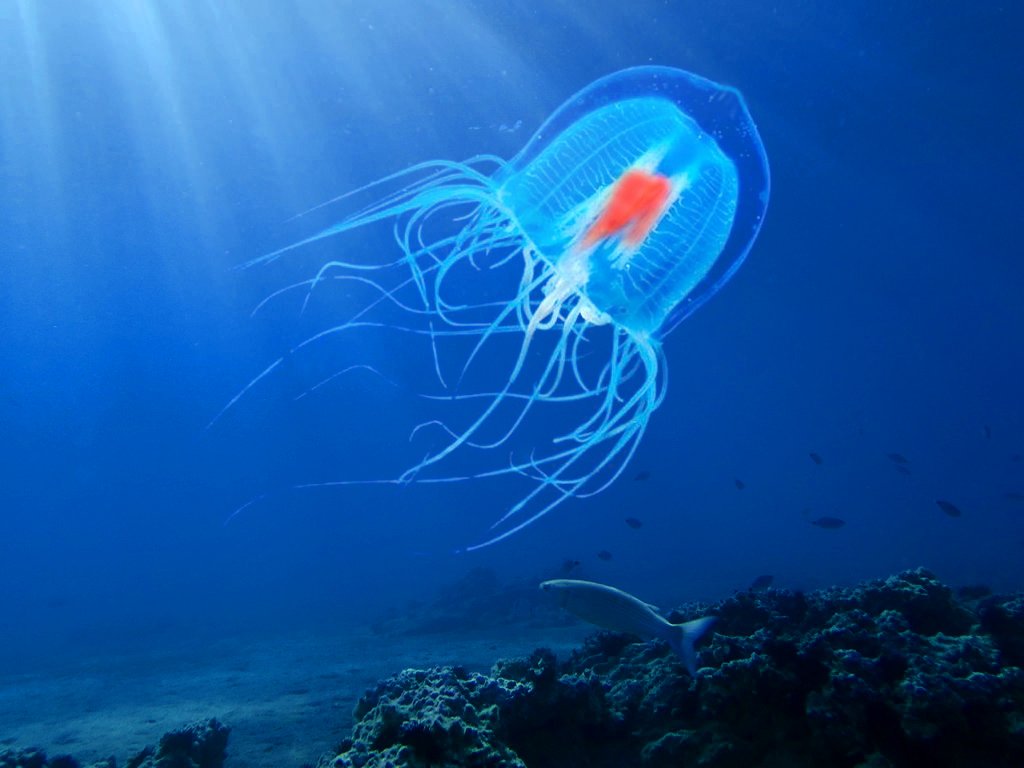
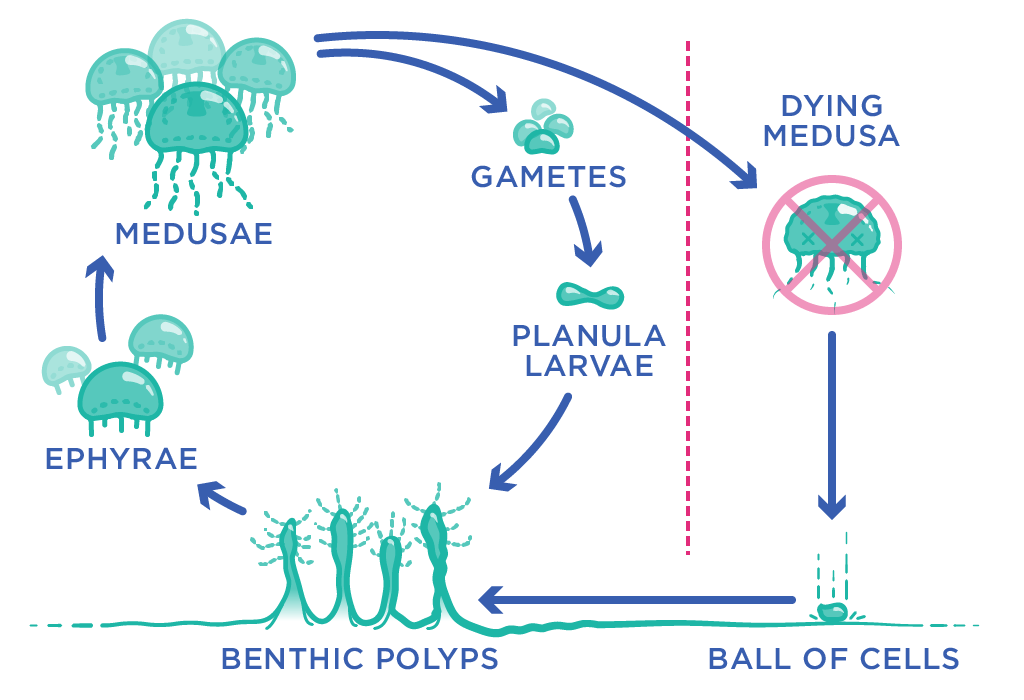
When the kids told me of the immortal jellyfish, I couldn’t believe my ears. All my life I never heard of such a bizarre thing! One is reminded of the picture ‘Death becomes her’ starring Meryl Streep and Goldie Hawn! The greed of some ladies to debunk ageing and always remain youthful! Actually there is grace in ageing, and to look your age is what is dignity all about. I can’t understand why women want to look younger than their age. If you are gifted, your genes can do the wonder for you without you having to ask or try – without you having to hop into the beauty salon every other week or having a body massage every five days. You don’t have to go for fillers or tummytuck or liposuction. I have always felt that the lovehandles and sagging boobs and a cute paunch and a big butt are sexiest! They mean you have lived a wholesome and fulfilling life and that you are well endowed! There must be lines under your tired eyes, the crows feet show that you care, the cheeks weigh down with the stress and not just hang down there, double chin is the proud smirk and you may look look amazing in salt and pepper, sign of your maturity. The baldest men are the brainiest in the world with their untold stories of success! The transparent veins, the creases in your forehead script your life experiences. So ageing is something profound. A milestone not everyone is fortunate to reach. Beauty is your natural skin without any overtone or conditioning. BEAUTY IS YOU, JUST YOU. Death is a blessing that has to come to us at the right time, never a moment early, never too late. I read a lot about wildlife, watch quite some ecology stuff, yet how come all these years I never knew that the jellyfish never dies?! The immortal jellyfish actually regenerates once its medusa is damaged, reverts back to its cystic form on the ocean floor. From this stage it begins a new lifecycle as if on rebirth. We have to remember here that the jellyfish. similar to many other species of marine life, carry both the male and female sex organs within. The regeneration or new life starts when the medusa dies a natural death with age. This means, an immortal jellyfish NEVER dies and is immortal! So the age of a jellyfish can be easily thousand years! However, the same jellyfish can die at the hands of fish or turtle in the sea becoming a meal! In essence therefore, a jellyfish cannot die due to ageing process and those that survive on regeneration are termed the ‘immortal jellyfish.’ Kind of weird, is it not? Not only can jellyfish cheat death, it is a also a super organic life form without eyes or heart or brains – like some narcissists we have here! And yeah, the jellyfish also shares with the narcissist an inherent toxicity, beware! So if there is one animate on planet Earth that may have stayed immortal from primordial times and that which may continue to survive to eternity, it could be the JELLYFISH.
Posted in Environment

Sea Grass Meadows: the Carbon Capturers of the Oceans.

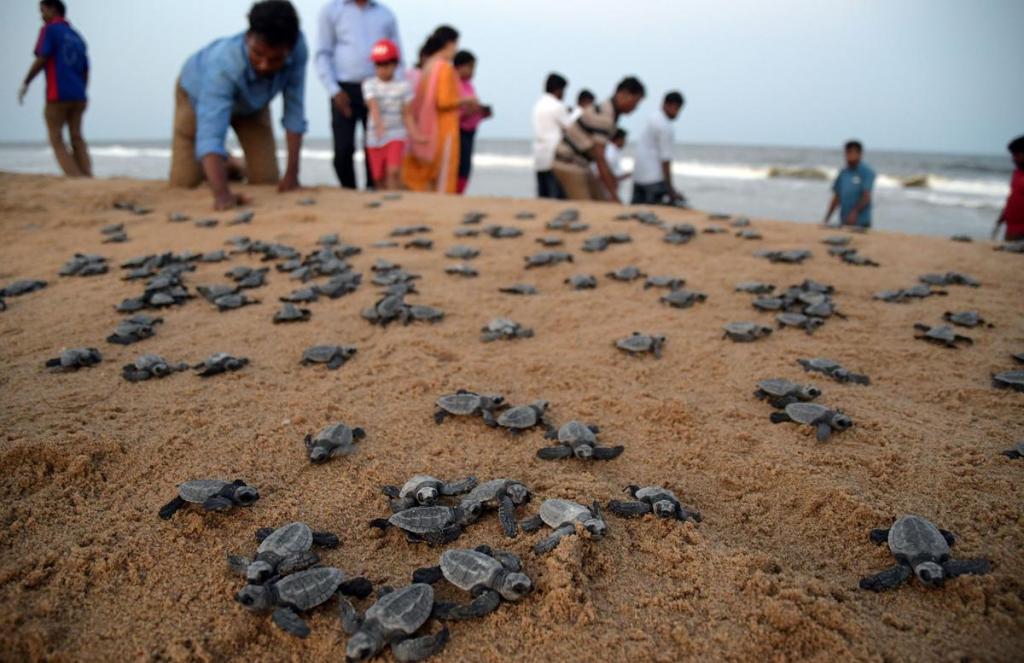
In Palavakkam, a suburb of Chennai, the stretch of beach sees Olive Ridleys laying eggs in the shore. To encourage the turtle breeding and to not confuse the hatchlings with too much illumination in the darkness of the night, the street lights are strictly switched off. This ensures that the turtle hatchlings make their way to the sea in their still unsteady tiny feat. The neighbourhood volunteer self-styled environmentalists help the stranded ones reach the waters safe. Olive Ridleys breed through stretches of the eastern Coromandel coast of India. The state pf Orissa is another popular pick for them with its pristine virgin beaches with minimum recorded human footfall. As awareness kicks in, locals now make sure that the olive ridley hatchlings survive. And therefore the south east coast of India remains the olive ridleys’ favourite destination when it comes to breeding. To encourage the adult female turtles to lay their eggs in the beach sand, the switching off of street lights is encouraged and practised. This shows that we are a responsible society willing to go the extra mile to see that wildlife is nurtured. Conflicts arise mostly when there is damage to property and/or loss of human life as it happens in the elephant corridors where human settlements bifurcate forest reserves.

Anyway, that is how my interest in olive ridleys happened. For sighting, one can plan an outing. This extraordinary adventure is open for city dwellers without pinching their pockets.

https://timesofindia.indiatimes.com/videos/news/chennai-baby-olive-ridley-turtles-emerge-from-pits-crawl-into-sea/videoshow/58098913.cms?from=mdr

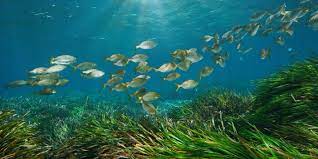
It sounds implausible that the cousins of Olive Ridleys, the Green Turtles must be behind the environmental destruction caused by disappearing seagrass meadows with their mass feeding frenzy?! It comes as a shocking surprise that sometimes specific wild flora and fauna may turn out to be the agents behind driving to extinction many other co-existent wild species vying for survival in the same shared environment or eco-system. Of course, if wheat and paddy are widely cultivated and thriving crop species today, once upon a time they must have been the weed that drove to extinction better cereals/food grains. Like the poultry and cattle, maize and wheat are winners by mere mindless propagation. Green turtles to me sound like these hollow winners of the ecological war. Besides, it is news to me that the seagrass can capture and block at least eighteen percent of global carbon. It means the seagrass may be having a direct and significant role in oxygen quality in planet earth. Precisely this seagrass is fodder for dugongs, green turtles and other sea creature that mostly graze them to extinction. Reading of the green turtles in swarms feeding on the leaves and then even digging out the roots of the sea grass, one is reminded of the human greed. Green turtles have no geographic home ground. They are on the move for the entire span of their lives moving enmasse from one atoll to another, in search of seagrass, their staple food. They circumnavigate the earth thus from Cuba to Indonesia, India to Maldives and Pacific islands. In India, for a while, the Lakshadweep lagoons served as their feeding grounds before they grazed them seagrass meadows to near extinction. And then they were gone. Refer/recommend the book ‘At the feet of the living things’ yet again, authored by research scholars backed by NCF Aparajitha Dutta and others.

Seagrass meadows, the savannahs of the ocean are also the ecosystems that sustain a plethora of fish families besides supporting the turtles, dugongs and the like. Correlated to the corals and the mangroves, the seagrass meadows play a vital role in sustaining living organisms in the planet. Kudos to research scholars and NCF, India for coming up with unconventional ideas to protect and propagate sea grass and thus saving it from total extinction in this part of the world.

Mother nature maintains a delicate balance: the green turtles have to survive and the seagrass meadows also must flourish giving earth a chance to breathe. The key to Planet Earth’s survival lies under the oceans: in the profusion of seagrass meadows that absorb the excess carbon from the atmosphere and keep it all locked down fathoms beneath them cleaning up the oceans.

Wow now I do wanna go for snorkelling! I didn’t capitalize on a dozen chances I got in life, out of … er.. kind of phobia 😀 but then what a terrible loss this is. I must, the next time opportunity presents itself.

Posted in Environment

Under Threat: Bitra: Floating Marine Reserve, India.

Ref: How the Bitra Floating Marine Reserve was born – by Rohan Arthur and T R Shankar Raman , from ‘At the feet of living things’ -edited by Aparajitta Datta

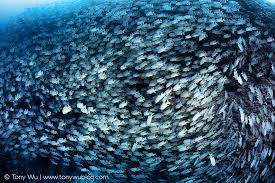
Always amazed by fish spawning frenzy spotlighted by underwater videos that we come across in Animal Planet etc. Never knew it had a scientific name: FSA (Fish Spawning aggregation). What is more surprising is learning that India has a Floating Marine Reserve (among a handful) at Bitra, Lakshadweep group of Islands falling under the Union Territory, off Kerala coast, in the Arabian sea.

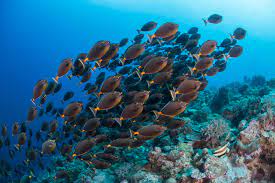
Some of the books I have read on the wildlife in India were authored by wildlife research aspirants who were gathering material and evidence for their doctorate. The Bitra Reserve apparently was born thanks to the efforts of two such ambitious and enthusiastic PhD candidates of Fisheries who had chosen Bitra for their studies. I am blogging this from a series of essays on Indian wildlife conservation efforts in about a quarter century until the 1990s. Some articles lie outside the purview of the scope of the book obviously, because the Bitra scene is from very recent. One of the group of islands of the Lakshadweep archipelago, Bitra is an impoverished fishing island where naturally fishing continues to be the way of life. The two researchers Rohan Arthur and T S Shankar Raman venture into this sleepy fishing center and stumble upon the FSA off the reefs of Bitra sea. They discover in the year close to 2012 that there is the FSA (fish spawning aggregation) ritual happening under sea near the reef where the square tails aggregated in tens of thousands to spawn their litter. A rare event in Indian territory, the Fisheries guys congregate with the locals and take steps to preserve the FSA from damages of fishing.

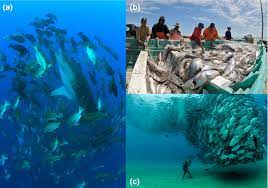
Seriously I wish they hadn’t tabled their findings! In a bid to submit their papers for their diplomas, they have given away the precious info to the locals that they seem to exploit for commercial gains. The earliest boost for their venture was the kudos that came from the Fisheries department itself that went against their grain. The department seconding to save fish is anathema to their founding principles and motto. No wonder, the plans fell flat in their face as the local fishermen refused to comply with the restrictions and started fishing vigorously in the delicately balanced marine eco system with the mother boats that made a killing catch every season of spawning (around new moon day a particular time of the year). Thus in matter of ten years the FSA fish count has dropped by over 90% . Human greed knows no bounds. Educating the local fishermen, bringing the awareness is a slow process but can work in the long run. Hopefully by the time realization dawns, there are still square tails left out in the Arabian sea/Indian ocean to make it to the Bitra reef for their annual appointed FSA.

Will the center look in and do something decisive about the protection of the Bitra reef and FSA therein? #narendramodi

I am banking on our Prime Minister Shri Narendra Modi ji on saving the floating marine reserve at Bitra and the annual FSA, saving the square tail and other fish species from extinction in near future. FSA is way of nature. We shall be making or breaking the natural cycle in Bitra shortly as frenzied fishing activity near the reef can drive the fish away from the FSA pool which for some evolutionary/geographic/scientific reason has been natural selection for the fish species since ages.