Posted in Environment

The damaging Forest Conservation (Amendment) Bill, 2023, India

The VAN (SANRAKSHAN EVAM SAMVARDHAN) ADHINIYAM Act

Very disheartening learning about the Forest Conservation (Amendment) Bill, 2023, passed by both the Lok Sabha and Rajya Sabha, the lower and upper houses of the Indian Parliament, that can make way for taking over of shoulder lands abutting forested areas for developmental activities of national importance (as claimed by the tenets of the bill). This means, highways can crisscross India’s forest reserves and wildlife sanctuaries in future without legal implications. Of particular concern is the virgin forestry we have in north eastern India that is home to myriad species of wildlife. The nation boasts of ecologically diverse zones from the Western Ghats (Nilgiris – the Blue Mountains) in the south with the primary rain forest reserves and the Thar desert in the west, the Sundarbans with its mangroves in the east and the mighty Himalayas in the north. Central India or the hinterland is home to a range of hills including the Vindhyaas and Satpuras and lakes and plateaus. The long peninsular coastline of India is rich with an impressive array of marine life. There are natural harbours and coral reefs and the world’s only surviving dugongs among others in our waters. Mountain ranges and valleys and passes and peaks of India together with rivers and streams and seas and islands and seasonal monsoons facilitate survival of a stunning range of flora and fauna, as next to Africa, only India has lions, tigers, leopards, elephants and single horned rhinos – the big five – in the entire world, and winged species gracing and sharing the congested land with some 1.3 billion strong human population. India is home to highest number of tigers in the world. Lion count is also on upswing. Conservation efforts are afoot but for every single step forward, the naturalists get pushed over by a dozen steps backward. What is the need for eco-tourism in a country like India where wildlife and humanity have to jostle for space and the man-animal conflict is getting worse with each passing day claiming lives on both sides. As someone has posted in the comments, this is clearly a DEFORESTATION move:

Even without the Bill, elephant corridors have been illegally but smartly taken over by those like Jaggi Vasudev in Tamil Nadu – right under the nose of both the central and state governments or perhaps under the auspices of our government. Ramdev & co., reportedly encroached on north eastern forests for Ayurvedic production unit. The environmental degradation we see in India is mindboggling with our rivers polluted and air toxic and soil poisoned. Now look at the further damage the Bill can do. Adani and Ambani can set up five star hotels without approval from Forest department right next to the wildlife sanctuaries and promote upscale tourism for celebs and page 3 socialites from India and abroad. Is it not the motive of the bill, after all? Who knows, whether Mahindra mooted the bill or any other business house. Agroforestry and afforestation are hogwash. Then there is the case of the tribals of India who have been living alongside wildlife right within our forest reserves or in settlements adjoining forest areas with their livelihood tied to the forests, traditionally for centuries. It will be piece of cake for Adani and Ambani to remove the tribes from their native lands and rehabilitate them in cramped neighbourhoods erasing their roots cleverly and systematically. A well planned strategy. Under the aegis of our prime minister himself, I hope? What a sad story. Following up NCF, Bird Count of India etc., I have been on a high noting the conservation efforts even if painfully aware that only a small percentage of it all succeeds. If I have it my way, a good portion of my meagre, petty and insignificant estate shall go to wildlife conservation in India (and NOT to temples). Its my wish and unregistered will (!) as of date. The kids can fend for themselves -god shall give them the strength.
Posted in Environment

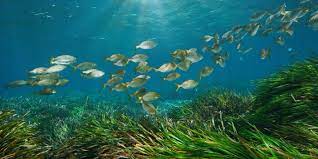
Sea Grass Meadows: the Carbon Capturers of the Oceans.

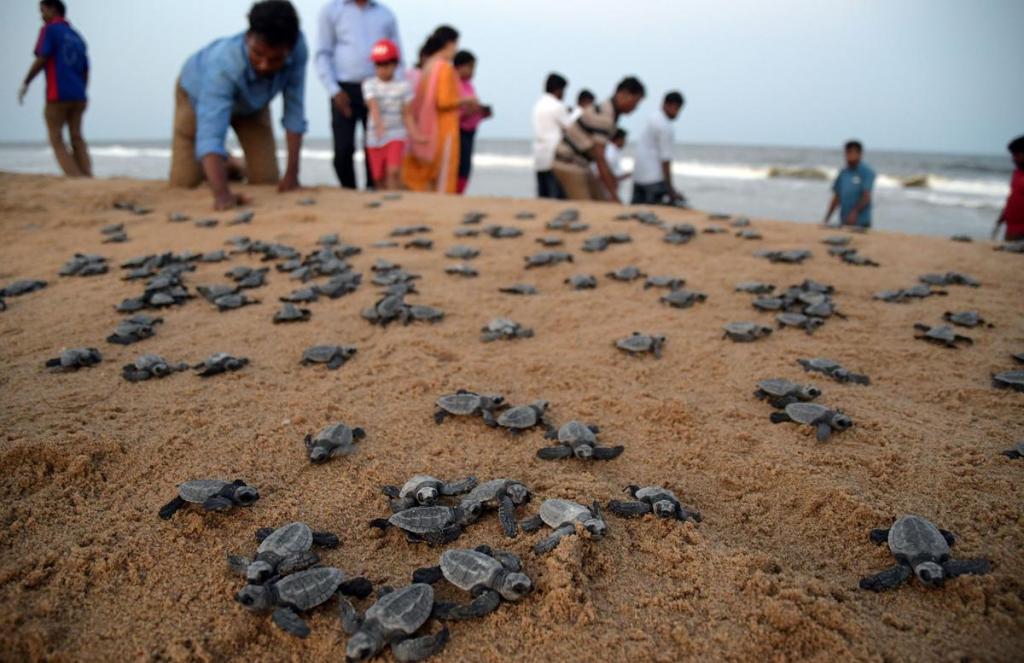
In Palavakkam, a suburb of Chennai, the stretch of beach sees Olive Ridleys laying eggs in the shore. To encourage the turtle breeding and to not confuse the hatchlings with too much illumination in the darkness of the night, the street lights are strictly switched off. This ensures that the turtle hatchlings make their way to the sea in their still unsteady tiny feat. The neighbourhood volunteer self-styled environmentalists help the stranded ones reach the waters safe. Olive Ridleys breed through stretches of the eastern Coromandel coast of India. The state pf Orissa is another popular pick for them with its pristine virgin beaches with minimum recorded human footfall. As awareness kicks in, locals now make sure that the olive ridley hatchlings survive. And therefore the south east coast of India remains the olive ridleys’ favourite destination when it comes to breeding. To encourage the adult female turtles to lay their eggs in the beach sand, the switching off of street lights is encouraged and practised. This shows that we are a responsible society willing to go the extra mile to see that wildlife is nurtured. Conflicts arise mostly when there is damage to property and/or loss of human life as it happens in the elephant corridors where human settlements bifurcate forest reserves.

Anyway, that is how my interest in olive ridleys happened. For sighting, one can plan an outing. This extraordinary adventure is open for city dwellers without pinching their pockets.

https://timesofindia.indiatimes.com/videos/news/chennai-baby-olive-ridley-turtles-emerge-from-pits-crawl-into-sea/videoshow/58098913.cms?from=mdr

It sounds implausible that the cousins of Olive Ridleys, the Green Turtles must be behind the environmental destruction caused by disappearing seagrass meadows with their mass feeding frenzy?! It comes as a shocking surprise that sometimes specific wild flora and fauna may turn out to be the agents behind driving to extinction many other co-existent wild species vying for survival in the same shared environment or eco-system. Of course, if wheat and paddy are widely cultivated and thriving crop species today, once upon a time they must have been the weed that drove to extinction better cereals/food grains. Like the poultry and cattle, maize and wheat are winners by mere mindless propagation. Green turtles to me sound like these hollow winners of the ecological war. Besides, it is news to me that the seagrass can capture and block at least eighteen percent of global carbon. It means the seagrass may be having a direct and significant role in oxygen quality in planet earth. Precisely this seagrass is fodder for dugongs, green turtles and other sea creature that mostly graze them to extinction. Reading of the green turtles in swarms feeding on the leaves and then even digging out the roots of the sea grass, one is reminded of the human greed. Green turtles have no geographic home ground. They are on the move for the entire span of their lives moving enmasse from one atoll to another, in search of seagrass, their staple food. They circumnavigate the earth thus from Cuba to Indonesia, India to Maldives and Pacific islands. In India, for a while, the Lakshadweep lagoons served as their feeding grounds before they grazed them seagrass meadows to near extinction. And then they were gone. Refer/recommend the book ‘At the feet of the living things’ yet again, authored by research scholars backed by NCF Aparajitha Dutta and others.

Seagrass meadows, the savannahs of the ocean are also the ecosystems that sustain a plethora of fish families besides supporting the turtles, dugongs and the like. Correlated to the corals and the mangroves, the seagrass meadows play a vital role in sustaining living organisms in the planet. Kudos to research scholars and NCF, India for coming up with unconventional ideas to protect and propagate sea grass and thus saving it from total extinction in this part of the world.

Mother nature maintains a delicate balance: the green turtles have to survive and the seagrass meadows also must flourish giving earth a chance to breathe. The key to Planet Earth’s survival lies under the oceans: in the profusion of seagrass meadows that absorb the excess carbon from the atmosphere and keep it all locked down fathoms beneath them cleaning up the oceans.

Wow now I do wanna go for snorkelling! I didn’t capitalize on a dozen chances I got in life, out of … er.. kind of phobia 😀 but then what a terrible loss this is. I must, the next time opportunity presents itself.