Posted in Food For Soul

Decoding Dharma 4: – Jeev Samadhi when fully awake

Hindu by default. Vegetarian by default.

But why do I always be wanna be reborn a Hindu. This is merely my simple ingestion of the essence of Dharma. I may or may not be right. (I think I have a long long way to go through many multiple janams before hoping for an elimination from the birth cycle). Practising Hindus must be aware how we seek liberation (Mukthi) from this vicious circle of birth and death (which is the illusion or Maya) in our Prarthana before blending with the One Collective Consciousness.

……https://www.youtube.com/watch?v=jHqRJRV-0Ds…..

I have tried not to attach the You tube link in this post considering the sensitivity of the topic. Please copy and paste or search You tube for ‘buddhist monk or thai monk attaining jeev samadhi or leaving body.’

Just watched a video of a Buddhist monk in Thailand attain Jeev Samadhi when fully awake. I have blogged on this earlier. This kind of taking leave is possible only for Hindu/Buddhist/Jain monks of the Dharmic nature.

Where others fail and why is Hindu Dharma scientific. Because, only we speak of a higher consciousness that we regard as the nether. If we do not evolve as humans to this state of consciousness, we may get propelled into the birth cycle again and again. We may take a thousand janams and still be not rid of the birth and rebirth cycles. For Hindus, this emancipation is entirely a mind factor. This is the ultimate state of Nirvana or Moksha whatever name you may call it by. What we see in temples is for those at the base of the pyramid who have limited thought process to imagine anything beyond. As we may reach the upper echelons of our consciousness, we may start leaving rituals entirely behind. Some of my friends do follow parallel paths in search of this elusive truth or wisdom.

(You may ask about those folds where rituals are non-existent or minimal. Absence of rituals is no guarantee to enlightenment. Contrary to the belief of many, ritual processes enable us and prepare us for the next stages of consciousness. Yoga and Meditation may be effective tools for attaining the discipline for both mind and body control. Which is why the Christian Yoga that dispenses with Om Mantra may not serve purpose. Synchronization of the body and the mind can be achieved with focus with Om chanting)

I have spoken of the ‘ant and the boot’ story pretty often. To the minute ant at the edge of the boot, the imposing man can never be comprehensible. It is beyond the tiny brain of the little ant to break out of its intelligence level to understand the looming man in his entirety. This is all Hindu Dharma is about. That overwhelming knowledge is our God-Goddess. We simpletons may relate to this supreme consciousness as Shiva or Raam or Shakthi as per our comfort level.

I am sharing links to my earlier blog posts on this fascinating subject of mine. I have always regarded myself as kind of spiritual(!) over religious!!! That inspite of me having limited spiritual knowledge. Still this is the one single realization that the Abrahamic folds completely missed out on. This may be because, Hinduism has no founder. That we are not an organized religion like others, helps. Dharma is not an ‘ism’ at all. The Sanathana Dharma is way of life that if you follow with conscience can open doors to achieve supreme levels of higher conscience when you can belong in the other world without your physical/mortal body even as an earthling. Otherwise this is possible only when we shed our physicality (on death). This is where transcendental meditation comes in. Hindus are eternal seekers. We seek, don’t pray. We seek the supreme knowledge to attain the level of higher consciousness in our own time which is possible only for Mahans like Swami Vivekanand.

I am writing this up after watching the video of a Thai Buddhist monk take leave of his physical/mortal body when fully awake. I am not the owner of the video. This is a very recent recording. Generally this kind of Jeev Samadhi is not possible to witness at all. Rarest to happen. What a highest level of super consciousness the Buddhist monk must have attained. Technology has gifted us this wonderful opportunity to understand or decode the one true path which is Dharmic (Buddhism and Jainism and even Sikkism are offshoots of Hindu Dharma).

Pranaams to the noble Atma. Blessed. What a way to take leave. In a world wracked by violence and bombs and bloodshed, what a dharmic way some live by. Om Shanthi!

(On my friends’ suggestion I am adding this on India. Bharatha is Yoga Bhoomi while the Abrahamic nations in Middle East and the West are bhogis. In short, materialistic. Our paths can only be divergent).
Posted in History-Culture

God’s Own Initials

God’s Own Initials : Pillayar Suzhi & Other Holistic Hindu Symbols

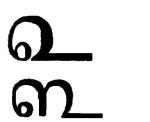
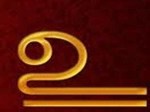
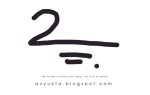
No Hindu puts down a thing in paper with pen-pencil without first marking the ‘Pillaiyar Suzhi’ – to Lord Ganesh (Pillayar is Thamizh name of Ganesha). It is custom even otherwise to begin anything and everything in our culture after offering obeisance to Ganesh first. Ganesh worship precedes all rites and rituals which follow up later. One of the strict advices we are issued before our school board/university exams is ‘not to mark our papers with the ubiquitous Pillayar Suzhi’ (habitual with most of us) – specific instruction from our teachers and invigilators supervising the halls. We Hindus associate Knowledge with spirituality; Knowledge leads to liberation; Knowledge is the ultimate truth, the enlightenment we seek. And the light that dispels darkness called ignorance is the He & She for us. After all who would worship text books and instruments of writing and machine tools and musical instruments, and why even the automobiles, the way we do in India! For one thing this represents the respect and love a Hindu inculcates from birth both for animate and inanimate objects. Then again, it symbolizes the significance we impart to acquiring wisdom that we have a designated Goddess heading the department, Saraswathi! I bow to her here for the supreme knowledge that She is and for what She bestows us with.

So from such a point of view we can derive at the curious custom of inscribing the Lord’s initials on our papers first – be it in the answering sheets in examination halls or in our accounting ledgers.

There are various ways we inscribe the Pillayar Suzhi. We each indigenise it to certain degree, to our style of writing. The first alphabet a Hindu child ever writes is this Pillayar Suzhi – with his/her mother or teacher holding his/her hand at the tender age of 3 years. Until recently our children wrote the alphabet in food grains on first day at school marking fertility and auspiciousness in learning and gaining wisdom. Even today many schools in India follow the tradition.

Origin of Pillayar Suzhi: The practice is since the ages when wise men wrote the Hindu scriptures in parched palm leaves with dried twigs/iron nails millenniums before. Pillayar Suzhi on top of the leaf was for testing whether the leaves were dried to optimum level before starting to inscribe in them. The suzhi that came with a stroke and curve and dot and line in its full form served as the judging sample for discarding/taking leaves for valuable inscription.

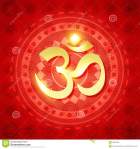
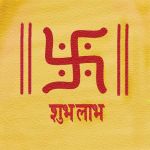
Pillaiyar Suzhi therefore came to mean beginning of scheme of things in general. On Diwali day which is the Hindu new year, traders open their new books after inscribing ‘Shree’ with words ‘Shubh Labh’ (auspiciousness & prosperity) flanking the Shree Mantra. In the place of Pillayar Suzhi, there is the tradition of inscribing ‘Om’ Mantra or the ‘Shree’ Mantra on top of a page in North Indian communities. ‘Shree’ not only refers to the Goddess of Wealth & Prosperity Lakshmi but also to Ganesh again. So either way, nothing moves in India without Ganesh’s consent.

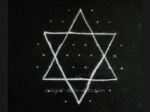
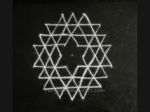
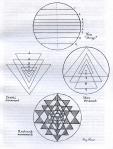
Other famous Hindu symbols around the world include the ‘Swastika’ and the set of 2 Inverted Triangles overlapping each other. These are powerful as we know them today.

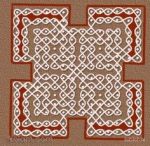
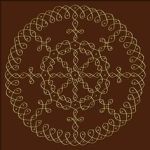
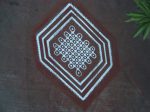
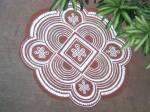
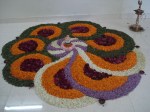
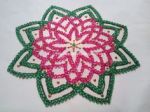
Kolams (in the south) and Rangolis (colourful Kolams done in north) are very precise arithmetic and geometric calculations, basically scientific in principle. The vibrant drawings they are, kolams are a varied expression of spirituality, a celebration of holiness whenever festivity is in the air. A work of aesthetics, the kolams are a visual pleasure for the right connoisseurs.

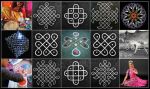
Anu’s Maargazhi Kolams: a page devoted to the passionate hobby of a friend who does a commendable job the entire Tamil month of Maargazhi (Dec 15 – Jan 14), the winter season. What a wonderful way to preserve, showcase and popularize our culture.

Check out Anu’s labour of love at

https://www.facebook.com/Maargazhi-Kolam-by-Anuradha-1010399552360135/

The kolams that still adorn every doorstep down south were meant to be mental practice for women who drew them with exact precision every morning in front of their homes to greet their ‘adhithi’ (guests). The kolams are good for nimble fingers even in today’s modern computer age, and weaving your way through the intricate maze-like artwork, mapping it out mentally with calculated precision could postpone the onset of Alzheimer’s in women. One sees innovative concepts in kolams keeping with changing times. The inner creativity (of the artist) – the ingenuity, the discipline, the harmony, the patience and the calm execution may well be important management lessons for youngsters today. Besides, the back-breaking exercise in early morning by itself is an uncharted but effective fitness regimen. It is a shame a good majority of us educated woman have given up the habit of drawing kolams.

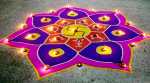
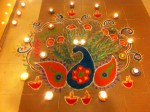
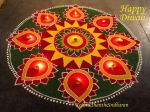
Rangolis are more colourful creations compared to south Indian kolams (normally done with ground rice flour which doubles up as favourite food for winged visitors and insects and other pests.) Our ancestors had a reason apparently for every ritual we have adopted in our way of life. There is no Holy or Diwali celebration without adorning your home and carpeting your living with a Rangoli first.

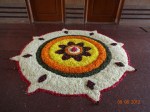
Pookolam as the name suggests are floral kolams specific to Onam celebrations in Kerala. A group of women get together to create this enchanting masterpiece of peace and tranquility which is a feast for sore human eyes.

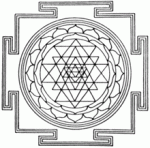
Which brings us to those special and divine kolams we reserve for the Puja (altar) in our homes. These are not for public display or to be stepped upon by foot.

https://en.wikipedia.org/wiki/Sri_Yantra

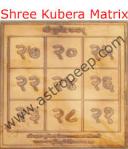
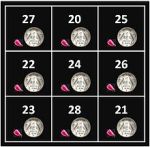
The ambitious among us are also into computing the ‘Kubera Yantra’ kolam in our spirituality quotient! Literally meaning the Hindu magic square, it is scientific and one more proof to ancient Hindu genius. Yantra in sanskrit means ‘instrument’ or tool. The Tantra-Yantra-Mantra have imbedded cosmic elements which can have an effect on our beings.  The astronomical, astrological derivations are not anyone’s fancy imagination but constitute a strict discipline of science.

https://en.wikipedia.org/wiki/Kuberakolam

The Hindu heritage is vast as the ocean and its depths. We shoulder the tremendous responsibility of keeping alive our precious traditions and passing on the wealth to future generations without a break. ‘Sanathana Dharma’ is not around for over 10,000 years without a logic. How many of us cherish our bountiful inheritance.

The scope of this post is enormous.

Om Shanthi ! (Peace)