Posted in Books

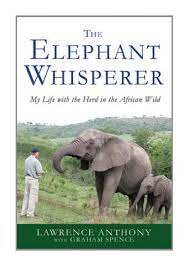
Review: The Elephant Whisperer – Lawrence Anthony.

My awareness of Lawrence Anthony’s work was purely incidental. I would be looking out for elephant news and he was always there in You tube in a time when we still did not have whatsapp or google. I am sure i have watched the video of elephants mourning his demise. What a blessed life. He could have lived longer, but the stress of running the reserve must have told upon his health. This we understand as we turn page after page of his book ‘the elephant whisperer.’

As Anthony makes it clear at the outset, the elephant whisperer is not him but the elephant in question that spoke to him. This book has been on my reading list now for years. Finally got my hands on it (kindle version). Comes second to Tanya James’ ‘the tusk that did the damage’ on the elephant scene in India that centers around the menacing poaching issue we have in the country for the precious tusks of the elephants. (Same is true of Indian single horned rhinos as well in the state of Assam, similar to the precarious situation of the double horned rhinos of Africa that are nearly hunted down to extinction already. Anthony’s ‘the last rhino’ is on the rhinos). Until this book happened I believed, the Indian wild elephant escaped poaching even if unhealthily domesticated at an alarming rate.

My introduction to the Zulus and Bantus, the native tribes of South Africa happened in my ninth standard I guess, when I read for the first time a James Hadley Chase novel ‘the vulture is a patient bird.’ It is because of the content i remember the title and the tribes. I can say this may have been a chief reason for my interests in Africa including its wildlife. Later on of course, there was Wilbur Smith. Literally every single trilogy or whatever of his I read with, mainly for the wildlife info even if it was all fiction. ‘The elephant song’ of his was special. The matriarch comes through in Smith’s works. I would like to skip his latest works that I wouldn’t attribute to him, probably penned under his name by someone else (like in the case of Sidney Sheldon). They don’t carry the same Smith stamp. If you have been reading Wilbur Smith, you must be familiar with entire Africa from Sudan, Egypt and Ethiopia to Congo, South Africa, Zaire and Zambia (both of erstwhile Rhodesia) and more. You learn of the languages such as Swahili. You discover the native tribes, the shortest men, the yellow men, the spear throwers, the trackers etc. You develop a deep respect for the dark continent that has been mindlessly exploited and now made a complete mess. I agree with Anthony on the violence aspect about Africa which has to keep with its wild nature. Apartheid is long since over. Afrikaners and the other remaining whites are doing a wonderful service to the conservation causes in Africa in the present, even if it was their ancestors who nearly brought the native wildlife to the brink of extinction in the first place. Still the current conservation efforts must not be underestimated or disrespected. This is very much the need of the hour.

Unlike fellow Indians, I am totally against domestication of our Indian wild elephants for Hindu temple service and for gala events like Navaratri-Dusshera celebrations in Mysore palace grounds in the name of culture, heritage and traditions. I have been vociferous over this capturing and taming of wild Indian elephants from the jungles, earning quite a few adversaries in the process. But here end my feeble protests. NGOs for wildlife and elephant lovers have to take the mantle from well-wishers and whistleblowers (!) like me at this stage.

My piece on temple elephants in India captured from wild for domestication, inspired by Lawrence Anthony’s ‘the Elephant whisperer’

I wish India has someone like Lawrence Anthony to save our wild elephants from poachers, regain the lost elephant corridors and conserve the population from going to extinction inevitably in a century or two.

wild Indian elephants faring no better…

The book is a treat to elephant lovers and naturalists and conservationists. It is enjoyable and good learning guide for anyone for that matter. Those of us who are keen on safaris must know what it takes to run a show.

Lawrence Anthony confirmed what I had read about the pachyderms over years: that the elephants communicate very intelligently in a unique way both physical and metaphysical, with their stomach rumblings in a very low frequency inaudible to human ears that therefore fail to pick up the jumbo communication. So that way, quite like the whales, the elephant community too may be much more evolved than us homo sapiens when it comes to tele communication. It is not without a reason that these giant mammals have survived and roamed planet earth many millions of years. The other way the elephants communicate is by tactile contact in the bush. The infrared waves of elephant whispers probably serve as transmission conduits to reach over herds spread across entire landmass of Africa which is stunning! Science may prove theories in labs but here was this dauntless conservationist living the experience to relate his story to the world. To me his well lived life and real time observation suffice as authentic proof to elephant telepathy we talk about including the long elephantine memory. The tuskers’ moving vigil for two days on Lawrence’s demise is the testimonial ultimate for what Lawrence recorded in his book: “The most important lesson i learned is that there are no walls between humans and the elephants except those we put up ourselves.

Anthony also in the course of his writing introduces us to the lush and rich spectrum of his natural reserve Thula Thula:

  • mongoose, warthog, tawny eagle, martial eagle, impala, zebra, wildebeest, kudu, nyala, baboon, black mumba, black python, bark spider, leguaan (african monitor lizard), duiker, southern white rhino, honey badgers, crocs, barbel (fish), cape buffalo … and of course elephants
  • (noctural creatures): bush pigs, giant eagle owl, vondos, bush rats, nightjars, bats, bushbabies, hyenas, leopard, lynx, serval
  • reptilians: Black mumba, puff adder, mozambican cobra
  • trees native to Africa: Acacia robusta, marula, boerbeen, fig, umbrella thorn tree
  • the winged nesters: plum coloured starlings, european rollers, bush shrike, narina trojans, gwala gwala, vultures

What a spectacular life Anthony lived! Added bonus was his elephants whispering to him accepting him as one among them. Nana and Frankie, the matriarchs in particular shared a wavelength with Anthony, able to reach him. Here i have to mention Anthony’s intention of keeping the wildlife feral and so his deliberate breaking up of connection with the tuskers so that the herd moves deeper into the bush far from human contact for their own sake. This was also necessary as Anthony felt that this way, the elephants will stay wary of poachers (or any humans for that matter).

When I was reading about the way Anthony was spending long and perilous nights in the bush to safekeep the elephants in the boma when they were traumatized, rowdy and tyrant, i couldn’t stop myself from admiring the man for not only his courage but also for his big heart that did not hesitate to sacrifice creature comforts to settle down the disturbed gang in his reserve. The herd mistrusted human beings having been subject to witnessing massacre of their family members. The move by truck and darting (with tranquilizers) had dazed them and made them more violent and edgy. Anthony however focused only on rehabilitation of the elephants on their new home winning their confidence and trust gradually. In the process he did not lose his patience or hope even for a minute. He believed sincerely, the elephants deserved a chance. It was a painstakingly done work worth its rich dividends. You have to be gifted for sharing such a compassion for wildlife to be going this extra mile. As Anthony himself says, one has to probably grow up in the bush with the right mindset to be able to work or live in this kind of nature’s setting. It is a tough but rewarding life for those with a passion for conversation. Only that, your physical fitness must match the demanding conditions of the life in the veldt. And African tribes like the Zulus of warrior blood naturally fit in their roles as armed rangers of the reserve. Having to share their living space with Africa’s rich wildlife and having a history, they are the natural choice for the maintenance and running of the Zululand sanctuary in the heartland of South Africa.

Anthony speak:

  • Living rough in the wilderness is a salve for the soul. Ancient instincts awaken; forgotten skills are relearned, consciousness is sharpened and life thrums at a rich tempo.
  • No matter how heart-wrenching the situation, we never interfered with nature. Brutal as the food chain is, that’s the balance of life in the wild.
  • Interesting observation on fright-flight distance, innovative game keeping methods, round the clock alertness and an equally enthusiastic team of rangers, merit a mention. Bush piloting and crane lifting on darting are familiar with us in India where latter methods are employed when it comes to dealing with the tuskers.

    What I consider firsthand research material about Anthony’s work may be the elephant communication information and Askari (male elephants led by an ageing patriarch) observations in particular apart from breeding habits of different fauna. Valuable input for future wildlife studies and conservationists. Kudos to his diplomacy with the native tribes. In today’s highly jingoistic egoistic material world, we need this kind of trendsetter. In another part of the book, Anthony says, it is the elephant who is the tone setter for the relationship shared between him and the herd. He goes on to narrate how each and every member of the family enriched his life and added dimensions to his perspective on the African elephant.

    Serious poaching threats from armed gangs and sharpshooters fitted to their teeth, the uneasy relationship Anthony shared with Nkosi Biyela and the Indunas in general whose ancient zululand is the reserve, the epidemics waiting to devastate wildlife if unchecked, the brutal forest fires, the rogue beasts on prowl (like the male elephant Mnumzane in musth that had to be put down) endangering not only safaris but also other wildlife (with Mnumzane shearing white female rhino to death with his tusk), natural disasters such as river flooding and breaking banks, the maintenance of full length electric fence with low voltage just to stun the wildlife from crossing over but not kill, the challenge of balancing the wildlife population that ensures the survival of the fittest in accordance with the food chain, nerve wracking dealings with the superstitious African tribes not antagonizing the sons of the oil, the law and order issues to be taken up with law enforcement, the follow up with KNZ of whatever, the wildlife departments and reserve sanctuaries of South Africa, … and much much more need to be addressed on day-to-day basis running a wildlife reserve as vast and teeming with diverse wildlife as Thula Thula.. And if the reserve is to boast of a safari lodge like Thula Thula, the challenge is many more time magnified, keeping in view the safety of the tourists. The days start well before dawn for a safari and end with the last of the tourists hitting the sack as Anthony explains. Lawrence’s wife Francoise now in charge of Thula Thula seems to have lent a French touch to the holiday resort with her exotic cuisine, a big draw with the visitors naturally. Game sighting is adventure like nothing else. Only those who have sampled this heady brew of thrill will know why nature and wildlife can be such a humbling and invigorating experience at the same time, making one even spiritual. You connect with your basal instincts when you confront all forms of life from the millipede, centipede and scorpions and spiders to the crocodiles and rhinos and bucks and antelopes and the giant elephants under trees as ancient as you can imagine, with their gnarled roots and spread branches sporting myriad coloured winged nesters. A profusion of life in the natural element. Nightlife in the wild is another symphony. What a welcome break from the cacophony of our urban materialistic life.

    birth control not for Indian wild elephants…

    Hopefully land acquisition for expansion of Thula Thula is now done with, which can provide the wildlife in the reserve more of room to amble about. Anthony also gainfully employed the local manpower which is mutually beneficial. Let’s see. I have always dreamt about a Kenya or Tanzania or even an Uganda or Zimbabwe safari, but never South African. My interest in South Africa got piqued with the Netflix serial ‘the penguin town.’ Now I have ‘Thula Thula’ too in my bucketlist! Hopefully i can make it with my entire family there in a couple of years, along with my grandchildren in tow! How i would luv to show my grandkids Nana and Frankie!

    My first ever elephant write-up. The original draft may be from over 10 years back…

    Anthony not a serious contender for Noble prize in lit still his south African lingo is something! Good sense of humour there. That supersized vacuum cleaner of an elephant trunk! Menopausal rhino!

    Rounding up with Lawrence Anthony quote: THE BEST CAGE IS NO CAGE. Om Shanthi!
    Posted in Books

    Review: ‘Gandhi Before India’ by Ramachandra Guha

    Making of the ‘Mahatma’

    Took me a solid 45 days to 2 months to read up Ramachandra Guha’s ‘Gandhi Before India.’  The author has taught at Yale, Stanford, Oslo and also the London School of Economics. Winner of Sahitya Academy and Bharat Bhushan awards in India among others, featured in Prospect magazine’s list of world’s most influential thinkers, it is a tad too much for me to even attempt reviewing the outstanding work the book is.  If at all I am doing it, it is because I want to spread the word, make more people read the class writing of the author that befits the matchless and inimical social life and works of Mahatma Gandhi.  I am trying my hand at non-fictions only from very recently. They are kind of difficult to hold your interest – so the author has a huge responsibility of sustaining the flow in readers (like me who are bred on staple diet of English fictions).

    And most certainly I have not read up the ‘Collected Works’ of Gandhi which is a compilation from various archives in India, South Africa and England. Neither have I read Raj Mohan Gandhi,  one of Gandhi’s well known biographers and his grandson. Yet I can imagine the extent to which Mr. Guha pushed  himself with research to dig up archives ranging from as far as Haifa in Israel unearthing evidences that eluded other resourceful eyes, I bow to his brilliant professionalism first over even Gandhi!

    Such an accurate recording of history is of great relevance in today’s world of Donald Trumps, in the light of Paris and Brussels from recent times. Another category that must not miss the detailed study is the widespread Indian diaspora that has made every nook and corner of the globe their home. The NRIs need to know how they came to earn their respect in their adopted  homelands on fair and equal footing with the white races and how and where and why the story began. Last but not the least is India’s younger generation who have lost touch with anything concerning Independence movement. The trails have turned cold now and there is nothing by way of inspiration to motivate them ahead. Highschoolers get to learn bare outlines in history text books which is insufficient in my opinion. This hardly does any proper justice. I for once until now never knew Gandhi the way I do now. I have come to know what we are missing.

    Schools can stock Mr. Guha’s book in library. Or if I am the Education minister, I would like to make it a part of the curriculum – the Non-detailed English subject.

    The book traces Mohandas Karamchand Gandhi’s early life in South Africa which constitutes the part I of his social life nonetheless. The India part is clearly like an after-thought. Gandhi was already an established social activist in South Africa before he returned to India for good in 1914. A barrister by profession who graduated at the Inner Circle of London, his first broad based association is with the Vegetarian Society in London where he pursues a degree to become attorney-at-law. A chance offer to represent a Gujarati Muslim client in South Africa in a court battle takes him to the African nation where he spends a good 20 years of his life, his 30s and 40s, starting his profession as the first qualified lawyer representing the Indian community in the continent.

    As the book unravels, it is impossible to dismiss the conclusion how South Africa shapes the Mahatma like India could never have. From Porbandur to Rajkot and Mumbai and London to Durban and Johannesburg, Gandhi turns out to be a well-traveled and enlightened man, not confined to the narrow spectrum of castes and regional prejudices of India of a bygone era. The peculiar circumstances Gandhi is thrown in, the expat Indian melodrama which is fairly new in foreign soil, friendship with foreigners of varied hue from different backgrounds, his firsthand experiences with the proletariat classes, the trader community and others alike, his correspondence with Tolstoy who sufficiently influences his thought process…  all chisel a young lawyer intent on building a lucrative legal practice on alien soil into one of world’s foremost social reformers of the century. The books he reads, the health practices he preaches, the strict code and ethics of life he adheres to, the editor he is of a press over a 100 years back, the quiet but persistent rebel  yet just and fair he metamorphoses into, Gandhi rides many horses as the author rightly words.

    Gandhi’s published book(s) in English and Gujarathi ‘The Home Rule’ and ‘Hind Swaraj’ make him one of India’s foremost established and well-read writers. His editing and publishing of ‘Indian Opinion’ from late 1800s in South Africa again makes him a pioneer in print-media, for ahead of his contemporaries easily. His writing style (as evidenced from his published letters quote unquote Mr. Guha) is fluent and classy and flawless.  There is a slight subordination which irritates the 21st century Indian Me when Gandhi addresses his British administrators. May be the deference has to do with protocol he couldn’t do without but it could also be because Gandhi strikes you basically as a very earnest man who wants to solve issues rather than complicate them. As the book flows, we can summarize how Gandhi wants to avoid controversies, make peace, is willing to go submissive and yield, is averse to treading confrontational paths.

    It is in South Africa Gandhi spearheads the ‘Satyagraha’ or ‘Passive Resistance’ movement for the first time in 1907 as the local government gets tough with immigrant population like Indians and coloureds. When Gandhi coins the word, he is still unaware of the Passive Resistance spoken of by Henry Thoreau. The Transvaal Indians unwittingly become the first Satyagrahis in south African/Indian/world history.

    Thereafter Gandhi carries forward the nonviolent struggle with the help of a host of Indians of all castes and creed as well some Europeans especially Jewish friends like Henry Polak and family, Kallenbach, Sonja Shlesin, Doke and others. Among Indians he interacts with Tamils, Gujarathis, Parsis, Muslims, Christians and others in the same wavelength. The exposure educates him on the plurality and melting pot that India is which is a reason for his pan-India approach to things (to come later).

    The South African odyssey is not easy in that the Satyagrahis who are plantation workers to traders and housewives, all Indians come together irrespective of their ethnic background, to seek voluntary arrest and throw themselves into gaols to shame their cruel administrators into submission.

    Gandhi is an exceptional leader in that he practices what he preaches. The way his sons court arrest and difficult times he gives his family and his wife in particular sheds light into the kind of selfless man who is born to lead.

    I have always wondered about his ‘brahmacharya’ and the books seems to dwell on a few points for me to dispel certain doubts. In fact the book enables me to even understand WHY MODI?

    After prolonged struggle that stretches the Indian community’s mental strength and economic ability, Gandhi is able to successfully secure a repeal of the draconic Asiatic Law by General Smuts that which enforced a $3 tax on Indians and made the Asian weddings null and void.

    During the entire course of time, the original and majority inhabitants of South Africa, the blacks, seem to have been brushed under the carpet not merely by the British-Boers but also by expat Indian community including their leader Gandhi. The leader of the Indian masses in South Africa belatedly gives them the due recognition which the author smartly records into his writing (fair enough). John Dube and other African leaders do not seem to be chummy with Gandhi like the way some Europeans seem to have managed to.

    Indian history makes a mention of Dadabai Naoroji, Gopal Krishna Gokhale and his mentor Ranade along with V D Savarkar, but we never knew who to place where. Thanks for the clarifications, Mr. Guha! There is a Ranade library in Luz, Mylapore and I was aware Ranade was a freedom fighter but never pushed myself to learn  who he was.

    The other real life characters like Raichand Bhai, Pranjeevan Metha, Parsee Rustomjee, Thambi Naidoo etc., have also been suitably highlighted by the author. You bet this is the first time I have heard of them.

    Interesting to find a mention of Dr. Annie Besant of Home Rule movement in India after whom Besant Nagar is named in Chennai with its beautiful beach stretch. J. Krishnamurthy is also a thinker and philosopher many of us follow until today. Thanks for shedding some light on the Theosophical Society of Madras, Mr. Guha.

    India owes a lot to the Tata name but it comes as a surprise that (the senior) Ratan Tata was already a great contributing figure to India’s glory and a philanthropist   The story continues to date. The Ambanis and Adanis of today can draw a lesson or two from the Tata values.

    Most of us Tamils grow up underrating ourselves for not doing enough for the nation – be it during the independence struggle or even in securing and safeguarding the Indian nation in present times by way of impressive enrollment in our armed forces. For the first time, I feel better on learning of the Tamil involvement in south African struggles even if we are generally aware of the Tamil interest in African soil.

    Tamil diaspora is spread around the world thanks to the British who took the able-bodied Tamils of South India along with the Chinese and planted them as indentured labour in not just South Africa but also in Malaysia, Sri Lanka, Fiji, Mauritius etc. Today’s ethnic issue in Sri Lanka is a direct result of this thoughtless act. While granting independence to the island nation of Sri Lanka, the British discounted the Tamils who had made Sri Lanka their home for over 2 centuries as ‘minorities’ who were reduced to fighting for their voting rights on the departure of the whitemen.

    The circumstances are similar in Malaysia with the exception that Malaysian Indians (predominantly Tamil) have a healthy company in (mainland) Chinese who were brought to the south east Asian nation to work in tin mines when the Indian labourers were working the rubber plantations. The British administered the same ‘divide and rule’ policy as in India and Sri Lanka and Malaysia is simmering even today thanks to the mischief. Leong Quinn of China is the Chinese face of the south African Asiatic struggle. After Gandhi returns to India, the nation and China take to two different paths to affirming their political and social status in emerging world scenario.

    Neither of the two have it easy though.

    Fortunately it is not India or China or Malaysia or Sri Lanka that the occupiers wanted to make their home. It’s unfortunately Africa that was geographically in the temperate zone and not in hot and sultry tropics like Asia did. For the same reason, the Americas became their next home where (native) Indians turned out to be lame ducks like African tribes in the Dark continent.

    What bothers is, Gandhi never seeks equal footing for Indians with Europeans in anything in South Africa. Given the point of time, probably this was a pragmatic approach by him that satisfied every quarter and let peace prevail. But the infinite patience he suggests for waiver of $3 tax on Indians following protocols via councils and cabinets makes us wonder whether the same virtue is also Gandhi’s Achille’s Heel. To those of us Gandhi critics who grew up skeptical of his ways, it sounds so not without a justifiable reason.

    The self-interest of the British is amazing. What a greed. They have had a jumpstart in a visa-free era but were still shrewd enough to put one into practice when it came to immigration to their own native lands. What we see in France or Belgium today is not even 1% of what the Europeans did to the natives of Asia and Africa and even Americas over centuries when we had no wifi internet to telecast the ethnic cleansings live 24 hours.

    Being a Hindu thus places you in a neutral position – of not belonging to either of the Abrahamic faiths that are both anathema to the ancient Bharatiya culture of India spanning over 10,000 years.  Gandhi was blessed with the rare ability of seeing only the good thing in others but the doctrine of his won’t see us through 21st century if we are to close our eyes to injustices and imbalances of the present day.

    The book is an exceptional read that not merely Indians but also scholars worldwide must make a point to assimilate and meditate upon, it is also a treasure-house of information on the Father of the Nation that even his ‘Collected Works’ is reported  to have missed (by way of some important mails, etc).

    Good research Mr. Guha. Like Gandhi, you are also a skillful writer though I cannot say the same about your speeches that I have listened to in You Tube ! Excellent indexing of the proofs (mails), newspaper clippings and other correspondence, hats off to you for the depths you have plunged to extract valuable information. There is not an extra word and every claim of yours is appropriately validated with a documentary evidence thereof. There is virtually no page turning without citations here or there, referenced by books, quotes, newspapers, photos pertaining to the era.

    I shall be passing on the book to my son Mr. Guha – although I am not sure if he will have the ‘housewife’s patience’ that I so freely and readily nurture!

    As a concluding note I can say, there is no statesmanship without personal suffering and sacrifice, without the gift of patience and perseverance. In times of one-man-up-ship with regards to armaments and defence strategies and technological feat and material well-being, the book on Mahatma Gandhi reiterates and reserves the primitive rights of natives to scoff at the so-called civilization which does not measure more than westernization.  Unlearning certain modern day methods will go a long way in restoring long lost peace in the world. 200 years later and 100 years after Gandhi preached simple and basal way of life, things have changed to beyond redemption levels but there are checks we can introduce in places to make the world a better place to live in.