Posted in Books

Review: ‘Gandhi Before India’ by Ramachandra Guha

Making of the ‘Mahatma’

Took me a solid 45 days to 2 months to read up Ramachandra Guha’s ‘Gandhi Before India.’  The author has taught at Yale, Stanford, Oslo and also the London School of Economics. Winner of Sahitya Academy and Bharat Bhushan awards in India among others, featured in Prospect magazine’s list of world’s most influential thinkers, it is a tad too much for me to even attempt reviewing the outstanding work the book is.  If at all I am doing it, it is because I want to spread the word, make more people read the class writing of the author that befits the matchless and inimical social life and works of Mahatma Gandhi.  I am trying my hand at non-fictions only from very recently. They are kind of difficult to hold your interest – so the author has a huge responsibility of sustaining the flow in readers (like me who are bred on staple diet of English fictions).

And most certainly I have not read up the ‘Collected Works’ of Gandhi which is a compilation from various archives in India, South Africa and England. Neither have I read Raj Mohan Gandhi,  one of Gandhi’s well known biographers and his grandson. Yet I can imagine the extent to which Mr. Guha pushed  himself with research to dig up archives ranging from as far as Haifa in Israel unearthing evidences that eluded other resourceful eyes, I bow to his brilliant professionalism first over even Gandhi!

Such an accurate recording of history is of great relevance in today’s world of Donald Trumps, in the light of Paris and Brussels from recent times. Another category that must not miss the detailed study is the widespread Indian diaspora that has made every nook and corner of the globe their home. The NRIs need to know how they came to earn their respect in their adopted  homelands on fair and equal footing with the white races and how and where and why the story began. Last but not the least is India’s younger generation who have lost touch with anything concerning Independence movement. The trails have turned cold now and there is nothing by way of inspiration to motivate them ahead. Highschoolers get to learn bare outlines in history text books which is insufficient in my opinion. This hardly does any proper justice. I for once until now never knew Gandhi the way I do now. I have come to know what we are missing.

Schools can stock Mr. Guha’s book in library. Or if I am the Education minister, I would like to make it a part of the curriculum – the Non-detailed English subject.

The book traces Mohandas Karamchand Gandhi’s early life in South Africa which constitutes the part I of his social life nonetheless. The India part is clearly like an after-thought. Gandhi was already an established social activist in South Africa before he returned to India for good in 1914. A barrister by profession who graduated at the Inner Circle of London, his first broad based association is with the Vegetarian Society in London where he pursues a degree to become attorney-at-law. A chance offer to represent a Gujarati Muslim client in South Africa in a court battle takes him to the African nation where he spends a good 20 years of his life, his 30s and 40s, starting his profession as the first qualified lawyer representing the Indian community in the continent.

As the book unravels, it is impossible to dismiss the conclusion how South Africa shapes the Mahatma like India could never have. From Porbandur to Rajkot and Mumbai and London to Durban and Johannesburg, Gandhi turns out to be a well-traveled and enlightened man, not confined to the narrow spectrum of castes and regional prejudices of India of a bygone era. The peculiar circumstances Gandhi is thrown in, the expat Indian melodrama which is fairly new in foreign soil, friendship with foreigners of varied hue from different backgrounds, his firsthand experiences with the proletariat classes, the trader community and others alike, his correspondence with Tolstoy who sufficiently influences his thought process…  all chisel a young lawyer intent on building a lucrative legal practice on alien soil into one of world’s foremost social reformers of the century. The books he reads, the health practices he preaches, the strict code and ethics of life he adheres to, the editor he is of a press over a 100 years back, the quiet but persistent rebel  yet just and fair he metamorphoses into, Gandhi rides many horses as the author rightly words.

Gandhi’s published book(s) in English and Gujarathi ‘The Home Rule’ and ‘Hind Swaraj’ make him one of India’s foremost established and well-read writers. His editing and publishing of ‘Indian Opinion’ from late 1800s in South Africa again makes him a pioneer in print-media, for ahead of his contemporaries easily. His writing style (as evidenced from his published letters quote unquote Mr. Guha) is fluent and classy and flawless.  There is a slight subordination which irritates the 21st century Indian Me when Gandhi addresses his British administrators. May be the deference has to do with protocol he couldn’t do without but it could also be because Gandhi strikes you basically as a very earnest man who wants to solve issues rather than complicate them. As the book flows, we can summarize how Gandhi wants to avoid controversies, make peace, is willing to go submissive and yield, is averse to treading confrontational paths.

It is in South Africa Gandhi spearheads the ‘Satyagraha’ or ‘Passive Resistance’ movement for the first time in 1907 as the local government gets tough with immigrant population like Indians and coloureds. When Gandhi coins the word, he is still unaware of the Passive Resistance spoken of by Henry Thoreau. The Transvaal Indians unwittingly become the first Satyagrahis in south African/Indian/world history.

Thereafter Gandhi carries forward the nonviolent struggle with the help of a host of Indians of all castes and creed as well some Europeans especially Jewish friends like Henry Polak and family, Kallenbach, Sonja Shlesin, Doke and others. Among Indians he interacts with Tamils, Gujarathis, Parsis, Muslims, Christians and others in the same wavelength. The exposure educates him on the plurality and melting pot that India is which is a reason for his pan-India approach to things (to come later).

The South African odyssey is not easy in that the Satyagrahis who are plantation workers to traders and housewives, all Indians come together irrespective of their ethnic background, to seek voluntary arrest and throw themselves into gaols to shame their cruel administrators into submission.

Gandhi is an exceptional leader in that he practices what he preaches. The way his sons court arrest and difficult times he gives his family and his wife in particular sheds light into the kind of selfless man who is born to lead.

I have always wondered about his ‘brahmacharya’ and the books seems to dwell on a few points for me to dispel certain doubts. In fact the book enables me to even understand WHY MODI?

After prolonged struggle that stretches the Indian community’s mental strength and economic ability, Gandhi is able to successfully secure a repeal of the draconic Asiatic Law by General Smuts that which enforced a $3 tax on Indians and made the Asian weddings null and void.

During the entire course of time, the original and majority inhabitants of South Africa, the blacks, seem to have been brushed under the carpet not merely by the British-Boers but also by expat Indian community including their leader Gandhi. The leader of the Indian masses in South Africa belatedly gives them the due recognition which the author smartly records into his writing (fair enough). John Dube and other African leaders do not seem to be chummy with Gandhi like the way some Europeans seem to have managed to.

Indian history makes a mention of Dadabai Naoroji, Gopal Krishna Gokhale and his mentor Ranade along with V D Savarkar, but we never knew who to place where. Thanks for the clarifications, Mr. Guha! There is a Ranade library in Luz, Mylapore and I was aware Ranade was a freedom fighter but never pushed myself to learn  who he was.

The other real life characters like Raichand Bhai, Pranjeevan Metha, Parsee Rustomjee, Thambi Naidoo etc., have also been suitably highlighted by the author. You bet this is the first time I have heard of them.

Interesting to find a mention of Dr. Annie Besant of Home Rule movement in India after whom Besant Nagar is named in Chennai with its beautiful beach stretch. J. Krishnamurthy is also a thinker and philosopher many of us follow until today. Thanks for shedding some light on the Theosophical Society of Madras, Mr. Guha.

India owes a lot to the Tata name but it comes as a surprise that (the senior) Ratan Tata was already a great contributing figure to India’s glory and a philanthropist   The story continues to date. The Ambanis and Adanis of today can draw a lesson or two from the Tata values.

Most of us Tamils grow up underrating ourselves for not doing enough for the nation – be it during the independence struggle or even in securing and safeguarding the Indian nation in present times by way of impressive enrollment in our armed forces. For the first time, I feel better on learning of the Tamil involvement in south African struggles even if we are generally aware of the Tamil interest in African soil.

Tamil diaspora is spread around the world thanks to the British who took the able-bodied Tamils of South India along with the Chinese and planted them as indentured labour in not just South Africa but also in Malaysia, Sri Lanka, Fiji, Mauritius etc. Today’s ethnic issue in Sri Lanka is a direct result of this thoughtless act. While granting independence to the island nation of Sri Lanka, the British discounted the Tamils who had made Sri Lanka their home for over 2 centuries as ‘minorities’ who were reduced to fighting for their voting rights on the departure of the whitemen.

The circumstances are similar in Malaysia with the exception that Malaysian Indians (predominantly Tamil) have a healthy company in (mainland) Chinese who were brought to the south east Asian nation to work in tin mines when the Indian labourers were working the rubber plantations. The British administered the same ‘divide and rule’ policy as in India and Sri Lanka and Malaysia is simmering even today thanks to the mischief. Leong Quinn of China is the Chinese face of the south African Asiatic struggle. After Gandhi returns to India, the nation and China take to two different paths to affirming their political and social status in emerging world scenario.

Neither of the two have it easy though.

Fortunately it is not India or China or Malaysia or Sri Lanka that the occupiers wanted to make their home. It’s unfortunately Africa that was geographically in the temperate zone and not in hot and sultry tropics like Asia did. For the same reason, the Americas became their next home where (native) Indians turned out to be lame ducks like African tribes in the Dark continent.

What bothers is, Gandhi never seeks equal footing for Indians with Europeans in anything in South Africa. Given the point of time, probably this was a pragmatic approach by him that satisfied every quarter and let peace prevail. But the infinite patience he suggests for waiver of $3 tax on Indians following protocols via councils and cabinets makes us wonder whether the same virtue is also Gandhi’s Achille’s Heel. To those of us Gandhi critics who grew up skeptical of his ways, it sounds so not without a justifiable reason.

The self-interest of the British is amazing. What a greed. They have had a jumpstart in a visa-free era but were still shrewd enough to put one into practice when it came to immigration to their own native lands. What we see in France or Belgium today is not even 1% of what the Europeans did to the natives of Asia and Africa and even Americas over centuries when we had no wifi internet to telecast the ethnic cleansings live 24 hours.

Being a Hindu thus places you in a neutral position – of not belonging to either of the Abrahamic faiths that are both anathema to the ancient Bharatiya culture of India spanning over 10,000 years.  Gandhi was blessed with the rare ability of seeing only the good thing in others but the doctrine of his won’t see us through 21st century if we are to close our eyes to injustices and imbalances of the present day.

The book is an exceptional read that not merely Indians but also scholars worldwide must make a point to assimilate and meditate upon, it is also a treasure-house of information on the Father of the Nation that even his ‘Collected Works’ is reported  to have missed (by way of some important mails, etc).

Good research Mr. Guha. Like Gandhi, you are also a skillful writer though I cannot say the same about your speeches that I have listened to in You Tube ! Excellent indexing of the proofs (mails), newspaper clippings and other correspondence, hats off to you for the depths you have plunged to extract valuable information. There is not an extra word and every claim of yours is appropriately validated with a documentary evidence thereof. There is virtually no page turning without citations here or there, referenced by books, quotes, newspapers, photos pertaining to the era.

I shall be passing on the book to my son Mr. Guha – although I am not sure if he will have the ‘housewife’s patience’ that I so freely and readily nurture!

As a concluding note I can say, there is no statesmanship without personal suffering and sacrifice, without the gift of patience and perseverance. In times of one-man-up-ship with regards to armaments and defence strategies and technological feat and material well-being, the book on Mahatma Gandhi reiterates and reserves the primitive rights of natives to scoff at the so-called civilization which does not measure more than westernization.  Unlearning certain modern day methods will go a long way in restoring long lost peace in the world. 200 years later and 100 years after Gandhi preached simple and basal way of life, things have changed to beyond redemption levels but there are checks we can introduce in places to make the world a better place to live in.

Posted in Women & Family

A Ready Reference Handbook For Every Family

This International Woman’s Day Cultivate Awareness Ladies! Because Ignorance Is NOT Bliss!!

On Women’s Day March 8th, this is what I want every Indian woman to know: where exactly she stands and what is the corresponding status of her family in case of any unforeseen eventuality/emergency crisis. Well, I am not talking about something we are all totally unaware of. In fact, quite a few of us must have put into practice something like what I am going to suggest herein. I am blogging this piece for those who have not yet been as thoughtful.

So this is a winding post, I must caution but I hope it is worth a quick browsing.

An expat Indian worker died in service with his currency balances locked into foreign bank accounts in Middle East. That was when his wife (and the rest of us) came to know, there are no nomination facilities in this part of the world. The balance (that was substantial) in her spouse’s account stood to be frozen and later transferred to a welfare fund (that keeps swelling owing to many such an unfortunate and untimely death). The couple did not share a joint account and the lady did not know the card details of her husband either. The sudden demise of the head of the family dealt them a twin blow: emotional as well as financial.  Overnight the family found themselves at the mercy of others, having been denied access to what rightfully belonged to them. With school going children and the woman being a housewife, it couldn’t have gotten worse.

This is an eye-opener for all of us out there. A woman/mother/wife/daughter needs to know what is going on with the man of her life. I would suggest, it is imperative for even the children getting to know what is the family position.

The following is a check-list I am trying to make up. It is better if both spouses share all issues among themselves. They say, making hard copy and maintaining one is risky. I guess, it is a must to have a hardcopy, like a summary of all our savings and investments. Such a physical evidence can be taken care of personally the way we handle our passports and IDs for instance with diligent care.

Make a hard copy like a Diary with following entries (even if you have gone green completely) for the sake of your beloved ones. Who knows when it could come in handy (God forbid). Educate your younger children on the relevance and drop a hint where in the event of any unforeseen accident or health issues, they might find help in financial matters. If the children are over 18, include them in family discussions. Let them get the complete picture, it is high time.

A HANDBOOK  OF REFERENCE FOR MAINTENANCE OF FAMILY RECORDS/ACCOUNTS 

INDEX I

What the Hard Copy of Handwritten Diaries and Back-up of Soft Copies like saved Mails/Hard Discs/Pen Drives must contain:

  1. Make a list of all your bank accounts: SB (savings bank), NRI (non resident Indian), RD (recurring deposit), FD (fixed deposit) etc. Include the Account name, Number, Bank address, Debit/Credit card number, PIN, the 3 digit CVV code, the Internet Banking User ID, Password, Transaction Password, Registered Mobile No., Registered Mail ID, Phone Banking Code, Phone banking password. Update the Relationship Manager’s phone number everytime for quick access. This will enable your family to operate your account in distress situations when they could be facing crunch of funds.
  2. Make sure your register NOMINATIONS for all your Bank accounts. In India, one can still go for Legal Heir Certificate and Succession Certificate,  even if it is mandatory to register nominations in the first place. Update your nominations when your relationship status changes. That is, when you marry, you may update the legal nominee as your spouse and the second nominee as your kid (minor or major) etc. For each bank account you list, add the nominee names in the diary.
  3. PF (provident fund) accounts have to have nominations. Make sure you share the PF account and nomination details with your family through the diary.
  4. Make a list of your other liquid assets such as Shares in Equity Markets, Mutual Funds, Bonds etc. This is no more possible in physical form. Share your Demat account details with passwords in the diary you keep. Update password everytime you change it.
  5. Make a list of your Immovable Properties/Real Estate investments. List them one by one as per order of value and importance. Let each entry include, a detailed description of the property as to whether it is a parcel of land/plot or house/flat with complete address. Include the distinctive property ID, the date of registration, the address of the registrar’s office, the Patta No., the registered document no., the latest EC (encumbrance certificate no.) and in whose name it is registered. Add details if it is mortgaged with EMI commitments.
  6. Make a list of your Life Insurance policies. Update it on every premium subscription. Let the recordings include the date of maturity and premium amount. Include riders if any on the policies like Critical Illness apart from death benefit. This is very important. Now that we pay premiums online, add the User ID to log in to the insurers’ website with password. Save the premium receipts online either in mail boxes or in your computer. If you are in touch with your agent, include his/her phone number.
  7. Do not forget to file nominations for each and every of your life insurance policies.
  8. Make a list of the Health Insurance policies of the family members with renewal dates and risks/conditions and sum covered. Most urban Indians hold Cashless Medical insurance policies in which case, let the health cards be kept at an easily accessible and retrievable place of safety. Let the children know about the cards. Do not forget to renew health insurance every year when it is due. It could come handy if any of us should suffer a sudden heart attack or stroke or accident or such misfortune or mishap. However young the kids could be, they must be educated about the health policies and must be told about the health insurance cards for cashless and spot hospitalization. As health policies are also payable online, save the relevant mails in separate e-folders.
  9. Let your children know your health conditions: whether you suffer from lifestyle diseases such as Blood Pressure, Diabetes or Cholesterol or heart condition etc.  Write down your prescription medicines and dosages clearly mentioning at what intervals they must be taken. Please include details of drugs allergic to you. A short gist of previous history can also be included. Give the name of your doctor/hospital/consultant with address and phone number.
  10. Make a list of Vaccination histories thoroughly for each family member and update each new vaccine administered.
  11. Libel Suits if any also have to be brought to the attention of your children. Please do not leave any ugly surprise for them. Give details of your attorney and make a gist of the pending cases.
  12. Make a list of your Vehicles with their Insurances (with renewal date), RC book, Road tax details. Note down the phone number of your Car/Bike insurance agent and office.
  13. Make a page for jotting down all of your Driving Licence numbers – be it for bike or car. Add the renewal dates.
  14. Create a page for details of your PAN (Permanent Assessment Number) cards (for all adults in the family over the age of 21 years).
  15. Note down the details of your Ration (PDS) cards with zone number, serial number, issuing office, circle.
  16. It is now important to list even our Aadhar cards with distinctive individual ID numbers.
  17. Both spouses must be able to operate all Bank Lockers (the contents of which could be hinted to your children if they are minor). Ask your kid to sign for joint bank locker operation the day he/she turns 18. Take your adult children to banks and demonstrate to them the locker procedure. Introduction to ATM can be by pre-teen years.  Maintain a record of your annual visits for reference even if you sign in the bank register.
  18. If you are unsure about allowing access to your adult children to your bank lockers, allow them access to one of them if you have more and gradually introduce them to others. Keep the key and access permit to the other inaccessible lockers in the accessible ones.
  19. Make a list of Bank Locker contents briefly.
  20. A page mentioning the Bank Locker numbers is important. Let your know children where the bank locker keys are in safe-keeping at home.
  21. If you have a Will registered, let your legal heirs know of its existence. If there is no animosity/conflict of interests in the family, I see no reason to keep it hidden. Let them know where to find the will (whether it is safekept in bank locker or at home).
  22. Make a gist of Property Taxes paid. What corporation circle, zone. What is the property ID. Tax amount, paid upto which date. Update Corporation official phone number if possible. Now that the taxes are paid online, add the Login ID applicable for the corporation website with password for easy access. Make sure to save the paid receipts in e-folders either in your mail box or in computer or both.
  23. Make a list of Water taxes, Sewage taxes paid with details of corporation zone/circle and property ID. Add the Internet Login ID with password. Save the electronic receipts.
  24. A Jewelry list is a must. If you hold the purchases receipt, please note down the value of your gold/diamond ornaments. The jewelry list can include diamond, gold, silver, other precious stones and any other valuable ornament piece/articles.
  25. Do you have a House insurance. Share the details in case of theft, fire etc.
  26. Any debtors/creditors the family must know about
  27. Details of Pension policies with or without death benefits with maturity details. Remember to record your nomination for the policies.
  28. School/University certificates – date of registration/graduation, serial number, issuing authority etc.
  29. Work details like original Appointment letters, letters of appreciation and other service records
  30. Antique collections of any value with description
  31. Passport details updated periodically
  32. Have you delegated Power to anyone and registered the same? Details of Power vested in who, when, valid upto when must be entered. Are you standing in as POA (power of attorney) for anyone. Details please.
  33. LPG details with Consumer No., LPG agent number and contact phone and address
  34. Loan details. Housing loan/car loan EMIs, names of the banks/lenders, tenure of the loan(s), pre-closure if any, part-payment made etc.
  35. Land line phones/Mobile phones – connection/user name details.
  36. And aaawww, as a typical NRI on and off for last few years I have omitted including filing of your Income Tax Returns!!!  Most important of all in India! Make an entry everytime with brief particulars. A folder for IT returns filed.
  37. Any Fines/Penalties paid? Make a list.

It is wise to prepare both soft copies and hard copies of the important particulars and mail them to your spouse/children IN GOOD FAITH. Hopefully we all are blessed with sweet kids not wayward ones. Trust is the main factor. If there is a trust deficit in the family, kindly do not share. Instead, details can be listed in the diary and the existence of the diary could be confided to someone trustworthy – with information of finding it where should any emergency arise.

Children need not be revealed the complete details either. It is sufficient if they are told about the diary and where to find it in times of sudden crisis.  Sons and daughters over 18 must be shown the book/diary/record and given a soft copy of their own.

Don’t take the secrets to your grave leaving your family stranded.  Weaving one’s way through legal tangles is a messy and long drawn-out affair. A drain of our time and energy. Rather than bereaving for the departed, the legal heirs could be cursing the spirits for making it hard for them!

Make 1 or 2 hard copy diaries and store them in your Godrej almirah or any other steel safe in the house which is fire-resistant.  Lock up one in your bank locker. Let your kids and spouse know about it.

Send the soft copy to your family members and ask them to save it with password protection. The same can also be stored in hard disc/pen drives out of reach of others who are not family.

************************************

The Financial Security of a family lies principally in mutual and trustworthy sharing of information and proper planning.

*************************************

INDEX II

What should you put away in Bank Lockers:

  1. We Indians mostly reserve bank lockers for stashing gold/diamond jewelry. Now that property values have appreciated to sky levels in our cities, it is prudent to use the lockers first for safe-keeping your legal documents. If you can afford bigger size lockers, get them to put away safety the property files in proper order. File each property document neatly in individual labelled folder with brief description detailed on the front fly. This will make it easier for the legal heirs to retrieve papers, if it comes to that. Use different folders for each property. Let every folder include the original registered document with all other originals like the Patta and EC.
  2. All original Life Insurance and Health Insurance policies
  3. Original Pension policies and PF originals
  4. FD originals (if any) but these are mostly soft copies only now
  5. Any other legal paper pertaining to pending court cases
  6. Original School/University certificates
  7. Original Employment certificates
  8. Original car RC book, life time tax receipt etc. Make sure to change/update this folder every time you switch your car/bike.
  9. Any other original bank documents /share certificates etc if any
  10. Loan documents if any – property or car (original signed) with original receipts for pre-closures/part-payments
  11. Original POA if you are representing legally anyone and attested copies in case you have issued POA to any party
  12. One hardcopy of handwritten diary with the afore mentioned paritculars neat and legible as listed in Index I
  13. Finally if there is space remaining in your lockers, you may use it for stashing jewelry that you seldom wear!

Make a habit of recording physically your daily expenses if you have not so far. Let it be in Excel sheet if that’s how you may want it. 

An Excel sheet, by the way, is a precise and scientific method of maintaining family records like real estate holdings and bank account details.

INDEX III

What you must have at home in Steel Safe:

  1. Copies of all the above mentioned documents/papers you put into Bank Lockers. Just like in bank lockers, make a file folder for each entry separately. The only difference should be that, the bank lockers contain the originals whereas the steel safe at home has the photocopies. In short, copies of all listings under Index II.
  2. Bank locker keys in a distinctive pouch that the children must know about with numbers of the lockers clearly earmarked
  3. Minimal jewelry
  4. Taxes paid if any. Online taxes are applicable only in last 7-8 years. If you have any hardcopies from the past, put them away in bank lockers and store at home their photocopies. For property/water/sewage taxes paid – store the print-outs if you take one. I don’t.
  5. Original passports with multiple copies
  6. Original Ration cards with good number of photo copies
  7. Original Aadhar cards with good number of photo copies
  8. Copies of School/University certificates
  9. Copies of Employment certificates
  10. Old Salary certificates
  11. Copies of loan documents
  12. Copies of POA issued/standing in for
  13. Original Health Insurances Policies and Cashless Medical Insurance Cards
  14. Vaccination Records original
  15. Other Health/Medical records like previous histories/hospitalization 
  16. Original Driving Licences with good number of photo copies
  17. Copies of RC book of your car/bike and Life Road Tax paid
  18. Original car/bike insurance with third party cover plus some copies
  19. Passport size photos of all family members – multiple copies
  20. Original LPG booklet with copies, and one or two latest LPG refill receipts if possible
  21. Vacation ownership holdings – with copies
  22. Warranties of electronics, kitchen equipment, furniture etc
  23. Land line/Mobile phone connection Customer ID number/details
  24. Satellite tv subscription details
  25. AMC contract details for Water Purifier, Air Conditioner, Pest Control etc
  26. Lift Insurance/AMC details (if applicable)
  27. Maintenance charges records (in case of apartment residents)
  28. Club subscriptions
  29. Details of School/College fees paid with original receipts
  30. Any other substantial payment made/remittance received
  31. Original receipts of Fines/Penalties paid
  32. Rental receipts
  33. Original Agreements with copies made
  34. Income Tax Returns filed
  35. One hard copy of handwritten diary of all the listed items under Index I

It is better to file the details in separate individual folders with flaps briefing on the contents for ready reference and easy access. I prefer this method to huge box office files.

The keys to your steel safe must be kept in place known to your spouse and children but at the same time inaccessible to house maids/drivers/repairs persons/frequent visitors/relatives and guests.

Workings wives MUST share details with their husbands and housewives do have a right to know what the family stands to lose if faced with emergency crisis. I don’t see why children over 18 years should be excluded from sharing family particulars either. Under-aged minors can be briefed and told about the diary and precocious ones can be let into the ‘inner circle.’

Finally it is all for the family. Not many Indians are aware that an Indian male can leave more than one direct legal heir: his wife, his children and his mother. Bitter family disputes have since made the government and our banks strictly enforce the nomination facility. Unfortunately quite a few Indian men are in the habit of keeping their women in the dark when it comes to their economic standing.

Women’s Empowerment?

Ladies, you have every right to get the correct picture of your financial standings. If you have been kept away from these very important and necessary family details, demand to know of them. Educate your children and bring in an awareness. Maintain meticulous, systematic records in chronological order. Your future generations will thank you!

CAUTION FOR NRIs. 

How many of you are aware that nomination facilities are unavailable in some countries like in Middle-East for instance. Please repatriate your savings to mother country in that case for your own sake and the sake of your family, leaving a safe margin for comfortable living in the host country where you are a temporary guest (as employee). Share all account details with Internet Login ID, ATM password etc with your spouse and grown-up children.

Keep your loan commitments to the minimum even if foreign banks offer you attractive lendings at very reasonable rates of interests. Remember these are constraining traps which can prevent you from leaving the port of your employment at your will anytime you wish.

May there never arise an emergency situation in your life! But it is better to stay prepared in case of any eventuality, is it not.

How many diaries to make:

One for the Bank Locker, One for the Steel Safe at Home and One for handy reference that you can tuck into wardrobe for instance – for easy retrieval. It may be prudent to include even your e-mail IDs and passwords. But please take care that the sensitive records stay out the eyes and reach of any/all outsiders other than family members. Minors like under-aged kids can be hinted about the diary whereas the adults must have 100% awareness.

Soft copies to be password protected and saved in mail boxes in registered E-mail IDs or in Computer/Hard Discs/Pen Drives. Preserve them the way you take care of your physical IDs and Passports. Stay alert.

Before writing this up, I did reflect on the sensitivity of the information we could be sharing in diaries/soft copies. Is it worth the risk. I guess it is, because online transfers are safer with OTP (one time password)s generated with every single transaction in your registered mobile number. Still it will be prudent to exercise due caution and keep the material out of reach of anyone other than trusted intimate family members.

Posted in Women & Family

Feminism Within Four Walls…

WOMEN ARE BORN-SISSIES! Blame it on our XX chromosome!


What is Feminism.

Feminism to me is more about women opting for a flying career – not as air hostesses but as captains aboard. How many women out there even as Ground Staff – in Civil Aviation/Aerospace Engineering.

How many of us including me, among women, would opt for a Maritime career with 15 months at the sea at one go or for a posting at an Offshore Drilling platform should opportunities surface. The answer is ZERO even among the most liberated amidst us (from the west). Applications are called for from eligible qualified men, never women. And not surprisingly there is not a murmur of protest. FROM FEMINISTS. Busy donning the receptionist/secretary role?

Once talking to a man who flies weekly to an unstable man-made island in the middle of nowhere trusting his life with a rickety chopper that dispatches regularly his crew, I came to know temperatures exceeded 70 C in (the offshore or otherwise) oil rigs. Weather permitting, the men who subsisted on rationed food in pigeon-holed quarters could return on time to their families. There have been instances when they  were forced to stay back for extended periods disconnected to the rest of the world when things went wrong in the horizon (literally). Similar is the working condition in African countries, risky in their own way with physical and health threats and also being employed in uncharitable desert regions.

Occupational hazard is steepest when it comes to high altitude projects like building bridges – which are mostly undertaken by men. Same goes with sub-surface jobs. Again, the earnest window cleaners happen to be men, don’t they? Any takers among women for fishing? Stinks? Fisher-women I guess are more likely hawkers? Priestesses are fine but who among us is coming forward for a stint in burial/cremation ground?

Women are surgeons, astronauts, train drivers (in India) and flight lieutenants (as they come from the bold and daring army background like in most cases). Otherwise the statistic is hardly flattering. There are women mountain climbers, arctic expedition scientists (good number in HBO than in reality), marine biologists, archeologists yet there are also so, many, many things women are NOT yet. Or would rather BE NOT. BY CHOICE.

************************************

SOFT SKILLS HAVE TURNED TO BE THE URBAN INDIAN WOMEN’S FORTE, THE TERTIARY SECTOR – THE PREFERRED MEDIUM OF SECURE EMPLOYMENT AND ECONOMIC INDEPENDENCE. CORPORATE LEADERSHIPS OVER CHAMPIONING MIGHTY PHYSICAL CAUSE COULD WELL BE A SORE WEAKNESS

************************************

Women entrepreneurs seem to be content designing clothes and homes, baking among other nubile lady-like things. Appropriate for the sex and the society they come form.  PhDs are for Economics mostly over Nano Technology. Literature over Logic. Challenges like these make us truly ‘the flower power.’

How many ladies are really upto running a garage for instance,  getting their hands and feet dirty. Oh yes, there are the peasant women milking cows in the shed! And there are those farm hands.

How many young girls are keen to take up boxing (the picture Irudhi Suttru (Saala Khadoos in Hindi) is an inspiration for this post) or weight-lifting. Cricket is for ‘gentlewomen.’

Claiming equality with men, we though would like to spare ourselves from seeking equal hardship when it comes to working as foremen in factories  -to say so. We would rather leave the dirty, dangerous jobs to the men!

How many girls in our cities and villages enroll for mechanical or civil engineering. Why should they when there are safer options like chemical, electronics, electrical and information technology and architecture. Those few who do venture, invariably shut themselves into air-conditioned cabins restricting themselves to planning and such docile assignments. The tough work is for the boys. Field work is routinely left to men, east or west.

But look at how many Beauticians we have. Women Choreographers. Camera women. Directors. Writers. ACTIVISTS !!! Activists :these come in all colours, shapes and sizes ! We have maximum aspiring women here with many more waiting in the sidelines  to become the self-appointed ‘voice of nation’ as we see. Clutching the mic that is. (One Smriti Irani is what it takes to quell a 1000 or more Barkha Slutts, ladies. Know what to make out of your life).

How many women in the lower-middle class strata opt to work as simple as courier-women (even if in India there can’t be a teenage girl in the present who cannot ride a moped/scooter). As medical representatives. As marketing executives or travelling sales personnel. There are some in Chennai, and ofcourse there is one in my relative circle who is a successful rep selling surgical instruments minting good commissions, still these are avenues women generally seem to avoid stepping into.

How may women TTRs in overnight trains covering long distances through different states from Kashmir to Kanyakumari, Goa to Assam?

I am a woman, have had a working woman for mother who never spent a day in kitchen, and I am the fourth generation literate woman from both sides – parental and marital. Still I lacked, and lack still the courage to venture into anything physically taxing, exhausting the way men in our families so readily do. I am hesitant to step out of my comfort zone – and not necessarily security is always the question. Four generations of seeing the light has not made me strong enough and weaned me from weaknesses – imagined and physical both.

Why cannot we women still push borders and get ourselves do the unconventional jobs. Who will stop us from pulling a cart or lifting a sack of grains. From changing a fused bulb to fixing a leaking faucet. I don’t think women are made fragile. It is more of a mind-matter.

Easiest to become gossipy Journalists. Make-up artists. Teachers. Doctors. Cooks. Tailors. Nurses. Domestic servants. Sans any unforeseen risks, I see. You may also dress up as an added bonus 🙂 Arts and Aesthetics are alluringly feminine.

Equality only in pay checks? Equality only in treatment? Equality not when it comes to sweating as hard and sincere as men?

The best excuse we can give is women sitting in board meetings. I have had enough of Indra Nooyis and Chanda Kochchars, thank you. I have had an overdoze of even Sania Mirza and Jhumpa Lahiri and Nandita Das and Latha Mangeshkar and ofcourse Sunita Williams.  Not to leave out Indira Gandhi to Kiran Bedi. I want a woman mason. A woman carpenter. A woman house painter. A woman plumber. A woman electrician. That is someone I failed to be. My friends failed to be.

Women apprentices should be working the labs and the lathes alike. Women trainees must be willing to leave their cozy air-conditioned offices to serve in inhospitable environment, the way men dare to. Who and what prevents us from taking responsibilities, donning the unenviable role the way men have.

These are grey areas I see even women of the west seem to be shy of, not coming abreast with men. If there is any presence at all, it is negligible and hardly worthy of mention. Whereas there are male chefs, male hair-stylists, male dancers (hehe even gigolos – but i am yet to meet one 😦 ) so what do we have to show among women for male equivalents in a variety of traditionally male-dominated professions.

This is the reason I condone feminists. Women like Arundathi Roy and Barkha Dutt make me revolt. First one is a one-book wonder who capitalized with sensationalizing incest. The second one – well you know. It is exactly the kind of feminism they have come to represent that I detest fiercest.

I am impressed to what length a working professional male or a male labourer can go. Can exert himself willingly: physically and mentally. ALL FOR THE FAMILY.

Whereas we women still want to exchange night shifts with male colleagues in IT industry. Where do we go from here.

Excuse me, this is most definitely meant NOT to be a reprieve for rapists and wife-beaters. As much as I hate men, I also adore men. Love their sense of humour, happy-go-lucky attitude, gossip-free banter… Even a 20 minute chat with a well-informed man with a funny bone is enough to make your day … whereas women continue to disappoint me …

Very elite among us forsake domesticity and kitchen duties – because we think we are above it all. Very rare to see women who think otherwise. Juggling home and office is not piece of cake for every woman.

Driving or swimming is not a feat, Miss. It is mandatory in this 21st century CE. Sense of independence is every woman’s inheritance by birth. Gene. You may have lost it in transition but acquiring one is not a privilege.

I am a Varahi worshipper. She is war chieftain 🙂 I love Parvathi’s hold over Shiva. (I didn’t want to mix religion in this post but couldn’t help it. As much as I revere Saraswathi and Lakshmi, the reigning queens of wisdom and wealth, I am for the strong, fiery, aggressive and dominating form of Mother Goddess – the Shakthi who is no non-sense. She means Power and I am her loyal devotee.

But I know, this is face value. What we women have to still do is EVOLVE. Equality to me is a totally different plane. Equality is not just about bringing in your share of bread. Raising a family is part of the package.

Men in my life have helped me grow in their own way.

Women have been the anchor in my life. But i will not let any man be defaced by one Nirbhaya BBC story.  Women have been subject of abuse of various kinds, but I shall not let that cloud my judgement on men. Good men.

Men view women as sex objects not because we kindle their imagination, but because we are proving to be sissies, acting like ‘Alice in Wonderland’ – looking lost and helpless. Women seeking concessions are shameless.

I am sick of reading the typical feminist-authors, the so-called self-righteous advocates of women’s causes. With a couple of gloating women activists they complete the picture: one of perpetual lament, pleading tone, unconvincing anger and weak claims.

Women have been on the defensive  long enough. Time to get offensive. Counter offensive. Playing victim for too long – at the receiving end. Isn’t it time we break out and into every other male bastion.  The first thing we will have to do is STOP dreaming the Fairy tales. So long as we act ‘damsel in distress’ waiting for ‘the prince in shining armour’ to come to our rescue like we are the Snow White, Cinderella and Rapunzel (and rightfully seeking ladies’ seats in buses and trains), I do not see a hope.

Emancipation is not just about trotting around in faded jeans and carrying placards in protest rallies. IT IS ABOUT LIVING A MAN’S LIFE, IF YOU CAN THAT IS.

So dear Feminists, stop your shrill cry now wanting more, acting selfish. Break new paths.  Throw the stones of excuses behind you. Walk free.

Posted in Interests

Era Of The Tamil Drama

Stage, they say, is the mother of modern cinema. There was a time in Tamil film industry when the road one took to the silverscreen was through live stage. Veteran actors Shivaji Ganesan to M G Ramachandran (MGR who later became the state’s chief minister preceding his disciple Jayalalitha Jayaram),  almost everyone most naturally followed this time-tested route to stardom. The galaxy of character artistes who made it big with a giant leap from stage-plays to tamil filmdom included those like Major Sundarrajan, M R Radha, Nagesh (the comedian), Srikkanth, Poornam Viswanathan etc besides leading ladies from the ’50s such as Banumathy and Manorama barring a lucky few who hit the jackpot straight away like MGR’s prodigy Jayalalitha herself (who also succeeded him incidentally as the state CM) and ‘Gemini Ganesan’  (father of bollywood heroine Rekha) (to name a couple of stalwarts).

Histrionics, dialogue delivery, screen presence and even singing abilities were considered to be the chief merits of those who ruled the stage as well as the cinemas from as early as the ’50s. P U Chinnappa and M K Thiagaraja Bhagavathar from 1940s were sort of cult heroes of their times with a huge, huge fan following.

Nearly sixty years later unfolds an interesting scene:

The once vibrant and healthy Tamil theatre has visibly (and perhaps audibly) gone silent for sometime now; it is not though entirely or exactly dormant but it has stopped  making waves since long. Or may be it is drawing its last breath… One or two like the ’70s dramatists like Kathadi Ramamurthy and Y G Mahendra seem to be persisting against all odds but for whom it is nearly dead, well almost. Sad, but inevitable reality? Satellite tv did to Tamil stage dramas what not even celluloid films could manage to do for a whopping 40-50 years, reasons for which can be attributed for a variety of causes. Mass media came home with the idiot box, not reserved for a selective, ‘appreciative’ audience as the stage plays seemed to command and cater to. Atleast it was fashionable for middle-class folks of the 1970s and 80s to hold ‘sabha’ memberships, and attending fortnightly plays was like kind of an unmissable ritual. The sabha appearance became a social status where one flaunted his/her friends and family. The odd films were here and there but the dramas were a huge draw and mainstay of quality family entertainment. Expensive, to start matters with or perhaps privileged to those who had ‘the aesthetic sense’ and ‘good company.’

**************************************************************

Revival of Tamil Theatre: ‘Ponniyin Selvan’ by Kalki

https://www.youtube.com/watch?v=OaDtrsLKvu4

**************************************************************

The monochrome tv set was ignored for a while but things changed with the arrival of the colour tv concept. Coupled with scores of multilingual entertainment content and news packages with the new dish tv in the block round the clock all 24×7, curtains were beginning to fall for the ‘elite’ Tamil drama stage.  Elite, in the sense, the drama audience comprised mostly of urban middle-class society for whom a hot steaming ‘filter’ coffee with a plate of spicy oily onion ‘bajjis’ in the recess between the plays meant a heady social interaction nonetheless. This was nothing short of class act.  Something that was compromised and leveled even with the advent of colour television. TV truly is a game-changer that way. Paupers to the pompous, folks retired to the comfort of their own couches where class and taste had no role to play. Around this period began a series of half to one-hour concise plays that were telecast to tv viewers weekly twice catering to the drama-hooked patrons. The package was disappointing and perhaps around this time, interests started to wane. Over years, the plays simply got rarer and stopped one fine day unable to keep up with mega serials that became the staple diet of popular television viewing.

So much so that by the ’90s, there were hardly any sabhas regularly featuring tamil plays. A flourishing business was coming to a close but with the other door swinging open for artists left in the wake by way of endless family sagas of tv soaps, drama took any new avatar? The halls of the city from now on almost always were rather booked full for only the December music season ‘kutcheries’. For the few persisting drama companies, to expect a packed audience became like believing in a miracle.

http://creative.sulekha.com/theater-sadly-neglected-art-in-tamilnadu_70003_blog

Interest in live stage has since clearly diminished if not totally vanished…

The interest in stage plays was however rekindled recently in Tamil audience with the picture ‘Kavia Thalaivan’ (Epic Hero) starring Siddharth, Prithviraj and Nasser. It was a period film from the times of Sankardas Swamigal who is revered to be the father of Tamil Theatre.

https://en.wikipedia.org/wiki/Sankaradas_Swamigal

The film brought out memories of late ’70s and ’80s synonymous with stage dramas for Tamils.

R.R. Sabha in Mylapore for instance was virtually a temple for avid drama-watchers. There was a time when people used to queue up outside the ‘sabha’ halls for tickets like they do in movie halls.

Mylapore Fine Arts, Karthik Fine Arts etc where routinely they screened Tamil plays were also some regular haunts for drama-enthusiasts.  Proximity to the sabhas/halls was the main reason many of us had access to a variety of performing arts in those days.

Many of us the ’80s teenagers did miss the era of stage plays of the K Balachander and Y G Parthasarathy generation. Our parents had literally soaked in the stage creations of the bygone era that were truly dramatic. KB made successfully to the pictures in ’50s and until today there is no match for him in entire India when it comes to dealing with dramatic-turned-realistic scripts. It was bold of him to touch upon taboo subjects, far advanced for those ages and adapt them later on successfully in the silverscreen. It was risk but one which payed off luckily.

Debuting in stage and progressing to mass media like cinema also came to be a well adopted ploy to some well known political figures of Tamil Nadu who used both the forms of theater as springboard to leap into political arena. The trend started with Anna Durai, Tamil Nadu’s first dravidian party CM, who was a scriptwriter for tamil plays. It continued with K. Karunanidhi and then M G Ramachandran, all of whom used the stage as a stepping stone into silverscreen and eventually politics apart from utilizing it as (DMK) party’s propaganda machinery. Stage plays and cinema became a good medium for ‘educating’ masses on certain ‘ideologies’ synonymous to state political machinery.

One more dramatist Cho Ramaswamy well known for the wizard and king-maker he has been (in Tamil Nadu), was also popular on stage for his political plays. He had his own select faithful followers. He was in many ways our first political satirist, a novelty in the ’60s and ’70s. His stage creations were like ‘fireworks.’

The latest entry into the world of politics following the historical route of stage play-cinema-party is S Ve Shekhar, a popular comedian-dramatist from the ’80s.  Shekhar remained a contemporary of Crazy Mohan from whose troupe he split after their most successful debut drama ‘Crazy Thieves in Palavakkam.’ The play infact was re-enacted in parts by many of us school kids of the ’80s for its humour content. It was a runaway hit.

Shekhar and Crazy Mohan also had the company of Mouli, a quiet humourist himself who modelled on ‘Kathadi Ramamurthy.’ The humourous brigade took aver Tamil stage after a serious rebel spell by those like Y G Parthasarathy, K Balachander and others who were their seniors.

There was also an other strain of dramas : of Jayakanthan’s genre, which are my all-time favourite. Those of us who missed his screenplays in stage caught up with them in celluloid form – as black & white magic, produced in late ’70s. ‘Oru Nadigai Nadagam Parkiraal’ (an actress watches a show) and ‘Sila Nerangalil Sila Manidhargal’ (some men at times) both classics starring Lakshmi and Srikkanth with razor sharp dialogues and retorts and fine direction are a treat to our literary senses.

As for KB, his adaptations ranged from middle-class dramas to travails of rebellious women who were protagonists of a varied kind . ‘Bama Vijayam’ to ‘Arangetram’ KB’s transition was not only smooth but also was received well by audience. (Incidentally KB also debuted in tv soaps, only one of his calibre successfully making it to all three stages of mass entertainment viz., live stage, cinema and television. Kudos to the director!)

After the heavy-themed plays of the ’60s and ’70s whether the humour brigade adopted a slightly weakened script keeping with times – is something we keep our fingers crossed about. For a matter of fact it is now figured that many a big name on the stage made it to the larger theatre called cinema without much of hitch.  It couldn’t have been easy but at some stage, the crossing must have been inevitable as technology won over.The lighter side of the ’80s dramas could perhaps be attributed to changing pulse of Indian nation? While the ’60s and ’70s were unsettling phases in our political history with India engaged in multiple wars with her adversaries, the mood of the populace could have been sombre. Imposition of ‘Emergency’ in 1975 worsened matters. The ’80s saw a change in trend with a young prime minister (in Rajiv Gandhi) heralding a new era in Indian history while in the state, a popular MGR (ADMK) front took over the reins of governance. Did the combined effect, comfort factor play any indirect role in loosening up of the nerves of our script writers?

Because the idealism that we see etched in both theater and cinema of the late 1970s and early ’80s seems to be largely a missing factor from the late ’80s from when on the audience started relaxing. Late ’80s could have been undefined period where a shift could have commenced forth.

Some of us teenagers of the ’80s basked in the timeless humour of those like Crazy Mohan who also seamlessly made it to the celluloid medium scripting for pictures like ‘Avvai Shanmughi’ (Chachi 420 in Hindi starring Kamal Hassan). The ’90s saw exactly this kind of flowering of drama artists into mainstream theater personalities of the other kind.   Amitabh Bachchan (of Bollywood) could have been the ‘angry young man’ of his times but instead Tamil cinema has always had ‘angry young woman’ thanks to KB. The loosening up happened with the arrival of software boom as value systems changed. This is where the crazy-kind came into foray.

The entire bunch seems to have made it along including Visu, Mouli to name the others who took to low cost production of middle-class subjects which make for an interesting viewership even today from the 1980s. Humour mixed with society values was the new mantra. Of these, Visu carved for himself a niche with branding this kind of films that were most entertaining and literal adaptations of some of his most successful stage plays.

The post would go incomplete without the mention of R S Manohar, the roaring thunder of Tamil theatre.

R S Manohar exalted playing anti-hero to the hilt in his in-house productions that were mega-hits! From period costume drama to erecting grand sets, he set a benchmark in stage plays that kept packed auditoriums pinned to their seats in anticipation and thrill. Famous for his histrionics on stage, Manohar screened historical plays/epics like Ramayan, Mahabharat or mostly some select episodes/branch stories from them. His most popular play was ‘Ilangeswaran.’ (Lord of Lanka meaning Ravan) The anti-hero had a cult following playing the hideous villain laughing loud and shaking the stage with his over-acting.

http://en.wikipedia.org/wiki/R._S._Manohar

The thunderous echo of dramatists like R S Manohar died away since long and what follows is steady silence in a still vacuum. There have been attempts in recent times to revive the Tamil stage, proven futile. Lack of sponsors and rigorous working climate (for aspiring artists to be cast in live stage) could be reasons for Tamil drama to linger over unveiling a bold and new era. Besides how lucrative the old business is, is a million dollar question. To hold an audience captive for hours can’t be more challenging than now, with attention span of today’s society dipping to new lows.

Stage  plays are NOT and must NOT be equated to tv plays because in the former, there are no re-takes and the act has to be performed in front of a live audience. The cast has to be super-alert and on toes as there will be no second chance. Dramas nurtured the performing arts scene when there were no professional institutes grooming would-be theater personalities and technicians. The plays provided an excellent platform to express individual views as well as social concerns bringing in an awareness on their part. Tamil stage has indeed played a constructive role in instilling ‘swadeshi’ spirit in patriots in pre-Independence India.

GenNext has no clue what stage play is about. Or does it all boil down to after all one more phase of evolution in entertainment industry?  It may be too much to expect a resurrection of Tamil Theater in this digital age, still for those of us bred on wholesome hearty family dramas, the loss is deeply felt.

Posted in Temples Of India

Temple Tanks: the best Rainwater Harvest Systems of Chennai

Starting my first post on an auspicious note: with Temple Tanks of Chennai and that of a few famous towns and cities close by.

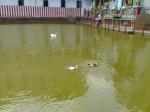
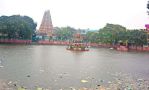
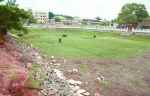
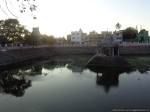
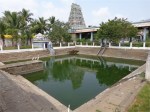
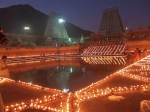
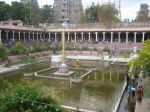
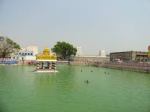
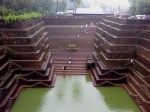
Temple Tanks are our unsung heroes – the lifeline of the otherwise concrete jungles that our metros have turned into; they are our cities’ very lungs. A brimming temple tank means, water-table is high in adjoining areas. A dry temple tank has a direct adverse effect in our neighbourhood with the water-table receding accordingly sometimes to as deep as 70-80 feet in peak summers when monsoons fail for continuous years… The catchment areas to these temple tanks have since been taken over for development which is a chief concern. Entirely rain-dependent today, it is therefore imperative that these tanks are weeded out for undergrowth and bushes when they run completely dry. Upkeeping the temple tanks is in the larger interests of the society. Earlier meant for ablutions to be carried out by devotees before entering Hindu temples, today the temple tanks serve to be those few rare breathing spaces that have won out against indiscriminate urbanization.

Please feel free to notify  me of more temple tanks. Will be a pleasure to add them up here. Temple Tanks: Best Rain Harvest System of Chennai. Simplest means to recharge our fast-depleting ground resources.