Before going to whole grains, I am making a list of veggies we consume around the year. Our Hindu meals include atleast three to four veggies or more every single day. Everything fresh from market or grocery stores.
Onion, tomato, ginger, garlic, green chili. Shallots or the baby onions are southern special
Carrots, beetroots
Cabbage, cauliflower and now even broccoli (for soups)
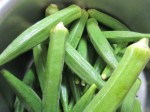
Okra (ladies finger), Brinjal all colours, drumsticks (not the chicken drumstick; this one grows on trees) (the poorman’s viagra)
Cucumber, radish, turnip
Capsicum or bell pepper all colours especially green
Potato, yam, sweet potato, colacasia
Broad beans, cluster beans
Fresh green peas, double beans, butter beans, soya beans – no need for soaking if you live in India. They come fresh round the year
Raw banana, banana flower, banana stems,
Rajma (red kidney bean), Channa (chick pea both brown and white)(these have to be soaked) though Rajma also comes fresh with no need to soak overnight
Corn, babycorn, mushrooms, soya chunks, lemons, gooseberries
Panneer the cottage cheese and tofu
Coconut, raw mango, jack fruit seed
Black gram, bengal gram etc.
Bitter gourd, snake guard, ash gourd, bottle gourd, ridge gourd, yellow pumpkins, chayote. Bitter gourd is good for diabetes control. Must in our food.
Greens: methi (fenugreek) leaves, mustard leaves, amaranth both red and green, drumstick leaves, spinach, mint, coriander, curry leaves, etc., just to sample. Keezhaanelli leaves are natural cure for jaundice but America patented it as we never claimed it as ours.
I shall add more as and when I recall. All these we eat atleast once in 20 days. That is how rich and sumptuous a Hindu meal/food can be.
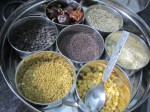
Seasoning used in every day cooking : mustard seeds, cumin seeds, fenugreek seeds, black peppercorn, fennel seeds, dried fenugreek leaves, dry red chili, bay leaf, cinnamon, cardamom, cloves, asafoetida, etc.
Other natural seasonings/taste enhancers: tamarind, turmeric powder (for colouring and for its antiseptic qualities) (there is NO Indian cuisine without the turmeric)
For protein for vegetarians: all kinds of lentils and pulses.
Whole grains and others: broken wheat, wheat, brown rice, white rice, original Basmati rice, red rice, broken rice, atta 0r the whole wheat flour, rice flour
Millets: this is the native food of India. Finger millets, pearl millet, jowar, bajra etc., are making a come back in Indian cuisine.
Oils of India: groundnut oil, coconut oil, mustard oil, sesame oil . Sunflower oil is very much affordable. Palm oil is for the nation’s poorest being our bulk import from Malaysia.
Coffee and tea are alien to us but they have such a profound presence in India.
So this is how we raise our children in India.
Fruits native to India are mangoes, jack fruit, banana among others. Seetha pazham, vilaam pazham – I don’t know the English names. Have to google. These are found to have cancer fighting properties. Elantham pazham. Apple and oranges are believed to be imported but they might also have been growing in the higher altitudes of India like in the Himalayas and the Nilgiris that the plains people remained unaware of for centuries.
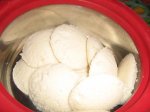
The stunning variety of the veggies we Hindus could be a reason for our global success in most of our opinion. Our breakfast Idlis which are pancakes from urad dal and rice get made from fermented batter that are natural probiotics. No Indian meal is complete without the intake of curd (Indian yoghurt). Similarly we use ghee or the clarified butter in daily food.
Hindu vegetarians lose no nutrition because of their picky food habits. My greatest regret is my son losing on the kind of vegetables and greens I used to cook for him after migrating from India.
I may be vegetarian from birth, but I learnt to cook meat for my family. WE always got fresh chicken and fish, never the frozen ones. My family loved king fish and hover’s carp. Staples for my son every week. Indian mutton too is rated highly over Australian mutton. Twice a week minced meat or mutton or chicken with a fish was in my son’s menu. On rare occasions father and son cooked for themselves sea crab. Fresh sea prawns also featured in the monthly diet list. I always rotated the menu and saw to that nothing was left out from our table. Eggs of course was like a pickle. Constant presence. Even so I would try to order country eggs. Instead of broiler chicken, I went for country chicken. We attached great importance to organic nature of food and nutritional quality. Frozen food except for panneer or the cottage cheese, was 100% ruled out. NO AERATED DRINKS AT HOME. If Indian cuisine is No.1 success story around the world, the reason could be the infusion of so many vegetables and greens in our food.
Sadly sometimes, our superduper food gets branded as curry by those who prefer the KFC nonsense and bland and stale and unimaginative food. This is the fate of anything too good to believe in this world. The kind of food we serve everyday in our family can be billed easily at 500$ in the US for instance. I know what I am eating.
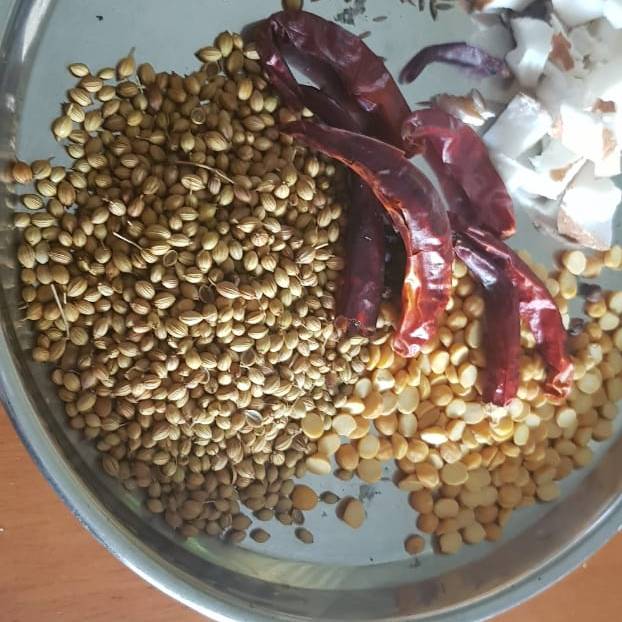
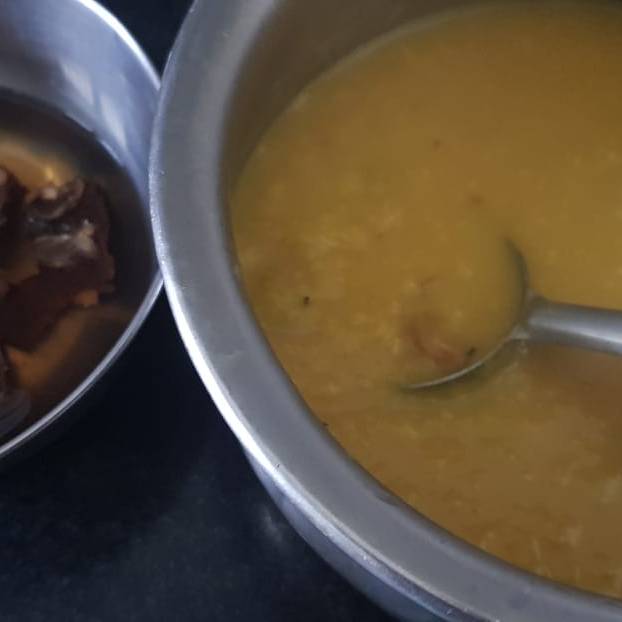
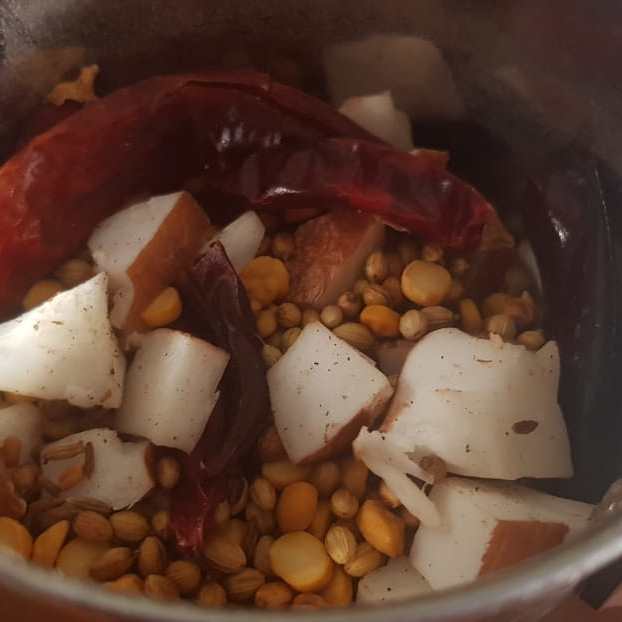
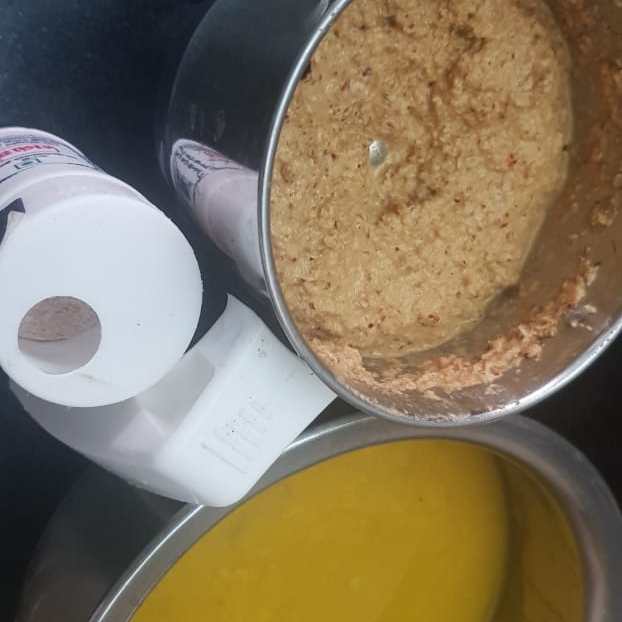
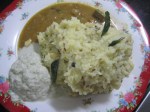
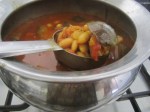
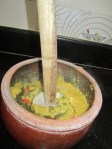
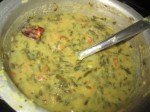
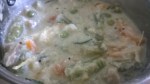
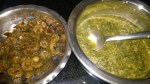
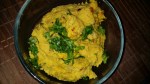
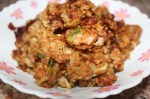
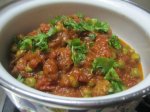
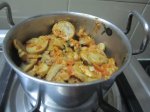
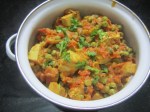
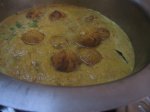
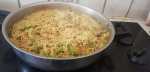
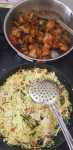
After a gap I returned to Doha to join my husband. Our lunch yesterday was cabbage koottu – a stew made with cooked lentils 2 types. I added coconut milk to it ground with green chili and soaked jeera or coriander seeds along with a slice of ginger. I garnished the stew with madras sambar powder made of red chili-coriander seed-black peppercorn powder. I sauteed some mustard seeds, cumin seeds with split red chili, added asafoetida a bit freshly ground, curry leaves in a tablespoon of heated coconut oil. I added this to the stew bringing to a boil. Seasoned with freshly cut coriander leaves. For curry I made a roast of double beans shelled fresh, roasted with tomato, garlic, onion. Sauteed with mustard seeds with cumin seeds in heated groundnut oil. Seasoning was with curry leaves, coriander leaves. The beans got the spice from madras curry powder – a mix of dry red chili, coriander seeds and black peppercorn roasted and ground. For crispies I deepfried some dried tapioca pearl chips that are sold by homemakers. I got some packets from India. A simple rasam, a juice of tamarind and tomato with black peppercorn powder and curd completed our homemeal. This is normal Indian cooking. I did nothing special. In fact, my cooking yesterday was minimal and very simple. I cooked brown rice to go with it. Breakfast was millet stringhoppers sold by some Indian shops. Its best for sugar control. We watch very much what we eat. If you don’t want gluten, then you may as well go to sleep on empty stomach.
Hindu food is rich in content. EXcepting for meat, Hindu food is mostly SATWIK. Satwik food is the reason for the Hindu temperament.
I am blessed to be born a Hindu, blessed to be a vegetarian from birth and blessed to live in the great ancient nation Bharat/India. Hindu culture is the one and only unbroken and continuous civilization in the world for over 10,000 years now.
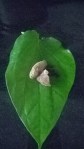
I see so many addicts to Indian range of cuisine around the world. If Indian food is priced exorbitant in foreign countries, it is for this reason: its exotic and the ingredients have medicinal values. ‘Food as therapy’ as we Hindus call it. Chewing betel leaves with areca nuts was custom to enable our ancestors get their continuous supply of calcium when they were vegetarians.
Years of living in foreign countries got my eyes opened to what really is quality of life: whether it is something to do with highways and malls and casinos and brands. Or something holistic , no way materialistic but that which leaves you with profound contentment. Where others see heat and dust, I see what really matters in life.





















 vijiravindran's